Archival Innovators: Doug Boyd, Director of the University of Kentucky’s Louie B. Nunn Center for Oral History

This is second entry in our new series Archival Innovators, which aims to raise awareness of the individuals, institutions, and collaborations that are helping to boldly chart the future of the the archives profession and set new precedents for the role of the archivist in society.
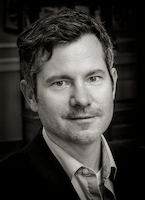
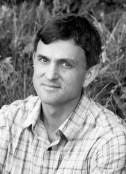
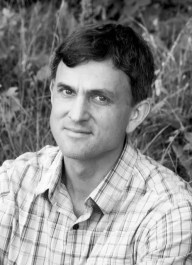
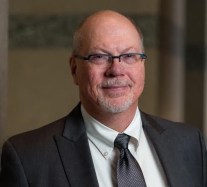
Doug Boyd, Ph.D.

In this post, COPA member Vince Lee brings you an interview with Doug Boyd, Ph.D., Director of the Louie B. Nunn Center for Oral History at the University of Kentucky Libraries.  Dr. Boyd is a recognized leader regarding oral history, archives, and digital technologies. He recently managed the Oral History in the Digital Age, which was funded by the Institute of Museum and Library Services.  Boyd currently leads the team that envisioned, designed, and is implementing the open-source Oral History Metadata Synchronizer (OHMS) system, which synchronizes text with audio and video online.  He holds a PhD in folklore and ethnomusicology from Indiana University and previously served as the manger of the Digital Program for the University of Alabama Libraries, Director of the Kentucky Oral History Commission, and Senior Archivist for the oral history and folklife collections at the Kentucky Historical Society. He authors the blog Digital Omnium: Oral History, Archives and Digital Technologies, is the co-editor of the book Oral History and Digital Humanities published by Palgrave MacMillan in 2014, and Boyd is the author of the book Crawfish Bottom: Recovering a Lost Kentucky Community published in August 2011 by the University Press of Kentucky.

VL: Please describe your innovative project.

DB: In 2008 I designed a web application called OHMS (Oral History Metadata Synchronizer) to enhance access to online oral history by connecting a text search of a transcript or an index to the corresponding moment in the audio or video.  OHMS is a 2-part system that includes the OHMS web application and the OHMS viewer.  The web application is where you do the work of synchronizing a transcript or indexing your interview.  When indexing an interview you create linkable segments that include a range of metadata fields that include the following fields: segment title, description, partial transcript, keywords, subjects, GPS coordinates, as well as hyperlinks which can be used to link the user to related web resources, or link the user to photographs.

The second part of OHMS is the OHMS Viewer.  The viewer was designed to interact with a local CMS and can be incorporated in free systems such as Omeka or WordPress just as simply as it is integrated into more complex systems such as CONTENTdm, Islandora, or Blacklight. OHMS was designed to provide an affordable option for enhancing access to online oral history and it has transformed our workflow at the Nunn Center.  Prior to launching OHMS, the Nunn Center was averaging 300-500 interviews that were being accessed each year.  Today, Nunn Center interviews are being accessed online an average of 10,000-12,000 times per month.  In 2011 the Nunn Center received a national leadership grant from IMLS to make OHMS open source and free.  In 2014, OHMS was released to the public, and at this time, there are over 500 individual and institutional OHMS accounts in over 35 different countries.

VL: Where did you get your idea and what inspired you?

DB: Prior to working at the University of Kentucky I managed the digital program at the University of Alabama.  During this time I thought a great deal about web usability and design, as well as the user experience working with digital library/archives platforms at the time, especially with regard to archived oral histories.  Prior to my experience at the University of Alabama, I was the Senior Archivist for the oral history collection at the Kentucky Historical Society and had grown frustrated with the discovery and usability challenges posed by archived oral history (and all time based media).  Most oral history interviews are not transcribed, which creates a great deal of challenges for both the archivist and the user.  The result was that the rich interviews in our oral history collections were mostly going undiscovered and ignored.  I began thinking about possibilities.  The digital program at the University of Kentucky had experimented with time-coded access to online oral history, but this required manual markup of a transcript.  OHMS grew out of my obsession with enhancing access to archived oral histories, but also to create empowering opportunities for more sustainable workflows in the archive.

VL: What worked? What didn’t work? Were you surprised by the outcome or any part of your experience?

DB: Developing OHMS was definitely an iterative process.  Keep in mind, we originally designed OHMS to work only with the Kentucky Digital Library, our primary access point at that time.  Also, initially OHMS only worked for synchronizing transcripts.  One of my favorite innovations of OHMS was when we designed the indexing feature.  Indexing really has been transformative for us, and now for so many individuals and institutions.  It provides an option for enhancing access to untextualized oral histories when transcription was not a financial or practical reality.  Last year the Nunn Center put over 900 indexed interviews online.  If we had transcribed all of those interviews, it would have cost the center over $250,000, which of course we would not be able to afford.  We would have only been able to provide online access to about 75-100 interviews that year.  One of the overarching goals for OHMS from the beginning was to create more sustainable workflows that were both effective and efficient, and that has clearly worked very well.

What did not work? The original plan was to have the OHMS Viewer be a plugin for 3-4 popular content management systems.  Once we really sat down at the table to talk about this it became abundantly clear that we would never be able to maintain and grow that approach after the grant ran out.  While this meant that the OHMS viewer was not as integrated as it could have been with a select few content management systems, it meant that there were fewer dependencies, making the OHMS Viewer portable enough to interact easily with any system.

VL: What would you do differently?

DB: Automating account setup far earlier in the development journey.  It was not until this last development cycle that we automated the account setup process.  Manual setup of each account was fine in the very beginning when there were few OHMS accounts beyond our internal use at UK.  It was such an honor to interact with so many wonderful oral history projects around the world.  However, there came a point where I was manually setting up 10-20 accounts each week.  Automating account setup had been on the development roadmap for several years, however, it kept falling down as a priority.  I would always ask questions such as “do we make OHMS bilingual, or do we make things easier on me.”  The last year or so automation became essential as so many account requests were coming in. While this does make things easier on me, it really is an important step toward sustainability.

VL: What tips do you have for budding innovators?

DB: It sounds cliché but do not be afraid to experiment.  The original version of OHMS was created and launched for $10,000 using internal funds (not a grant).  While $10,000 is an incredibly large amount of money, for a digital project, this is extremely affordable.  We found an creative programmer, drew up many designs on napkins and moved forward with development.  Also, think about sustaining your innovation early in the process.  While we did receive an IMLS National Leadership Grant, we had already created and implemented OHMS several years prior to getting the grant.  All of our development since the 2011 grant has been internally funded.  You can do magical things with a grant, what you cannot always do is sustain the work once the grant has run out.  I am pretty proud that we have designed OHMS to be sustainable whether there is a grant in play or not.

VL:  Did you get media attention? How did that happen?

DB: We have received wonderful attention.  In a way, this attention was not driven by OHMS, but by the enhanced discoverability of the oral history material being delivered via the OHMS Viewer.  Often the media is first drawn to the contents of the interviews, and then they have the “a-ha” moment where they realize how amazing the interface is.  Additionally, I have lectured a great deal about OHMS, which has raised general awareness of the tool within the oral history and archives community.  I have spoken about OHMS throughout the United States, in Australia, China, the UK, and several countries in Europe.  When I go on the radio, or when I narrate our podcast The Wisdom Project, I will give OHMS a brief mention.  I will say something to the effect “You can listen to these interviews in their entirety using our magical search system called “OHMS,” a system we developed at the Nunn Center.” While this sounds self-promotional, it is intending to raise general awareness and plant seeds.  While media attention is important, it is vitally important to raise general awareness of OHMS among the audience that OHMS is serving, so I get as excited about a mention on a student blog, or in The Signal (a blog published by the Library of Congress) than I do about articles in the Chronicle of Higher Education or a mention on NPR.
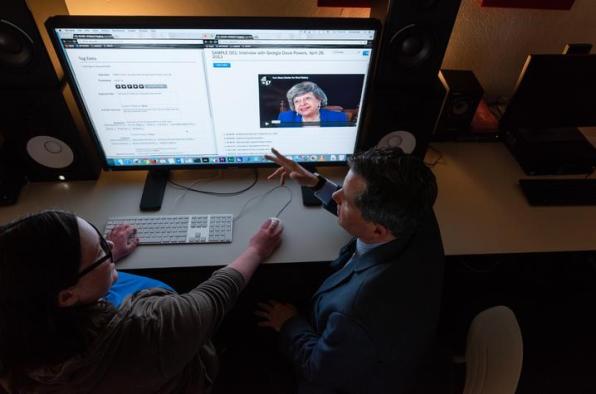
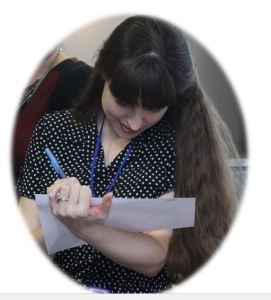
Boyd working with a colleague on an oral history interview in OHMS.

VL:  Do you have a collaborator? If so, how did you find them?

DB: Definitely.  Internally, our team at the Nunn Center and University of Kentucky Libraries have been critically important.  Eric Weig, Mary Molinaro, Kopana Terry, Danielle Gabbard, and Michael Slone have all played essential roles in making OHMS a practical reality.  When you are at an academic institution working on a project like OHMS development, the Deans of University of Kentucky Libraries (Terry Birdwhistell and Deirdre Scaggs) continue to be essential collaborators.  Jack Schmidt was the original programmer who we contracted to write the original code.  Externally, each programmer who has worked on OHMS has been an essential collaborator, especially Shawn De Cesari who worked for the company we contracted to rewrite the code during the IMLS grant.  Recently, we have worked closely with AVPreserve on the development of OHMS and this collaboration has proven incredible with regard to helping me shape the vision and development direction of OHMS.   In each case, programmers who have worked on OHMS have been so much more than just work-for-hire programmers, each one bought in to the mission and vision of OHMS and have always delivered far more creatively than they were being paid for.

The other collaborators who are critical to mention are those early adopters of OHMS who continue to give amazing feedback about development and usability priorities.  Institutions like the Richard B. Russell Library for Political Research and Studies at the University of Georgia and the Brooklyn Historical Society were critical early on in the process.  These institutions took a chance on OHMS early on and gave profoundly important feedback early on.  More recently, working with organizations like Oral History in the Liberal Arts, the students and faculty at West Chester University, as well as the Academy of Motion Picture Arts and Sciences have been important on the development of OHMS as a pedagogical tool (more on that later) as well as shaping my work in adding the bilingual aspects of OHMS.

Finding collaborators is about recognizing the opportunities and proactively empowering those collaborators to feel part of the process, part of the team. Now, our collaborators are broadening out to other institutions, such as Indiana University, who have begun to collaborate on the development of OHMS and help take the system to the next level.  Indiana University recently contracted AVPreserve to add Avalon capability to OHMS, which has been transformational on many levels.  I am very excited about seeing what comes next with regard to collaborators on development.

VL: Did you have institutional, administrative, or financial support for your project? How did you go about securing that support?

DB: As mentioned above, I initially funded development using some Nunn Center endowment funds that had accumulated over a few years prior to me coming to the University of Kentucky.  The Deans and Associate Deans at the University of Kentucky have always been open to experimentation and they all gave me the space to move something like OHMS from the idea phase into actuality.  Having their trust was essential to securing the initial internal funding.  Externally, we did receive an IMLS National Leadership Grant in 2011.  This was a critical development as it provided the support needed to rewrite the entire code and rethink OHMS as a system that people outside of the University of Kentucky could use.

VL: What’s next?  Either for this project or a new development?

DB: I have received a Fulbright Research Grant to spend 6 months in Australia to work with the National Library of Australia.  The NLA created a system similar to OHMS.  The Fulbright grant is a way for us to collaborate in a substantive way on how we can work together to elevate both systems and explore international standards for enhancing access to online oral history. We are moving in to the next active development stage where some exciting things are happening.  Most importantly, when I return from Australia, the top priority is to establish an institutional consortium that will help guide and sustain OHMS development moving forward.

VL: What barriers or challenges did you face?

DB: Of course, the major barriers are always funding and available resources.  Again, I am proud that we have been able to sustain the work of OHMS long after the IMLS grant was complete, but major paradigm-shifting development will need more grants. Upon completion of the grant there were some aspects of OHMS hosting and minor development that fell to programmers at the University of Kentucky Libraries.  We have very talented IT staff, but OHMS hosting and development had to be absorbed and balanced with many competing (and sometimes conflicting) priorities.  We have since moved hosting and development to AVPreserve, which has been an incredible experience.  We have expedited development and OHMS is no longer a conflicting/competing priority for the UK Libraries IT staff.  This really was a great move on so many levels.

Of course, OHMS is no longer something that only serves the Nunn Center.  Since there are OHMS accounts in over 35 different countries, I need to think about OHMS accounts and users on an international scale when making even small development decisions.  Last year some of our international partners reported that the OHMS Viewer was not effectively searching characters utilizing diacritics.  As a result, we had to shift some priorities around.  While this is neither a barrier nor a challenge, it is an exciting shift in focus for me to have to think so broadly about our development roadmap.

VL: Were you able to leverage help from students, interns, or grad students for technological or experiential aspects of the project?

DB: Absolutely.  We have a full team of student indexers at the Nunn Center who have provided incredibly valuable feedback on OHMS development, as well as on the resources and tutorials that we have created on using OHMS.

VL: Are there plans for implementing this project in curricula or as a resource to faculty/students?

DB: Absolutely. First, the Nunn Center’s collections are now accessed on a massive scale.  As designed, OHMS has enhanced discovery and usability, and as a result, faculty and students are using oral histories in the classroom on a much larger scale.  However, there has been an unexpected shift in how OHMS is being used in the classroom.  Even before OHMS had been released publicly to other institutions, I started using the back-end of OHMS in the classroom.  Specifically, students were assigned indexing projects in my graduate and undergraduate classes.  After the first semester, I very quickly realized that OHMS could be utilized as a powerful pedagogical tool.  Since then, we have collaborated with several professors at the University of Kentucky, as well as at Universities around the country who are designing entire courses around using OHMS to work with oral history in the classroom in powerful and effective ways.  The Going North and Philly Immigration projects at West Chester University, the Jewish Kentucky project here at the University of Kentucky are some higher profile examples, but smaller scale classroom initiatives are popping up around the country allowing the archives to engage faculty and students in new ways. Additionally there have been several recent journal articles in the Oral History Review focusing on OHMS as a pedagogical tool, as well as the article “Connecting the Classroom and the Archive: Oral History, Pedagogy, and Goin’ North” featured in Oral History in the Digital Age.

VL: How did you use this project as a catalyst for getting different groups to talk to each other (cross-generational, cross-cultural, etc.)?

DB: OHMS has transformed access to our oral history collection at the Nunn Center.  In 2008 we had 300-500 interviews being accessed annually.  Now the number averages 10,000-12,000 each month. This level of access has perpetuated a renewed interest in oral history at my institution.  The Nunn Center is currently maintaining over 50 interviewing initiatives at any given moment, which has connected us to new communities around Kentucky, as well as working with communities and individuals on a national and an international scale.  We used to work only with projects on the state-level, however, now we have projects all over the United States, as well as in Haiti, India, Pakistan, as well as a current interviewing project in Ecuador.  This volume of oral history is, by definition, catalyzing connection.  Much of this success is due to the success of OHMS and our commitment to enhancing access to our archived oral history interviews.

VL: What was your institution like before you joined? Does your institution have a history of supporting innovation in archives?

DB: The Special Collections Research Center in the University of Kentucky Libraries has had a history of experimentation and early adoption.  One of the things that drew me to the University of Kentucky in 2008 was the fact that I knew I could work very closely with the digital program.  So I came in to a context that was supportive and curious.

VL: What was your strategy for shifting the culture of your institution to be open to your innovative projects?

DB: Honestly, I did not have to do much beyond earning the trust and confidence of leadership.  I was able to recognize a problem—major discovery and usability challenges to accessing oral history—and articulate a potential solution.  I am a big believer in creating a “proof of concept” which is what we had when we built the initial version of OHMS.  Once leadership saw OHMS in action, there was very little convincing that was needed at that point.
Recap of American Archives Month 2018

American Archives Month, held each October since 2006, gives archivists an opportunity to find creative ways to educate the public about the importance of archives. Many institutions kicked off the month by participating in #AskanArchivist Day on October 3. (Check out the ArchivesAWARE! recap of #AskanArchivist Day 2018 here). Throughout the remainder of the month, events, tours, exhibits, and other programs were held across the country with the goal of highlighting archival collections and their connections to local communities. In this post, we are featuring some of the American Archives Month activities to inspire and inform your plans for next October!

Archives Crawls and Bazaars

Archives Crawls are multi-repository tours that allow participants to visit several institutions throughout a day or month and become acquainted with the range of resources held by local cultural heritage institutions. Similarly, Archives Bazaars or Fairs bring together several institutions into a single space, allowing attendees to learn more about local archival resources.

Screen Shot 2018-11-04 at 6.27.42 PM

Now in it’s third year, the Austin Archives Bazaar was held on October 28 and featured 26 area repositories. The event included a full slate of speakers (podcast hosts, PBS series creators, a PhD candidate, and a community organizer) who discussed how they had used archives in their work. An oral history booth, archival film screening, and a preservation station (where attendees could talk to professionals about the best way to preserve their photographs, scrapbooks, and other materials) were also included in the Bazaar.

The Border Regional Archives Group hosted their second annual Bazaar featuring 22 repositories from southern New Mexico, west Texas, and northern Mexico. Archivists, librarians, and curators were on hand to answer questions, short talks about regional history and genealogy were presented in English and Spanish, and scan stations were provided for digitization of family photographs and documents.

The 13th annual Los Angeles Archives Bazaar was held at the University of Southern California and included a full day of workshops and presentations including “Researching L.A. 101” which provided advice on getting started with archival research and a panel discussion with archivists and researchers on how archives can reveal hidden dimensions of California’s past. Archivists were on hand throughout the event to answer questions and talk to attendees about their collections.

Elsewhere in the Golden State, the 8th Annual Sacramento Archives Crawl invited participants to collect stamps on their passport by visiting four host locations (California State Archives, California State Library, Center for Sacramento History, and the Sacramento Public Library). Participants who visited at least three of the stops received a set of limited edition commemorative coasters featuring archival images. Other city or countywide Archives Crawls were held in Portland, San Francisco, and Orange County. In Monmouth County, New Jersey, 63 history-related organizations (including archives, libraries, historical societies, and government agencies) came together for the 23rd annual Archives and History Day.

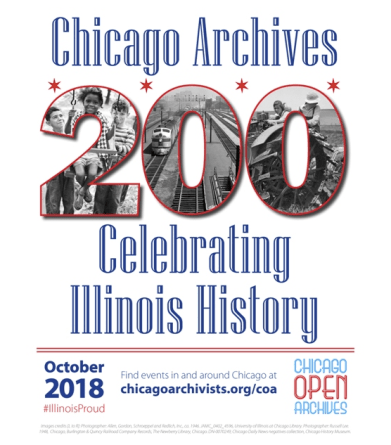
Screen Shot 2018-11-04 at 6.39.54 PMChicago Area Archivists presented Chicago Open Archives, a month-long opportunity for the public to visit repositories in the Chicago area. This year, the event was held in conjunction with the Illinois Bicentennial and highlighted items and collections focused on Illinois history. The Newberry Library, Chicago Public Library, the National Association of Realtors Archives, Chicago Film Archives, International Museum of Surgical Science, Chicago History Museum, and several area colleges and universities were among the participating institutions.
Lectures and Presentations

Meredith Evans and P

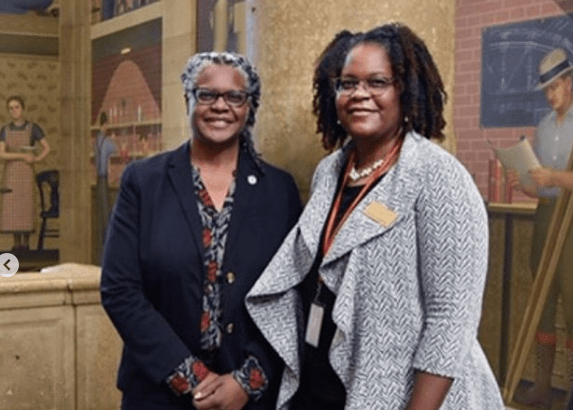
SAA President Meredith Evans with Petrina Jackson, Head of Special Collections and University Archives at Iowa State University

During American Archives Month, SAA President Meredith Evans spoke at the Ames Rotary and Iowa State University Library for the opening of Congressman Edward Mezvinsky’s Papers. Evans discussed each individual’s social responsibility and participation in the preservation of materials that reflect one’s life and heritage and the complexities and challenges of working with born-digital content.

The Western New York Library Resources Council focused on food throughout the month for their “Harvest of History” themed American Archives Month celebration. Presentations were held at different repositories and discussed how to preserve family recipes and how ingredients and cooking utensils have changed over time. The Council also gathered recipes for their Online Regional Cookbook.

Other Engagement Activities

American Samoa Street Wave

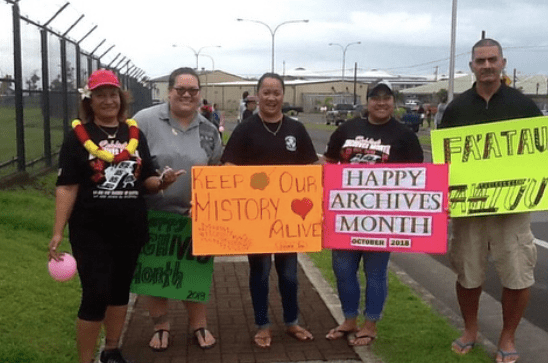
Archivists participate in the 3rd Annual American Samoa Archives Street Wave

On October 19, 50 staff members from the Office of Archives and Records in American Samoa’s Department of Administration Services participated in the 3rd annual Street Wave. Wearing bright Archives Month t-shirts and carrying signs saying “We are Made by History,” “Masina O Fa’amaumauga,” “Celebrate Our Archives Month,” and “Puipui Teuga Pepa,” participants were joined by local politicians in greeting morning commuters in Tafuna. Archivists in American Samoa also sponsored a poster contest for 6th-12th graders on the theme “Yesterday, Today, and Tomorrow” and held a “Night in the Archives” event on October 31.

The South Dakota State Archives hosted a Facebook photo scavenger hunt encouraging people to join in the conversation about local history. The Archives also held a History Trivia Night and an Escape the Archives event.

The Virginia Caucus of MARAC (Mid-Atlantic Regional Archives Conference) sponsored the REMIX Archival Oddities contest asking participants to use archival images from Virginia institutions in new an interesting ways.

How did your institution participate in American Archives Month? Tell us about it in the comments or on Twitter using the hashtag #ArchivesAWARE!

Archival Ghosts: Spooky Stories from “A Finding Aid to My Soul”

The Committee on Public Awareness (COPA) presented “A Finding Aid To My Soul,” an open-mic storytelling session on August 18 at the COSA/NAGARA/SAA joint meeting. The event was a smashing success, with twelve archivists sharing stories to a packed room that were sad, funny, profound, and even a little scary at times.

SAA and COPA will be sharing recorded audio from a number of the storytellers over the coming months. To kick things off, and in the spirit of the Halloween season, here are a couple of ghost stories shared that evening by Jennifer Overstreet and Terry Baxter.

They are a little spooky and do contain some graphic content, so listener beware.

Jennifer Overstreet, Graduate Student, University of North Carolina, Chapel Hill

OverstreetJennifer.jpg large

Terry Baxter, Archivist, Multnomah County Archives

BaxterTerry

Archival Innovators: Bryan Giemza, Director of UNC Chapel Hill’s Southern Historical Collection (Part 2)

This is the latest post in our new series Archival Innovators, which aims to raise awareness of the individuals, institutions, and collaborations that are helping to boldly chart the future of the the archives profession and set new precedents for the role of the archivist in society.

Bryan Giemza

This is Part 2 of Lindsay Anderberg’s interview with Bryan Giemza, Director of the Southern Historical Collection (SHC) at the Wilson Special Collections Library, part of the University Libraries at the University of North Carolina at Chapel Hill (see Part 1 here).  Part 2 continues Lindsay and Bryan’s discussion on how one archive was able to launch multiple innovative projects while challenging the notion of who creates and maintains archives.

LA: Your projects obviously require a lot of collaboration— from grant funding to partnerships both international and local. Can you talk about these partnerships both on a large scale, for example your Mellon grant funding, and about smaller, local connections that have propelled these projects forward?

BG: Funding from the Andrew W. Mellon Foundation has certainly enlarged the scope of what we can develop.  It offers the opportunity to grow our collaborations outward in expanding circles.  It enables the development of the backpacks and put us on a footing to contribute our methodology to the project in Yucatán, for example.  The Mellon Grant gives us the opportunity to pull together a Community-Driven Archives Team with multiple graduate students, library colleagues, coinvestigators in other institutions, and talented people and administrators.  Another key element to our model is working with community liaisons, who help us do the translational work of explaining archives work to communities, and explaining community needs to archives.

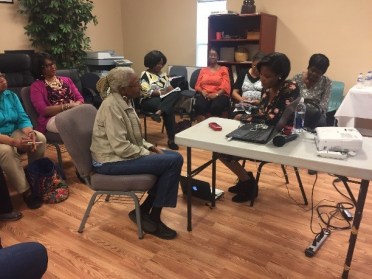
Train the Trainer session: Participants at the San Antonio African American Community Archives and Museum (SAAACAM) work with Dr. Karida Brown to conduct oral histories and store digital files.
Image Credit : B. Bernetiae Reed, SHC Community-Driven Archives.

At the same time, these projects are intensely local in nature.  Professor Karida Brown, one of our co-investigators and an innovator in her own right, always points out that you can’t be local enough.  When she was framing up what became the East Kentucky African American Migration Project—one of the SHC’s community partners—she started with the received tools of sociology and mailed out a survey to would-be participants. People in the community responded dutifully, but she realized that the instrument flattened everything out. It didn’t really get at their stories. It wasn’t until she really started talking to people one-on-one that she could begin.  She realized that the survey had been a false start and went back to the drawing board, which really put the project on a footing for success.

Fostering those local connections and surfacing the stories eventually led Karida to the Southern Historical Collection through word-of-mouth referrals from academic advisors. We are connected with larger partnerships and circles of like-minded colleagues who work in this area, too, from the west coast to the east, and finding strength in those numbers, as well as the lessons we learn from community partners.

LA: What is your advice to someone who wants to launch an innovative project with their archives, but might have limited funding or an organization that is not open to change?

BG: In writing about all this, the sheepish fact of the matter is that I work in an institution that is very well resourced, I have the backing of grants, and I work with very talented and creative colleagues.

So, it’s very easy for me to talk about how projects work…. And it’s hard to offer answers that aren’t too pat.  All I can say is that you can be creative and use your reputation in service of others to change things. Put your products in the public domain. Where funders are concerned, it’s important to move your ideas tangibly into practices and products, not just as proof of concept but as proof of the sort of success that others like to invest in. It’s better to come from a place of strength before need.

Backpacks in use: The SHC Community-Driven Archives Team collaborated with Public History graduate students from North Carolina Central University and community members in Princeville, NC, to conduct oral histories and to discern needful resources and cultural projects.
Image Credit : Claire Du Laney, SHC Community-Driven Archives.

Another perhaps too-easy answer is to start small or structure the strategic partnerships that extend your reach and resources. This doesn’t do a lot to disrupt power and funding disparities where larger institutions are concerned, but it gives you a way to tap into the aquifer.  When you are bringing something of value, turn the tables and set the terms.

Last bit of advice: borrow shamelessly and make sure you know what’s going on in your corner of the marketplace of ideas before setting out.  Be careful about reinventing the wheel; figure out how to borrow it from someone else. If you’re applying for a job, go ahead and float a budget and ask for startup money to achieve the vision on the front end—that’s what entrepreneurs do, and it lets you put something on the table when you ask others to participate.  Part of innovating is developing a thick skin. Expect to hear no often and remember that you only have to hear yes once.

If your organization is not open to change, as I see it, there are two options. You can take the long view and begin a change management campaign, as I mentioned earlier.  Or you can move on to an institution that is open. If it comes to that, my advice is to vote with your feet.  You owe it to yourself. If you’re interested in justice and innovation, align yourself with a place that makes it possible.

LA: Is there anything else you’d like fellow archivists to know about your projects or tips for how to launch similar projects at their institutions?

BG: This is a good moment to put in a shameless plug for the Practices in Community-Driven Archives Handbook that we’re developing as part of the Mellon grant.  It’s still a few years out on the horizon, but we are designing it to be useful to practitioners of all kinds. We’re the first to say that these are simply practices—not best practices, but the results of our experiments and learning, since every project is different—so your mileage may vary.  But maybe there’s something you can use there.

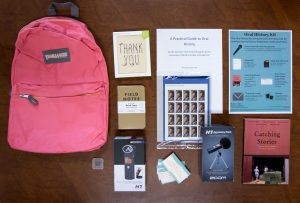
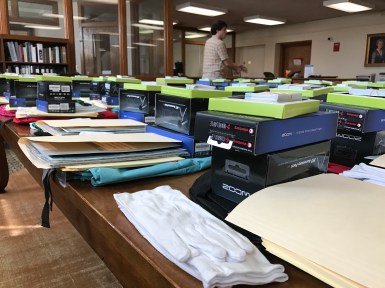
The contents of the Oral History Archivist in a Backpack include how-to guides, audio equipment and thank you cards. The Community-Driven Archives Team provides basic tools for oral history success and affirms the importance of community-curated histories.
Image Credit: Aleah Howell, Wilson Library, UNC-CH

We’re currently renovating the web presence for our community-driven projects, and we’re constantly adding our products and training materials as we go.  So if you wanted, for instance, to create a set of Backpacks for a community project, you can find all of the elements of the backpack, down to the pricing, in our online helps.

One other suggestion. Say things at meetings and have your elevator speech ready—ideas have to be reducible to terms that a child can understand quickly.  Speak them out loud.  Language is the first step toward making the ideal into the real, and if you sit in meetings and bite your tongue because you’re worried that your ideas aren’t good enough, nothing will happen.  The African proverb says it best: the open mouth gets fed.

LA: What’s next?  How will these projects continue or are you launching something new?

BG: Well, there are a lot of things. I am excited about the upcoming release of a fulldome movie that will bring our archival materials on southern history to a new format and to new audiences.

And I have a longer vision in mind for building on the potential in Archivist in a Backpack.  It’s about gradually scaling up capacity for community archives.  What if we could create archivally sound storage units—the sort of thing that municipalities throughout the region could afford to include in their planning—and harvest those pods to depositories supported by regional consortiums of libraries and archives?  Repeat the process and enhance inclusivity in each cycle? Community groups that aren’t interested in starting their own brick-and-mortar archive want to know that their materials will have a good archival home that respects the rights of their creators. As a profession, I think it’s a good thing when archivists consider how to join ranks in the scholarly dissemination of participatory methods. We can build outward from there.

These projects certainly have a momentum of their own.  Sometimes good writers turn out stories by creating characters and turning them loose to see what they will do.  Maybe we can think about projects and invention the same way.  Pick up one little piece of the challenge, start the project, and see where it wants to lead you.  We think about innovation as something you do, often through a kind of hard-nosed wrestling with a particular challenge.  But that puts “problems” first instead of people—the characters, so to speak. The reward of good work is more of it, and if you see innovation as a natural outgrowth of generosity, spontaneity, friendliness—well, maybe innovation has an animation of its own, and becomes the sure guide to better places.

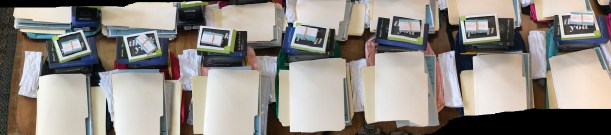
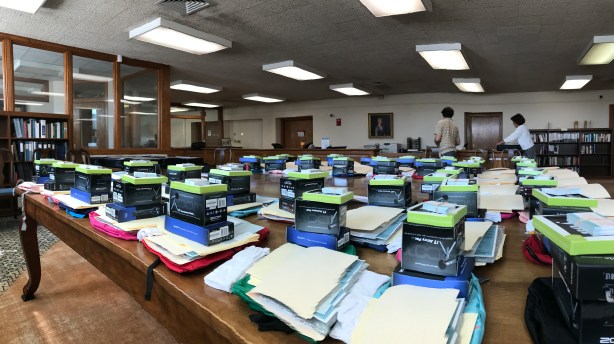
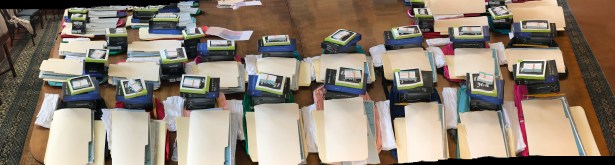
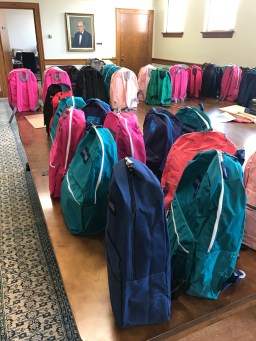
Assembling the Archivist in a Backpack kits at the Southern Historical Collection

Archival Innovators: Bryan Giemza, Director of UNC Chapel Hill’s Southern Historical Collection (Part 1)

This is the inaugural post in our new series Archival Innovators!  In this new series, we aim to raise awareness of the individuals, institutions, and collaborations that are helping to boldly chart the future of the the archives profession and set new precedents for the role of the archivist in society.

Bryan Giemza

Our first Archival Innovators post brings you an interview with Bryan Giemza, Director of the Southern Historical Collection (SHC) at the Wilson Special Collections Library, part of the University Libraries at the University of North Carolina at Chapel Hill (Bryan’s bio is contained at the end of this post).  Bryan and the SHC might already be on your radar as archival innovators thanks to the publicity around Archivist in a Backpack and the Maya from the Margins project, the latter of which was awarded SAA’s 2018 Diversity Award as well as a Spotlight Award for team member Bernetiae Reed.  COPA member Lindsay Anderberg, Interdisciplinary Science & Technology Librarian and Poly Archivist at New York University, spoke with Bryan to find out how one archive was able to launch multiple innovative projects while challenging the notion of who creates and maintains archives.

This is Part 1 of Lindsay and Bryan’s interview; stay tuned for Part 2 next week!

LA: Could you start by telling us a little about Archivist in a Backpack and how it fits within the concept of participatory research?

Assembling the Archivist in a Backpack kits at the Southern Historical Collection

BG: Archivist in a Backpack distills some basic tools of archival trade into a kit that’s small enough, and accessible enough, to act as starter material for a community-driven archive project.  We know from experience that oral histories are great for jumpstarting community-driven archives projects. And we know that people love the tangibility of archives experience.  You can see that in the moment of electricity when a student opens a nineteenth-century journal for the first time.  So, the question was, how do you get people of all ages comfortable thinking about themselves as archivists in a way that’s fun and interactive and ultimately empowering?

That’s what participatory research is all about: moving away from methods of enquiry that perpetuate the idea that expertise comes from outside a community. In the world of archives, it addresses a recurrent problem, that communities have limited say in what goes into an archive, what happens to it afterwards, even in its interpretation. Archivist in a Backpack is a kind of hook, it’s a straightforward way to get people into the participatory process and to say, You can do this, too.

Assembling the Archivist in a Backpack kits at the Southern Historical Collection

Assembling the Archivist in a Backpack kits at the Southern Historical Collection

LA: What about your Maya from the Margins project? How does that draw on participatory methodology?

BG: The spirit of participatory research infused Maya from the Margins, too. A lightbulb moment came from conversations I’d had with Latinos who were at best reluctant to acknowledge their indigenous past. I knew that young North Carolinians with both Latinx and indigenous roots often feel like outsiders. Their identity is really complex, and as second-generation Americans they’re at an uneasy remove from the experiences and culture of their immigrant parents. In addition to barriers to inclusion, the historic suppression of indigenous culture and language in Latin America poses a problem if you want to transmit a living history. Colonialism is not exactly a force for making people the curators of their own histories—which is what we’re trying to do.

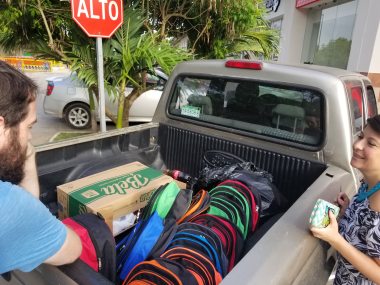
Khristin Landry-Montes and Douglas “Biff” Hollingsworth (Collections and Outreach Archivist, Southern Historical Collection) prepare backpacks that have been translated into Yucatec Mayan for distribution to teachers and students in Valladolid, Mexico

When I visited the State Archive of Yucatán, I viewed Mexican plantation documents that were every bit the counterpart of items held in the Southern Historical Collection, and I began to discern in the archive some common themes in history, movement and migration.  How could we bring people together around the topic of Mayan identity, and, in the participatory mode, enable them to take ownership of those histories, and claim that common ground?

The core idea was to create programming and archives-based exhibits by pairing a cohort of young Maya-identifying people in Yucatán with counterparts in North Carolina. Along with two Morganton high school teachers and two UNC-Chapel Hill undergraduate student mentors, the student participants visited the Southern Historical Collection and the State Archives of Yucatán, crisscrossed North Carolina and Yucatán, and collaboratively curated a travelling exhibition that was displayed at exchange sites.

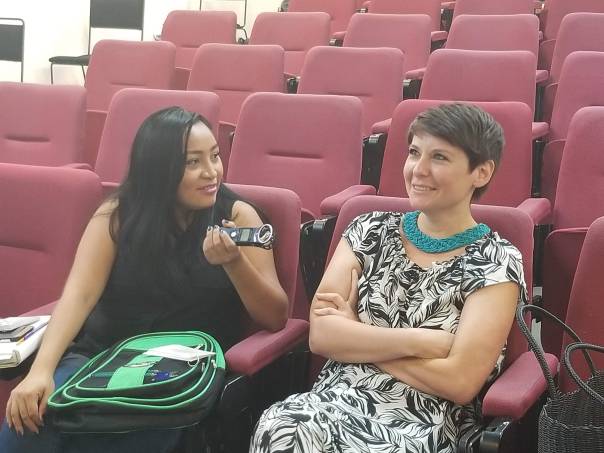
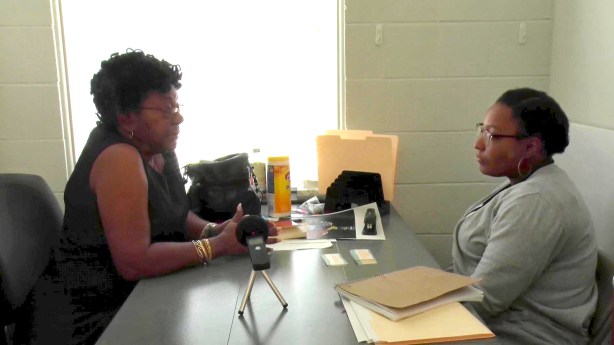
Daniela Garrido Durán uses backpack materials to interview Khristin Landry-Montes at a teacher training workshop sponsored by National Geographic at Universidad de Oriente in Valladolid, Mexico

LA: There’s a been a lot of talk in the archives profession about diversity, inclusion, and social justice, but I think people can be unsure of how to enact these ideas within the existing structures of academic and cultural institutions.  Can you talk about how your projects aim to disrupt power disparities and to empower communities or individuals?

BG: Sure!  One thing I can say from experience is that the challenge endemic to enacting the ideals of participatory research is making sure the implementation of projects matches the soaring rhetoric.  That’s actually where a lot of the space of invention comes in. The conceptual forms have to find embodiment in institutional and operational procedures, and finally, the tangible. We find ourselves answering a thousand sub-questions: for example, what’s the appropriate workflow, and what are the rights considerations, for ingesting material from a community history harvest?  Often it’s a case of first impression.  It puts demands on the imagination of the participants, the practitioners, and the institution.

Assembling the Archivist in a Backpack kits at the Southern Historical Collection

Let me try to make this a little more real and a little less aspirational or abstract. We gathered feedback on Archivist in a Backpack from community partners by including in each a stamped card to be returned to us. One community partner reported, “We all witnessed how meaningful it was for the … participants to get those protectors, a certain kind of unexpected acknowledgement of the value of their memories.” Here again, tangibility matters; having the plastic sleeves made interviewees feel their material is cared for by someone else and not just of value to them.  Archivists can’t be everywhere at once; not everyone has the experience of seeing their materials foldered and rehoused.  There’s intrinsic power in letting the community member be the bearer of that gift.

History from below, as a school of thought in public history, needs to be matched with archives from below.  It’s an orientation toward finding what’s not in the grand narratives and making it present and accessible.  This manifests differently in diverse disciplines, but there’s a kind of interdisciplinary convergence happening, in my view.  It’s happening in sociology, anthropology, public health, and so on.  It’s not an accident that Maya from the Margins required partnerships with colleagues in anthropology, a nonprofit, archives and higher ed abroad, and institutions across campus.  Participatory research provides the common ground for the real interdisciplinary work that we hear a lot about but that’s so rarely achieved.

Delores Porter and Adreonna Simmons use backpack materials to conduct an interview in the historic black town of Princeville, NC

Certainly there’s a built-in tension in the fact that institutions innately want to control narratives. It’s revealing to speak with communities where outside institutions have walked away on their own terms, or pursued their own extractive ends.  The traditional quid-pro-quo nature of collecting ignores the fact that generosity is usually repaid handsomely and that it takes a relationship to bring a person, a story, to an archive.  There’s a long way to go with all this. We still have a hard time paying community experts, for example, and reaching carceral populations, and finding ways to fund community projects directly.

LA: What was the Southern Historical Collection (SHC) like, both in content and in practice, before you started working there four years ago?

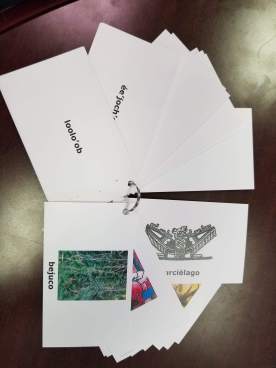
As one element of the backpack, these oral history prompt cards pertaining to the terminology of cenotes were translated into Yucatec Mayan and Spanish

BG: The Collection’s origins give it a tremendous magnetic force, since good collections have a way of attracting more good collections. I happened to be hired under a charter for change.  The SHC had a longstanding tradition of outreach, so I wanted to think about how to shift it beyond the podium.  We operated in a fairly conventional manuscripts mode: the goal traditionally has been to get primary material behind thick archival walls.  I was interested in how we could make those walls less intimidating and how we might render them invisible in a manner of speaking.  We took the time to do some planning and to hold ourselves accountable, which put us in a position to do more than react and to set a proactive collecting agenda. My SHC colleagues Chaitra Powell and Douglas “Biff” Hollingsworth bring tremendous creativity and experience to all of these efforts.  Our team agreed that we would be inspirited by an ethic of outrageous generosity and joyful participation, and that we would not lose sight of that simple mission.

LA: Since you were hired under a “charter for change,” what was your strategy for shifting the culture of SHC and launching these innovative projects?

BG: When I joined the Southern Historical Collection, I was determined to shift toward a participatory paradigm as a way of collecting that chimed with the best part of our “Of the People” institutional history. It offered a means to perpetuate a culture of respect and reciprocity. It’s a collecting ethos that will carry into the future, because collecting, broadly, is all about people and relationships. Those relationships are the most important corrective to the selective vision of academe. One of my favorite aphorisms is, No one sees his own ears.  Participatory research methods tend to point to our blind spots.  This is healthy not just for academic institutions; it’s good for communities, and it’s fundamentally an equitable way to go about the process. The power differences between academic institutions and communities—particularly those underrepresented in archives—are beyond enormous. From a collections standpoint, it’s like, the balance of power is tipped in favor of the institution before you arrive, not to mention while you’re there, so how do you continually put yourself in the perspective of a community member?  In those conversations, how can you be aware of the silencing effect of legacies and power disparities that extend well into the past?

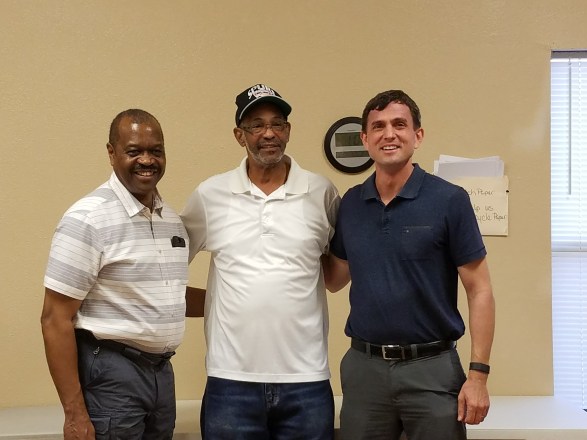
Everett Fly, George Frederick (SAAACAM – San Antonio African American Community Archive and Museum) and Bryan Giemza. SAAACAM is one of the community partners that is deploying Archivist in a Backpack

There is also an admittedly wonkish side to the business of change management; reading a book or two on the topic or taking a course can be helpful. It sounds calculated, and it is: you can develop a campaign for change, and that’s what I set out to do with the SHC team. We thought about how we might build allies across the organization, knowing that we wouldn’t get perfect buy-in from everyone, and that’s something we would have to accept and write off.

Trying to usher in community archives as a new way of thinking about what we do posed a lot of challenges, and it’s still a work in progress.  It’s a first principle of change management that most major change initiatives don’t pan out, and the ones that do require an absolutely relentless communication campaign. That’s very hard to do when you’re building the airplane in the air and doing your best to be responsive to communities.  We’ve been persistent in delivering the message that this work is essential to our identity. Put differently, community-driven archives aren’t just what we do—they’re who we are. It’s another gift to work in a place where others are innately disposed toward trying new things in service of others—and where there’s room for failure.

Stay tuned for Part 2 of our Archival Innovators interview with Bryan Giemza!

Bryan Giemza is Director of the Southern Historical Collection in Wilson Special Collections at the University of North Carolina at Chapel Hill, where he has been developing practices in community-driven archives. He is author or an editor of six academic books on American literary and cultural history, including Irish Catholic Writers and the Invention of the American South and Images of Depression-Era Louisiana: The FSA Photographs of Ben Shahn, Russell Lee, and Marion Post Wolcott. As principal investigator of grants from the Andrew W. Mellon Foundation and National Endowment for the Humanities, among others, he has led a variety of public humanities projects concerning the history and culture of the U.S. South. In 2019 he joins the faculty of the Honors College at Texas Tech University as professor of humanities and literature. Among his duties: working with students in the Sowell Family Collection in Literature, Community and the Natural World.

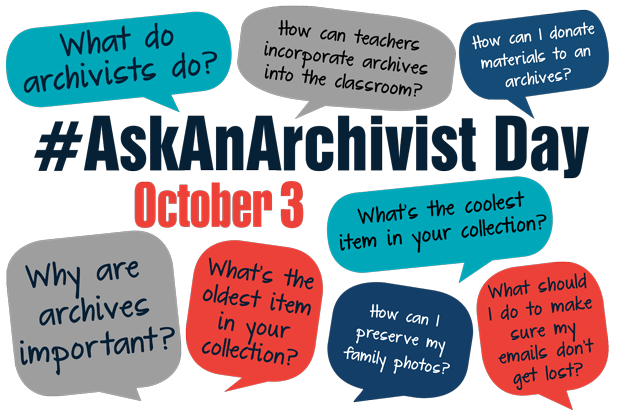
October 3rd is Ask An Archivist Day!

#AskAnArchivist_Oct-3-2017.jpg


The members of SAA’s Committee on Public Awareness (COPA) get excited when #AskAnArchivist Day comes around. This year’s #AskAnArchivist Day will be Weds, Oct 3. On that day, archivists around the country will take to Twitter to respond to questions tweeted with the hashtag #AskAnArchivist, letting us engage directly with the public about what we do, why it’s important, and of course, to share our “most interesting/bizarre/touching etc., records” stories.

Between now and October 3, we encourage you to promote #AskAnArchivist Day among your users and constituents via your institution’s website, Twitter account, blog, newsletter, and any other mediums available to you. View SAA’s public #AskAnArchivist Day announcement  and feel free to pick up language from it for your own promotions.

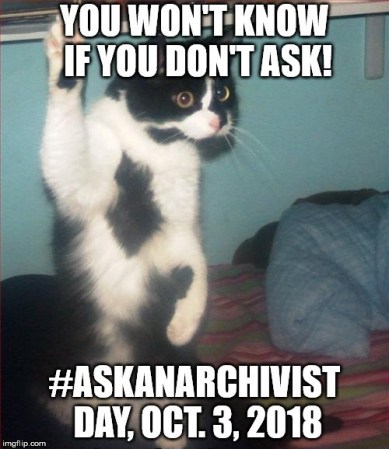
COPA’s members have found memes to be a great way to drum up excitement. They’re fun and are easily created through an online meme generator. This is a meme from COPA’s own vault that’s been “repurposed” for this year.

kittymeme

Starting October 1, follow the official hashtag #AskAnArchivist, on Twitter–we’ll keep sharing our memes up until the big day. We hope to see yours as well.

COPA members are also thinking of questions we can ask throughout the big day, so that we can join the conversation and hear your archival stories.

  • Who’s the most interesting or famous person who’s entered your archives?
  • What was the most difficult item to preserve in your Archives and why?

…so get your answers ready, and be prepared for more questions coming from COPA! We’ll be using an added hashtag, #ArchivesAWARE, to make it easy to follow our questions.

If you plan to participate, please email SAA Editorial and Production Coordinator Abigail Christian with your Twitter handle so we can add you to the 2018 list of participants.

Federal Funding Impact Story #10

dennis meissner on NHPRC’s Archival research fellowships program and “more product, less process”

Dennis Meissner

Dennis Meissner is the retired Deputy Director for Programs at the Minnesota Historical Society, a Fellow of the Society of American Archivists, and a past president of SAA. Most of his career has focused on the arrangement, description, and use of archival materials, and he has participated in a number of national and international efforts to develop standards and practices in those areas.  In 2003-2004 he collaborated with Mark Greene on the NHPRC-funded More Product, Less Process research project, which has seen broad adoption within American archives and special collections.

In this special contribution to our Federal Funding Impact Stories series, Mr. Meissner reflects on the importance of federal funding in facilitating the research project that resulted in the seminal article “More Product, Less Process: Revamping Traditional Archival Processing” in the fall/winter 2005 issue of The American Archivist.

Granting Agency: National Historical Publications and Records Commission (NHPRC)
Grant Program: Archival Research Fellowships Program
Program Fellows: Mark Greene, American Heritage Center, University of Wyoming; Dennis Meissner, Minnesota Historical Society
Project Title: More Product, Less Process
Grant Period: 2003-2004
Award Amount: $10,000

Project Description
There is no shortage of archivists and repositories that have benefitted materially and professionally from the largesse and strategic investments made by the NHPRC over the past half century.  My own institution, the Minnesota Historical Society, received microfilming grants beginning in the 1960s and continued to benefit from Commission funding up through the past decade with generous backlog reduction and digitization grants. These are the sort of benefits with which archivists are most familiar.  Although the NHPRC budget has usually been modest, its grants have greatly assisted countless repositories in their efforts to achieve programmatic sustainability, records preservation, and service innovation.

But NHPRC has invested in a variety of other projects over the years, less well known but equally helpful to archivists and their profession.  One of those projects, near and dear to my heart, was the Archival Research Fellowships Program that was active from 2002 through 2005.  The Research Fellowships were set up as a three-year program established with an award of $143,000 to manage a new, non-residential archival research fellowship program. The program was administered by representatives from the Massachusetts Historical Society, Massachusetts Institute of Technology, Northeastern University, Schlesinger Library at the Radcliffe Institute, and WGBH Educational Foundation.

Members of the three annual cohorts of Fellows (4-6 per year) were each required to conduct research and write about a topic of importance to the archival profession, with proposals concerning electronic records given a somewhat higher priority.  The program resulted in a number of fine projects that advanced archival thinking and produced important publications, perhaps the most widely beneficial of them being Richard Pearce-Moses’s A Glossary of Archival & Records Terminology (SAA, 2005).

The program also funded the year of research that led to the publication of the “More Product, Less Process” article.  So, it is with great fondness and deep gratitude that I think back on the crucial role that NHPRC funding played in making that project a reality for Mark Greene and me.  In short, we would probably not have attempted that significant work without the financial support provided by the Fellows Program and (equally important) without its absolute deadline and firm expectation that we would report out something of merit at the end of a year.  The stipend itself funded an important research trip to D.C. to research historical grant files, my travel to Wyoming so that we could work shoulder to shoulder in early project scoping and writing sessions, and to hire student help in capturing and analyzing a large body of survey data.  The expectation to produce results focused our thinking and forced us to work quickly and energetically toward our goal.  That compressed work and energy could not have happened without our Commission support.

MPLP was made possible by generous NHPRC support through the funding vehicle provided by its Archival Research Fellowships Program, a gift that supported important work by a number of archivists over its brief duration.  This type of strategic investment in archivists and the archival profession is carried on today though the Commission’s support of the Archives Leadership Institute, which is helping a large number of mid-level professionals prepare themselves to become senior leaders in their repositories and in their profession.  I am continually impressed with NHPRC’s ability to strategically plant modest seeds that grow innovation and resilience throughout the U.S. archives community.

There’s an Archivist for That! Interview with Meredith Torre, Archivist, Atlanta Housing

This is the seventh post in our There’s an Archivist for That! series, which will feature examples of archivists working in places you might not expect.  To continue this new series, COPA member Rachel Seale, Outreach Archivist at Iowa State University, brings you an interview with Meredith Torre, Archivist for Atlanta Housing Archives (AH).

Writing

Photograph of Meredith Torre. Courtesy of Meredith Torre.

Meredith Torre is the Archivist for Atlanta Housing Archives. Torre earned her MLS with specializations in archives, rare books, and conservation at the University of Wisconsin, Madison. She has been a member of both the Society of American Archivists, Society of Georgia Archivists, and also the Heritage Emergency Response Alliance.  In August 2017, Torre received the Employee of the Month from Atlanta Housing Authority and has also won the CEO Award for Preserving Our Past from the Atlanta Housing Authority in 2015.

Be sure to also check out the profile of the Atlanta Housing Archives Torre wrote for the SAA Business Archives Section.

RS: How did you get your gig?

MT: In 2014, I saw that Atlanta Housing was hiring an archivist. Then Director of Records and Information Management, David Carmichael, had been Director of the Georgia Archives where I first worked as an archives intern. I did a little bit of investigating into the position and learned that the hiring would be Atlanta Housing’s first archivist, which intrigued me. I also liked that the lone ranger position would provide the opportunity to engage in all aspects of archival work. The archivist position started out as a temporary one. However, the agency began to see the archives as a valuable program within Records and Information Management and in 2015 invested in making the position a permanent one.

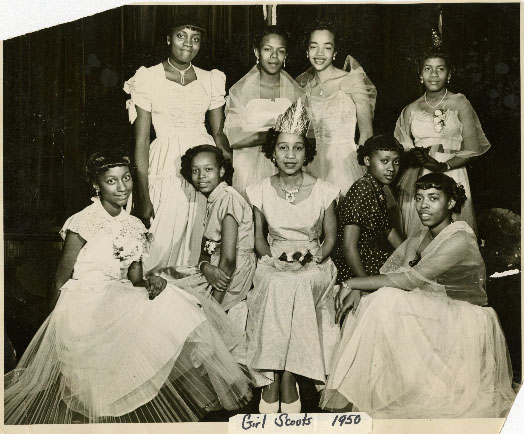
Girl scouts

“Girl Scouts.” AHA 2013.00258, 1950. Courtesy of the Atlanta Housing Archives.

RS: Tell us about your organization.

MT: For eight decades, Atlanta Housing (AH) has been at the forefront of providing affordable housing for many low-income families. The Housing Authority of the City of Atlanta formed May 18, 1938. AH’s founding Chairman Charles Forrest Palmer with Dr. John Hope, first black president of Morehouse College envisioned public housing that would eliminate Atlanta of its festering slums and provide decent, safe and sanitary housing at rent affordable to low income families. Under President Roosevelt’s New Deal these men formed an alliance to create the first federally subsidized public housing in the United States: Techwood and University Homes, serving as a national model for public housing. During the war AH again became a national model when President Roosevelt appointed AH’s founder as the Defense Housing Coordinator and AH lead national efforts for the construction of defense housing and housing for migrant war-workers and their families. Public housing nationally in the United States is still relatively young. AH recently reached its 80th anniversary (May 2018). During these years, public housing has undergone many changes and implemented new programs with Atlanta Housing continuing to play a key role in public housing policy. It’s a very exciting time to be an archivist for this type of organization!
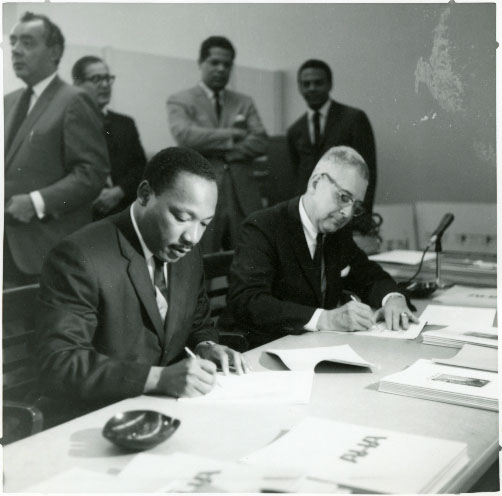
MLK

Martin Luther King, Jr. at Ebenezer Baptist Church signing an agreement with Edwin L. Sterne, AHA board chairman to develop a low and moderate income housing complex in the Rawson-Washington Urban Renewal Area. AHA 2013.01115, 1967. Courtesy of the Atlanta Housing Archives.

RS: Describe your collections.

SH: Atlanta Housing (“AH”) collects and preserves records of permanent and historical value dating back to the 1930’s. These records document the history of AH’s work and support its mission. Materials preserved in AH’s Archives have significant relevance to AH and document the evolution and history of AH, its achievements, administrative policy, programs, and projects. Records of enduring research value document the early history of public housing in Atlanta or in which AH played a pivotal and innovative role in shaping public housing policy and/or history. In particular, collecting areas include:

  • The United States first federally funded housing developments Techwood and University Homes.
  • AH during the period of war housing.
  • Housing project and real estate development/redevelopment records.
  • Urban Renewal records.
  • Official policies, reports, and agreements.
  • Programmatic records.
  • Papers and correspondence of executive directors, deputy executive directors, senior vice-presidents, and the President/CEO.
  • Photographs, audiovisual materials, and artifacts.
  • Oral histories.
  • Community life.
  • Marketing, media, and publications created by AH.
  • Materials published outside AH that describe AH, its programs, projects, and history (such as newspaper and magazine articles).
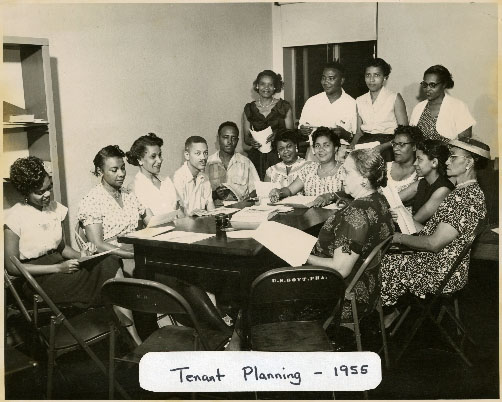
Tenant planning

“Tenant Planning” AHA 2013.00252, 1955. Courtesy of the Atlanta Housing Archives.

RS: What are some challenges unique to your collections?

MT: Up until 2014, AH’s records were poorly housed in cardboard boxes, exposed to pests and profusely lined the floors and racks of the agency’s headquarters attic and basement prone to floods. A historian compiling a history for AH rearranged all records according to subjects in her book. Loss of original order, poor labeling, no indexing, duplications, separation of signatures from original agreements to create “a signature file of important persons”, and poor storage lead to issues in record retrieval, authenticity, loss of information, and damage to valuable historical records.

Part of the unique challenge I faced when first coming to AH was to build an archives from the ground up. I was tasked with creating an archival environment for the records and to restore original order to the records. Because the loss of original order and the necessity of its restoration, the processing of record collections is ongoing. Records are now arranged and described following best practices and standards including MPLP, DACs, and assigning Library of Congress and the ATT authorized subject and name authorities. Preliminary finding aids for AH’s collections are now available. Processed records are reboxed using archival materials and in 2016, the archives moved to a secure, climate-monitored space.

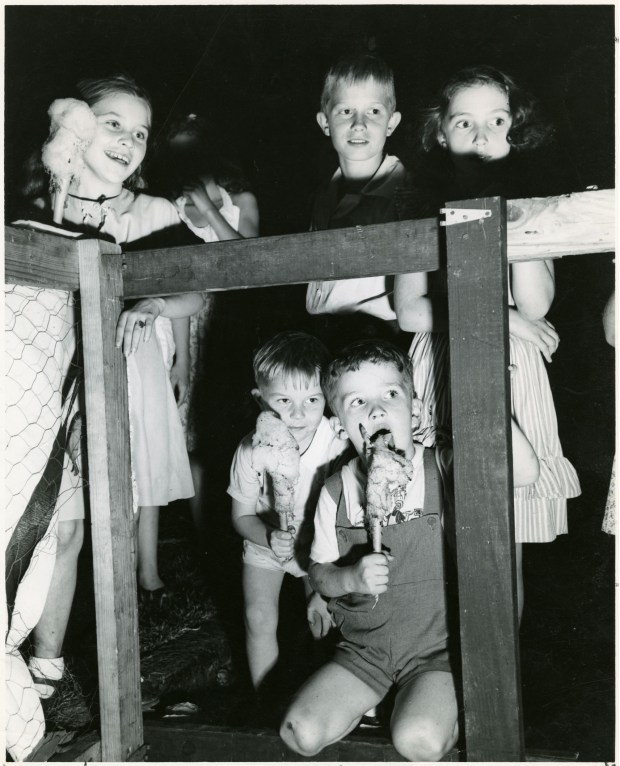
Techwood Clark

Techwood-Clark Howell Homes Carnival, community life. AHA 2013.00298, circa 1940-1949. Courtesy of the Atlanta Housing Archives.

RS: What is the favorite part of your job?

MT: I have worked in many different types of archival environments (government, academic, theological) and one of the most favorite aspects of my job for me is working within its unique environment. Atlanta Housing is a quasi-governmental entity. It functions as a business. It’s also a service oriented nonprofit institution. The business environment at AH requires flexibility in setting processing priorities and providing quick turnaround while realistically managing expectations. This environment offers its challenges. It also offers me the opportunity to tell people what it is archivists do frequently and to experience that moment of discovery from different people throughout the agency when they realize archives can work for them, has meaning, and is practically useful and magical. I also really enjoy working with our researchers. AH has hosted researchers and students locally and from all over the country interested in public housing history.

Stay tuned for future posts in the “There’s an Archivist for That!” series, featuring stories on archivists working in places you might not expect. If you know of an archivist who fits this description or are yourself an archivist who fits this description, the editors would love to hear from you—share in the comments below or contact archivesaware@archivists.org to be interviewed for ArchivesAWARE!

Recap of “Carpe Media! Communications and Media Training for Archivists” Workshop at ARCHIVES*RECORDS 2018

In this post, authors Vince Lee and Rachel Seale, members of SAA’s Committee on Public Awareness (COPA), share their impressions from attending the COPA-sponsored “Carpe Media! Communications and Media Training for Archivists” workshop at ARCHIVES*RECORDS 2018.

Workshop facilitator Jason Steinhauer role-playing with an attendee. Photo courtesy of Vince Lee.

Carpe Media! Communications and Media Training for Archivists” was a day long workshop put together by SAA’s Committee on Public Awareness (COPA) and facilitated by Jason Steinhauer at Archives*Records 2018. This workshop offered archivists the necessary tools and confidence to be better communicators on their profession and organization to a wide variety of audiences. Many of us were forced out of our comfort zones to participate in activities that helped focus our message about archives, in general, and specific messages to our respective stakeholders and users, in particular.

COPA worked with SAA Executive Director, Nancy Beaumont, and Director of Publishing, Teresa Brinati, to bring this professional development opportunity to SAA members. Communicating effectively to the media or on social media is something most archivists have learned on the job and many of us would still like to develop these skills.  Reasons for attending the training and what they hoped to get out of it were articulated at the beginning of the session during introductions between Jason and the attendees:

  • Tools to raise awareness of what they do and the collections they have to the general public
  • Make communications more interesting and impactful to targeted audience
  • Communicate more strategically
  • Awareness and advocacy targeted to grass roots audience on why archivists and their organizations need additional resources/facilities to house and process their collections
  • Donor communications and bridging perceptions on archivists and our roles
  • Awareness and community outreach to potential donors
  • Get “buy-in” from organizational leadership for additional resources
  • Communicating history and heritage to internal stakeholders

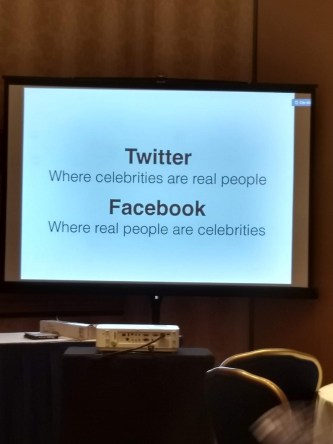
    Leadership slide from workshop. Photo courtesy of Teresa Brinati.

Takeaways

  • Be concise and consistent.
  • Social media slide from workshop. Photo courtesy of Vince Lee.

    Be repetitive, don’t assume people are going to see your one Tweet amidst the 500 million other Tweets that day.

  • You have customers and users. Tailor your message to each group.
  • Your brand is a promise to deliver something to your customers and also how you are perceived.
  • Resist the temptation to be clever.
  • Stick to the message, don’t be cute or snarky or that’s what the journalist may cut out of context and use in their piece.
  • Choose the platform/s that is most used by your customers and users. Don’t know which platform? Survey!
  • Always be connected (ABC)-think about who you are connecting to and with and what message your audience wants/expects to receive.

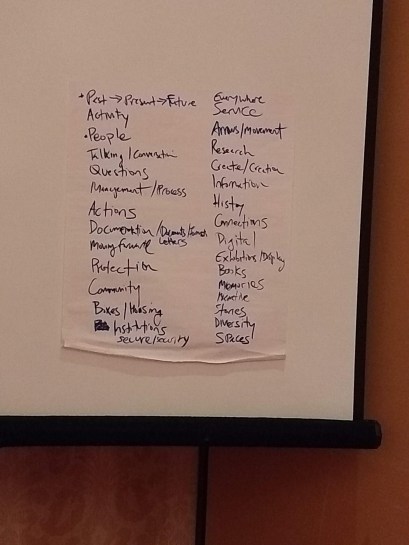
List of “our words” that we can use to communicate what an archives is to an external audience. Photo courtesy of Vince Lee.

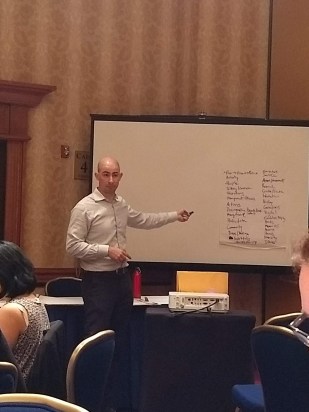
Jason pointing to our “words” to describe what an Archives means to each of us. Photo courtesy of Vince Lee.

Attendees from the workshop came away with a newfound appreciation that words matter and time is short. The words we use to tell our stories about ourselves, our profession, and the organizations we work for must come from us in order to be authentic and resonate to those we are trying to communicate to. We all have a limited amount of time and space to get our point across. We need to think of the essence of the thing without the whole thing. What is the essence of archives? It’s important to strip and distill what an archives is down for our audience in digestible chunks. The essence of archives is about the words we choose to describe ourselves and our profession. It’s important that we incorporate and use our words in conversations with donors, media, and our customers on a consistent basis.

At the end attendees had the opportunity to practice what they have learned in a one-on-one role-play exercise with Jason on various scenarios and situations they may find themselves in- whether it is interviewing in front of a camera, requesting more funding from an administrator or donor, or requesting additional resources in support of a project. Attendees would then receive feedback on their performance from both Jason and their peers.

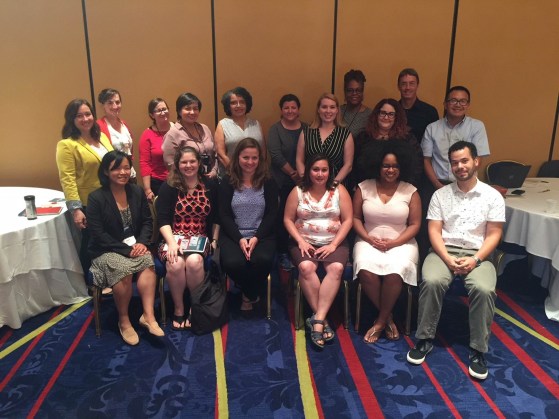
Group photo of attendees. Photo courtesy of Teresa Brinati.