THERE’S AN ARCHIVIST FOR THAT! INTERVIEW WITH ANNETTE LA RUE FROM ELECTROMAGNETIC TATTOO AND ADAM JEFFERY FROM THE BALTIMORE TATTOO MUSEUM BY ALLISON TERMINE

This is the newest post in our There’s an Archivist for That! series, which features examples of archivists working in places you might not expect. Allison Termine, brings you an interview with Adam Jeffery, the Tattooer, Collector of The Baltimore Tattoo Museum (est. 1999) and Annette La Rue, Tattooer, Collector from Electromagnetic Tattoo in Chesapeake, Virginia.

Interviewer: Allison Termine, I’m a trained Librarian, Archivist and Collections Manager, learning Taxonomy and Ontology. Capturing the essence of nostalgia in my life has always led me to activities, professional and personal, where I had the opportunity to observe, record, preserve, display, learn and organize primary and secondary material of history.

Image by Annette La Rue of Paul Rogers.

INTRODUCTION

The pioneering style in the trade of tattooing is called Americana. Knowledge of this trade was passed down orally by August “Cap” Coleman, 1884-1973 and Franklin Paul Rogers, 1905-1990, the for-father’s, what remains is tattoo ephemera and an oral tradition that lives on today through those they taught. Important historical artifacts of modern electric tattooing exist in various collections who are archivists in their own right. It is a treat to interview two artists and collectors of the Tattoo Trade to learn of a niche subculture through its remnants / ephemera. Just like other collected historical archives, provenance of the Tattoo Trade is based on oral dissemination and the now primary objects that were used to apply the final product were secondary to them and therefore have become a nostalgic link to the past. Such object items are; the tattoo machines, drawings on fragile tracing paper, business cards, pictures, adapted furniture for the tattoo sitting, banners, and flash to name a few. These accidental archivists, interviewed are artists and collectors and are what I consider boots on the ground archivists. A term that describes the importance of gathering material in the present time, which they have done throughout their career in the Tattoo Trade.

*To discover an in depth history of the origins of Americana Tattooing visit:
http://www.tattooarchive.com/index.php and
https://selvedgeyard.com/2009/07/21/forefathers-of-american-tattooing/.

Image by Annette La Rue. Pictured is a Paul Rogers original tracing paper flash from “Sailor Eddies” Shop in Camden, New Jersey 1971. With additional acetate stencil rubbing of a “Cap” Colemans’ drawing reworked by Sailor Jerry.

Our first interview is with Annette La Rue of Electromagnetic Tattoo, Chesapeake Virginia. Find her shop owned by her and her husband Steve Tiberi, also a tattooer and collector on Instagram @electromagnetictattoo, @annettlelarulex, and @tiberitattoo.
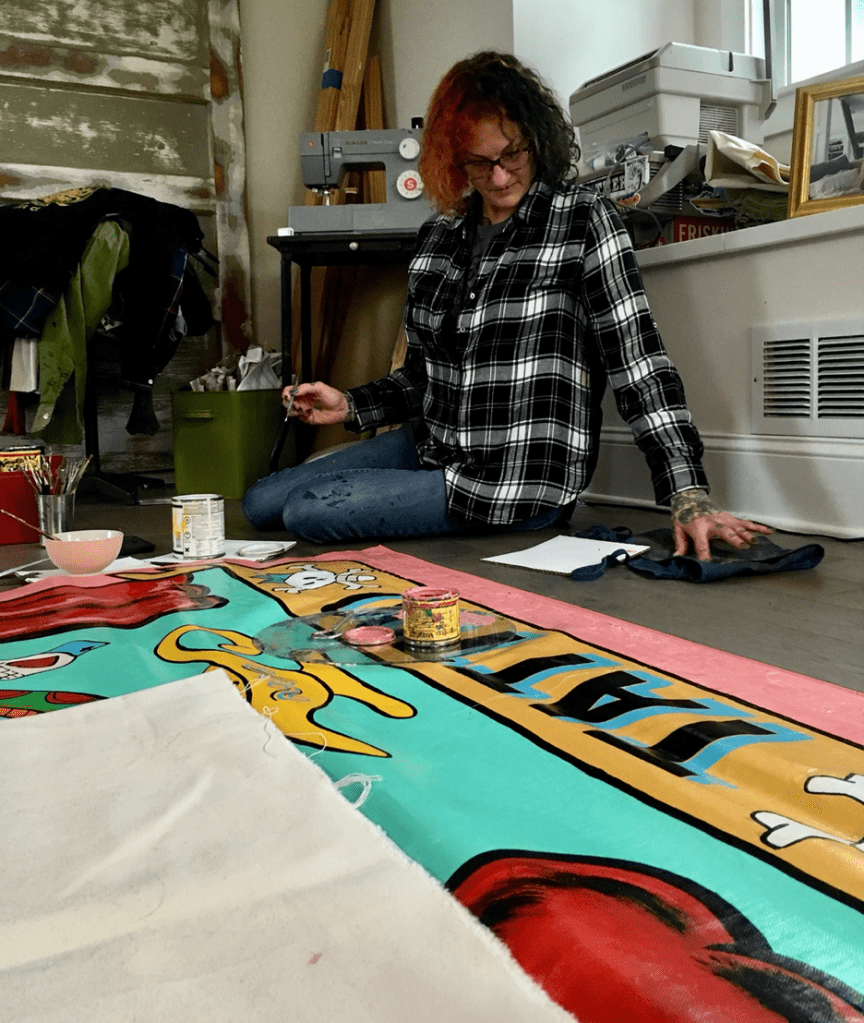
Image by Allison Termine. Annette La Rue and I doing conservation work, on a banner made by her friend, Ernie “Ernie the hat” Gosnell, of her former tattoo shop in New Orleans, Louisiana. Electric LadyLand.

Q: As a Tattooer of 30 years can you tell me about the history of Americana Tattooing?

Americana style tattooing means a bold colorful style consisting of bold thick outlines, solid black shading and bright solid colors. Americana tattooing was popular among sailors and circuses at the turn of the century. Most tattooers traveled with the circus or went to busy Navy port towns. It was seedy and frowned upon to have ink on your skin until the late 90’s into the 2000’s.
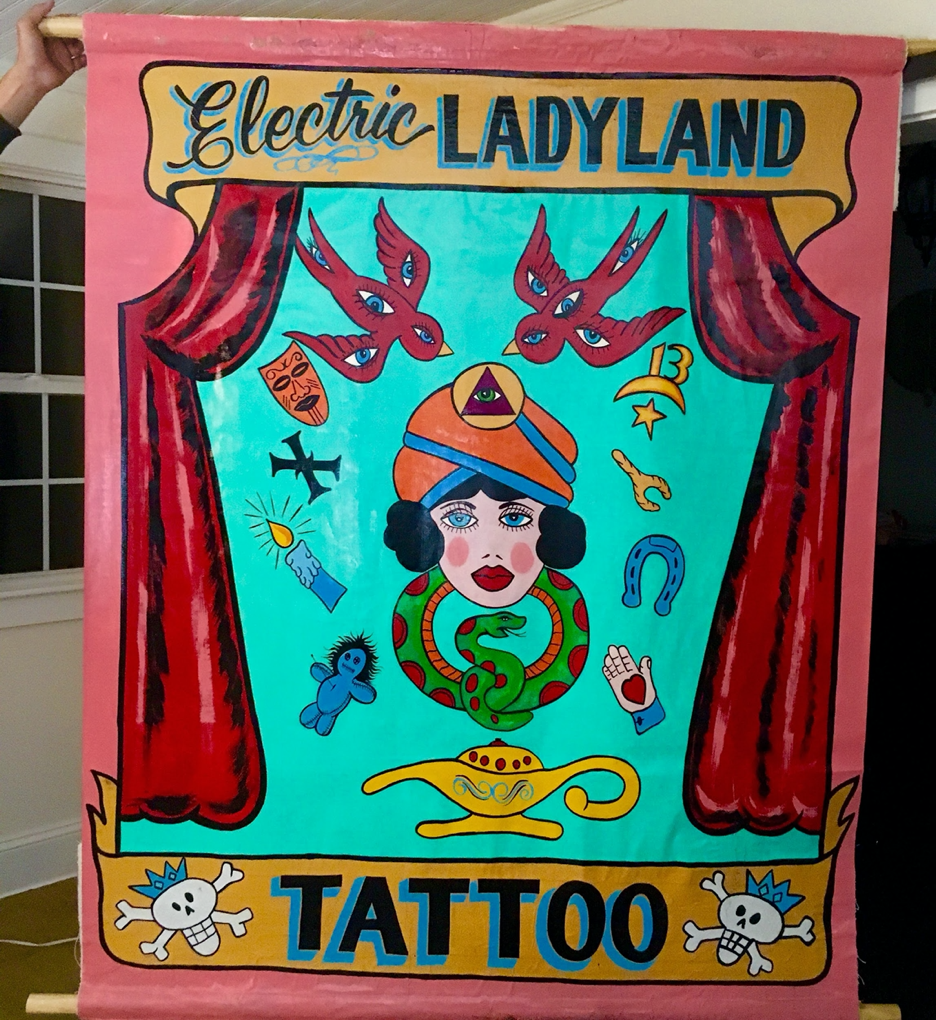
Image by Allison Termine. The Electric LadyLand banner made by, Ernie “Ernie the hat” Gosnell, of Annette La Rue’s former tattoo shop in New Orleans, Louisiana.

Q: As a collector of your trade what drove you to save ephemera of the tattoo trade throughout your career? (Your perspective then and now).

I was fascinated with older tools and designs because they connected me to the old ways. Kind of like a bridge to the heroes of yesterday. I felt a little “magic” in those tools. It made me feel like I had a link to the past and it made me proud to have possession of the tools of the trade. Now it’s just more stuff and I’m selling and trading my collection for things I can actually use. I want the younger tattooers to have those objects so they can feel like I did. To own historical tattoo pieces is like instant “cred” for anyone who has it. If you have money, you can be a collector. When I was buying you had to track someone down, go to their shop or house and beg them to sell you things. Now it’s on ebay and craigslist, too easy to get.

Q: Can you tell me about the significance of early tattoo machines and how the knowledge of building them was passed on and evolved through the years?

At the time there was no significance to old tattoo machines; they were simply a tool to make money. Tattooers would travel and visit each other and learn different ways to build machines. Most machine builders have their own style or frame configuration. They would mail parts and write about the secret trick they had to make to make their machines better. There was a lot of friendly competition between tattooers. Some builders got famous and some were more obscure. Machines from the old times are very valuable today. When the old guys died a lot of families were embarrassed about the line of work and tons were thrown out, leaving a few for younger tattooers to scourge to find them. Good builders would invite younger ones to come build and learn. You could spend the day or a few weeks with a builder and get secrets and tips while making your machine. A smart person would go to everyone’s house they could and did blend all the knowledge and make it on his or her own. This is significant because the younger generation needed to know the tips of the trade in order to keep machines up and running and it also helped the young guys to progress using old ways.

Q: If the collected ephemera of Americana Tattooing is the result of a trade learned orally, could you tell us about how the forefathers of Americana Tattooing influenced this particular style that remains “timeless” and how it has lasting power today over all other styles of tattooing being applied to skin?

I believe Americana style remains timeless because the designs were timeless. From the 1800’s to the late 1990’s an eagle looked like an eagle. A rose was a rose. You could tell what it was in two seconds. That is what makes it timeless. Today’s tattoos are trendy and you can tell if someone got it in their 90’s or early 2000 or 2010 or 2020 because of the design. They may seem more personal now but they aren’t. People get the same bad trendy design over and over, thinking they are “custom” and they don’t realise we tattooed that same design 40 times that month. Most timeless designs can be changed with different colors or leaves or background etc. Modern designs have not much room to change, as customers want it to look the same.
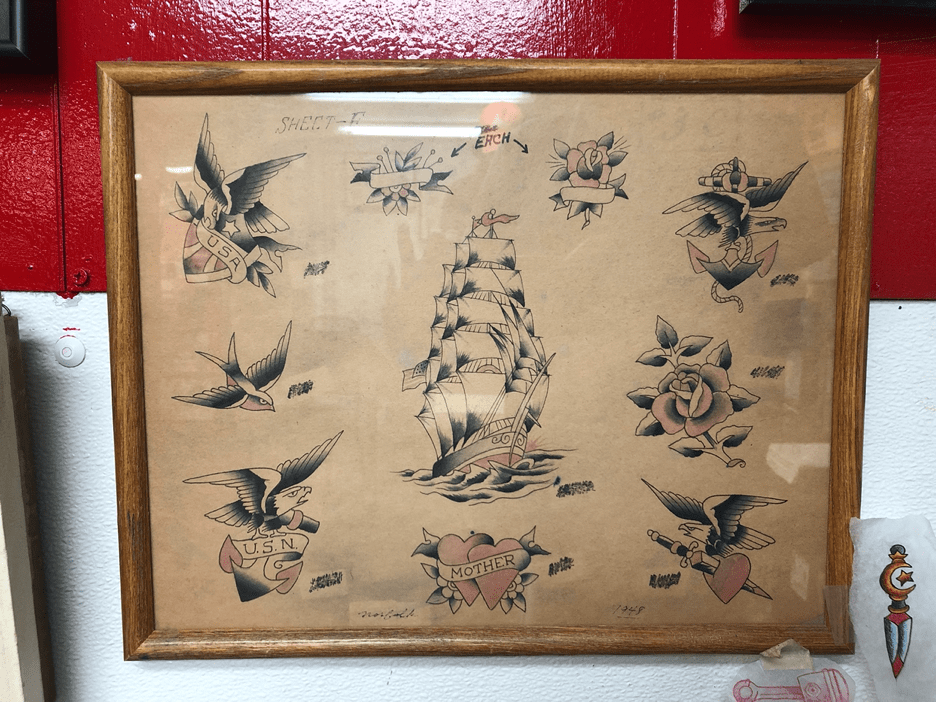
Image and caption by Annette La Rue. Pictured is a “Cap” Coleman original flash with signature and date, 1948. The significance of owning this sheet of flash is that 72 years ago “Cap” Coleman was in the next town over applying these very designs. This is my favorite piece in my collection and probably priceless.

Q: What is your favorite part of knowing you are an accidental archivist?

My favorite part of knowing I’m an accidental archivist is just knowing I can make young tattooers as excited and happy as I was when I started collecting. Of course these items all increase in value every year. It is the younger Tattooers having interest in keeping this history alive that I find interesting.

Our next interview is with Adam Jeffrey of The Baltimore Tattoo Museum. You can find Adam on Instagram @adamjeffreytattooer, and @thebaltimoretattomuseum.

Q: What are the types or formats of tattoo ephemera that were saved and what makes them significant? For example; how did a single piece of torn tracing paper with a pencil drawing become deemed “to save”, or a business card from Paul Rogers.

At The Baltimore Tattoo Museum we hope to explore the history and artifacts of modern tattooing in the Americana style. When it comes to the types of ephemera we collect that makes them significant are varied. For example, from some artists the art itself was secondary to their abilities to apply tattoos or build and tune tattoo equipment. So there are varying reasons we try to collect the many things we have. Some are significant to the tattooers of our area and the designs of a given town, for example, shipping and navy type tattoos in Baltimore, as it is a major east coast port. In other cases it might be the little inventions they crafted to make their everyday tasks a little easier like, retrofitting an old dental type chair to create better access to an area of skin to be tattooed. In other cases it’s their amazing ability, these untrained artists had to create very well drawn and thought out lasting style designs that even years later folks still would like to have applied to their skin.
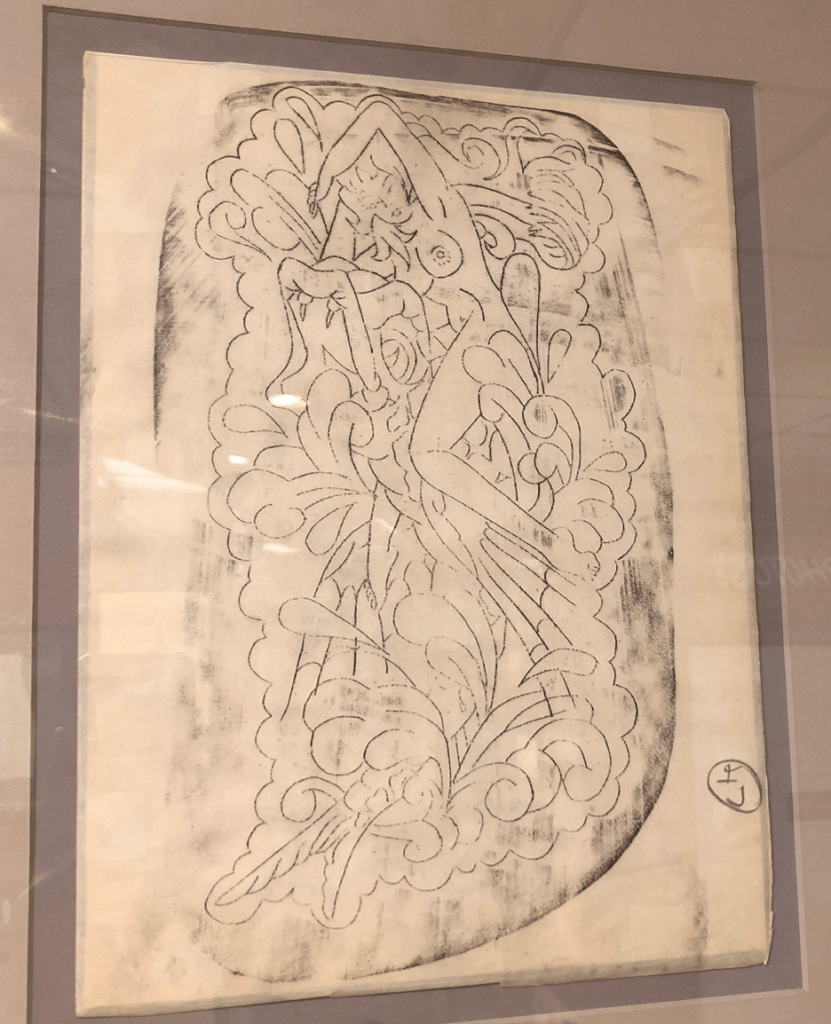
Image and caption by Adam Jeffrey from The Baltimore Tattoo Museum. Pictures is a rubbing of an acetate stencil made by Paul Rogers and sent in the mail to Ernie Carafa to share the design to make money. Back then, designs were common and people liked them that way. Uniformity with subtle differences to make it each artist’s own with various colors or background elements.

Q: If the collected ephemera of Americana Tattooing is the result of a trade learned orally, could you tell us about how the forefathers of Americana Tattooing influenced this particular style that remains “timeless” and how it has lasting power today over all other styles of tattooing being applied to skin?

Like us at Baltimore Tattoo and Museum and the majority of tattooers, still apply tattoos with the same electromagnet style tattoo machine they’ve always used. There are even modern makers making the same style frames that were being made in the turn of the century. As well as the same hand motions and application styles that were handed down to get the pigment under the skin, to have a good outcome to the tattoo once it’s healed. Also, the way the machinery is set up and tuned, to make precise lines and shading etc.
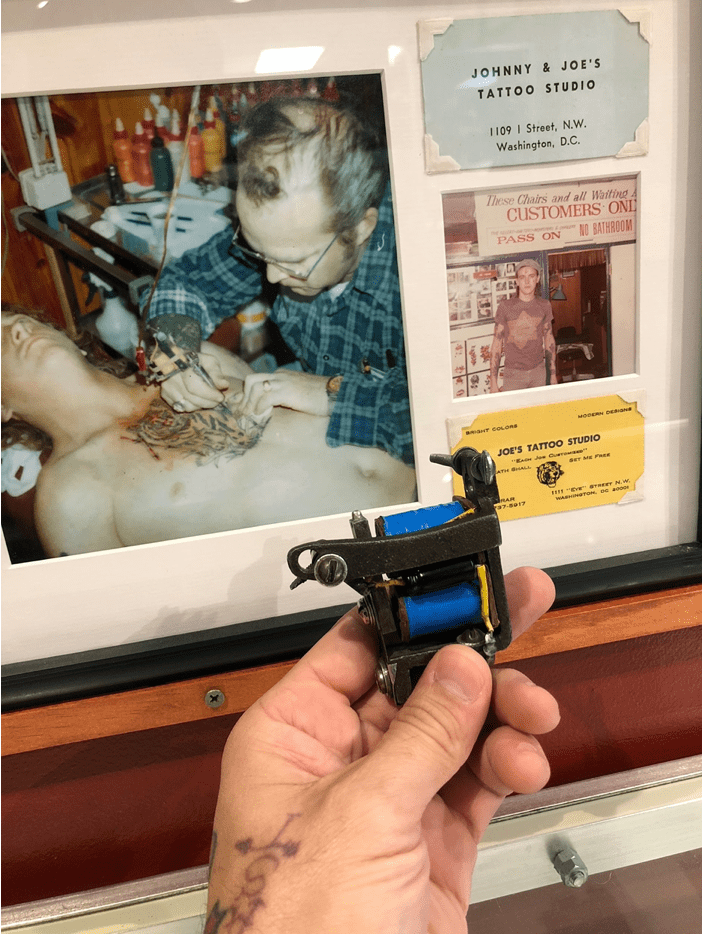
Image and caption by Adam Jeffery from The Baltimore Tattoo Museum. Pictured is a Joe Farrar machine built for Johnny Walker who tattooed with “Cap” Coleman of Norfolk, Virginia, and Sailor Jerry Collins in Honolulu, Hawaii. The machine is a Percy Waters model #7 from the 1940’s-1950’s era, that Farrar rebuilt to serve as a shader. Pictured in the right-hand corner is Joe’s tattooing and business card from their DC location.

Q: Can you tell us of one of your favorite collections?

I personally love our collection of Paul Rogers tattoo machines acetate stencils and flash. Most of it came from the collection of Charley and Sandy Parsons who are two of my mentors and were close friends with Paul who tattooed from the late 1920s till the late 1980s. Paul was an innovator and all around crafty artist making his own equipment, mixing his own colors and a designer of tattoos. The total package and to boot a good person as I am told.
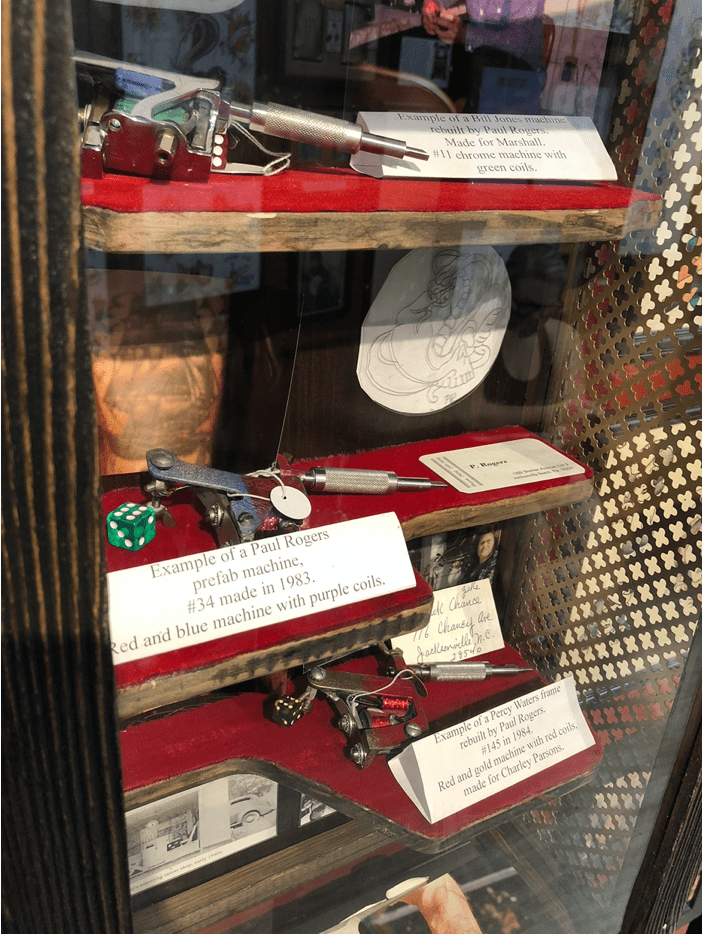
Image and caption by Adam Jeffery from The Baltimore Tattoo Museum. Displayed are Paul Rogers machines, acetate stencils made by Paul and a photo of a tattoo he did.

Q: What are some challenges unique to the collections?

The largest challenge is that prior to the 2000s Tattoo memorabilia was just old stuff or junk so a lot of it was thrown away or lost to time as tattooing was nowhere near as common as it is currently. So honestly, there isn’t as much of it to be had as one might think as well the prior you get it thru can be hard to deal with as it has become more popular. Prices have gone up and you are getting it second and third hand now so the provenance of it isn’t easy to establish.

Q: What is your favorite part of knowing you are an accidental archivist?

My favorite part of being an accidental archivist is interacting with other collectors who have been collecting for a long time, their knowledge helps me place dates and times on artists, machines and flash that I’ve had questions about. It can be an awesome community.

PITCH YOUR STORY! Call for Stories for “A Finding Aid to My Soul” Virtual Event on October 1.

1a

Arielle Petrovich at 2019 Storytelling Event.

Submission deadline extended to August 31!

When did you decide that you wanted to be an archivist? What was your first encounter with a particular archives? How did you handle a challenge in your work? What is a unique, serendipitous, moving, mysterious, special, or humorous experience you’ve had as an archivist?

If you would like the chance to share your story, then pitch it to us! In 100 to 200 words, tell us about your archives story. (Please don’t give us a cliff-hanger; you should summarize the whole story.) Great pitches will let us know what happened, what changed for you (or the world!), and what was at stake.

If your story is selected, you will have an opportunity to share your 5-minute, true personal story at the 2020 A Finding Aid to My Soul. This annual storytelling event brings together archivists for an evening of stories that energize and inspire, and celebrate the diversity of the archivist experience. This year’s virtual event—on October 1, from 7:00 pm to 9:00 pm ET—will be hosted by award-winning storyteller and educator Micaela Blei (The Moth, Risk). It is sponsored by SAA’s Committee on Public Awareness and will kick-off American Archives Month. If you’re unable to join us, the program will be recorded.

We’re looking for a wide range of voices to share their experiences. Absolutely no prior storytelling or performance experience is necessary—Micaela will support and guide you as you practice your story.

You may think that your story is not “dramatic” enough. We beg to differ! We want to hear stories with high stakes as well as small, and intimate stories of the work you do and the personal ways it connects to your life. If it mattered to you, it will matter to us, too.

If you need some inspiration, here’s a story from Travis Williams that closed out the 2019 event.


Want to listen to more? Selections from past Finding Aid to My Soul events can be found on the Archives in Context podcast.

Pitches are due August 31. Selected storytellers will be notified by September 4.

Pitch it here! 

There’s an Archivist for That! Interview with Danielle Nowak, Digital Assets Librarian at the Morton Arboretum

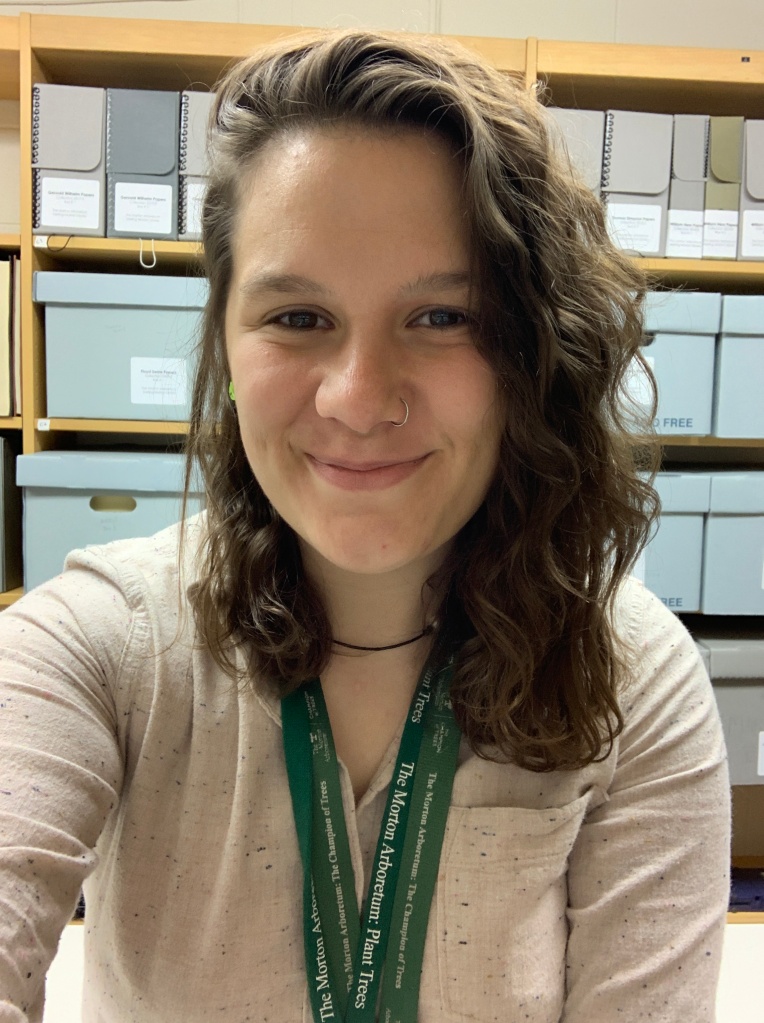
Danielle Nowak. Image courtesy of Danielle Nowak.

This is the newest post in our There’s an Archivist for That! series, which features examples of archivists working in places you might not expect.  COPA member Rachel Seale, Outreach Archivist at Iowa State University, brings you an interview with Danielle Nowak, the Digital Assets Librarian at the Morton Arboretum in the Sterling Morton Library in Lisle, Illinois.

Danielle Nowak graduated from Purdue University Calumet with a Bachelor’s Degree in History in 2015, followed by a Master’s of Library Science Degree from Indiana University Purdue University Indianapolis (IUPUI) in 2017.

After graduating with her MLS, Danielle worked as a Reference/Instruction Librarian at Prairie State College and the University of St. Francis before landing her permanent gig at The Morton Arboretum in Lisle, Illinois.

You can visit www.daniellenowakmls.org to learn more about Danielle’s past and current work and professional experience.

How did you get your gig?

I began working at The Morton Arboretum in late 2017 as the Access Services Librarian. Before earning my MLS I had interned and worked in various library settings and knew that I ultimately wanted to end up in a position where I would be working with archival collections. However, the challenging job market did not allow me to do that right away. As an undergraduate and graduate student I worked full-time as a manager at Panera Bread, while also picking up library and archival internships and jobs on top of that. Between school and working multiple jobs at the same time, I essentially worked 7 days a week for six years. Despite the trials and tribulations I went through in getting to this point, I never took my eyes off my end goal of getting a full-time archives job.

When I saw the opening for the Access Services Librarian role at The Morton Arboretum it was pretty much love at first sight. As someone that loves the outdoors, nature, history, and libraries, I was super excited to see that a position like this even existed. I applied in July-August, had my first and second interviews in September-October and then was hired in December. My original position as the Access Services Librarian had a term limit of two years. Close to the end of those two years, the Digital Assets Librarian position opened up and I applied for it and accepted the position.

Tell us about your organization.

Founded in 1922 by Joy Morton (founder of the Morton Salt Company), The Morton Arboretum is a 1,700 acre tree museum that is located in Lisle, Illinois. On these 1,700 acres are 222,000 live plants, representing nearly 4,300 taxa from around the world. The Arboretum conducts scientific research on tree and health improvement, collects and displays trees for study and enjoyment, offers educational programming for adults and children, and presents nature-related activities year round for people of all ages and interests.

The grounds are also home to a Visitor Center, Children’s Garden, Maze Garden, miles of hiking trails, a Herbarium, Plant Clinic, and the amazing Sterling Morton Library.

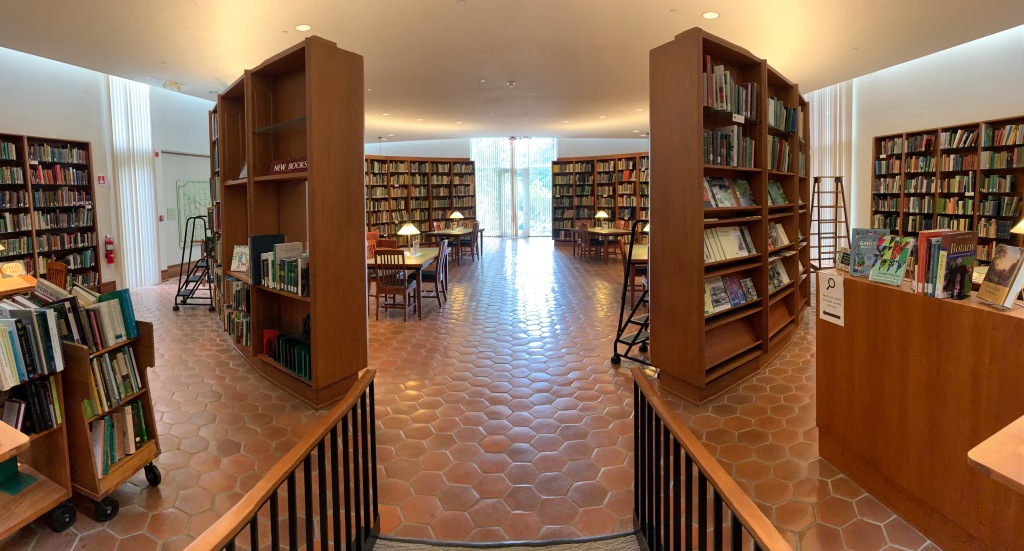
The Sterling Morton Library was opened in 1963 in memory of Sterling Morton, Joy Morton’s son. Interestingly, the library building itself was designed by the Chicago architect, Harry Weese, as an addition to The Arboretum’s Administration Building.

Sterling Morton Library Reading Room. Image courtesy of Danielle Nowak.

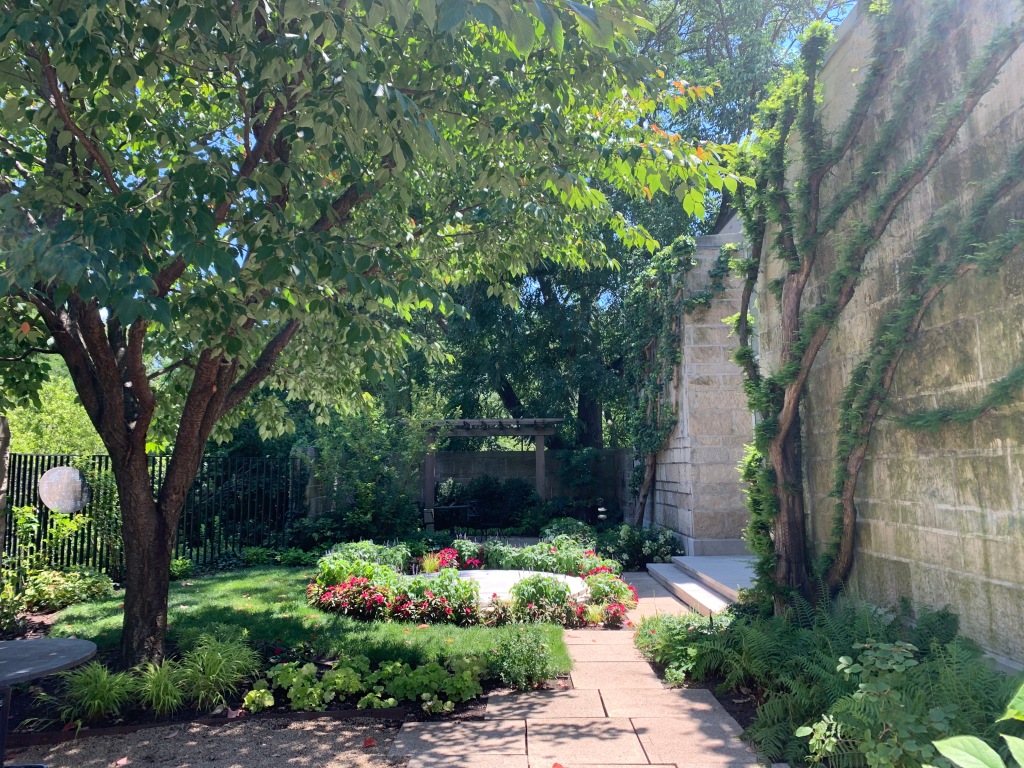
To add to the library’s uniqueness, the May T. Watts Reading Garden is attached to the library. The Reading Garden was constructed as a permanent monument to May Theilgaard Watts, a renowned American naturalist, author, poet, and educator. The Reading Garden makes for an exceptional place for quiet study or work.

May T. Watts Reading Garden, Image courtesy of Danielle Nowak

Describe your collections.

At the Sterling Morton Library we aim to collect resources that will assist our staff and members in supporting The Arboretum’s mission and work. In addition to our archival collections, we also have circulating, e-book, journal, artwork, nursery catalog, landscape plans, and rare book collections.

My work is primarily focused on our archival collections – both physical and digital.

The Library houses the institutional archives of The Morton Arboretum. These materials include documents and photographs that detail and describe The Arboretum’s development, past, and present; institutional and staff publications; photographs of plants taken on Arboretum grounds; photographs and documents pertaining to ex-situ plant collecting trips; and an assortment of other materials that help document The Arboretum’s existence and impact.

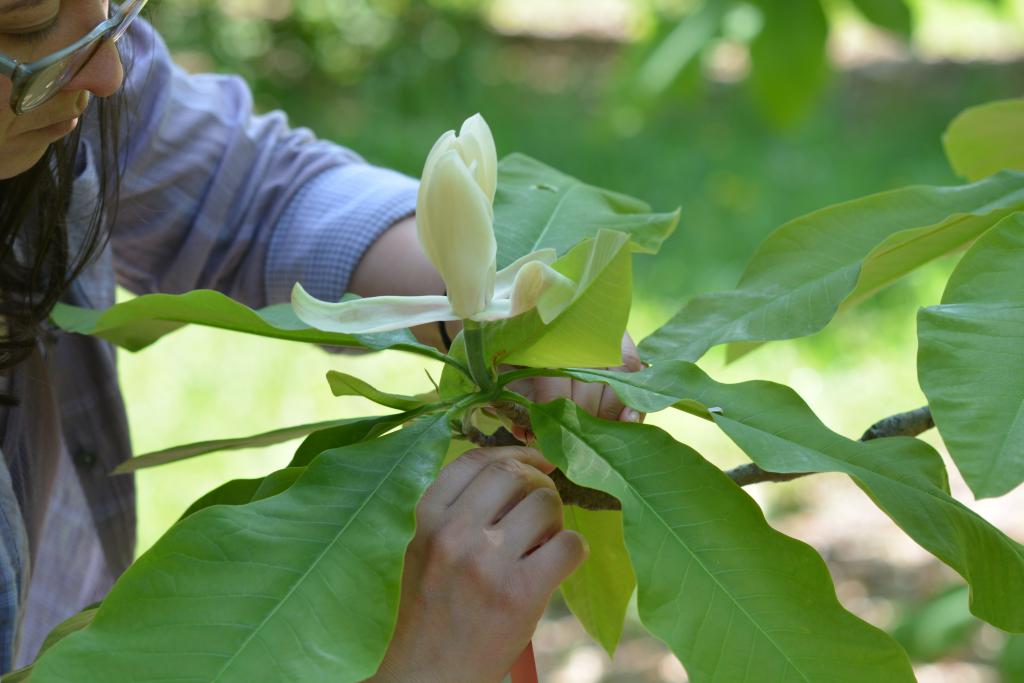
Kim Shearer, The Morton Arboretum’s Tree and Shrub Breeder, preparing to gather pollen from a Magnolia bloom. Image courtesy of The Morton Arboretum

The Library also houses and collects materials related to the Morton Family. With The Arboretum’s centennial approaching in 2022, digitizing the materials from the Collection of Morton Family Materials has become one of our priorities in the library. Right now, myself and a team of dedicated library volunteers are working to digitize and catalog our collection of Morton family correspondence, transcribe handwritten letters from said collection, and ultimately make the collection as accessible as possible.

Our fastest growing collections are our digital photograph collections, the largest being the Arboretum Image Bank, Collection of John Hagstrom Photographs, and the Living Collections Departmental Photographs. The Arboretum Image Bank is a series within The Morton Arboretum Records (our institutional collection) and contains photographs taken primarily by Arboretum staff of events at The Arboretum, work taking place at The Arboretum or off-site, and other Arboretum exhibitions and programming. We have contributors from our marketing, interpretation, and living collections departments transferring images on a regular basis.

Our other two largest digital photograph collections are related to plants and trees. Our Living Collections Departmental Photographs collection contains photographs of plants and trees that have been taken by an Arboretum staff member and an Arboretum volunteer. In these photographs, the two photographers aimed to capture images of woody plants around the Arboretum and Midwest. In addition to photographing just the entire plant, they also focused on taking pictures of specific parts of the plant or tree.

A mature seed from a Ginkgo biloba. Photographed by Ed Hedorn, Courtesy of The Morton Arboretum

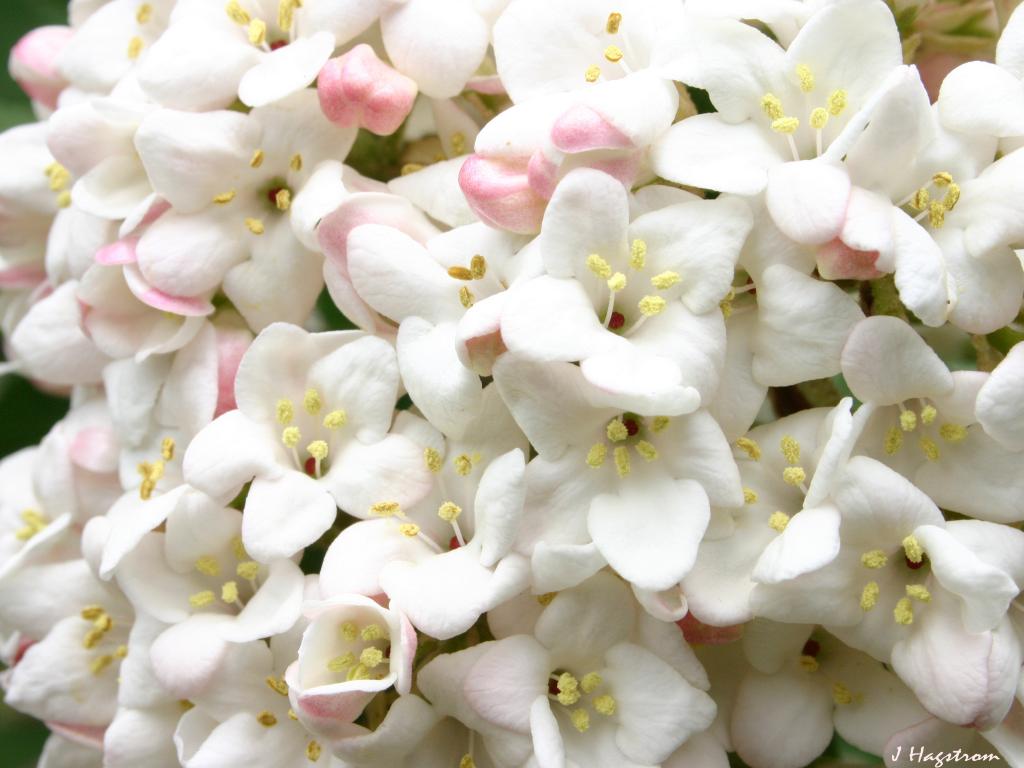
Our other collection of plant and tree photographs is the Collection of John Hagstrom Images. John Hagstrom is a long-time Arboretum volunteer that set out to photograph every type of plant at the Arboretum, each of its part, and in each season. While the project is still in progress, so far, John has donated over 10,000 images that we are actively incorporating into our digital collections.

A close-up view of flowers on a Viburnum farreri (fragrant viburnum). Photographed by John Hagstrom. Courtesy of The Morton Arboretum

What are some challenges unique to your collections?

I would say one of the biggest challenges that is unique to our collections is having a good grasp on plant names and naming conventions. Oftentimes, plants will have multiple common names or their name will have changed over time. Since plant photographs make up a huge part of our digital collections and we have searchers with varying plant knowledge, it is imperative that we are able to incorporate multiple names into our plant name’s keyword and also keep our naming convention consistent. Additionally, prior to being hired at the Arboretum, I did not have a strong background in botany. So, there has been a bit of a learning curve when it comes to plant names and parts, but I have thoroughly enjoyed learning about them and seeing myself become more knowledgeable on the topic. 

What is your favorite part of your job?

My favorite part of my job is the people I get to work with and assist. Because our collections encompass so many different topics (local history, botany, institutional records, etc.) I am always getting a variety of questions and tasks that keep me on my toes. I appreciate this because it helps facilitate an environment of learning that really helps me thrive.

Stay tuned for future posts in the “There’s an Archivist for That!” series, featuring stories on archivists working in places you might not expect. If you know of an archivist who fits this description or are yourself an archivist who fits this description, the editors would love to hear from you—share in the comments below or contact archivesaware@archivists.org to be interviewed for ArchivesAWARE!

Advocacy and Outreach Opportunities at the Archives*Records 2020 Annual Meeting

Last week was the start of the SAA Annual Meeting with the Teaching Primary Sources Unconference kicking off the Pre-Conference activities. Here is a list of some recommendations for awareness and advocacy sessions and creative outreach.

Please note, there is a mix of live, recorded, and on-demand sessions. Make sure to visit the schedule and view session descriptions to see which category a session or meeting falls and whether you need to register for a session.

Wednesday, July 29

College & University Archives Section

Join the Section to continue discussion on the various topics we’ve had at our weekly “coffee chats”, including collecting COVID stories, working and managing remotely, combating systemic racism at our institutions, and our plans for returning to campus. We’ll split into breakout sessions to explore these topics further. But first (after our business meeting), we’ll hear from Katie Howell, who developed a rapid response collecting initiative to document COVID-19 on the campus of UNC Charlotte.

Students & New Archives Professionals Section

Join SNAP for a brief business meeting as we present updates on section projects and advocacy work from the past year and introduce new steering committee members. 

Friday, July 31

Archives Management Section

Look, I Made a Hat: Agility in the Archives
Archives managers are required to don many hats (as it were) in addressing a range of challenges and moving quickly to implement solutions. After conducting some section business, we will transition to presentations on incredibly timely topics: Budgeting, Personnel, and Advocacy.

Monday, August 3

Storytelling Workshop with Micaela Blei

A powerful story has the potential to connect us to our own experiences, pull a community together, and engage new audiences with our work. In this master class storytelling workshop led by two-time Moth GrandSLAM winner (and former Moth director of education) Micaela Blei, you’ll learn “what makes a story work” and the connections among narrative performance, research, and teaching, as well as brainstorm and craft stories of your own.

The workshop is structured to make the online experience as engaging and welcoming as possible—using a webinar format and then an optional small-group discussion structure to allow you to take part in the workshop at the level that will best serve you. 

Registration is required and there is an additional fee of $49.00 to attend.

Wednesday, August 5

Keeping Archives Relevant in a Dizzying Digital World

Join Preservica customers and staff as they explore together the evolving impact of digital archives, celebrate user projects and stories, and discuss innovations in archival practice.

Thursday, August 6

Plenary 1

In addition to hearing our current president, Dr. Meredith Evans speak, this session includes Jodie Foley and Tempestt Hazel. Jodie Foley is the Montana State Archivist at the Montana State Historical Society.

Tempestt Hazel was the 2019 recipient of the J. Franklin Jameson Archival Advocacy Award from the Society of American Archivists. She is a curator, writer, and founder of Sixty Inches From Center, a Chicago-based arts publication and archiving initiative that has promoted and preserved the practices of BIPOC and LGBTQIA+ artists, and artists with disabilities across the Midwest since 2010. Focusing primarily on reframing cultural archives and institutional collections, her exhibitions and projects have been produced with the University of North Texas, South Side Community Art Center, Terrain Exhibitions, the Black Metropolis Research Consortium, the Smart Museum of Art, and the University of Chicago, among others.

2B – Archival Outreach in the New Normal: Using Digital Platforms to Teach Primary Sources

Learn about the National Archives and Records Administration’s (NARA) longstanding partnership with Internet2 and the Presidential Primary Source Project and the teaching series they have done, completely online. They will share tips for presenting in this medium and discuss methods for regaining audience attention and making the session more interactive.

In addition, learn more how NARA has moved its adult programming to online platforms. They will discuss how to host these kinds of sessions with members of the general public and how to manage registrations, digital platforms, and advertising.

3A – From the Margins to the Center: Foregrounding Underrepresented Communities and Revitalizing Mainstream Collections

This session examines how different approaches to foregrounding marginalized groups and individuals have revitalized established collections at three archival repositories.

3B – Showing Up: Community Engagement Events Toward a Better Cultural Record

This panel will explore the centrality of community partnerships in the diversification of the archival record, featuring programs that have hosted grant-funded community engagement activities to create and collect documentation of historically underrepresented groups.

Friday, August 7

4B – Reframing History: Opening Up Archives to Artists

This panel will highlight the Chicago Archives + Artists Project organized by Sixty Inches From Center and feature visual artists, curators, and writers who have collaborated with archivists, librarians, and other collection caretakers for their research-based creative practices to commission new artworks and curate exhibitions.

Hop into History: Archives and Alcohol in America

Grab a drink, and pull up a stool at the virtual hotel bar for a storytelling session featuring archivists who are working to document various aspects of alcohol history in the United States. Whether your drink of choice is beer, wine, bourbon, or cocktails, we’ll share some stories from our collections that might make you think a little differently the next time you take a sip!

Saturday, August 8

S04 – Ambition, Advocacy, and the Future of Storytelling

Orchestra and radio archivists describe how they pitched forward-thinking projects that break storytelling out of its traditional mold. Participants then break into groups to imagine, share, and learn what the future role of archives will and can be. Practical tips and challenges related to technology, project implementation, and advocacy will be shared.

S11 – Community Collections as Digital Collections

L.A. as Subject (LAAS), Chicago Collections Consortium (CCC), and the Recollect community in Australia and New Zealand will address the lessons learned and future visions in achieving a truly collaborative and reciprocal network. Although they are separate and independent entities, LAAS, CCC, and Recollect developed coinciding missions to collaborate with a diverse set of community archives in order to openly share collections and strengthen the profession through more comprehensive knowledge sharing.

S12 – Connecting to Communities: Outreach at the Missouri State Archives

 In this session archivists from the Missouri State Archives will share their experiences with tours, special events, speaker series, and grant programs. The focus is on creating sustainable, diverse programs to reach a broad range of patrons.

S29 – Love Can’t Turn Around™: Evidences of the Belief in the Power of Our Collective Social Experiences as Sites of Pleasure, Purpose and Politics

The Blackivists™ are a collective of trained and credentialed African-American archivists based in the Chicagoland area who address the needs of people interested in creating and preserving personal, community and “non-traditional” archives. The Blackivists™ collaborated with Honey Pot Performance on a series of programs for the Chicago Black Social Culture Mapping Project, which exists to preserve Chicago’s black social cultural lineage through fun and informative experiences focused on a Chicago based cultural art form: House music.

S35 – Project STAND: Highlights and Hurdles of a National Project on Social Justice and Archives

Project STAND, is a consortium of 70 colleges and universities that has created an online resource centralizing primary sources relating to student activism in historically under-documented and minoritized communities. This session will focus on its creation, highlights, and hurdles, and the role of the archivists to build relationships with marginalized communities, provide tools for documenting activism, and advance archival collections. Speakers will discuss the website and collection highlights, the Archiving Activism toolkit, and the symposia conducted in 2019/2020.

S36 – Protocols 101: How to Start the Conversation at Your Institution

This session explores the future of Indigenous collections stewardship for the 21st century archivist. Following the conference theme, it asks participants to consider how archivists can leverage creativity to make positive changes to collections care and access amidst institutional constraints.

S39 – Remaining Relevant: Changing the aesthetic of archives through collaboration and creativity

This interactive session is opportunity to not only hear what this institution is doing to change the profession, but engage in constructive and collaborative brainstorming with a variety of professionals to incorporate new strategies to better provide access and awareness to collections.

S42 – Setting a New Standard: Practical Applications and Uses of Standardized Measures and Metrics

Presenters will discuss implementation of the  SAA/RBMS Standardized Statistical Measures and Metrics, approved by SAA in 2018, and suggest ways to use statistical data to impact internal operations and advocate for your institution. General recommendations for data collection and application will also be provided. 

Tuesday, August 11

Reference, Access, and Outreach Section

As a part of the 2020 Annual Meeting of the Society of American Archivists, the Reference, Access, & Outreach (RAO) section will host its 8th annual Marketplace of Ideas. The Marketplace of Ideas takes place in conjunction with the annual RAO business meeting, and offers participants a chance to learn more about creative instruction, outreach, and reference programs piloted by colleagues. 

Thursday, August 13

Committee on Public Awareness

Come meet the members of the Committee on Public Awareness, hear about our activities over the past year, and learn about our plans for next year!

Know of other outreach- and advocacy-related sessions, events, and general happenings taking place over the course of ARCHIVES*RECORDS 2020 that didn’t make our schedule? Tell us in the comments below, or let us know which of these and other annual meeting events you are most looking forward to!

Announcing a Storytelling Workshop with Micaela Blei – August 3, 2020.

MicaelaBleicopy

Micaela Blei, PhD, has years of experience working with individuals, organizations, and communities to shape and share the important stories of their lives. Last year at the SAA Annual Meeting in Austin she hosted the storytelling-show-about-archives, “A Finding Aid to My Soul,” to great acclaim! Her popular workshops are invitations to reflection, spaces for discovery, and—most of all—a lot of fun. Her own stories have been called “heartbreaking and hilarious.” She’s appeared on The Moth Radio Hour and live on sold-out storytelling stages nationwide. In 2016, Micaela wrote The Moth’s storytelling curriculum, now used by more than 1,500 educators around the world. Learn more at micaelablei.com.

A powerful story has the potential to connect us to our own experiences, pull a community together, and engage new audiences with our work. In this master class storytelling workshop sponsored by the Committee on Public Awareness (COPA) and led by two-time Moth GrandSLAM winner (and former Moth director of education) Micaela Blei, you’ll learn “what makes a story work” and the connections among narrative performance, research, and teaching, as well as brainstorm and craft stories of your own. The workshop is structured to make the online experience as engaging and welcoming as possible—using a webinar format and then an optional small-group discussion structure to allow you to take part in the workshop at the level that will best serve you.

micaela+blei_01After this workshop, you’ll have the chance to submit your story for possible performance in a special online storytelling event—“A Finding Aid to My Soul” on October 1, 2020! If selected, you’ll receive additional guidance from Blei to help fine tune your story.
Register for the workshop here ($49 fee), and stay tuned for more details about the third annual “A Finding Aid to My Soul” storytelling event.

Stories from the 2019 event, including one from Micaela herself can be found on Season 3 of the Archives in Context podcast and stories from the 2018 event can be found here and here. To learn more about Micaela, check out this ArchivesAware! interview from 2019.


THERE’S AN ARCHIVIST FOR THAT! INTERVIEW WITH LAURA LAPLACA, THE DIRECTOR OF ARCHIVES OF THE NATIONAL COMEDY CENTER

Laura LaPlaca, Director of Archives. Photo courtesy of Laura LaPlaca.

Laura LaPlaca, Director of Archives. Photo courtesy of Laura LaPlaca.

This is the newest post in our There’s an Archivist for That! series, which features examples of archivists working in places you might not expect. COPA member Rachael Woody, owner of Rachael Cristine Consulting LLC, brings you an interview with Laura LaPlaca, the Director of Archives of the National Comedy Center.

Before her tenure as Director of Archives for the National Comedy Center in Jamestown, NY, Laura earned a PhD in Screen Cultures in the Department of Radio/TV/Film at Northwestern University. Her work focused on the early history of broadcasting in the United States, and particularly the development of the sitcom genre from the late 1920s to early 1960s. She also holds a master’s degree from Northwestern University’s Dept. of Radio/TV/Film, and bachelor’s degrees in Art History and English Literature from Pepperdine University. During her 10+ years as an archivist of popular culture and media, Laura has led or contributed to processing and preservation efforts at institutions including the Library of Congress, USC-Warner Brothers Archives, and Paley Center for Media. She founded the Northwestern University Radio Archive Project [NURAP] and has served on the boards of the Library of Congress Radio Preservation Task Force and Society for Cinema and Media Studies’ Television Studies Scholarly Interest Group. Her co-authored manuscript on the history of American comedy is forthcoming from Smithsonian Press.

RW: How did you get your gig at the National Comedy Center Archives?

I first visited Jamestown, NY – a beautiful historic community on the shore of Lake Chautauqua in Southwestern NY – on a grant-funded archival research trip while completing my doctoral dissertation on the history of the sitcom. Jamestown is the birthplace of the ground-breaking TV pioneer Lucille Ball, whose archives are housed by the Lucille Ball Desi Arnaz Museum, which tells the story of Ball and Arnaz’s influential Desilu Studios and celebrates their enduring cultural legacies. During my visit, I met Journey Gunderson, the Executive Director of the museum, who told me about her team’s ambitious efforts to execute Lucille Ball’s vision to build the first national-scale, non-profit educational institution devoted to comedy in her hometown. I knew moments after meeting Journey, and hearing about the remarkable energy, optimism, and goodwill that all of Jamestown was pouring into the National Comedy Center project, that I had to be involved. It turned out that the Comedy Center had yet to hire a Director of Archives & Research, and my particular background in the history of entertainment media and popular culture archives was a good match. I joined the team about 18 months before the 37,000-square-foot, $50-million-dollar National Comedy Center opened its doors in August 2018. Since opening, we’ve educated more than 100,000 guests from around the world about the history and art of comedy. We’ve been named one of Time’s “World’s Greatest Places,” voted “Best New Museum” by USA Today, and were designated by the United States Congress as our country’s official cultural institution devoted to preserving and presenting the vital story of comedy. But I am most proud of the fact that we have been so thoroughly embraced by the comedy community itself; knowing that the artists and creators we are celebrating find our work important is really the best metric of our success so far, and the thing that energizes me every day.

Q: Please tell us about the National Comedy Center Archives.

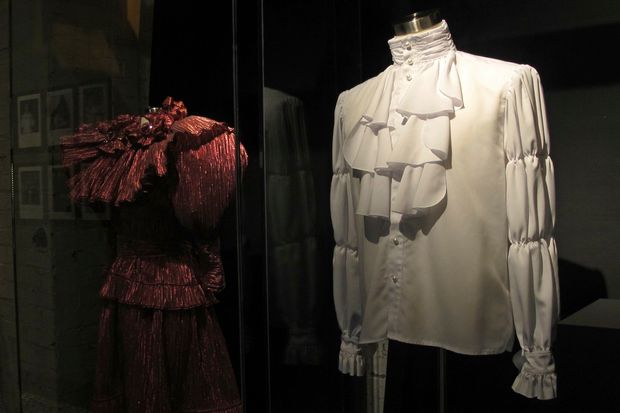
Seinfeld_Puffy_Shirt

From the American sitcom Seinfeld, the Seinfeld puffy shirt on exhibit at the National Comedy Center. Photo courtesy of the National Comedy Center.

The National Comedy Center Archives collects materials that illuminate the comedic process, demonstrate the sociopolitical import of comedy history, and elevate comedy as an artform. We are committed, first and foremost, to providing access to collections. We always acquire, process, and preserve artifacts with exhibition and educational goals top of mind. To that end, the archives team works hand-in-hand everyday with staff in Guest Experiences, Education, Programming, and Technology to activate our collections for the public. The Comedy Center is comprised of more than 50 immersive exhibits that marshal cutting-edge technology and novel forms of interactive storytelling to communicate the story of comedy – very often via primary source archival materials. One of my primary roles as

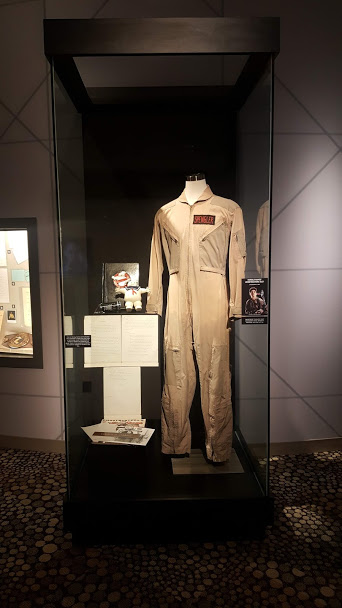
Ghostbusters_Costume

From the movie Ghostbusters, the Ghostbuster suit on display at the National Comedy Center. Photo courtesy of the National Comedy Center.

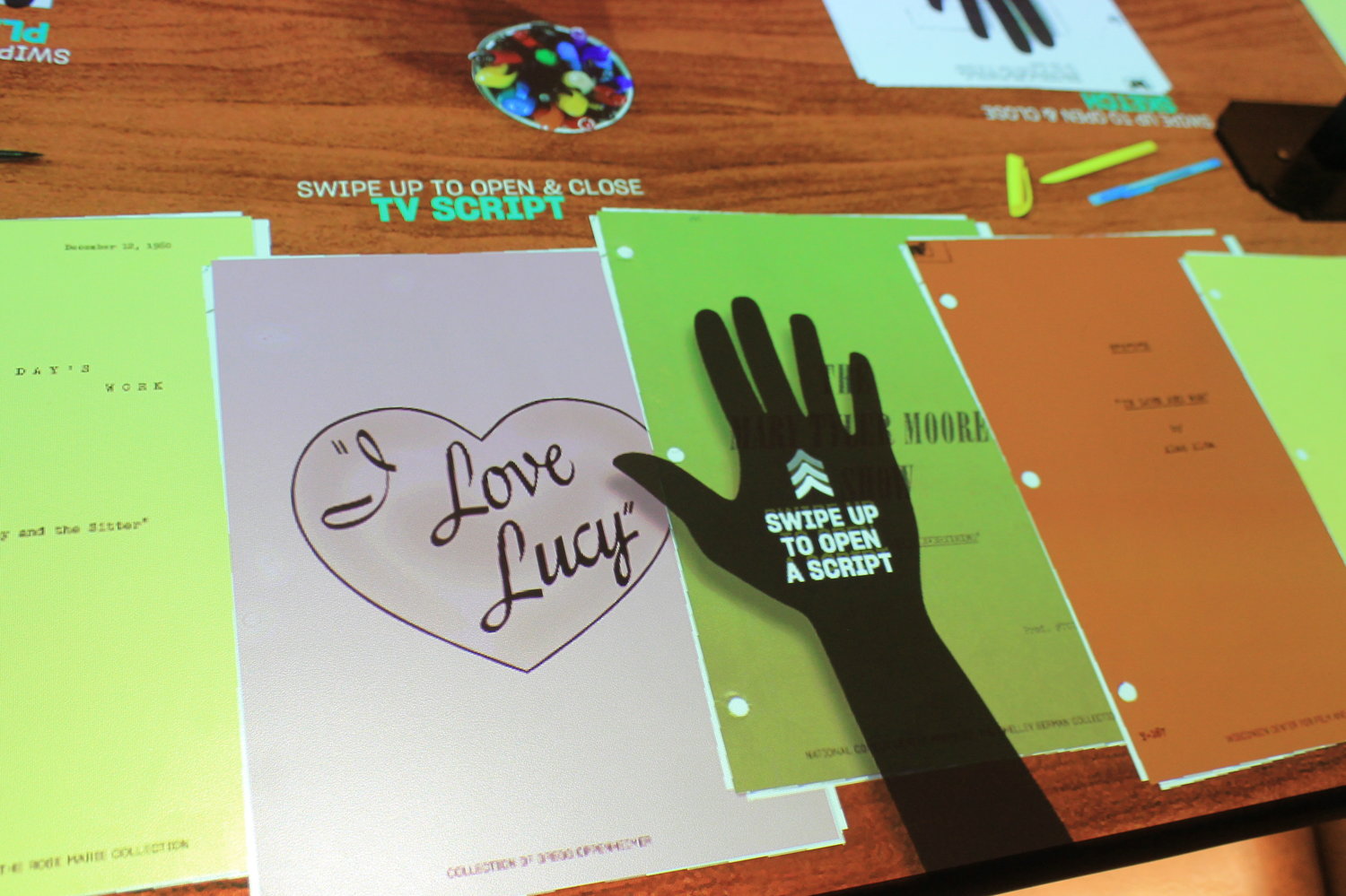
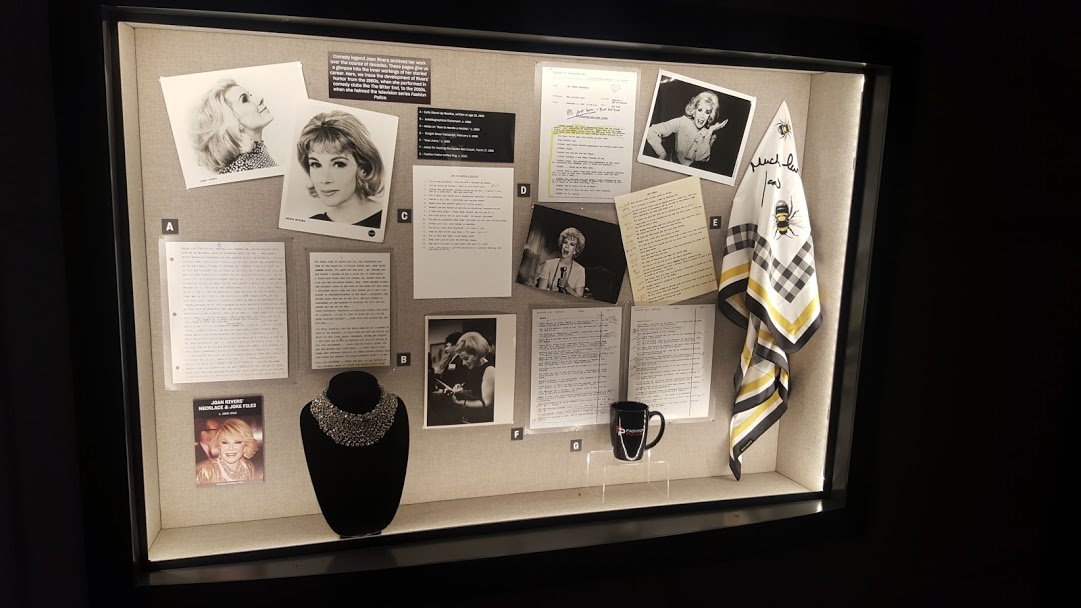
Director of Archives is curatorial: Where and how can archival materials illuminate history for our visitors? That sometimes takes the form of traditional artifact displays inside glass cases (the “Puffy Shirt” from Seinfeld, Harold Ramis’ Ghostbusters suit, Charlie Chaplin’s cane, or Joan Rivers’ joke notes). But, more often, involves activating digital surrogates of archival originals as part of interactive exhibits that involve touch screens, video walls, projections, or other technologically enhanced presentations. To share just one example, our visitors can take a seat at a Virtual Writer’s Desk and “page through” annotated script drafts from comedies like The Muppets, The Mary Tyler Moore Show, or A Funny Thing Happened on the Way to the Forum while the final-draft on-screen versions of the scenes play out beside them. In the past six weeks, due to the COVID-19 closures, we have moved a selection of our exhibit content to a digital platform that brings the museum direct to fans, students, and families around the world. You may enjoy exploring National Comedy Center Anywhere at anywhere.comedycenter.org.

Virtual_Writers_Desk

The Virtual Writer’s Desk on exhibit at the National Comedy Center. Photo courtesy of the National Comedy Center.

Q: Please describe the collections or one of your favorite collections.

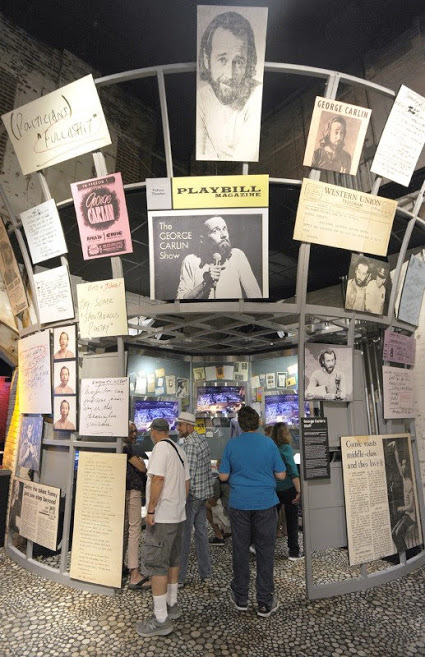
Carlin_Exhibit

The George Carlin Collection on exhibit at the National Comedy Center. Photo courtesy of the National Comedy Center.

Our collections range across the history of comedy, from I Love Lucy to Saturday Night Live, from vaudeville to Internet humor, and across all comedy genres. I have three “favorite” collections: First, the 27,000-piece George Carlin Collection, which we have digitized and made available to visitors via an interactive interface in our galleries. The collection chronicles Carlin’s five-decade evolution as an artist, via his copious handwritten notes, day planners, audiovisual recordings, wardrobe, and more than 40 boxes of creative ephemera. The interactive exhibit showcases his meticulous process in detail, and allows our visitors an up-close look at the creative mind of one of the most influential artists of the 20th century. Second, the Rusty Warren Collection, and accompanying exhibit, honors the contributions of an important feminist comedic artist who levied her talents and brilliant wit to become a leading voice in the sexual revolution of the 1960s. Rusty Warren’s work was so progressive – and so feared – that she was banned from performing on television. Nevertheless, she toured cabarets and nightclubs for over thirty years and made 11 hugely popular comedy albums – 7 of which “went Gold.” Third, the Carl Reiner Collection – which is currently being processed – includes digitized

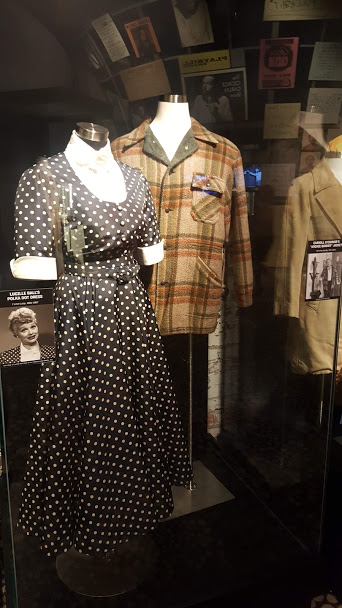
Lucille_Ball_Dress

From the American sitcom I Love Lucy, Lucille Ball’s polka dot dress on display at the National Comedy Center. Photo courtesy of the National Comedy Center.

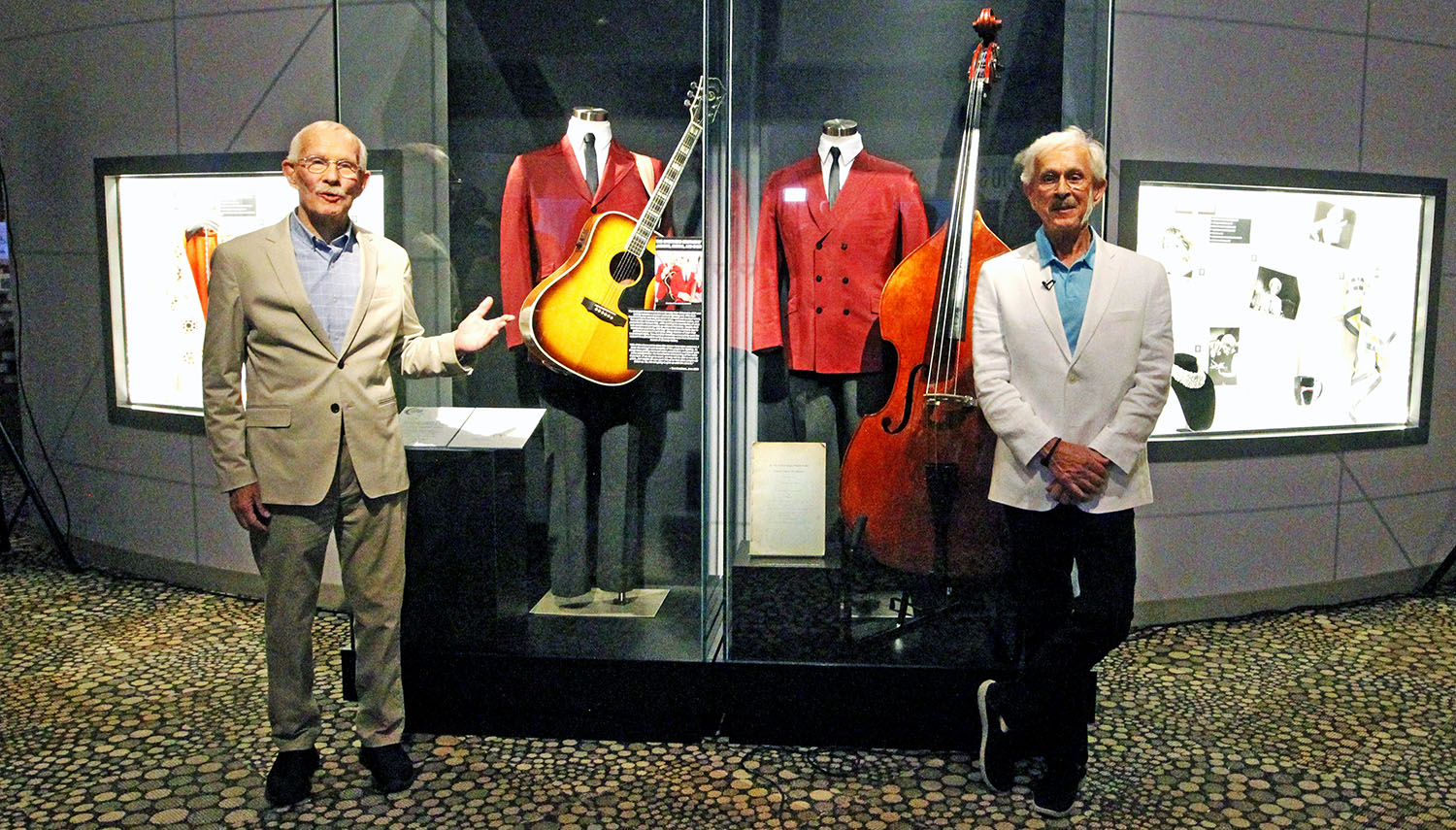
copies of every annotated draft page of the scripts for the seminal sitcom The Dick Van Dyke Show, which Reiner created and wrote. This series was an important pivot point in the history of American television, and set a high watermark that endures to this day. The chance to peer into Reiner’s process via these scripts is like taking a masterclass in the art of comedy writing. In addition to overseeing the processing and preservation of our rapidly-growing permanent collections, I also work closely with artists, estates, and industry partners to curate rotating exhibits of documents, props, and costumes that represent landmark moments in the history of comedy: Lenny Bruce’s trenchcoat, Harpo Marx’s wig, Lucille Ball’s polka dot dress, a “Dundie” from The Office, Carol Burnett’s charwoman costume, The Smothers Brothers’ guitar and bass, Andy Kaufman’s wrestling belt, Eddie Murphy’s Nutty Professor costume, the wedding dress from Bridesmaids, Weird Al Yankovic’s accordion, and so many more.

Smothers_Brothers_w_Exhibit

The Smothers Brothers pose with the Smothers Brothers Collection on exhibit at the National Comedy Center. Photo courtesy of the National Comedy Center.

Q: What are some challenges unique to the collections?

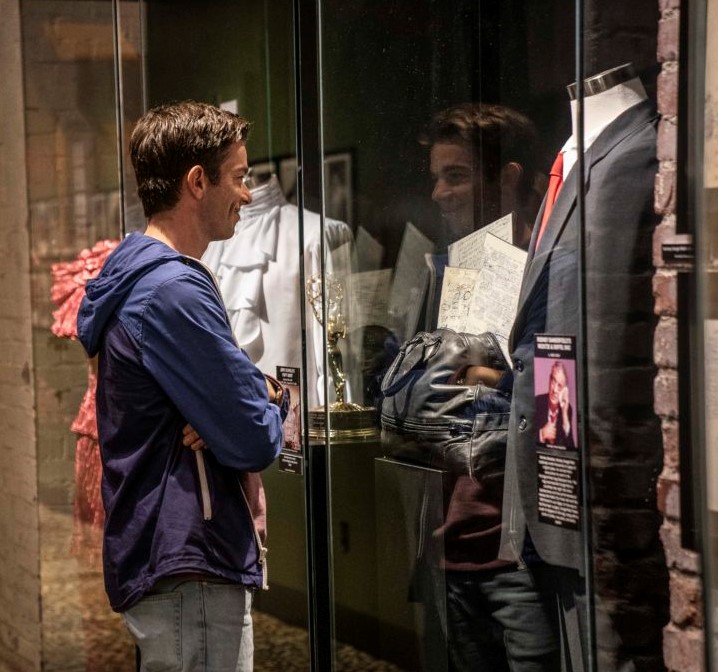
John_Mulaney_Rodney_Dangerfield_Exhibit

John Mulaney views whe Rodney Dangerfield Exhibit at the National Comedy Center. Photo courtesy of the National Comedy Center.

The primary challenge that we contend with is the vastness and variability of comedy as a subject area. The Comedy Center celebrates comedy in all its forms – and across all eras. That approach requires safely housing, preserving, and conserving a broad range of multimedia artifacts, most of which were designed for one-time use on stage – not for decades of stable storage and exhibition. Our team routinely handles manuscripts, photographs, scrapbooks, and documents of all sorts…but also cares for 100-year-old fake mustaches, vaudeville broadsides, cartoonist’s palettes, Grammy Awards, a toupee, acetate discs, costume jewelry, a piano, several motor vehicles, a papier-mâché frog costume, paintings, undergarments, nitrate films, a miniature bicycle, a trick cello, a sledgehammer, and all manner of fragile, irregular, and – oftentimes – very funny objects.

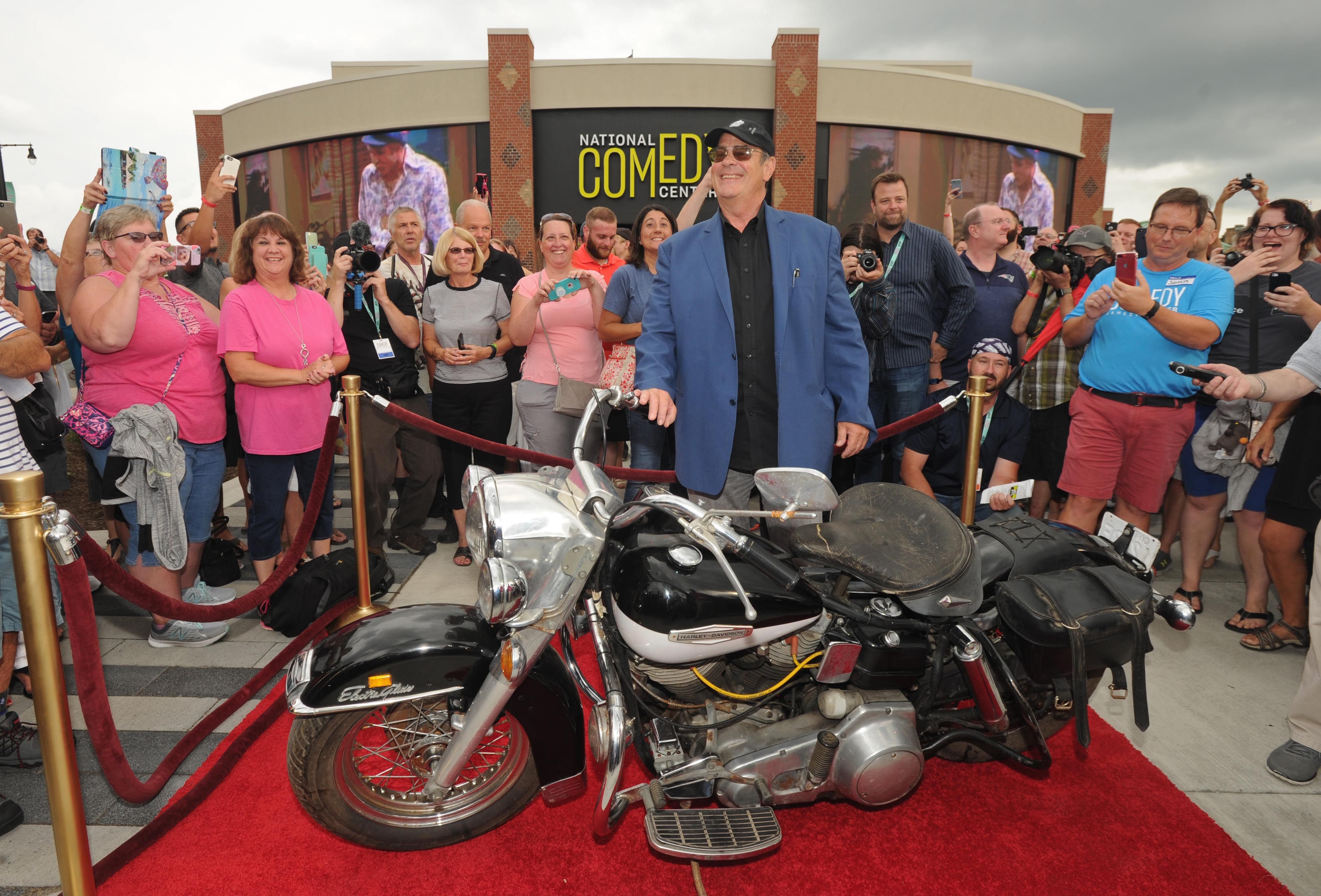
Dan_Aykroyd_Donates_Motorcycle

Dan Aykroyd donates his motorcycle to the National Comedy Center. Photo courtesy of the National Comedy Center.

Q: What is your favorite part of the job?

Part of my responsibility as the National Comedy Center’s Director of Archives is to work directly with artists and their estates to devise the best ways to engage, inspire, and entertain our visitors while educating them about the vital role that comedy has played in shaping our shared cultural heritage. I enjoy every opportunity I have to interact with artists: to discuss their work, to internalize their stories, to strategize together about how to preserve and celebrate their craft for generations to come.

Joan_Rivers_Exhibit

The Joan Rivers Collection on exhibit at the National Comedy Center. Photo courtesy of the National Comedy Center.

There’s an Archivist for That! Interview with Ilana Short

Courtesy of Ilana Short.

This is the newest post in our There’s an Archivist for That! series, which features examples of archivists working in places you might not expect.  COPA member Rachel Seale, Outreach Archivist at Iowa State University, brings you an interview with Ilana Short, the Vault Manager for Invenium.

Ilana Short, MA has an undergraduate degree in Anthropology from the University of Tennessee, Knoxville and a master’s degree in Museum Studies from Johns Hopkins University. Ilana is currently the Vault Manager for Inveniem, a technology and archival company in Los Angeles, California. Ilana has previously held positions as the Manager of Visitor Services and Education with Bellagio Gallery of Fine Arts and the Photography Collections Manager for the Nevada State Museum, Las Vegas.

How did you get your gig?

I honestly sort of fell into it, which is of course not what people want to hear, as I know how hard it is to get a position working in archives. But, it really is the truth in this case!

I had spent most of my career working in museums, and I had done everything from education and visitor services to working with collections. Collections was really my favorite and where I focused my career, and I had been working at the Nevada State Museum, Las Vegas managing the photography collections and archive. I then became more involved with the Curator of Manuscripts, and worked with her on cataloging and developing taxonomies for the photo collections, in addition to developing and curating exhibits. I discovered I had a knack for cataloging, and really enjoyed the work as well! I had been working closely with the archivist for a sister organization, the Las Vegas News Bureau, when she came across the job posting for Vault Manager at Inveniem on the SAA message board. She forwarded it to me with a note that said “this sounds like you!”

I have a personal passion for music, and many things I enjoyed doing in my free time revolved around music and concerts, and the job posting mentioned working in the music industry. I really went back and forth on applying for a little while, since the job was in Los Angeles, and I live in Las Vegas, but I did apply a couple days later.

From there, things moved fairly quickly, at least for a job in the museum and archives world. I applied in late summer, had a few rounds of interviews, and started in November of 2018. I had expected that my husband, kids, and I would all move to Los Angeles, but it hasn’t actually worked out that way. I am still commuting weekly, but now I am working from home more with the pandemic.

Tell us about your organization.

Inveniem is a small, private technology and archival company and we work primarily with living musicians and the estates of former musicians. Our client list, with rare exceptions, is completely confidential. What we specialize in, though, is helping our clients archive their personal memorabilia and possessions, as well as helping them monetize those assets if they choose to do so. We employ a staff of professional archivists, most of whom have MLIS degrees, and have developed our own schema and taxonomic structures for cataloging our client’s assets. We also choose the best long term storage and preservation options for our client’s assets as well. As Vault Manager, my job is to oversee the archivists, as well as developing strategic methods for cataloging assets and monetization plans, and creating work flow procedures for each of our clients.

Describe your collections.

The collections that we work with vary from client to client, but because our clients are musicians, they tend to contain a lot of the same types of objects. The assets that we work with typically include photographic materials (photos, slides, negatives, and transparencies), tour books, merchandise from tours, stage and video costumes, awards (like gold records and Grammy Awards), instruments, posters, and personal memorabilia. Being a photo archivist by trade, the photographic collections are always my favorites to work with!

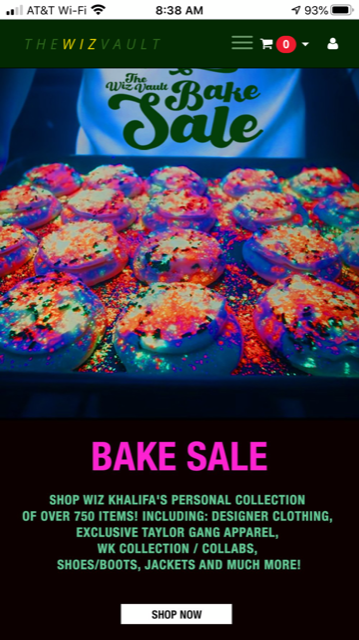
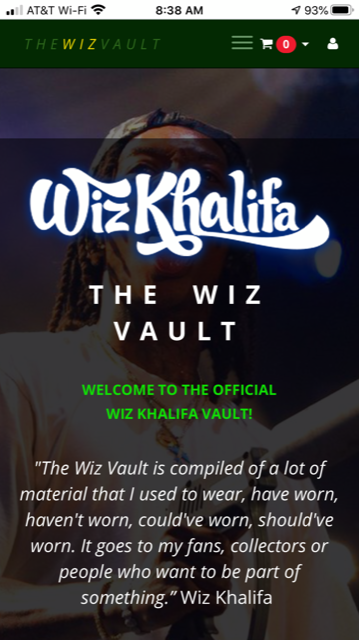
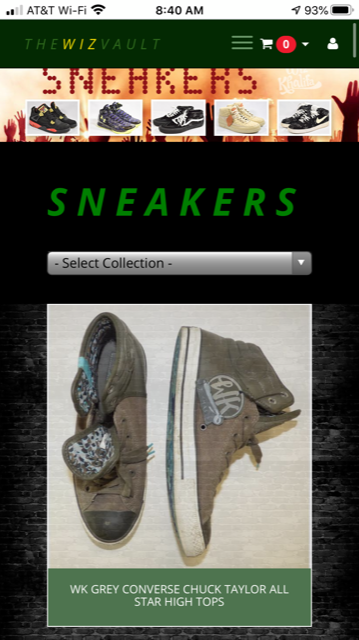
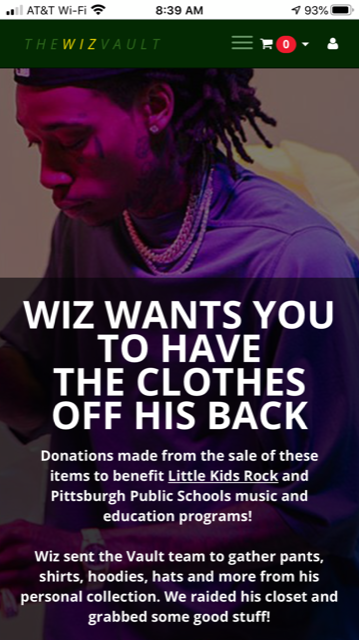
One client that we are allowed to talk about is Wiz Khalifa, and most of the objects we worked with in his collection were clothing and shoes. We really excel at receiving a lot of disparate objects and turning them into cohesive collections – we categorize the objects, assign barcodes, photograph or scan each object, create metadata, and ingest the metadata into our database.

What are some challenges unique to your collections?

One of the biggest challenges is our confidentiality. It’s absolutely essential to our business but it does make it more difficult to participate in things that archivists normally would for professional development, like presenting at conferences. It’s also hard on a personal level because you might be a tremendous fan of an artist you are working with and you can’t tell anyone what you are doing! Aside from that, we face the challenges anyone in other archives face, especially how to organize information so that our clients can interact with it in a way that makes sense to them, as they aren’t archivists.

What is your favorite part of your job?

Where do I begin? In a lot of ways I have really found my “dream job.” Yes, I get to meet rock stars from time to time, but honestly my favorite thing is working with objects that I know no one else has ever seen. Some of our clients are artists that I really enjoy listening to, so getting to see lyrics in their handwriting, or photos from their travels are fascinating to me. I also love that the job constantly brings new challenges to solve and that I have to continuously be creative in many ways to bring new initiatives to our clients.

Stay tuned for future posts in the “There’s an Archivist for That!” series, featuring stories on archivists working in places you might not expect. If you know of an archivist who fits this description or are yourself an archivist who fits this description, the editors would love to hear from you—share in the comments below or contact archivesaware@archivists.org to be interviewed for ArchivesAWARE!

Responses and Retrospectives: Sarah Meidl on The Colorado State University Archives & Special Collections Covid-19 Archive

Sarah MeidlThis is the latest post in our series Responses and Retrospectives, which features archivists’ personal responses and perspectives concerning current or historical events/subjects with significant implications for the archives profession. Interested in contributing to Responses and Retrospectives?  Please email the editor at archivesaware@archivists.org with your ideas!
MLIS candidate at the University of Washington and SAA student chapter member Sarah Meidl brings you an interview with Mark Shelstad, Coordinator for Digital and Archives Services at Colorado State University.

COV19-01-2048x381-1-768x143

Mark Shelstad manages the Covid-19 Archive at Colorado State University, a new project that seeks to document the impact of the Covid-19 pandemic on the community of students, faculty, and staff at CSU.

Please see the Society of American Archivists’ press release (drafted by COPA) for more information on organizations documenting COVID-19 in their communities.

Q. When did the Covid-19 Archive project start and what gave you the idea for the project?

A. Our official start date for working at home was March 23rd. And like many colleges and universities out there we were anticipating how the virus might affect the university community. In doing so, we surveyed what other institutions’ documentation efforts, and we took to heart the option for digital acquisitions through web harvesting, and a digital submission form to document the virus’ impact on the University’s community. Submitters can also fill out a questionnaire to share their personal stories about the virus’ impact on their studies, work, and other challenges.

Q. What types of submissions have you received so far?

A. So far, it’s been a little bit on the low side. We’ve received a couple of student video projects which have been great talking about their experiences. One is really well done with two students sharing their experience prior to being sent home interspaced with text messages that they were receiving from the University emergency response team and the county health office. We’ve had a couple submissions of folks who were sent home, the impact of doing remote work and remote learning, and then a lot of images from around campus, and where people self-quarantining.

Q. Are you open to all kinds of digital formats?

A. We wanted to set a low bar for submissions So far they have been the standard JPEGs, PDFs and MP4s. But we’ll do our best to accept the formats as they come in and convert them as needed.

Q. Are you actively processing things or are you waiting until things go back to normal to start the processing project?

A. We will begin making the items available in our digital repository, Mountain Scholar. When a corpus of material has been submitted, a Story map or another online exhibit platform will interpret the materials.

Q. How many people are working on the project right now?

A. Four members of Digital and Archive Services have been involved over the course of the project in developing the digital submission form, metadata creation, and web harvesting.

Q. Are the users creating any metadata for what they are uploading?

A. Yes, users are providing information about themselves, creation of the items, location, and topics. People have been very willing to share this information and self-document. s.

Q. And is this project just for the Colorado State University community or is it open to anyone?

A. As the University Archives, our project is focused on the CSU community. We have talked collecting scope with other archives in the area, and the University Museum of Design and Merchandising, which is collecting masks and clothing. The campus GIS center, the Geospatial Centroid, is running a survey on people’s locations after the semester moved online. We’ve managed to identify portions of this documentation project in a collaborative way.

Q. Will you experience any challenges when you start processing materials? Do you have access to needed software?

A. Submitted items are captured in the cloud, and our digital repository platform is DSpace, so we’ve been able to work in this new environment without many challenges.

Q. Have you had any challenges working from home?

A. Personally speaking, the main challenge has been getting bumped off the VPN depending upon user volume, and making the transition to Microsoft Teams for communication and collaboration.

Q. In addition to this project, are you also working on your regular projects?

A. Yes, we have other projects developed for remote work since we aren’t able to work on physical collections. Namely they involve metadata creation and cleanup, updating finding aids and Wikipedia entries. We also have two crowdsourcing projects underway, one for CSU President Charles Lory, and for interstate water compact attorney Delph Carpenter

Q. Have you managed a similar project in the past where you’re trying to have members of the community upload materials, or is this new ground for the Archives?

A. This is the first round for us, and I’m interested to see what kind of response we get over time. We’re planning to keep the project open, well after the return to work order has been lifted so folks can keep contributing. My sense is that individuals will have an opportunity down the road to reflect on their experiences.

Q. You mentioned having a collection in your digital repository. What is your plan on arranging materials in the repository?

A. We will load them into a Covid-19 collection within our University Archives Community in the repository, with Dublin core metadata supporting their discovery.

Q. Do you see this project as fulfilling the mission of Archives and Special Collections for CSU?

A. Absolutely. These are unprecedented times, and we need to document our individual and shared experiences, ranging from safety protocols, faculty moving their instruction online, staff working remotely, and students who had to leave campus on short notice and transition to online learning. At CSU, it harkens back to a devastating flood in 1997, and I would want to draw upon the oral histories with our emergency response team for comparison.

Q. Do you have any advice for other cultural heritage institutions that may be working on similar projects? Or, lessons learned from your experience so far?

A. I would say jump in. It’s an opportunity for setting collecting priorities and methods, and outreach with potential donors and users. Publicity is also very important, and this project’s selling point is the organic submissions, and getting to tell your story.

Q. How have you been publicizing the event so far?

A. We have used various outlets, such as our campus newsletter and social media outlets, and directly with targeted constituents. A schedule has been developed as periodic reminders for the fall semester.

Q. What do you see as the impact of this Covid-19 pandemic on the profession and on archival institutions?

A. I think there’s a great opportunity for a profession-wide case study to see what efforts were successful, what kind of materials have been acquired, how access and interpretation are being provided, and the impact this documentation efforts has with public policymakers.

Q. Anything to add?

A. In the fall we’d really like to do that oral history with our senior leadership to capture the lessons learned from the pandemic. For students, to have a story-both project for them to drop in and share their experiences, and a digital acquisitions day when they return. We would want to engage with them in physical and digital spaces.

This post was written by Sarah Meidl based on an interview conducted with Mark Shelstad. The opinions and assertions stated within this piece are the interviewee’s alone, and do not represent the official stance of the Society of American Archivists. COPA publishes response posts with the sole aim of providing additional perspectives, context, and information on current events and subjects that directly impact archives and archivists.

Deriving Value from Collections in the Time of Corona (COVID-19)

Deriving Value from Collections in the Time of Corona (COVID-19) was delivered on April 7, 2020 by Margot Note (founder and principal of Margot Note Consulting), Chris Cummings (Founder and CEO of Pass it Down), and Rachael Cristine Woody (owner of Rachael Cristine Consulting).

The webinar was sponsored by the Society of American Archivists’ Committee on Public Awareness (COPA) and is recorded on SAA’s Resources & Toolkits page.

Abstract

Join Margot Note, Chris Cummings, and Rachael Cristine Woody in “Deriving Value from Collections in a Time of Corona,” a webinar brought to you by SAA’s Committee on Public Awareness. The webinar is a call to action for enhancing museum and archives collection programs online through adaption and repurposing of content, reviewing digital usership and digital collection best practices, and capturing the value of your online collections work to broadcast to administrative stakeholders. By combining traditional archival administration with innovative uses of digital collections, archivists can advocate for their collections, enriching their value in a period of uncertainty. The aim of the webinar is to help archivists and museum professionals cultivate their skills to become better promoters of themselves, their repositories, and their profession.

Q&A Section

So much great content and resources were shared during the Q&A that we decided to capture it here for easy reference. Thank you for asking thoughtful questions and for helping us find resources to point people to for some of the questions we couldn’t address fully.

Q. Do you know about 508 accessibility for Pinterest? I’m sure I can look this up too and you might get to it anyway but I want to emphasize to anyone and everyone the importance of accessibility for disabled users.

A. From Bureau of Internet Accessibility: https://www.boia.org/blog/how-to-utilize-and-create-accessible-pinterest-content.

Q. What tools do you recommend to crowdsource or capture COVID-19 materials?

Submitted by the group:

COPA has also just put out a press release documenting some of these efforts.

Q. Do you have any webinars or archives webinar platforms that you would recommend [specific to collection content adaptation and advocating for the value of our collection work]?

A. Rachael Woody just provided an expansion of her topic in her webinar Strategies for How to Capture and Communicate the Value of Collection Work (discussed more below). Additionally, there are a lot of good webinars being offered by peer organizations and companies, such as: Cuseum, CultureConnect, and The National Preservation Leadership Forum. Please let us know in the comments if there are webinars we can add to this list for easy reference.

Q. Who (which organization) created the puzzle? 

A. The Cooper Gallery.

Q. How do you strike a balance between wanting to lift people’s spirits with light-hearted content and coming off as too silly and inappropriate during such a scary time?

A. Evaluate what your current tone and mission is for your organization’s social media presence as consistency in messaging is important. Even if your social tone is on the lighter side, it is important to still be aware of current events and sensitive the hardships people are facing. Be intentional with what item, story, or exhibit you’re sharing and provide context–offer an explanation on why you’re sharing what you’re sharing. Evaluate your tone to ensure it’s in keeping with your intent. Additionally, with the heaviness of current events, people are going to social media for relief and it’s OK to be a provide of relief and enjoyment during this time. In fact, it’s a very valuable thing to offer people. And it’s OK to experiment during this time to find what’s valuable to your audience.

Q. Some people have expressed an understandable sensitivity to posting archival images that don’t display proper social distancing during this time, instead of posting on events (now cancelled) from the past that show crowds of people. Any thoughts on this?

A. Context is key. It’s OK to post these images as long as you provide a thoughtful comment as to why you’re sharing it. For example, a historical photo of a annual parade with a note that says something like: “We’ll sure miss seeing you at the annual parade this year, but we look forward to seeing everyone next year–happy and healthy!”

Comment: Thank you for offering this very useful and informative webinar. Our whole staff in the NMSU Archives & Special Collections is viewing this. Useful to us, as we have just started a blog. https://openstacks.nmsu.edu/

Q. I love all of the fun ideas for engagement with the public! As an academic institution, we also need to emphasize our academic value to our students and our impact on teaching and learning. Any suggestions in this area? Thank you!

A. Yes! Knowing the stress that students and faculty have been under to move everything online–and the access disparities that have been present–think of ways you can help supplement, support, or help adapt collection teaching content for online. Suggestions from the panelists:

  • Proactively reach out with resources that are ready to go.
  • Offer office hours for students and faculty to receive help around using collections for the teaching and learning work.
  • Look at digital content that’s already available that could be repurposed or repackaged into something to help support students and faculty.
  • Take the opportunity to craft lessons plans that can accompany online collections. Consider including lesson plan creation as part of your workflow to coincide with new exhibits and newly online collections.

Q. How are you adapting to the online environment with your online classes with special collections. Can you give examples?

The Rockefeller Archive Center offers resources for crafting primary source-based education. Check out their resource page for primary source unites, workshops, ad projects. The American Alliance of Museums also offers programs and resources in their Repository of Distance Learning.

Submitted by the group:

Q. What are your opinions on posts about working from home? Is there a sensitive way to share about archivists commitment to their work while being cognizant that many people are not able to work right now? Side note, thank you! This has so far been fabulous.

A. Similar to some of the questions fielded already, we encourage you to be honest, provide context as to why you’re sharing, and acknowledge that the current situation has left many unemployed, furloughed, or in precarious work positions; and offer a note of support. Also, keep in mind that for many in our audience the work that we do is often mysterious and interesting, and they’ll appreciate you offering a peek behind the curtain.

Q. How do you recommend getting past internal roadblocks to posting content?

A. Approach it as an experiment and track your efforts to demonstrate the engagement that occurs. As discussed in the webinar, it’s so important to track engagement numbers in order to show the value of the work happening. Also, consider how this might tie into supporting the organization’s income stream and mission. It may also be helpful to point to peers in the field who are on social media as competition among peers is often helpful in inspiring a “Yes” so that your organization isn’t left out. And sometimes it’s easier to seek forgiveness than ask permission. As long as one person in power is supportive, take the opportunity to explore how you can serve your audience in this new way or even add a new audience members.

Q. What advice would you give institutions on how to technically preserve social media posts?

It’s tricky to find a tool that helps to consistent and legally capture digital content and has the technical wherewithal to follow digital preservation best practices. Some digital preservationists still recommend to print it out, taking a screenshot, or converting to a PDF for easier preservation and digital migration. While it seems archaic, paper is still the preferred medium for saving information of value as the digital media landscape is still evolving and therefore very volatile for future duration. Rachael Woody wrote a post on this in 2019: Responses & Retrospectives: Rachael Woody on Myspace and the Precarity of User Content on Social Media Platforms.

Submitted by the group:

Q. I am a lone arranger at a local county archive. During this time many people are taking the opportunity to cleaning out closets, attics, basements and garages. How do we get the message out that our archives is still taking records donations but can’t receive them until after this “Great Pause”!

A. Put out a call to action with instructions. Acknowledge that this is a great time for people to clean out their closets and provide guidelines for what you’re looking for per your collection policy. Then give them a direction. Maybe it’s a form to fill out, a box with a label to send, etc.

Q. What advice do you have for use of images and content that might be otherwise be copyrighted by others?

A. It’s very important to discern if the archives have a Deed of Gift for collections that grant rights and permissions to the organization. There are cases where past practices of archives mean there isn’t a Deed of Gift. To the best of your ability attempt to determine if materials are created by others and seek their permission before you use it. Many archives offer a mechanism for people to contact them if there are items online that they believe they own copyright of.

Q. You mentioned reaching out to engaged community members on platforms like Facebook groups. Can you go into more detail about how you do that? I sometimes struggle with knowing where or when to join in when I see our collections show up on those platforms.

A. Sure. In almost every community, there will be groups set up that showcase historic photos and stories from that community. The best way to begin would be to do an audit of both Facebook and Instagram for any groups that would be relevant to your community. Next, become an active participant and start to chime in with helpful comments and content. We would also recommend that you reach out to the administrator of the group to introduce yourself and your institution and ways you might collaborate.

Margot Note shares: I usually first start out as a “lurker.” I see what interests the group, what they’re talking about, and who are the frequent posters. When you’re comfortable and feel like you have something to share, you can write a short post about your collection, how to access it, and how you think you might help them. Then see what the reaction is. As long as you’re sharing information that would generally help people and not overly promoting something, the responses are almost always positive.

Q. I find posting historic images and videos onto Instagram painfully difficult. Am I just not downloading some key “extra” app that would make it way less frustrating? Maybe even easy?

A. The trick is sending photos, videos, and captions in an email, and accessing them on your phone. You then can post images and cut and paste text. To learn more, check out this chapter written by Margot Note, “#CulturalHeritage: Connecting to Audiences through Instagram” in Engagement and Access: Innovative Approaches for Museums, edited by Juilee Decker, New York: Rowman & Littlefield, 2015. Although Instagram has changed a lot since the book was published, the chapter still offers valuable information on how to curate an account with archival images.

Chris Cummings shares: Anyone that’s done social media for long has felt the frustration of having to post to instagram directly from a mobile device. There are a few great tools that will let you schedule and post to instagram directly from the web. Check out Grum.co or Later for tools that should make your social media life a lot easier!

Q. What platform do you think would be best to start off with, if our institution doesn’t have much of an online presence?

A. Start out with the one you believe would best fit your needs and that you are technically comfortable with. The better suited the platform is to your purposes the more you will use it, and the more effective it will be. That said, we recommend you start by reviewing what the purpose of each social platform is. Instagram is for visual presentation, YouTube is for videos, and Facebook is a hybrid of both, etc. You can also get insight into what a good platform match would be by reviewing what your peer organizations are using and how they are using it.

Connect with the Presenters

Connect with the webinar presenters (and sign up for their newsletters so you don’t miss their content and resource drops!):

Margot Note, Founder and Principal of Margot Note Consulting. Photo courtesy of Margot Note Consulting.

Margot Note, Founder and Principal of Margot Note Consulting. Photo courtesy of Margot Note Consulting.

Margot Note Website: https://www.margotnote.com/
Twitter: https://twitter.com/margotnote
Linkedin: https://www.linkedin.com/in/margotnote/
Newsletter: https://www.margotnote.com/newsletter

Margot Note, CA, CRM, IGP, PMP. Note is the principal and founder of Margot Note Consulting, LLC, an archives and records management consulting business in New York. She’s a professor in the graduate Women’s History program at Sarah Lawrence College and an Adjunct Assistant Professor in the Library and Information Science program at St. John’s University. She’s the author of five books, including her newest Creating Family Archives: A Step‐by‐Step Guide for Saving Your Memories for Future Generations published by the Society of American Archivists.

Chris Cummings, Founder & CEO of Pass it Down. Photo courtesy of Pass it Down.

Chris Cummings, Founder & CEO of Pass it Down. Photo courtesy of Pass it Down.

Chris Cummings Website: https://passitdown.com/
Twitter: https://twitter.com/passitdown
Linkedin: https://www.linkedin.com/in/christopheracummings/
Newsletter: https://passitdown.typeform.com/to/A5vBoV

Chris is the founder and CEO of Pass It Down Inc., a digital exhibit builder platform that’s been recognized globally for transforming how cultural institutions and brands engage their visitors. From Cairo to San Francisco, Chris has been invited to speak around the world on the Future of Museums and archives, and is a global pioneer in the field of digital storytelling.  Pass It Down’s been recognized as a leader in experiential marketing and digital exhibits by Coca-Cola, the Consumer Technology Association and Established, Techstars, and is the winner of the 2019 BREW Pitch Contest and $100,000 prize.

Chris is a 3-time CEO, two-time founder, and attorney and a former Collegiate National Champion in Public Speaking. Chris received his JD from the Paul M. Hebert LSU Law Center and has clerked for numerous judges, including the honorable Chief Justice Johnson of the Louisiana Supreme Court. He received a double BA In Political Science and International Relations from Louisiana State University.

Rachael Cristine Woody, Owner of Rachael Cristine Consulting. Photo courtesy of Rachael Cristine Consulting.

Rachael Cristine Woody, Owner of Rachael Cristine Consulting. Photo courtesy of Rachael Cristine Consulting.

Rachael Cristine Woody Website: https://rachaelcristine.com/
Twitter: https://twitter.com/rachaelcristine
Linkedin: https://www.linkedin.com/in/rachaelcristinewoody/
Newsletter: https://rachaelcristine.mykajabi.com/signup

Rachael Woody is the owner of Rachael Cristine Consulting LLC. After a successful tenure at the Smithsonian Institution and the Oregon Wine History Archive, Woody established her consultancy to teach archives, museums, and cultural heritage organizations how to take care of their collections and advocate for their value. Woody has experienced precariously funded positions first-hand and has proven tactical strategies to demonstrate the value of collection work. As a result of her experience, Woody has dedicated herself to advocating for the value of collection work. She serves on SAA’s Committee on Public Awareness, established the Archivist-in-Residence (paid internship) program at Northwest Archivists, and serves on several salary advocacy committees.

Rachael Woody developed a companion piece to this webinar: Strategies for How to Capture and Communicate the Value of Collection Work. Please see her blog post for more information, a link to download the slide deck, links to resources, and a summary of the Q&A. The webinar is also provided below for ease of access.

Abstract

Archives, museums, and cultural heritage organizations across the world are struggling with the impact of COVID-19.  As public spaces remain closed, archives and museums are challenged with fulfilling their mission while seeking economic relief. Many archives and museum professionals are facing precarious employment as they struggle to prove the value of their work. This webinar is a follow up to the Society of American Archivists’ “Deriving Value from Collections in the Time of Corona (COVID-19)” (view: https://youtu.be/vhK2ww1_ZR8).  Please join me for a deeper dive into strategies for how to capture and communicate the value of collection work. The webinar will offer a framework to define the value of your work, discuss mechanisms for capturing value, and offer strategies for communicating the value of your work to your boss, your board, your fellow staff, and your community stakeholders.

There’s An Archivist for That! Interview with Kat Siddle, Librarian for lululemon athletica

Portrait of Kat Siddle.

Courtesy of Kat Siddle.

This is the newest post in our There’s an Archivist for That! series, which features examples of archivists working in places you might not expect.  COPA member Rachel Seale, Outreach Archivist at Iowa State University, brings you an interview with Kat Siddle, the Sample  Librarian for the Historical Garment Archive at lululemon athletica.

As a self-described “clothes librarian”, Kat Siddle manages the historical garment archive at lululemon athletica’s headquarters in Vancouver, BC. During her 12 year career, Kat has worked in public, academic, and special libraries, with a short stint in copywriting.

How did you get your gig?

It’s a long story!

I’m technically a librarian, not an archivist. And I got this job because I left libraries for copywriting.

After I graduated, my first full-time position was at a public law library. I liked my job, but after a few years, I started feeling like it was time to move on. I didn’t quite know what to do next. Library jobs were scarce and public law libraries are pretty unusual institutions. I didn’t have an obvious next step. I went back to the drawing board and started applying for non-library jobs. I got a job as a junior a copywriter at lululemon athletica, the company that invented yoga pants. I didn’t have any experience, but I was interested in the apparel industry and I was a good writer. I didn’t know if I would ever end up in libraries again. I did copywriting and content management at lululemon for 2.5 years – and then a role in the archives opened up.

Now I’m librarian running an archive. And instead of books or documents, my archive is filled with clothes. It’s a hybrid library-archive space, because employees can check items in and out, and they’re able to self-serve if I’m not available.

Tell us about your organization.

lululemon is company that makes yoga and fitness clothing, plus accessories and clothes for everyday. It’s known for having an intense culture. It’s very outgoing, sporty and goal-driven—which was a big change for me!

View o f hoodies in pastel and gray shades hanging on a rack.

Garment racks are absolutely essential. They’re my bookcarts. They’re the best way to organize and transport clothing in a workspace. Courtesy of Kat Siddle.

lululemon is a vertical company, which means that we create everything in-house. We develop our own special fabrics and design our own garments, and sell them in our own stores. This means there’s lots of opportunities for information professionals. Right now, there are three librarians/archivists working here.

Describe your collections.

Right now, my collections all contain clothing and accessories. I have a few other products, like bottles of skincare and cans of lululemon-branded beer that we created for our annual half-marathon.  We keep the lululemon products that come out globally every season, plus products made by our Lab line and our little-sister company, Ivivva. Ivivva made clothing for girls. The Ivivva brand will be closing soon, so right now I’m working on transitioning that collection from a “working collection” that needs to be referenced by merchants and designers to a historical collection. I want to capture the aesthetic character of the brand and really honor all the hard work that went into it.

Some day, I would love to keep designer’s sketches and other artifacts from the design process, because I find that fascinating.

What are some challenges unique to your collections?

One challenge is that our accessions are driven by the company’s productivity. The company has been growing, so the amount of archival garments that I’m keeping is increases every quarter—but my space remains the same. So I’m always on the verge of a space crisis.

Another challenge is defining what makes up a meaningful or useful collection. I don’t always know how or why people are using my collections, which can make planning and weeding a challenge.

View of women's mannequins in storage.

Behind the scenes at a clothing company. Piles of mannequins are pretty common, and I almost don’t find them creepy anymore. Courtesy of Kat Siddle.

What is your favorite part of your job?

I love that I have the chance to apply my skills in a design-driven environment. I always wanted to be a special librarian, but many of those positions deal with dry subject matter that doesn’t inspire me the way clothing does. I love working with colours and fabrics. It’s just inherently interesting to me. And I’m always learning — there’s so much I still want to learn from the fields of archives and museum sciences.

9 scrunchies on display, various colors, w/ exhibit tags.

I keep collections of all kinds of clothing and accessories. For some reason, the scrunchie collection is one of my favourites. Courtesy of Kat Siddle.

Stay tuned for future posts in the “There’s an Archivist for That!” series, featuring stories on archivists working in places you might not expect. If you know of an archivist who fits this description or are yourself an archivist who fits this description, the editors would love to hear from you—share in the comments below or contact archivesaware@archivists.org to be interviewed for ArchivesAWARE!