Asserting the Archivist, no. 3

This post was authored by guest contributor Samantha Norling, Digital Collections Manager at Newfields and member of SAA’s Committee on Public Awareness (COPA).  This is the third post in our “Asserting the Archivist” series on the importance of highlighting archivists and archival work in outreach efforts, rather than just focusing on the collections themselves.

Too often, archivists and archival repositories can get stuck in the loop of sharing only THE STUFF, especially as those posts get a positive response and many interactions. But those collection-centric posts that help to extend our reach to every conceivable interest group on the web provide us with a valuable opportunity to highlight the work, knowledge, and skills of archivists to a nearly unlimited variety of audiences–“Asserting the Archivist” in outreach for our institutions.

Last week this this tweet from Susie Cummings, a member of NPR’s Research, Archives & Data Strategy team (RAD) caught my attention:

https://twitter.com/cususie/status/994649834253639680

Assuming that NPR RAD’s #TechTuesday Instagram initiative would be an exciting new example of Asserting the Archivist, I went straight over to IG to check out the story–and I was not disappointed! While the main goal of these posts is to share the technologies that make preservation of audio collections possible, the stories make it clear that the staff are integral to this process, bringing essential professional expertise to the table.

https://www.instagram.com/p/BihkLXZnK3w/?hl=en

Apart from these #TechTuesday postings, the @npr_rad IG account features their staff on a regular basis, sharing interesting details about their work while associating the real people (including their faces, personalities, and background stories) behind job titles such as “Deputy RAD Chief” and “audio reformatting intern.”

https://www.instagram.com/p/BcazQUOjCMJ/?hl=en&taken-by=npr_rad

https://www.instagram.com/p/BUh5g4KjHrQ/?hl=en&taken-by=npr_rad

NPR RAD’s enthusiasm for sharing their work and the people who make up their team has helped to gain them broader attention, both within the larger NPR organization and outside. Coverage has included an Inside NPR post titled “Preserving the Past,” and an article in Current, “How NPR’s Research, Archives & Data Strategy team is saving sounds of the past for the future.”

If I haven’t convinced you yet, I strongly encourage you to check out and follow the NPR RAD Instagram and Twitter accounts–not just for the #TechTuesday stories, but for all of their great archives- and, more importantly, archivists-related content!

Did I mention that they are active participants in #AskAnArchivist Day?

Do you have a favorite example of archival repositories or organizations/businesses that “assert the archivist” in their outreach efforts? Or would you like to share your experience incorporating archival work into your outreach? Please share in the comments below or contact archivesaware@archivists.org to be a guest contributor to ArchivesAWARE!

Getting It Together: Launching #WeRateArchives

JROEheadshot


This post was authored by guest contributor Jeannine Roe, Electronic Records Specialist, Indiana Archives and Records Administration and Communications Committee Member, Society of Indiana Archivists.


For Preservation Week 2018, the Society of Indiana Archivists (SIA) Communications Committee members tested the boundaries of archival humor and good taste with the #WeRateArchives initiative. The committee is made up of six professionals from different institutions around the state, has been working to promote the programs and events of Indiana archives, libraries, and museums via social media. Our inspiration for the hashtag was the success of #rateaspecies, where zoos gave their animals amusing Amazon.com-like ratings, and @TheMERL’s brilliant response after a tweet went viral and launched a major educational win for their museum. We sat back and thought, “Archives can do that.” With limited time to devote to social media throughout the week due to our regular job duties, we had one modest goal in mind – to bring some positive attention to archives and highlight preservation challenges by sharing items from our collections in a new and interesting way.

The process:

There are two inherent barriers for archives when it comes to promotion via social media. Firstly, we aren’t providing a product that the general public would regularly search for on the internet. As such, we need to “sell” archives in a different way. Secondly, we lack the “cute factor” that made it so easy for #rateaspecies and the absolute unit to gain instant fame. There is, sadly, a distinct lack of adorable otters and fluffy sheep in most archives. To help overcome these limitations, our approach involved something archivists are generally good at – finding humor in the objects and circumstances we find ourselves interacting with every day.

An appealing Twitter post can take on many forms, but we have tried to incorporate the following three elements into our tweets:

  1. A recognizable or relatable object and/or situation
  2. An educational component
  3. A “twist”

These components can be combined any number of ways to make a funny tweet. Sometimes a little set-up is needed ahead of time, but the results are worth it:

This tweet from SIA Communications Committee member Julie Motyka is a great example, because the image provides instantaneous recognition – any person familiar with Hungry Hungry Hippos will see the resemblance right away. It also leaves the door wide open for questions regarding the objects in the image (what are they, what are they made of, etc.), or for commenters to share their own images or experiences relating to the objects.

Another way to go is the ever-popular pun, perhaps paired with some other tags and/or mentions:

There are also many opportunities for those who deal with legacy AV and electronic materials to get in a few shots:

In these examples, the “twist” lies in approaching a format that many of us grew up with from the perspective of someone who has never seen or used such a device. The popularity of these jokes is undeniable – this post from @michianamemory is currently one of the top tweets:


How we have found success thus far:

  1. Involving a layperson. As the lead on this venture, I cannot emphasize enough the benefits of getting input from my husband, who does not use Twitter, prior to kicking off the hashtag. As someone from outside the archival field, his comments prompted us to reevaluate some of our original ideas and fine-tune the humor for a more polished presentation.
  2. “Seeding” the tag. Several days before the start of Preservation Week, we emailed a small number of Indiana institutions we knew were regularly on Twitter and Facebook with an invitation to join the initiative, including a few example tweets to get the creativity flowing.
  3. Losing the jargon. We purposely chose not to use field-specific words such as “accession” in order to make the hashtag as widely accessible as possible.
  4. Incorporating our personal accounts. This was a simple and obvious way to reach followers who may be less familiar with archives.
  5. Quadruple-checking spelling before publishing any posts. Autocorrect is not your friend, especially in regards to acronyms!


How we hope to use this hashtag to promote archives:

As a committee we chose to kick off #WeRateArchives during Preservation Week because strange and sometimes distressingly uncared-for materials pop up in archives everywhere, and it seemed logical to celebrate the event by showcasing these objects alongside our mad archival wit. The hashtag itself has a wider appeal, however. Archives receive unusual materials all the time that can potentially be used to create teaching moments online. Twitter also provides a forum that encourages people to share their archival stories – or just vent a bit – via the tag.

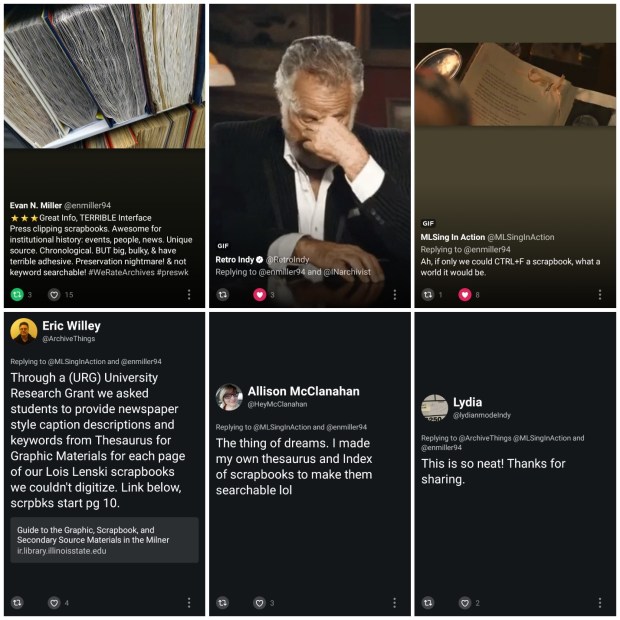
#WeRateArchives can also spark interesting reactions, new conversations, and the sharing of tools and ideas. The tweet below from @enmiller94 did just that:

https://twitter.com/enmiller94/status/988819485992935424?s=19

tweetcomposite

One additional benefit to using a common hashtag is that it brings institutional Twitter accounts to the attention of other archives, libraries, and museums. There is a LOT of competition for visibility on any given day, so it takes something extra to stand out and gain people’s awareness. When institutions follow each other and retweet posts, we can reach a significantly wider audience with minimal effort. One image, one quote, one hashtag, one share – it can be just as easy as that!

SIA would like to encourage anyone interested to participate in this initiative, now and going forward. #WeRateArchives encourages dialogue (and hopefully, a few laughs) around archival issues, while providing an opportunity to show off some of the valuable, information, fun, and funky things in our repositories. We’ve been getting some great feedback so far, and we hope it will continue! As a way to engage with your collections and followers on social media, we give it 5 stars out of 5.

Follow us @INarchivist + https://www.facebook.com/INarchivist/

The Great Society Congress: A Collaborative Approach to Digital Exhibits and Outreach

Staff members at the Wise Library pose for photographs in front of books January 4th, 2018. Photo Brian Persinger Wyatt Jay

This post was authored by guest contributors Danielle Emerling, Assistant Curator, Congressional and Political Papers Archivist, West Virginia University Libraries, and Jay Wyatt, Director of Programs and Research, Robert C. Byrd Center for Congressional History and Education.


Introduction

VRA

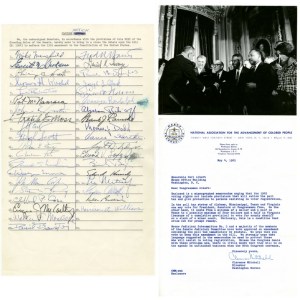
Congressional records are held in repositories around the country. Here, records from three repositories document the Voting Rights Act of 1965. 1. Petition for Cloture Motion, May, 21, 1965, “Cloture Petition” folder, Unanimous Consent to Resignations, Box 3, Secretary of the Senate, 89th Congress, Records the U.S. Senate, RG 46, National Archives. 2. Photograph of the Voting Rights Act signing, The Claude Pepper Papers, Florida State University Libraries. 3. Correspondence between the National Association for the Advancement of Colored People and Carl Albert, with enclosure, Carl Albert Congressional Papers, Legislative Series, Box 89, Folder 87, Carl Albert Center Congressional Archives, University of Oklahoma.

The archives that document the United States Congress reside in repositories throughout the country. How to bring them together in a meaningful and thematic way is a question congressional archivists and historians often ponder. About four years ago we started planning a project that would do just that – use materials from several archives to explore the numerous pieces of legislation that make up the “Great Society” and discover the Congress that passed them.

The digital exhibit, “The Great Society Congress,” is a collaborative project of the Association of Centers for the Study of Congress (ACSC). The ACSC is an association of organizations that promotes the study of the United States Congress. Many ACSC member organizations maintain archival collections of current and former members of the House of Representatives and the Senate. The online exhibit features more than 400 items from 18 member institutions. While our energy initially was focused on creating the exhibit, the exhibit has turned into a great vehicle for new partnerships and outreach.

How We Did the Project

Exhibit

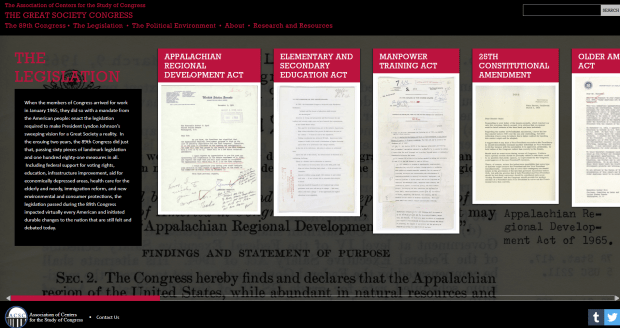
One section of the exhibit focuses on the key legislation passed by the 89th Congress.

Telling the story of Congress is difficult. It’s a large, complex institution with more than 500 members who bring different interests, points of view, and ways of working to a body that needs to make policy for the entire country. Our approach was to focus on the key legislation, the leadership and procedures that shaped this particular Congress, and some of the larger events unfolding at the time, such as the Vietnam War and the Civil Rights movement.

With so many different components, we chose to develop the exhibit over the course of two years, releasing pieces of it to coincide with different legislative anniversaries. This made the project more manageable for our all-volunteer exhibit task force.

We were unsure at first how many ACSC member institutions would contribute to the project because participation largely depended on what members were able to find in their collections. We were pleasantly surprised by the response, though.  By the time we completed the site build, we had incorporated over 400 primary source documents from almost 20 different ACSC member organizations.

We also received a wider variety of materials focusing on a broader array of topics than we initially anticipated, and so both the size and scope of the exhibit expanded as the project proceeded.  For example, the W.R. Poage Legislative Library at Baylor University and the Robert J. Dole Institute of Politics at the University of Kansas submitted materials documenting a Food for Peace delegation trip to India led by then-Congressman Dole and Congressman W.R. “Bob” Poage.  The highlight of this submission was the discovery that silent film footage of the trip held at the Poage Legislative Library matched up with audio held at the Dole Institute, and archivists Debbie Davendonis (Poage) and Sarah D’Antonio Gard (Dole) were able to reconstruct this rare source. The submission encouraged us to consider the additional work that Congress does, and as a result we developed “The Political Environment” section of the exhibit, which eventually grew to include features on civil rights and the war in Vietnam.

We brought all of these materials together in an Omeka exhibit, hosted by the University of Delaware Library. With the assistance of the Web Services and Digital Humanities Librarian, we were able to create a special template for the site that blends contemporary design and easy navigability.

NARA Lesson Plan

LessonPlan

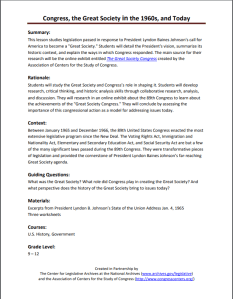
The ACSC exhibit task force partnered with the Center for Legislative Archives at NARA to create the “Congress, the Great Society in the 1960s, and today” lesson plan.

After creating the site’s content, we received some anecdotal evidence that college faculty were using the site for instruction, but we hoped that educators teaching at various levels would use the site in the classroom. We also knew educators have a tremendous workload and would likely want something ready-made and flexible to use.

So, we partnered with the Center for Legislative Archives (CLA) at the National Archives and Records Administration (NARA) to create a lesson plan. The CLA is the part of NARA that preserves and makes available the official records of Congress, and as a longtime ACSC member, it had already contributed a great deal of expertise and documents to the exhibit. The CLA has extensive experience developing educational resources, including lesson plans, e-books, and mobile apps, for K-12 educators.   Charles Flanagan, Outreach Supervisor at the CLA, guided us through the lesson plan creation and showed us how to structure a lesson so students build on their knowledge from one day to the next.

The resulting lesson plan, “Congress, the Great Society in the 1960s, and today,” asks students in grades 9-12 to summarize President Lyndon Johnson’s vision for a “Great Society,” place the vision in historical context, and detail the ways in which Congress responded.

Our partnership with the CLA has been invaluable.  Charlie and the CLA’s educational specialists use the “Great Society” lesson plan in many of the outreach activities they conduct with teachers across the country each year, and that has helped make people more aware of the exhibit and encouraged greater interaction with the materials. It has, in many ways, helped keep the exhibit relevant, as we’ve moved on from the 50th anniversary of the Great Society.

National History Day Article

NHDThemebook

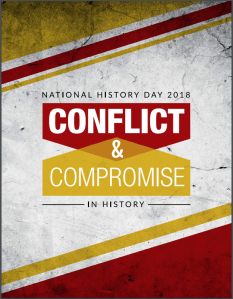
Our article, “Congress Constructs the Great Society Through Conflict and Compromise,” appeared in the 2018 National History Day theme book.

In addition to instruction, we wanted to entice students to use the site for their research. One of the members of the exhibit team had worked with National History Day (NHD) in the past, and we contacted NHD about writing an article for the 2018 theme book. Each year, the NHD theme book consists of articles relating to the year’s theme, and it is unveiled at the national competition. They print approximately 12,000-15,000 copies, but most people access it online. The theme book usually receives approximately 300,000 page views.

Our article, “Congress Constructs the Great Society Through Conflict and Compromise,” provides an overview of the exhibit. By pulling out specific documents, photographs, and audio files available in the exhibit, we sought to highlight the numerous ways students could connect Congress’ role in passing legislation with the theme of “Conflict and Compromise.” Following the theme book’s publication in fall 2017, we saw a significant increase in traffic to the exhibit website.   Approximately 7,000 new users have tallied near 18,000 page views on the exhibit over the past eight months.  This represents more than a quarter of the 26,000 users who have visited the exhibit since its launch in April 2015. Like the lesson plan, the outreach that we’ve done to promote the exhibit via the NHD theme book has paid major dividends.

Lessons Learned and the Future of the Exhibit

Through collaboration among member institutions to build the site and partnerships to develop instruction and student research resources, “The Great Society Congress” digital exhibit successfully highlighted congressional archives for new audiences. If we did the exhibit over again, we would consider applying for a grant, particularly so we could help member institutions with costs associated with researching topics, digitizing materials, and creating metadata. Although we will not be adding content to the exhibit, we’ll continue to look for outreach opportunities (like this blog!) to help get more people interested in the exhibit.  We believe it will continue to be relevant for instructors teaching the history of the 1960s at various levels and a fantastic resource for anyone interested in learning more about the Great Society.

There’s an Archivist for That! Interview with Colleen McFarland Rademaker of the Corning Museum of Glass

The There’s an Archivist for That! series features examples of archivists working in places you might not expect. COPA member Anna Trammell, Archival Operations and Reference Specialist at the University of Illinois Archives Research Center/Student Life and Culture Archives, brings you an interview with Colleen McFarland Rademaker, Associate Librarian, Special Collections at the Corning Museum of Glass Rakow Research Library.

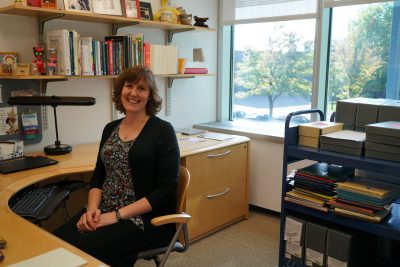
Colleen McFarland Rademaker in her office at the Rakow Research Library, Corning Museum of Glass (Courtesy of Colleen McFarland Rademaker)

Colleen McFarland Rademaker currently serves as associate librarian, special collections at the Rakow Research Library, The Corning Museum of Glass. Previously she was head archivist for the Sisters of Charity of Leavenworth (2015-2017), director of archives and records management (2012-2015) and archivist (2010-2012) for the Mennonite Church USA in Goshen, Ind., and head of special collections & university archivist at the University of Wisconsin — Eau Claire (2006-2010). She serves on the Society of American Archivists Publications Board (2014-2020) and is certified as an interpretive guide by the National Association for Interpretation. Colleen received a B.A. in German and history from the College of Wooster, an M.A. in history from Cornell University, and an M.L.I.S. from the University of Wisconsin — Milwaukee.

AT: How did you get your gig?

CMR: After working in academic archives for six years and religious archives for seven years, I took what may not look like a logical “next step” by seeking a position in a museum archives. However, the Corning Museum of Glass is not just any museum, and neither is it an archival program. I was immediately drawn to the institution’s interdisciplinary mission to document and promote the art, history, science, and technology of glass. Few repositories offer the opportunity to work both broadly and deeply across disciplines, and I embraced the challenge of serving patrons who bring expertise from incredibly diverse backgrounds to the research process. Having an interdisciplinary academic background myself, I recognized that this position might be a great fit for me.

As for the mechanics of getting the job, I confess that I applied for a different position than the one I currently hold. A very strong internal candidate was offered the position I originally applied for. In delivering that news to me, the chief librarian asked whether I might be interested in a different position in the organization. My answer was obviously an enthusiastic yes!

AT: Tell us about your organization.

CMR: The Corning Museum of Glass was founded in 1951. Corning Incorporated (then Corning Glass Works) gave the museum to the nation as a gift on the company’s 100th anniversary. The museum tells the world about glass by hosting over 400,000 visitors annually in its glass collection galleries, innovation center, glassmaking school, and center for glass scholarship, the Rakow Research Library. Guest artists frequently work and teach at the museum, and the museum takes glass demonstrations on the road with a hot glass roadshow mobile unit.

The museum’s commitment to glass scholarship is evident in the fact that the library is one its largest components. The library hosts researchers from around the globe, and library staff answered over 4,400 reference questions last year. The newly-formed special collections department provides leadership in managing all unique materials, but especially 20th and 21st century manuscript collections created by glass artists and manufacturers.

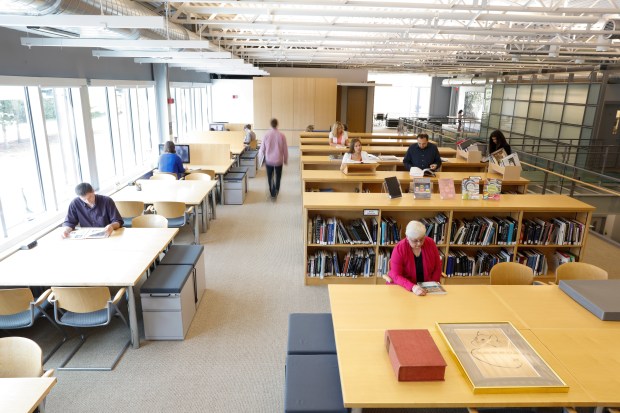
Rakow Research Library Reading Room (Courtesy of Colleen McFarland Rademaker)

AT: Describe your collections.

CMR: The Rakow Research Library holds the world’s most comprehensive collection on glass making. Its special collections include everything from a 12th century Mappae Clavicula (a medieval Latin text containing material formulas) to digital video capturing contemporary glass artists at work.  While special collections includes rare books, trade catalogs, works of art on paper, and archival collections, I’ll focus only on the archival collections here.

The library functions primarily as a collecting institution and has acquired over 200 manuscripts documenting the work of glass artists, glass factories, stained glass firms, glass researchers, and glass collectors. Some of our most significant and heavily-used collections are those documenting the local glass industry. While Corning Incorporated maintains its own corporate archives, the records of the cut glass manufacturer T. G. Hawkes and Co., and the art glass producer Steuben Glass Works are among our most beloved holdings. These records not only provide an important glimpse into the economic and social history of the region, but also support the provenance research of glass collectors. These records also complement the records of glass firms outside of the region, such as the recently-acquired records of Fenton Art Glass Company.

Among the personal papers in our holdings, glass artists’ papers have great significance because they document all phases of the creative process, from inspiration to execution. Glass recipe books, called “batch books,” are invaluable not only to glass researchers, but also to glass artists today who continue to experiment with glass formulas. And while the museum curators collect representative pieces from glass artists, the artists’ papers contextualize those pieces in photographs of and writing about the broader body of work.

The museum’s institutional archives also reside among the archival holdings. As the Corning Museum of Glass approaches its 75th anniversary (2026), its historic records are more important than ever. As the memories of long-tenured retired staff members begin to fail, current museum staff have increasing need to consult the institutional archives.

AT: What are some challenges unique to your collections?

CMR: The museum suffered a devastating flood in 1972, and none of the collections were spared. A selection of images of the flood damage and subsequent conservation work may be seen here. That the museum reopened just six weeks after the flood seems nothing short of a miracle! Significant resources were invested to conserve the collections, and the museum contracted with experts, including book conservator Carolyn Horton. However, the institution’s own records were not fully conserved, and original order was lost during salvage operations. Individual documents were chemically treated, dried, and repacked into dozens of records cartons. Some hold related caches of documents, while others do not. Imposing an arrangement on the museum’s early records presents a significant challenge because of the time it will require.  Sadly, MPLP is not an option for this project.

We are also in the midst of documenting the first generation of Studio Glass artists. Art glass production began to move from factories to small studios in the early 1960s, where artists could collaborate, experiment, and make one-of-a-kind objects. The pioneers of the Studio Glass movement are now considering their legacies, and many wish to make their papers available to future generations of glass artists and researchers. The volume of papers and the narrow timeframe for collecting pose a formidable task.

AT: What is your favorite part of your job?

CMR: I have the privilege of working with tremendously knowledgeable and dedicated people! Having worked as a lone arranger for most of my career, I am enjoying the company and expertise of others who share my sense of mission and passion for the collection.  I also appreciate the enthusiasm and intellectual generosity of the glass community – the artists, collectors, and scholars who create and use the records under my care.

Stay tuned for future posts in the “There’s an Archivist for That!” series, featuring stories on archivists working in places you might not expect. If you know of an archivist who fits this description or are yourself an archivist who fits this description, the editors would love to hear from you—share in the comments below or contact archivesaware@archivists.org to be interviewed for ArchivesAWARE!

Archives + Audiences: David Grann on “Killers of the Flower Moon”

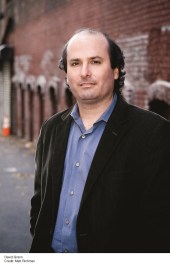
David Grann, author, Lost City of Z

This post is part of our new Archives + Audiences series, which features the perspectives of archival audiences – scholars, journalists, filmmakers, artists, activists, and more – for whom archives have been an important part of their life and work.

In this Archives + Audiences entry, we bring you an interview with David Grann, author of Killers of the Flower Moon: The Osage Murders and the Birth of the FBI (Doubleday, 2017), on the centrality of archival research to the writing of this important yet little-known chapter in American history.  Just released in paperback on April 3rd, Killers of the Flower Moon has garnered a mass of critical acclaim and was a National Book Award finalist.

David Grann is a staff writer at The New Yorker and the bestselling author of The Devil and Sherlock Holmes and The Lost City of Z, which has been translated into more than twenty languages. His stories have appeared in many anthologies of the best American writing, and he has written for The New York Times MagazineThe AtlanticThe Washington PostThe Wall Street Journal, and The New Republic.

ArchivesAWARE: What archival collections did you use for research while writing Killers of the Flower Moon?

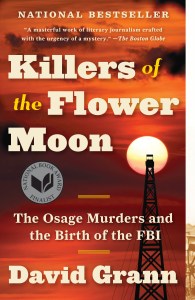
Cover of “Killers of the Flower Moon” by David Grann (Doubleday, 2017)

Grann: I drew on records from so many archives. They included the National Archives, Library of Congress, Oklahoma Historical Society, Osage Nation Museum, Oklahoma State Archives and Records Management, Texas State Library and Archives Commission, and University of Oklahoma Western History Collections.

ArchivesAWARE: Were there any collections that you’d single out as being most essential to the writing of the book?  Why?  How did you come to discover those collections?

Grann: A branch of the National Archives in Fort Worth, Texas, was an essential repository for my research. Many federal records concerning Oklahoma—including documents from the Bureau of Indian Affairs and the judicial system—are stored there. Among the unexpected documents I found in a box here was the secret grand jury testimony from the prosecution of some of the murderers of the Osage. This testimony proved invaluable in telling the history of what happened and being able to record the voices of many of the participants. It’s why I think it’s important when doing archival research to look through boxes that may not be precisely catalogued, because you don’t know what you might turn up.

ArchivesAWARE: Did anything in the collections surprise you or spark an “a-ha!” moment?

Grann: At the archives in Fort Worth, I also came across a tattered logbook, which contained the names of white guardians. Because of extraordinary racism, the U.S. Congress had passed legislation requiring many Osage to have white guardians to oversee their wealth. The logbook listed the Osage who had been assigned to each guardian, and if one of these Osage had passed away under the guardianship system, a single word was usually scrawled by his or her name: Dead. I noticed that one guardian was assigned to five Osages, and all five of their names were followed by that word. Another guardian had thirteen wards, more than half of whom had been listed as deceased. And so it went. The numbers were staggering and clearly defied a natural death rate. I began to get a sense of the breadth of the systematic murder campaign against the Osage.

ArchivesAWARE: Was there something you were hoping to find but didn’t?

Grann: In research, especially historical research, there are always some gaps of information, which gnaw at you.

ArchivesAWARE: Did you encounter many barriers to accessing or using any collections?

Grann: No, I was fortunate. Not only did institutions share with me their collections, but many Osage who had kept letters and court records and photos also did.

ArchivesAWARE: How would you describe the overall impact of archival collections on the writing of the book?

Grann: This book is born out of archives. It could not have been written without the benefit of these collections, and the many archivists who kindly guided me to hidden troves.

ArchivesAWARE: Is there anything else you would like to share about your archival research experience in connection with Killers of the Flower Moon?

Grann: Perhaps the most remarkable discovery happened when I told a librarian at the New York City Public Library about my research. To my astonishment, he told me that some members of his family were from Oklahoma and were related to several of the victims and the murderers I was writing about. He put me in touch with them, which led to a wealth of information.

Federal Funding Impact Story #9

Project: Collections and Facility Assessment and Planning

desegregation_anthology-1

“The Price We Paid: An Anthology of the Desegregation of Mississippi State College for Women” was created in 2016 as part of the Those Who Dared event series commemorating the 50th anniversary of desegregation. This project is the product of a significant collaboration between the MUW Archives and the History, Political Science, and Geography Department at MUW.

Granting Agency: Institute of Museum and Library Services (IMLS)
Grant Program: Collections Assessment for Preservation Program
Institution: Mississippi University for Women
State: Mississippi
Congressional District: 1st Mississippi Congressional District
Grant Period: April 2013-March 2014
Award Amount: $7,190

Project Description
The Conservation Assessment Program funds a collections conservator and a facility conservator to visit a repository or 2-3 days, identify problem areas, and develop an action plan for the institution.

What was the need for the grant?
The archives had been dormant for several decades before hiring an archivist in 2012. It was in very poor shape, with extensive water and mold damage to the records, poor facility conditions (it was left in a vacant building with no climate or pest control), and little access for potential researchers. We were hoping to bring in some professionals to give us a sense of where to start and what to prioritize in bringing the archives back online.

What has been the primary impact of this project?
This project ultimately allowed us to preserve and provide access to our collections on the first publicly-funded women’s college in the United States. Subsequent research by students in our collections has revealed insights into subjects like racial integration at southern institutions, and early women’s education in the United States, which has led to public programming and discussion in the community.

The grant allowed us to bring two conservators to campus for several days. The priorities they developed with us served as a road map to saving the materials in the archives, which is now in a better facility, with better conditions, and is used by students every semester for class research projects.

Submission by: Derek Webb, Special Collections Librarian/University Archivist, Mississippi University for Women
Image credit to Mississippi University for Women.

Escape the Room… With Archives!

Solve the puzzles and celebrate your victory! Stay locked in and seethe (you were this close)!

If you’ve ever tried your luck at an escape room, you know the thrill of working to make sense of clues that will let you unlock the door and make your escape. But the one thing that might have made your escape experience even better? Archives! What if you could bring this special thrill to your archives’ patrons,  while introducing them to your collections and resources?  How would you go about it?

Laura Weakly

Laura Weakly, Metadata and Encoding Specialist at the Center for Digital Research in the Humanities, University of Nebraska-Lincoln, combined archives and escape rooms by organizing an event for students in Fall 2017 using clues rooted in Nebraska history. In the following interview with COPA member Caryn Radick, Digital Archivist at Rutgers University Libraries, Weakly discusses how the event was organized and offers tips for would-be room designers.

CR: Why did you decide to do an escape room?

LW: The escape room was part of a campus wide welcome event for new and returning students at the University of Nebraska-Lincoln for Fall semester 2017. The room was located in C. Y. Thompson Library on UNL’s East Campus. The idea was to draw students into the library and familiarize them with library resources in a fun way. The escape room was the brainchild of librarians Jennifer Thoegersen and Erica DeFrain. In 2015, Jenny and her husband Rasmus Thoegersen, who was then director of libraries in Nebraska City, had created an escape room as a children’s event at the Morton-James Public Library.

CR: Who was involved and how did it work?

LW: Besides Erica and Jenny, the project team consisted of 10 employees of the UNL Libraries who created games and set up the room. The team split into groups to create a storyline, come up with the puzzles, develop graphics, and devise the rules for gameplay. Thirteen others tested the room once it was set up to ensure that the puzzles were set up properly, explained well, and solvable. After testing, some of the games were modified to make them easier and to give more detailed instructions before the students began playing. The game consisted of three puzzles which had to be solved in the allotted 20 minute time period. The answers to the puzzles led to a code that then needed to be entered into a “Time Machine” — a skinned Raspberry Pi computer.

nebnewspapers

CR: How did you choose which stories you wanted to feature?

Newspaper column featuring cattle brands

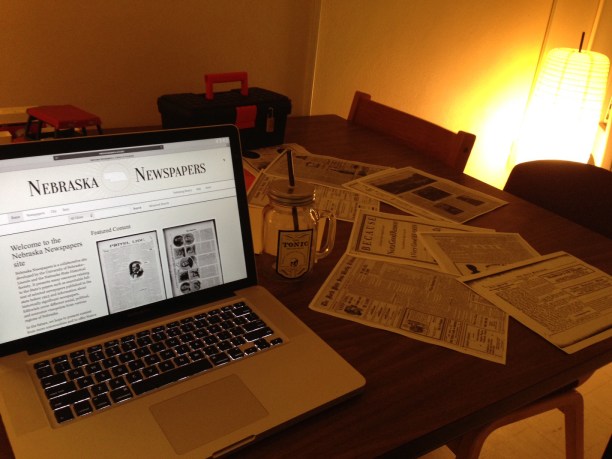
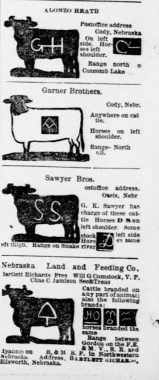
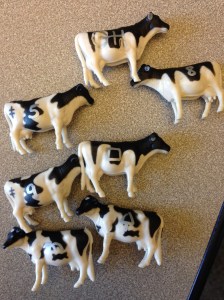
LW: The storyline we created was a time machine that would take the players back in the history of the campus to events that did or could have occurred on the campus. Players would then need to use library resources strategically placed in the room to help them solve the puzzles and return to the present time. UNL’s East Campus is home to the International Quilt Study Center and so one puzzle focused on using print resources to solve a quilt-based riddle. Another puzzle centered on the Larsen Tractor Test Museum and photographs of historic tractors found in our Image and Multimedia Collections. The puzzle that my group created was focused on historic Nebraska newspapers digitized as part of the National Digital Newspaper Program and found on Chronicling America and Nebraska Newspapers. I remembered from when we were performing collation that one of the papers, the Valentine Democrat, featured pages and pages of cattle brands. Our puzzle then centered on a supposed  escape of cattle on East Campus, which is home to the College of Agricultural Sciences and Natural Resources. We planted some “Fake News” about the escape in an edition of our campus newspaper The Daily Nebraskan. Players then had to read the story,  find the relevant brands in the Valentine Democrat, and then find the brands on tiny plastic toy cows. The toy cows had the brand on one side and a number on the other. The numbers were the answer to the puzzle.

Toy cows help solve the puzzle

CR: What was the response (how many students and what were their reactions)? Also, what was the fastest time the mystery was solved in?

LW: Ten teams of 3-6 students played the room. Six teams successfully escaped. The fastest time, recorded by the only team with just 3 players, escaped in the time of 11:33. Even the teams that didn’t escape said that is was really fun and that they enjoyed playing it.

CR:  What advice would you give to others thinking about setting up an escape room? Will you do another one?

LW: Having a good storyline and creating puzzles that go along with the story make a really great escape room. Testing and leaving enough time between groups to reset the room are also important. But mostly the room was about giving students an opportunity to go to the library just to have fun. We have already been talking about another escape room or rooms for the upcoming academic year, including possibly one in our new Learning Commons.

Asserting the Archivist, No. 2

This post was authored by guest contributor Samantha Norling, Digital Collections Manager at Newfields and member of SAA’s Committee on Public Awareness (COPA).  This the second post in our “Asserting the Archivist” series on the importance of highlighting archivists and archival work in outreach efforts, rather than just focusing on the collections themselves.

Too often, archivists and archival repositories can get stuck in the loop of sharing only THE STUFF, especially as those posts get a positive response and many interactions. But those collection-centric posts that help to extend our reach to every conceivable interest group on the web provide us with a valuable opportunity to highlight the work, knowledge, and skills of archivists to a nearly unlimited variety of audiences–“Asserting the Archivist” in outreach for our institutions.

In 2014, The Huntington Library created a series of 5 videos–published on Vimeo and shared on their social platforms—that took viewers behind-the-scenes to learn about the work of five staff members who filled different roles in the library. Included in these videos was the archivist, Li Wei.

In less than 3 minutes, Wei communicates multiple key points about what makes archivists unique from librarians and curators, emphasizing the complexity of archival collections and the skills needed to not just organize and catalog large archival collections, but to do so with the aim of facilitating access and discovery.

Do you have a favorite example of archival repositories or organizations/businesses that “assert the archivist” in their outreach efforts? Or would you like to share your experience incorporating archival work into your outreach? Please share in the comments below or contact archivesaware@archivists.org to be a guest contributor to ArchivesAWARE!

There’s an Archivist for That! Interview with Teresa Hedgpeth, United States Olympic Committee Archivist & Historical Steward

This is the third post in our new There’s an Archivist for That! series, which will feature examples of archivists working in places you might not expect.  To continue this new series, COPA member Rachel Seale, Outreach Archivist at Iowa State University, brings you an interview with Teresa Hedgpeth, archivist and historical steward for the Crawford Family U.S. Olympic Archives.
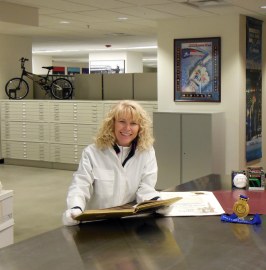
Teri Hedgpeth

Teresa Hedgpeth (photograph courtesy of U.S. Olympic committee).

Teresa Hedgpeth was named as Archivist and Historical Steward for the Crawford Family U.S. Olympic Archives in July 2012. She is a professionally trained Certified Archivist with experience from the National Archives, the U.S. Naval Historical Center, U.S. Navy History & Heritage Command and the Western History Center.

For years the Olympic archives sat idle, stored in boxes in the basement of the shooting building at the Colorado Springs Olympic Training Center (CSOTC). Shortly after Teri came to the United States Olympic Committee (USOC), a meeting was arranged with donor, U.S. Olympic and Paralympic Foundation Board Chair and Olympic artifact collector, Gordon “Gordy” Crawford. Crawford began collecting Olympic memorabilia back in 1984 and is now the proud curator of one of the largest known collections.

As a result of that visit, Crawford pledged the funds to build a state-of-the-art archives to properly preserve and display the Olympic artifacts and archives. $1.5 million and 2 years later – along with thousands of hours of labor and Teri’s passion for preserving the Olympic movement in a way that all could benefit – the archives moved from the CSOTC to its new facility at the USOC headquarters and are available for private tours upon request .

The most common, and most feared, question Teri faces in her position is: What is your favorite artifact? Her emphatic response? “There is no answer to that question!”

Teri earned a Master of Arts degree in U.S. History from American University, Washington, DC; a Bachelor’s degree in History from Auburn University at Montgomery; attended the Civil War Institute; and, is a graduate of The National Archives’ Modern Archives Institute. She is a member of the American Association for State and Local History, the Society of American Archivists, and the International Society of Olympic Historians.

RS: How did you get your gig?

TH: I’ve always been a huge fan of the Olympic Games – I mean, who isn’t right?  And, my daughters lived in Colorado Springs, where I was before taking the post as the archivist for the Western History Center in Casper, Wyoming; therefore, in 2012 when I saw the job posting for an archivist for the U.S. Olympic Committee, I jumped at the chance to prove to them I was the best candidate.  It was a multi-step process of application, telephone interview, all-day on site interview and then I had to create a 5-year plan once the field was narrowed down.  I am happy to say that the powers that be chose me to be the first archivist for the USOC.

This slideshow requires JavaScript.

RS: Tell us about your organization.

TH: The United States Olympic Committee is one of the most recognized non-profits in the world with a mission to support U.S. Olympic and Paralympic athletes in achieving sustained competitive excellence while demonstrating the values of the Olympic Movement, thereby inspiring all Americans.  Founded in 1894 and headquartered in Colorado Springs, Colo., the USOC serves as both the National Olympic Committee and National Paralympic Committee for the United States. As such, the USOC is responsible for the training, entering and funding of U.S. teams for the Olympic, Paralympic, Youth Olympic, Pan American and Parapan American Games, while serving as a steward of the Olympic Movement throughout the country.  In addition to its international Games responsibilities and its work to advance the Olympic Movement, the USOC aids America’s Olympic and Paralympic athletes through their National Governing Bodies, providing financial support and jointly working to develop customized, creative and impactful athlete-support and coaching education programs.

The United States Olympic Committee is governed by a 16-member board of directors and a professional staff headed by a CEO. The USOC also has three constituent councils to serve as sources of opinion and advice to the board and USOC staff, including the Athletes’ Advisory Council, National Governing Bodies Council and Multi-Sport Organizations Council.  The mission of the USOC archives is to capture and preserve the history of the Olympic and Paralympic movements in the United States.

RS: Describe your collections.

TH: The USOC archives has numerous collections consisting of manuscript, photographic, three-dimensional and a sport library.  Our manuscript records include the official history of the USOC as well as personal collections and records of the Olympic and Paralympic movements.  The photograph collection consists of headshots and action shots of our athletes, coaches, staff and venues of Olympic, Paralympic, Pan American and ParaPan Games.  We have not counted the images but we know the collection houses tens of thousands of images.  Our photograph collection is probably the most visible aspect as it is used by our organization and accessed by news media and researchers.

Finally, the coolest part of our collection is the artifact collection.  In this collection, we have Olympic and Paralympic uniforms, medals, and torches as well as additional ephemera associated with the Games such as pins, patches, stamps, tickets, merchandise, coins, cereal boxes, cabbage patch kids … you get the picture.  Think of any company that is an Olympic sponsor and we most likely have a sample of what was created.
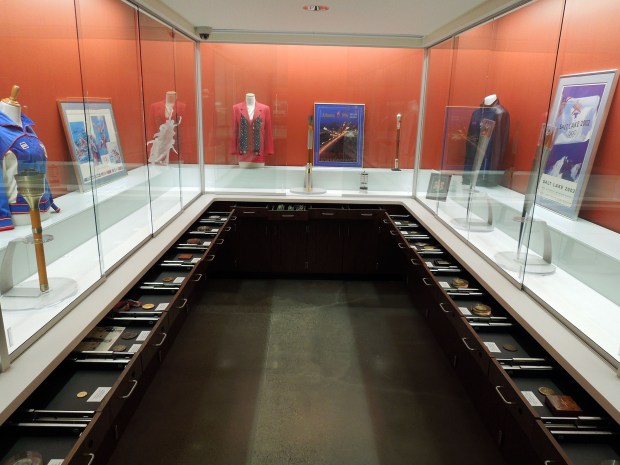
Special Collections-2

Special Collections (photograph courtesy of U.S. Olympic Committee).
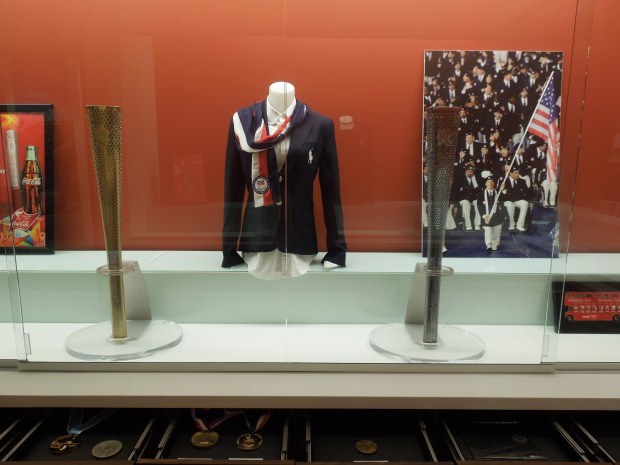
Special Collections-3

Close-up view of Special Collections (photograph courtesy of U.S. Olympic Committee).

RS: What are some challenges unique to your collections?

TH: The biggest challenge for me involves completing our collections of U.S. Olympic and Paralympic uniforms, medals, torches, etc.  The USOC did not start collecting artifacts until the 1980s and then it was only to support a  traveling exhibit sponsored by Coca-Cola.  There was no comprehensive collection policy in place.  From that first call-out for memorablia, the collection grew to over 3,700 items when I started in 2012.  Today, we have over 9,000 items and are continuing to fill in the gaps in our collection.

Another challenge is associated with our Olympic marks, the use of them and educating the public on how important it is to safeguard those.  Unlike most National Olympic Committees around the world, the USOC doesn’t receive government funding to support athlete programs. The USOC is responsible for overseeing amateur athletics in the United States and for training, funding and sending Team USA to the Olympic and Paralympic Games every two years. To allow the USOC to fulfill these responsibilities, Congress granted the USOC broad rights to control commercial uses of USOC IP in the United States. Official corporate partners provide critical funding for elite athletes and athlete programs. The USOC allows our official partners to use USOC trademarks in recognition of their support for these athletes.  When others use USOC IP without authorization, it creates a disincentive for our partners to continue funding Team USA in exchange for the right to promote that association with the U.S. Olympic Team.

And finally, I think the biggest challenge I face with our collection is convincing Olympians and Paralympians about the importance of safeguarding their history.  Some athletes get this; but others think that since they did not medal, their history is not important.  I am flabbergasted each time I run into this line of thought.  They are the best of the best, chosen to represent our country in the most iconic world competitions and they think they are not important because they did not win a medal?  When you take into consideration how few athletes win medals at the Games, this reasoning boggles my mind.  In my opinion, yes, winning an Olympic or Paralympic medal is the ultimate achievement for these athletes; but, one cannot ignore the huge sacrifices each athlete, who made the Olympic or Paralympic team, endured just to be on that team.  That’s what I love; all of what transpired before to get them to that point and that’s what I try to relate to them when I have the opportunity to talk to our athletes.

RS: What is the favorite part of your job?

TH:  My favorite part?  Oh man!  I love researching our athletes and the items we receive.  For example, a competition uniform is created for us by designers for use by our athletes.  It is important that we know the designer and I love researching that history.  Then, the uniform issued is worn by a specific athlete and I love finding out all about that athlete; what motivated them, what challenges they faced and how well they did, or did not do in competition.  Sometimes the stories amaze you; they will inspire you and uplift you.  Such as, Wilma Rudolph, who was born premature, contracted polio, wore leg braces until the age of 11; and then, just 5 years later competed in her first Olympic Games, at Melbourne in 1956 winning a bronze medal.  But, four years later, at the age of 20, became the first U.S. female athlete to win 3 gold medals in a single Games.

This slideshow requires JavaScript.

Another aspect I love about my job is sharing these stories with others.  We create historic displays and exhibits of our collection for use by our organization at events; we also conduct tours of our archives for different departments in our organization.  Development, Marketing, International Relations all love to give their visitors a tour of the archives.  Since we are not open to the public, this is a very special treat.

I am always asked, what is your favorite item in the archives or what is your favorite Olympic moment?  One of my favorite Olympic moments revolves around the men’s 10,000-meters at the 1964 Tokyo Olympic Games.  No one thought Billy Mills of the United States had a chance, except him; he knew he could do it.  I love watching the video of that race.  Listen to the announcers, one even stated, “Billy Mills from the United States is in there, a man no one expects to win this particular event.” In the final lap, Ron Clarke of Australia elbows Mills out of the lead.  No sooner is that done when Mohamad Gammoudi of Tunisia pushes through them both and takes over.  Mills is third and it seems out of the race after being jostled by both front runners.  However, in the final 100 yards, Mills comes on the outside of both runners in a blazing burst of speed to win, becoming the first American to win the 10,000-meter race.  Wow!  Chills every time I see that!  That is one athlete I would love to have in our collection.

Stay tuned for future posts in the “There’s an Archivist for That!” series, featuring stories on archivists working in places you might not expect. If you know of an archivist who fits this description or are yourself an archivist who fits this description, the editors would love to hear from you—share in the comments below or contact archivesaware@archivists.org to be interviewed on ArchivesAWARE!

Archives + Audiences: Gerry Canavan on the Octavia E. Butler Collection

Gerry Canavan

This post is the first in our new Archives + Audiences series, which will share perspectives from archival audiences – including scholars, journalists, filmmakers, artists, the general public, and more – for whom archives have been an important part of their life and work.  For this inaugural post, ArchivesAWARE! brings you an interview with Gerry Canavan, Assistant Professor of English at Marquette University, on his work with the Octavia E. Butler Collection at the Huntington Library.  Dr. Canavan’s book on Butler for the University of Illinois Press’s Modern Masters of Science Fiction series was published in 2016. (This is an abridged version of our interview with Dr. Canavan; the full version will appear in the next issue of SAA’s Archival Outlook magazine.)

ArchivesAWARE: What was it like to work with Butler’s papers at the Huntington?

Cover of “Octavia E. Butler” by Gerry Canavan (University of Illinois Press, 2016)

Canavan: The Octavia E. Butler Collection, which was bequeathed to the Huntington when Butler passed away, is a stunningly complete, immense archive, containing multiple drafts of her published works, many unpublished stories and projects (some complete, some totally unfinished), a lifetime of journals and personal correspondence, even handwritten composition books dating back to her childhood. There are over 500 boxes of material, hundreds of thousands of pages; of course I only scratched the surface.

Working with Butler’s papers was really one of the greatest pleasures of my career. I’d wondered for years how her Parables series would have continued in Parable of the Trickster—and I wound up being the first scholar to read her notes for the book, and the first to write about them (for The Los Angeles Review of Books). And that was only the beginning of the singular experience of inhabiting this record of the life of one of my favorite authors eight hours a day for two months. From unpublished novels to sketched-out but unwritten sequels, it’s a very special place and time for me. I wish every Butler fan could go.

ArchivesAWARE: Did anything in the collection surprise you, or were there any “a-ha” moments?

Canavan: There was a lot in the archive that was surprising, both in the way her writing process worked (she typically started out writing the exact opposite of the way the book finished up, especially with regard to her endings) and in the unvarnished and frequently quite sad look at her personal life and her struggle with depression. There were a lot of little surprises about the way different books had taken shape, some very much in line with what I would have imagined and other twists and turns I’d have never guessed in a million years. I’ll never forget finding the Patternist story she started to write set during the life of Christ, complete with a Virgin Mary sex scene.

I had a few a-ha moments, too, a lot of them revolving around my favorite book of Butler’s, Dawn. I’d recently taught the book and I was surprised to see things that had come up in our class discussions reflected so directly in the drafts of the novel, as well as in a letter where she discusses my favorite conspiratorial interpretation of the book (that the Oankali aliens caused the nuclear war that destroyed the human race). I was also floored to see that one my students’ outsized interest in a very minor character, Derrick, reflected a planned draft of the novel where he had been a much more important character; that night I wrote the student to let them know they’d intuited a hidden structure in the composition of the book that had been totally invisible to me.

When I broke some of the codes she used to describe her teenage crushes (including a crush on William Shatner), that was great fun too.

ArchivesAWARE: Did you encounter many barriers to accessing or using the collection?

Canavan: I had to be very careful about copyright, which is a huge issue in working with archives as US law gives copyright holders strong protections as to the right to determine the first publication of a work. I worked with the (very generous) literary estate to get permissions to publish a few photographs, as well as the essay that appears as an appendix to the book—and they also helped me lock down  an understanding of how much quotation would be “too much.” One of the last drafts of the book on my computer is the wildly overquoting version; I was so in love with her words and wanted to get as many of them across as I could, because I want everyone else to see what I had seen in the archives—but in the end I had to cut a lot of that direct quotation out and resort to my wholly inadequate paraphrase instead.

ArchivesAWARE: What was the overall impact of the Butler collection on the writing of your book?

Canavan: Without exaggeration, I don’t think the book would have been remotely possible without the archive. I never met Octavia, and wouldn’t have been able to write a biocritical “Modern Masters of Science Fiction” off her published interviews; I really needed this research space to get access to the larger arc of her life, especially what was going on behind the scenes. I think that’s really true not just for me but for everyone; the Huntington archive is transforming Butler studies as it allows for a fuller understanding of her achievement as the first (and for a long time only) black woman to earn her living writing science fiction. The Huntington has made an entirely new mode of Butler scholarship possible, and given us all a much better understanding of just how much she overcame.

Be sure to check out the next issue of SAA’s Archival Outlook magazine for the full version of our interview with Gerry Canavan on the Ocatvia E. Butler papers!