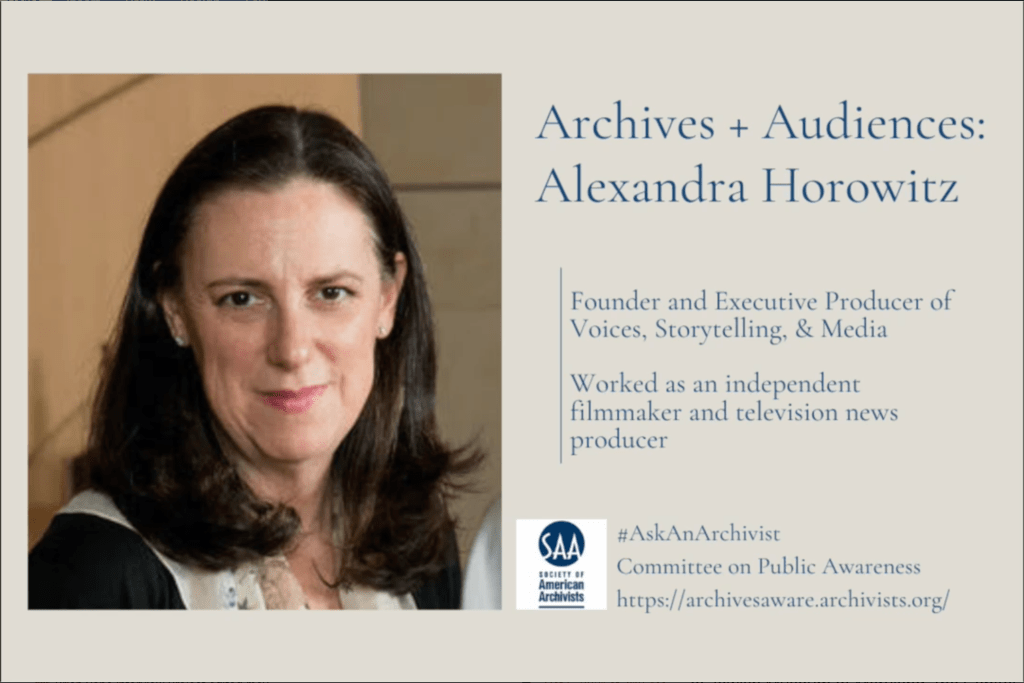
Archives + Audiences: Alexandra Horowitz, Voices Storytelling & Media

This interview is part of the Archives + Audiences series on the ArchivesAWARE blog. The Archives + Audiences series features the perspectives of archival audiences – scholars, journalists, filmmakers, artists, activists, and more – for whom archives have been an important part of their life and work.

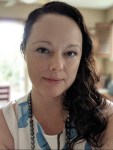
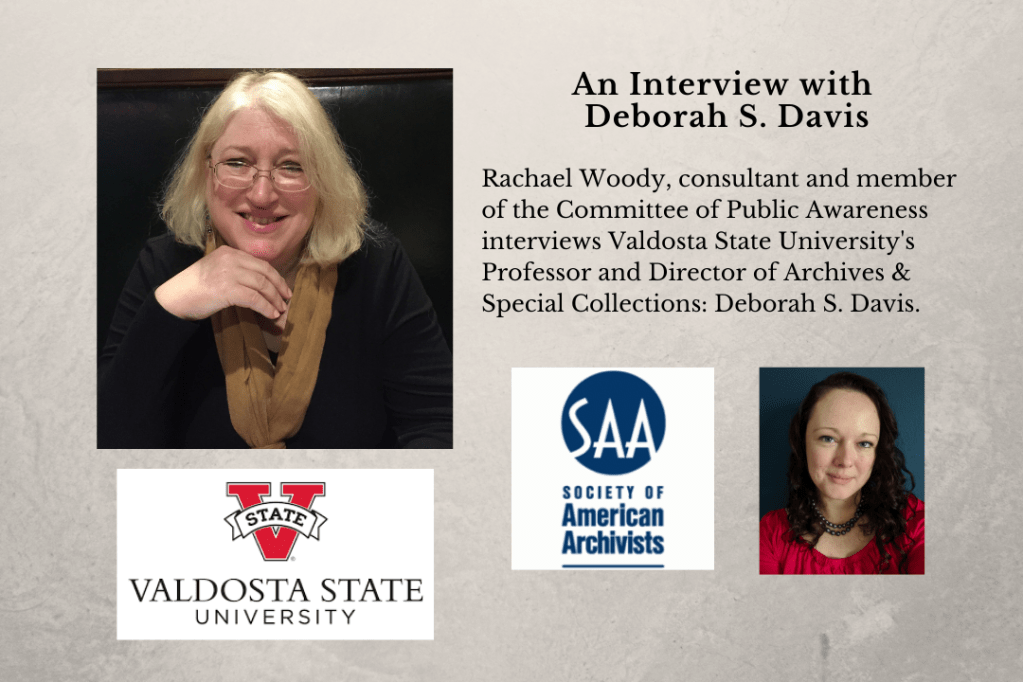
The ArchivesAWARE blog is ran by the Committee on Public Awareness (COPA), under the auspices of the Society of American Archivists. In this installment, Archivist and COPA Member, Rachael Cristine Woody, interviews Alexandra Horowitz and her experiences using oral histories and related archival materials as a writer, filmmaker, and producer.

Alexandra Horowitz is a writer, director, and producer based in the Washington, DC area. She founded Voices Storytelling & Media as a way to harness the power of archival material — such as oral histories, interviews, diaries, letters, and photos — to personalize history and current events. Alexandra has produced films for the Jewish Museum of Maryland, the Capital Jewish Museum in Washington DC, the Albemarle Charlottesville Historical Society, and Washington DC’s Theatre Lab. Her documentary short Reawakening was selected to screen at Jewish film festivals across the country and has been been featured in public programs at Jewish museums and organizations. A former Senior Producer at CNN International, Alexandra spent nearly ten years covering business and economics for CNN and its various networks from bureaus in New York, Washington, London, and Hong Kong. During that time, she produced full shows and individual stories, hard news and features, live and recorded broadcasts. Her writing has appeared in the Washington Post. Alexandra holds degrees from Brown University and the University of Michigan.

Interview Transcript

00:15

Alexandra thank you for being here today. Would you please take a moment to introduce yourself.

00:20

Sure, thank you so much for having me. It’s really a pleasure to be here. My name is Alexandra Horowitz, and I am the founder and executive producer of a small media content producer called Voices Storytelling and Media. I started it during the pandemic My background is as an independent filmmaker, and a television news producer.

00:48

Excellent, and I’m really looking forward to having this conversation with you. The series we’re doing this interview for us the archives and audiences. And part of what the Committee on Public Awareness is so interested in is how archives are actually used, how archivists help participate and between the archivists and collections, how they can be used in new creative ways, even if they’re not new ways like non-traditional academic ways so I’m really looking forward to hearing your answers. And my first question for you is you’ve researched written and filmed and produced media using oral histories and archival materials. So can you tell us a little bit more about your process and what goes into creating those works.

1:33

Absolutely, I’d be happy to. And I just want to say, in terms of using archives in creative ways. I love that. I mean that’s what I do and that’s what I’m trying to do with Voices Storytelling and Media is look at different ways that archives can be used creatively whether it’s podcasts or digital exhibits or film audio educational materials; I just think there’s so much potential out there. What I have done until this point has been using archives for film and I have based them on oral histories. Sometimes on one oral history, Where we’re profiling, a person, either for an event where the person is doing a public program, for example, and going through the person’s oral history and taking this hour and a half or two hour oral history, and finding, you know, sort of a five minute story in there that is relevant to whatever the story is you’re trying to tell. Right? If it’s an exhibit, what is the exhibit trying to say? If it’s a public program, what is the purpose of the person being here? Just to pull out from that long, oral history, the sort of the core story that is relevant to the event or the exhibit. And so that is one way by profiling one person. The other way I’ve done it, is to take an oral history, a collection of oral histories and find one theme through that collection so I did a film called Reawakening, which was about the Charlottesville Jewish community’s response to the unite the right rally is in August of 2017 and the oral history was not about the unite the right rallies, it was just a profile of the Jewish community of Charlottesville. So each person and I used about eight or 10 oral histories, each person had an oral history of about an hour and a half to two hours talking about their whole background – their Jewish upbringing and what brought them to Charlottesville and how they practiced and their involvement with the Jewish community and what they did professionally I mean it had 99.5% of each interview had nothing to do with the unite the right rallies, but because the unite the right rallies happened everybody spoke about it in the interview. And so, I was able working with the professor who conducted the oral history. I was able to pull out sound bites from each person and put them together in a film that looked at the response of the community to this event. So, I guess that’s the first point I want to make is that the, the oral history, don’t have to be about the specific theme that you want in the final product. Right. So, so, with both of those ways of doing it, either with looking at one oral history in depth, or looking at a theme through a collection. After that the process is kind of the same, like, I go through. I listen to them, I go through the transcripts, I find the most powerful sound bites the ones that really speak to the subject and are heartfelt and compelling. And I literally just take a highlighter and highlight all of those. And then I put them together, I look at what I have in my yellow highlights, and I put them together in a story form like what story are all of these individual soundbites telling and what kind of narrative arc can you develop from them and there usually is one, thankfully.

06:03

And after that, and I don’t write any narration, I mean I really want the work I do to be – I mean I called my company Voices — it’s meant to be the voices of the people in the oral histories, it’s not meant to be, you know, my voice kind of linking everything they have to say. And then I go through and once I have the script developed from the sound bites, I look for visual archival material, mostly photographs sometimes video. Sometimes newspaper or other printed material that can be used to illustrate what they’re talking about and sometimes that comes from libraries and collections. Sometimes it comes from the people themselves or other organizations that have been involved in whatever the subject matter is. So, that is largely the process, and it’s a very fulfilling one.

07:12

Thank you so much for sharing that. Your approach and your use of the oral histories and equipment, archival materials. In general, indicates to me at least it’s like you knew that these were available and knowing the archives and archivists can sometimes have a hard time getting the messaging out that, hey, we’re here. Please use us. I’m wondering what in your background or experiences, first introduced you to oral histories and archives.

07:48

So I will say, kind of being thrown into the fire. I had worked. I mean most of my career I worked for CNN, and when, and I had no experience with archives, but I was doing daily news and when you’re on deadline, and you need video at least, I mean I worked there a while ago, but at least at the time I worked there what you did when you needed video that you weren’t going out and shooting was you call the library and you said what do we have and they made it available to you and then you used it. So, so that was my entire experience I had no… I just didn’t think about archives. I had to do a shoot once at the National Archives, but that was, I don’t even remember the story was it wasn’t relevant to using archives. So then, okay, flash forward, many years, I took some time off stay home with my kids, I started up again as an independent producer, and I did, I produce the film that is linked to this, it’s Marian Ingram, it’s a profile of a woman who is a Holocaust survivor who came to the US in the 1950s and then worked in the civil rights movement. And I have this great oral history and I had the script, and I needed pictures, and I thought, okay, I also had a deadline, where am I going to get these pictures? And I had, I had no idea there was no library to call I was kind of at a loss as to what to do and I, I started Googling and I started hunting around and I went to the Library of Congress website I mean there’s so much online I don’t know what people did before collections were really online but now you can sit at home as we all have been doing for a long period of time and have access to enormous resources around the country and around the world. So, I just started Googling and I found material in large archives like the Library of Congress and I found material in small, you know, smaller towns and libraries and universities, and, and it was, I mean to me personally I, you know, it was just this amazing discovery that there’s so much out there that can be utilized that. That’s just amazing and I wish more people knew about.

https://vimeo.com/324248271/39c4f95bba

Marione Ingram: Civil Rights Activist, Author, Holocaust Survivor. Film produced entirely from archival material for the Jewish Historical Society of Greater Washington, now the Capital Jewish Museum.

10:26

Thank you so much for that answer, it’s I think it’s very helpful for us as archivist, to hear how people found us because it usually is, you know, it starts with a Google search or, yeah, asking that question of like this, this should exist where would it live?

10:45

Right, right, and it was largely entirely a Google search, but now, you know, now that I’m not so new to it I feel like there’s a whole network of people and there’s probably a listserv where I could say, you know, I need this. Does anyone have it and could I use it?

11:04

Thank you so much, that was a great answer, and very informative for us, too, and circling back to the archival materials for your work. You touched on this a little bit but just in case you had more to share. We’re curious about how you choose the videos and archival materials that you incorporate into your work.

11:25

Um, I think it, It starts with the stories that organizations want to tell, right? Is there an exhibit? Is there an event? Is there a film that’s being made for a classroom? And then, I think, in terms of the oral histories, the sound bites. It’s what is going to tell the story, the most powerfully, so not just the content, I mean, sometimes you just need a soundbite that says X because you have to get from point A to point B and it doesn’t make any sense if there’s not something that connects it but really what I look for is those that have the most heart, you know, like what is going to make people really feel and see another person’s story or another person’s point of view. And there’s, you know, much of the way that we have told history is now being revisited voices are being included, that have not previously been featured so prominently. And I am sure that there is just a wealth of archival material that that can be used to tell those stories and to help, you know, organizations that are revisiting their narratives and trying to add dimensions to race, gender, for example, that there has to be a wealth of material out there that can be used for that.

13:03

Could you share, like either one of your most favorite archival finds or like a fond memory you have working in the archives.

13:11

So, my favorite find is something that I thought I wasn’t going to be able to use and it was when I was doing this video, I have Marian Ingram, and she had volunteered and did some organizing for the March on Washington. And I hunting around I found this film that USIA had produced in, you know, in the 1960s afterwards and it had the MLK speech in it, but it also had people arriving and it had buses and it crowds and tents and. And it was just a godsend. And then I tried to get permission to use it and it seemed like a really complicated process and I had a deadline and I didn’t think I was gonna get it in time. So, I you know I put the paperwork in and went through the channels but then I forgot about it really because I didn’t think I was ever going to get to use it and then two days before I was set to edit, I got an email out of the blue. That said, “Yes, of course you can use it. The only thing you can’t use is the Martin Luther King sections because that’s protected by his estate, but anything else is fair game.” So, you know as it’s in the public domain so you can use it, and it was just sort of this waterfall of riches to be able to use it.

14:46

That is a great story, I’m so glad to hear that. When you’ve been working with archival materials and within archives and with archivists. Are there some examples of how the archives and those materials have helped to inspire and inform your work?

15:03

Um, yeah, they’re, I think it’s encouraged me to want to do more with archives. Because I think history is so important, and I, I just think… I love history. I hated history in school, I took as little of it as possible, but the, the parts of history that are really sort of rich and I think that that can teach the most powerfully, our photographs are hearing people’s stories. Yes, it’s not a collection of facts and sometimes it’s remembered with a point of view that sometimes is the one you want to teach and sometimes maybe isn’t but, but it’s, it’s heartfelt and it’s powerful and it’s, you know, the human experience. And so, I think that all of that is there in the archives in the way that it’s not usually in the history books, and so I just find that really encouraging and the more those archives are able to be accessed and used I think the more creatively we can teach connect to people, you know, whether it’s in museums, whether it’s in film, whether it’s in education and in classrooms. That there’s that connection through archives that there. You know there isn’t in other ways.

16:41

I love the word you chose to describe that as connection I think that is a powerful and, but yes, you know, simplistic, in its most awesome form in terms of as archivists, trying to have materials to be used and connect with communities to make sure that they are represented the I mean, so many ways that we could have more meaningful connections.

17:07

Yeah, and I think that the more archives, I mean I’ve always done it. You know from the producer and where I’m looking. I don’t know what archivist do proactively but I would say that the more that you can look around in your community, about what’s going on in classrooms and museums and public events, and see if the resources that you have. I think a lot of times people in the communities just aren’t aware of these repositories of material that, you know, that could be being used by the community. So maybe it’s up to the archives and archivists to try to connect with those people, or at least make known that the resources are available.

18:04

Yes, I think that is definitely, as, as the field which I can’t speak for everybody but my, my observation and experience has been, this has, has very much been a perpetual issue for us in how to one not only message value of collections but to make sure we’re actually connecting with the community in the way the community wants to be connected with. So, it’s definitely something I think it’s fair to say many of us are aware of and, and we are a very awkward work in progress toward better connections. But yeah, I think you hit the nail on the head with that one.

18:44

Yeah, I think, photos in particular you know I’ve gone, sometimes to the Library of Congress website just to look at photos if I needed them on a certain theme, and a photo can just say so much one photo that they can speak volumes about whatever the subject matter is, and, yeah. So, I just think for people in your communities to know what resources you have available is a really powerful thing.

19:27

Speaking of resources in use, is there an item or an area of a collection that you would like to use but like haven’t been able to find.

19:39

Um, I know you have connections. I’m not at the moment but I am so glad. Now to be in touch with this network of people that you know I certainly will turn to it in the future as needed, when things come up.

20:00

Yes, please do. We are here and we’re available so we welcome that. Great, that’s great. So, thinking about access to archives, and I know with COVID-19 obviously all of our realities have gotten a little bit more challenging. Yeah, but, but thinking about your past work, have there been any sort of barriers to access or any challenges specific to trying to reach archives or use the collections?

20:37

Um, for the most part, no. I tried to use. I mean in the past I’ve tried to use material that’s in the public domain.

20:45

And the times that I have had to get permission. It hasn’t been difficult. In fact, my experience has been more that professionals want their collections used and are very helpful in helping you use them, I had in the the film that I’ve linked there is a, there’s a visual of a burning, cross it towards the end of it, and it just all of a sudden realized I needed a burning cross and I googled it and I found these resources but I needed it soon. And so there were all these pictures online so I picked one and it was from East Carolina University and I emailed the person there and he was very nice and very accommodating and within, you know, I said “Well what do I do need to do to have permission to use this? Can I use it?” and, you know, “Is there a fee and how do I get is? Can I get a digital copy?” and all of this and I think within an hour maybe or two, I had permission I had the digital copy of the fill of the photo, and he couldn’t have been nicer and that has generally been my experience is that people are and especially I think I do. I generally work with nonprofits, and so if people know it’s for a community event. I use some news footage I know it’s not, I guess it’s archival news footage, it wasn’t that old, but for Charlottesville. And I went to the local television stations and at first they were like okay you know it’s this many $1,000 a minute of footage that you want and I said but it’s for, you know, an exhibit at a local historical societies. “Oh, okay well if it’s for that. We’ll send you our reel.” So, I think that when people know it’s, you know, you’re not trying to sell it, you’re not trying to put it on your Facebook page or, you know it’s a community. It’s for public history. Then I’ve generally found people to be very helpful and accommodating.

23:13

I’m very glad to hear that, that used to not be the case, way back in the day so I’m very glad that’s been your experience. What’s the one thing you wish the general public knew about archives?

23:26

Think I wish that the public just knew how much was there. And, and what an enormous resource it is, you know, I’ve got to think for teachers, for writers, for obviously for any kind of research, but I think people don’t necessarily know like I even working in media, for no more than a decade I, I didn’t have any idea so I think just for people to know what’s there, and how much is contained in them, you know, in one oral history. You know, you find things sometimes like a little piece of an interview that has nothing to do with bigger picture but it is sometimes the most valuable piece of that whole searches for people to realize what what’s out there. You know that, that we don’t normally see but that if you go looking, you might have to look a lot, but maybe with the help of an archivist. That it’s there.

24:39

Excellent, thank you so much for that answer, I think that that was such a great way to put it for us in terms of like that is something to focus on making sure that people know when that we exist and to just how much is there, and that we want you to use that kind of thing. Yeah. Excellent. Circling back to your work. And the the projects that you have done, what has been some of the feedback you’ve received, and general reception that kind of thing?

25:10

So generally good, but the one thing that has been consistent, is that people are always surprised that you can pull a storyline, like a five minute you can make a five minute film out of, you know, an hour and a half, two hour two and a half hour oral history or out of a collection that’s you know, 15 hours of oral history 20 hours of oral history that you can pull you can, you know, say I’m going to do this theme or I’m going to and you can pull a tight knit. Powerful story compelling story out of that. I think people in my experience tend to think, oh yeah, there’s an oral history on “X” and so it’s going to be everything about X, but when you, when you look for that one specific theme or that one specific subject that you can pull, you can pull a really compelling story that maybe has to do with the greater whole, and maybe doesn’t. But people are always surprised, in my experience to see that, you know, it’s like pulling a rabbit out of a hat.

26:31

And speaking of your work and of yourself, where can people find you online and connect with you?

26:39

So, my, my website is voicesstorytelling.com, and that has my email address on it it’s got my portfolio on it it’s got my email address on it, and more about my work on it so it’s voicesstorytelling.com.

27:07

Thank you for spelling that out and we will try our best. Right. I tracked I think so. I’m expecting it to be that hard to spell it’s not hard to spell when

27:18

I type it. But anyway, it’s voicesstorytelling.com, and the company’s Voices Storytelling and Media.

27:29

Is there anything else you’d like to share with us or anything? I didn’t ask that you would like to answer?

27:35

I would just say, I’m happy to be a resource or consultant with, if any, you know, if people have archives, archival material that they’re thinking of using, I’m happy to talk to anybody you know, not for any fee or anything, but just to a brainstorming session. Or, if somebody doesn’t have ideas but has this collection and wants to talk about how could they use it. I’m always happy to brainstorm, or do informal consulting to help give some shape and guidance if that’s helpful to anyone. Please feel free to reach out.

28:20

Thank you so much for that offer I imagine that would be particularly helpful, and I’m mentioning this for people listening not, not so much yourself, but you know, bringing in grants are seeking donor funding, sometimes connecting with an expert like yourself and even just getting like a one page. Here’s what Alexandra would do if we get the money…

28:43

Right, right, well they know I’m absolutely happy to help with that I have written grants myself I’ve received grants myself. And I am happy to give some shape and form to what you could do with your archives, if that’s helpful in anyone’s grant proposal writing.

29:02

Absolutely, yes. So, people who are watching slash reading definitely take Alexandra up on this offer. Well thank you so much for your time today, Alexandra. Is there anything else before I formally close our interview?

29:12

Um, no, I am really think very highly of archivists and archives and all that you do to preserve our history. And I know I would like to get those voices and get those materials out there. And so that’s, that’s it. I mean, please feel free to call and brainstorm or, you know, anytime I’m happy to do it and I’m so happy to be here today and to have found this connection.

Archival Innovators: Brian Pope and the Arc/k Project

This interview is part of the Archival Innovators series on the ArchivesAWARE blog. The Archival Innovator series aims to raise awareness of individuals, institutions, and collaborations that are helping to boldly chart the future of the archives profession and set new precedents for the role of archivists in society.

The ArchivesAWARE blog is ran by the Committee on Public Awareness (COPA), under the auspices of the Society of American Archivists. In this installment, Archivist and COPA Member, Rachael Cristine Woody, interviews Brian Pope, Founder and Executive Director of Arc/k Project. Arc/k Project is a nonprofit organization focused on a citizen-science approach to digital cultural heritage preservation.

Interview Transcript

Rachael: Okay, thank you for joining us. I am Rachel Woody, and I work with Society of American Archivists Committee on Public Awareness, and for today we are doing an Archival Innovator interview, and I am joined by a founder of an organization that is just amazing and I’m really excited to have a conversation with him, Brian, would you please introduce yourself and your organization.

Brain: Hi, sure. A pleasure. Thank you for having us Rachel. I’m Brian Pope, I’m the founder and executive director of Arc/k Project, which is a 501C3, a nonprofit that I started to generate a citizen science approach to digital cultural heritage preservation, specifically using techniques like LiDARr and photogrammetry.

Rachael: So, for Arc/k Project and and I know you got into just a little bit of this, but I would love for you to describe specifically the role that Arc/k project plays in preserving cultural heritage, at, how do you do it, I know there’s a lot to it and so, I mean, please feel free to share and describe as you see fit.

Brian: I think that our primary role, as we’ve defined it since the founding of the organization is disrupter, just difficult obnoxious unorthodox. We try to be literally deliberately, all kidding aside, a kind of disruptor in the sense that at the time that I founded Arc/k Project, I got very much a sense that there are inadvertent gatekeeper paradigms at play in how cultural heritage is archived, how it’s accessed and who gets to be a player in, in, in, archiving, in deciding what gets archived. and I, that hit me on a personal level because I guess I’m a person who tends not to really accept any barrier or boundary that I come across, and I myself have, you know, monolithic tastes I love monolithic architecture and so on, but I cannot, and  never have accepted the idea that, that is all of heritage. Heritage is the intimate, heritage is how you personally define it, and I saw a niche that needed to be filled there in terms of how we define cultural heritage, how we archive it, who gets to decide how that heritage is archived and what resources can be brought to bear for it. And whether that is considered valid science and so that’’s actually one of the things that my organization uses as its rallying call, which is the ability to generate what is, you know, casually referred to as citizen science. We absolutely believe that archiving cultural heritage can be democratized and that citizens, the average person is completely capable of both deciding and executing a cultural archive for themselves and for their culture.

Rachael: I love that you described yourself as a disrupter, and, and I very much view it as like a badge of honor that you have definitely earned, and, and just wanted to note that, you know, the series is called Archival Innovators, and I have found in my experiences that you don’t have innovation, unless you are disrupting the status quo.

Brian: Agreed, agreed. You know, we actually employ a full time archivist, Michael Conyers, I think you’re acquainted with him, and he actually inadvertently gave me one of the greatest compliments I’ve been given since we’ve been engaging in our project, he called me and you may want to bleep this,  I don’t know, shit disturber. I wear that badge with honor and pride. I think we all do at Arc/k Project. And it’s not that the archival community is in any way, lacking cultural heritage community there are some fantastic people that have given their life’s work for this right, but any organization, any institution, any workflow can almost always benefit, I think, from somebody from the outside, saying, wait a minute, let’s shake this up a little bit, let’s let’s rethink this you know, for better or worse,

Rachael: Mostly for better is what I’m seeing on this. 

Brian: Thank you, very gracious Thank you. 

Rachael: So, while we’re still on your origin story so to speak, yes, was there a particular catalyst event that the idea came to you to create our project, what inspired it?

Brian: There was, there were a few moments that were sort of offset in time but they played off one another. I was sitting in a cafe in Paris, struggling through the print version of Le Monde, if I recall, when I came across a story about ISIS project and it was one of the earlier reports of how they were basically doing an either cash and carry or destroying strategy toward cultural heritage. Anything that they couldn’t pick up and sell for illicit trafficking on gray and black arts markets, they would blow up. And at that point, the ancient city of Palmyra was being targeted. And the reason I say two parts, then for that catalytic moment was because it reminded me of, I must have been in my early 20s then, when I remember reading about what the Taliban had perpetrated against the Bamiyan  Buddhas in Afghanistan, and of course obviously as this interview  is being recorded that’s incredibly timely. Once again, the Taliban has just within the last week, assumed full control at a staggering speed, that apparently nobody foresaw. No comment. And I remembered an extreme sense of hopelessness. When I had been you know, as  a young man, seeing what was done against the Bamiyan Buddhas and then seeing something similar happening with ISIS and Syria, and Palmyra. And I remember simply rejecting that sense of helplessness, that sense of personal hopelessness and. And I also I will credit that moment with the realization that, look, these, these artifacts, whether they are monolithic heritage, or something much more intimate, say the recognition of the way a section of a city might change from one ethnic or demographic background to another. If we don’t track these things, we lose a sense of ourselves, and we lose a sense of both, where we come from yes, but then that makes us more vulnerable to manipulations about ideas of where we are going, and who we are. And because I was, I am a former visual effects artist who had very intimate knowledge of certain technologies that are casually used now in visual effects, I realized before I even found out that there were other organizations who had already begun doing things like this and that, in fact, there were techniques that were part of the cultural heritage community to scan heritage in 3d I realized that this was completely something in my wheelhouse, something that I could engage in, and as I began learning about other organizations that were out there doing it already, I found that there was a badly needed element that was missing, which was democratized activation of people, of citizen scientists of of heritage being recorded at every scale, not just the monolithic, not just the archeological, of, of, arguably dead cultures, but rather, living cultures, equally important, at least as important. And I determined that I would do something about it, I just didn’t want to feel helpless the way I had back when the Taliban destroyed the Bamiyan Buddhas. I didn’t want that feeling again. And in fact, the inaugural project of our project, of Arc/k Project, our very first full scale project was a crowdsourced photogrammetric digital recreation, that’s a mouthful I know, of Palmyra. And so, several of my staff of the newly formed organization, learned how to search in what I call the shutterbug cultures. The Japanese and German of websites. They’re tremendous they’re fabulous for being global tourists– shutter bugging, everything, everything, and of course also searching in Arabic and a few other languages, we cobbled together over 13,000 images of Palmyra, that had been taken over a span of, I think, eight years was the largest time period that our earliest to latest photographs, accessed, and we were able to generate a photogrammetric recreation of Palmyra, that even a scholar at the Metropolitan Museum, specialist in Near Eastern antiquities said, You know, and she had been there herself multiple times, said, this is actually the best restoration I’ve ever seen. And so we took that as our cue that we were doing something right. And, and then figured out later tried to figure out later, how that could fit into the cultural heritage community, and whether it could. And that’s something we’re actually still figuring out today.

Rachael: I still appreciate just  not only the natural curiosity and the desire to problem solve, but also knowing that it was not a straight path, and, you know, trial and error and learning how to search in Arabic, like, I mean just the amount of problem solving that you did in order to find a solution that works. I think this leads nicely into my next question which is, when thinking about our project, launching it and continuing to do the work you do today, what are the barriers and challenges that you experienced initially, and maybe some that may still continue?

Brian: There are significant barriers in what we’re doing. There’s no question. Initially, I will admit that I was naive, going into what we are doing, because as a potential disruptor, of course, that means you’re going to ruffle feathers and we’ve ruffled quite a few of them. But I was surprised and and initially I was disheartened by the fact that I think a lot of our work was either sometimes it felt almost as if we had been deliberately misunderstood. There were, there are established professionals, and there are established institutions that had been engaging in cultural heritage preservation for longer than I’ve been alive. And so, here we walk in being technologically empowered, and maybe with a slight sense of naivete and and entitlement, maybe just a little. And, we weren’t always greeted with the kind of open arms that I had hoped. And, as I said naively expected. And so, that that was one barrier, but there is also the simple barrier that these technologies that we are using: LIDAR, photogrammetry, citizen science enabled consumer driven recording technologies you know because a lot of what we teach is that with the right training, even a bloody iPhone can be a recorder of heritage, and in the lack of a 100 megapixel Hasselblad. It’s perfectly it’s so much better to have any archive than none at all, particularly if you have responsible metadata reporting practices, right, so, so we came at this utilizing technologies that had previously been either unavailable to the masses or strictly used in strict ways by professionals who had been trained lifelong in certain forms of institutionally oriented heritage archiving inherited heritage preservation and heritage access which I think is also crucial right. So it’s quite right, that some of these technologies should be created with suspicion because with some data, that’s the genie out of the bottle moment. Once that data is out in the real world, well, you’re never getting that back. And so, I, I, grudgingly acknowledged that some of the suspicion and and reticence that these technologies have been greeted with is in fact appropriate, and we’ve always tried to take the position that while anyone might be engaged in data acquisition in helping to archive their, their heritage, that doesn’t necessarily mean that that data should itself then be freely accessible to anyone. Because these technologies are powerful. And data is powerful. And so we’ve, we’ve wrestled with that a little bit, we’ve wrestled with trying to gain the respect and acceptance of established heritage institutions, while at the same time, having no problem with walking right into the same conferences, right into those same same professional moments and saying, well, we’re here, get used to it, and, and, and trying to engage them in such a way that they, I think over time have grudgingly begun to accept what we do more, and I do credit our organization with being one of those, one of those very few that has pushed the envelope in getting a democratized citizen science concept of cultural heritage archiving to be more accepted, and in fact there are some stodgy organizations that I will not name that have been part of the scene for a long time that had begun sort of altering how they speak about cultural heritage about how they speak of how it can be archived, and where those data sources can originate from and I don’t mind crediting my organization with being the one to have been part of that.

Rachael: So I’m gonna go off topic for a minute here Brian and I hope you’ll indulge me.  I am familiar with our projects work I have been lucky enough to be able to work with you on some projects and I know on the back end the commitment that Arc/k Project has to the standards in the field, digital preservation standards, I mean, you guys are using cutting edge technology and you’re, you’re sometimes helping people write the standards  on using those technologies. But then I also want to acknowledge it and share with the larger audience here that Arc/k Project, compared to some of the other players in the field, places, I think such a great emphasis in giving agency to the culture whose heritage you’re helping to document and that whole question of who owns digital culture I think the Arc/k Project’s been a leader in that I would love to hear your thoughts on that and why you took on that mantle as important for Arc/k Project to do.

Brian: Thank you, thank you for, for seeing that Rachel, I think you’ve always been gracious about your awareness of what we’re trying to do, and you know oftentimes that means asking the hard questions, not necessarily having the answers. We hope to have the answers we hope to evolve them, but we don’t claim to, I think the questions that we’re asking are at least as important as the answers that will ultimately be derived. And, yeah, to that end, democratization was crucial, because, again, as much as I love monolithic architecture and and archeology, it’s a fact that at this point, cultural evolution and cultural change has in fact become far far more rapid and often destructive, and you might think that because we are a digital society, a digital civilization that these things are being archived. As part of that, because we communicate digitally, but that’s not necessarily the case. A tremendous amount of crucial data about how we express ourselves, how we think of ourselves, is in fact considered digital flotsam. t’s not being archived because there’s simply too much of it right. So, when we began engaging in in generating Arc/k Project and trying to figure out how we should position the organization and where we were needed the most, it became clear that there was no place yet for citizen science in digital archiving and in fact it’s still considered a little bit of a gray area. But also, it occurred to me that as much as I adore going to a huge institution, museum or a university collection, these do not represent necessarily the standards and the and the priorities, and the, the sort of most dearly held tenets of cultures, especially cultures that are impoverished, or in states of extremis. And so, two things had to happen: one was, I felt an extreme need to sort of legitimize our practices, which meant that we studied. We already knew photogrammetry from a visual effects standpoint, many of my staff members are actually former visual effects artists who, like myself, wanted to turn our craft towards something a little bit more important than Star Wars Episode One opening weekend, right, and so we, of course took those techniques that I think are some of the best in the entire field. But then we wanted to legitimize them by. So, for example, I made sure that my staff was trained by the absolute best in the academic and archival field of photogrammetry. CHI- cultural heritage imaging in San Francisco and I adore those people, even to this day we credit them all the time with teaching us the very best techniques in photogrammetry. And I think because of where we were coming from, and taught them a few things and so there’s been a beautiful exchange of knowledge there, but that also meant hiring a professional archivist, full time staff member, so that he could advise us on archival techniques that’s Michael Conyers, I don’t know if you know this. He’s the world’s most famous archivist, as he calls himself it’s it’s a running joke. I adore it.So that so that we would be coming from a position of legitimacy, but then it also meant changing things up and that’s where the disruptive part came in, which meant specifically engaging cultures that are in states of extremis. So one of the first examples of that and actually to this day, the most successful example of that, if you can talk a little bit about the Venezuelan campaign. We used to call it Viva Venezuela, and so so we partnered with a fantastic organization called IAM Venezuela, that is largely an expat organization, mostly in and around Miami for Venezuelans who’ve emigrated. And yet they maintain a really really healthy volunteer base in Venezuela, and we developed a round tripping technique and a program by which we trained them on how to shoot for photogrammetry, and how to archive the kind of metadata that we need for an authentic archive. And rather than dictate to them, except in one or two specific cases where there were specific artifacts or sites that we knew were either endangered or have been specifically requested from say museum curators, that they be archived. We allowed our volunteer base themselves to determine what they were interested in recording, and we’re so proud of that because we now, at this point, maintain for what we call the Venezuelan people we maintain for them an archive of over 400 I think we may be close to 500 sites and objects, some of which, due to their intrinsic value in materials– bronze, copper, tin, aluminum, steel– have actually been destroyed. Well, because of our volunteer base, because of the techniques that we perfected in training remotely on how to shoot for photogrammetry, while we continue to do most of the software heavy lifting on our side, we have archived these things to such a high degree of technological acuity and fidelity that at some point, when hopefully there is a more stable period in Venezuela, we will round trip that data back to them and those objects  and sites, artifacts, sculptures in some cases that have been destroyed, we will actually be able to repatriate that data back to them. And, please understand, you know it’s not the belief that digital heritage replaces in any way the physical heritage and this has been one of those odd moments when we get these sort of sniping remarks, occasionally from heritage organizations or heritage professionals who seem to think that we are trying to supplant what they do when nothing is further from from the truth. These are overlapping mutually beneficial techniques. But the point in what we do is that the digital helps preserve the memory and the symbolism of an object which then makes it immortal, whereas the physical existence of an object continues its vulnerability. The two together, though, can form an impenetrable shield by which the symbolism and the importance and the cultural memory seeded into an object, whether that’s a physical object now, or a digital object or both. Over time, those things remain intact and that’s what we care about, that’s what’s important. And that’s what we’re trying to teach.So sorry I’m not even entirely sure that answers your question but I get excited about the mission.

Rachael: You know as a fellow business owner and obviously you, you run your organization it’s, you know, it can be tough, and, and it’s a bit of a hustle, sometimes, etc. And so I just want to point out that it is remarkable, I think, and laudable, you know Arc/k Project’s been around for a while now and you are passionate. It’s just, I think it’s a testament to like you’re doing what you were meant to do, because you still have so much passion and, you know, it’s just it is so palatable so like I really appreciated that answer and thank you for letting me sort of go off topic with that question.

Brian: No, not at all. Thank you. Can I also mention that, you know some of this work continues to be very difficult and heartbreaking, in the sense that we’re trying to reach communities that in some cases, let’s talk about Indigenous Indigenous cultures, let’s talk about Native American, Native Canadian cultures First Nations peoples. For example, we believe that within certain constraints, a lot of the work we do can be immensely valuable, but you’re when we try to reach out to Native American bands or tribes. Look, there is a tremendous culture there  a tremendous history of trauma of deceit of betrayal and we fully recognize that we have a lot of work to do there, in understanding in not preaching to but rather learning from and we, we are absolutely dedicated regardless of whether we personally do work with these with these tribes and these, these entities that the standards that are developing in the cultural heritage community about how to work with these people is something we absolutely believe we have a clear vision toward. And we want to make sure that as 3d standards and practices and protocols and workflows and industry sometimes entire fields, developing around heritage, are developing, that they are done so with Native American voices as part of that. And with their priorities, their standards held far above anyone else’s. And we think there’s a tremendous amount of work to be done there, but it’s also heartbreaking work. There’s a lot of distrust, there’s but and our young, still young, in some ways, organization, you know has had missteps there too and we continue to, to be just absolutely dedicated to the idea that we can be of assistance in this, and you know we’re, but it’s a, it’s a long path. And we absolutely want to make sure that the digital. I call it a cultural Gold Rush, that’s taking place in some ways, right now in our society and multiple societies, not run over Native Voices, this time. And so anyway, just to say there’s a lot of work to be done there, and we don’t pretend by any means to have all the answers. But, again, I will credit us with being one of the few voices who are asking the questions that need to be asked and I will continue, we will continue that work.

Rachael: Thank you for sharing that. Sure. I know that you shared a bit about the Venezuelan project, and one of my questions was to ask about some of your example partnerships with organizations and cultural communities. Do you have any other projects that you would like to share with us?

Brian: Sure. Oh gosh, so many, but given a limited amount of time. Let’s talk about first, I mean, we’re working with a fantastic group of people, ARTIVE and the work is sort of behind the scenes with them right now. t’s largely about generating more compatible overlapping databases, because there are a lot of different organizations out there that have data which can be immensely important in curtailing illicit trafficking, especially out of the Middle East right now. And I think we’re probably about to see a huge influx of illicit trafficking of antiquities from Afghanistan as well, for reasons that that should be obvious to everyone right now. And so getting databases to be more open, more compatible. And then once compatibility is established, to then get those databases into the hands of not just import export authorities, organizations like that, but rather to generate destruction of plausible deniability right so we’re talking about auction houses, antiques dealers, private collectors. We want to absolutely end plausible deniability in ignorance, that when you are trafficking in an object, don’t know exactly what you’re doing right so the first step of that we believe and ARTIVE has been amazing working with them so far we want to generate that that overlapping database. But at the same time it’s been a long time with COVID, and we’ve just been dying to get back in the field, and, at long last, I think we have an interim project that we can execute outdoors, which we’re very excited about in Miami. And so, a partnership with some of the people who originally were part of IAM Venezuela. Actually, we’re working with them to generate the kind of living map of the murals which are now this incredible journal of the cultural life of Miami. Miami has become one of those cities that has a world culture, people coming from so many places, especially in the Latin world, of course, and murals are one of the beautiful, beautiful canvases by which this culture is literally painted, but because these canvases are the sides of buildings, buildings, the sides of privately owned businesses, there is no framework by which these are necessarily perpetually kept and held dear, and without warning, a given mural can disappear overnight as an, as a new artist paints  atop, you know this, given an incredible public canvas. And so the idea is we’ll actually be executing this in the in the next several months, a volunteer base campaign so we will be training once again just like the IAM Venezuela campaign, we will be training people on the ground, how to take the photographic and drone based images, gathering data about the cultural importance of a given mural at a given location, the names of the artists, why they why they painted, hopefully even including interviews of those artists. But accepting the fact that these murals are non permanent, we will be constantly updating this living city map almost to kind of a living palimpsest of culture so that through a digital, let’s say maybe an iPhone or iPad based app or a mobile app, you’ll be able to access at any given moment, years of different murals, at a given location. So, even though the mural itself may cease to exist, the memory, the cultural importance and the lineage, because many of these murals actually bounce off one another right so you end up with a living memory of culture that is digitally held, but physically dispersed, and so it’s both in the physical and in the digital at once, and we just think that’s immensely exciting because culture, then stacks vertically over time and horizontally over over access, and neither destroys the other, I just think it’s going to be a fascinating model for heritage preservation that will actually transcend, just the format of murals. It’s super exciting and we’re using state of the art technology and volunteers and enthusiasts to engage in it and so it just hits all the buttons of what we care about. And so please stay tuned. I hope you’ll have me back actually when we, when we begin executing that project, and also I will mention that we’re not private about these things. Whenever we generate a model for interactivity and volunteer activation that works, we want to talk about that model so that other organizations can copy it as well. It would be nice if we get a credit here and there but yeah, hey, whatever you can do, whatever you can do. But the idea being that we want these models of heritage preservation to be proselytized.

Rachael: Yeah, I have to say and I know you touched on this in some of your answers, the, the way the Arc/k Project, how you created it and how you and your team have chosen to conduct yourselves and make those ethical decisions. I think we’re now sort of belatedly seeing in the historian and archives fields that that, that belated reckoning of the historical record being so incomplete and inaccessible to so many, so I think that’s all to say that, that you saw that early on, and the work that you’re doing, the practices you’re establishing are something that both the archives and historian fields could certainly use at this point.

Brian: Thank you. We actually like to think of our work as dissolving the boundaries between archives and exhibitions, so that they almost become undefinably together fused. 

Rachael: Yes that’s my personal opinion, everything should be together. Yeah, no silos.
Brian: Exactly, no silos, I love that. I love that.
Rachael: Yeah. Wonderful. Well I think my next question for you, I know we’ve touched on a couple examples of this, but in your own words I would love to hear you describe the importance and urgency of capturing the you know the digital tapestry of these different cultural heritage sites.

Brian: I do believe there is. On some days it’s almost difficult not to have a sense of panic about how rapidly some cultures are changing, about how little is being done to archive them, particularly on the intimate, well, you know, it’s, it’s, it’s been a source of bitter irony, sometimes for me when I see how much academics of ancient arguably extinct cultures, will spend on understanding a piece of garbage from say Pompeii, and yet we do so little to archive the personal and the Internet and the small scale and the low brow, or, or simply low finance aspects of human existence. Now, in cultures that, particularly because they are say perhaps poverty stricken, or in states of political and social extremis are rapidly evolving, and those stresses that those cultures are going through, then generate a level of creativity and adaptability, and flexibility that is a real credit to human creativity and human adaptability, and those are the moments that are desperately in need of being archived, and of being valued. And, yeah, some days it’s hard not to have a sense of panic about it. You know, I, if we had the funding I’d be sending cameras and recorders, everywhere, particularly with languages right so due to an involvement with a very good friend of mine Lena Herzog and her fantastic work in what’s called The Last Whispers projects. I gained a new sort of sensitivity to what’s happening with language extinction. And, you know,  Arc/k Project can only be spread so thin, but it was interesting to discover through the connections that Lena very graciously made available some fantastic people. A linguistic Institute, running out of, out of London for a while I think now out of Berlin. The idea that much language archiving is actually not done with a physical or visual aspect. And yet, if you’re talking about archiving a language in say a material culture,  that is very much, say, a sustenance, culture, a developing culture right, the language and the material expression of that culture are so tightly bound, the idea that you would archive the language and the grammar without archiving the material expression of the culture seems insane to me. And so I don’t know that that’s maybe one of our next disrupter moments, you know, but, but, again, we want to make those tools available, and we’ve begun working with some in the field linguist archivist to try to help generate a material aspect to how they archive the grammar and vocabulary of languages, and there’s so much work to be done, it’s just where do you where do you begin, you know, yes.

Rachael: Yeah, I can, I can very much imagine and empathize with the, the feeling of urgency to the point of panic. And yet, I mean you only have so much time. We have yet to access at least for daily people cloning technology, for yourselves so, right. Yeah, I can only imagine it must be very difficult to have to prioritize.

Brian: It absolutely is. It’s, it’s painful, and it’s, it’s something that we almost refuse to do in the sense that we’re simply all about proselytizing the tools. We’re actually speaking, I think it’s okay to talk about this at a very early stage, an academic model, through which various grad student programs in various colleges might work with say the parks services to generate a data acquisition model to monitor, especially built heritage, out in the field. You know in in parks in areas that can always be policed against vandalism, let alone, natural wear and tear. We want to generate models by which citizens, volunteers, engaged local heritage organizations, even just children, they can be immensely powerful as data acquisition tools. And those are the models that we are working on so that we won’t have to prioritize, and I’ll keep you abreast on any successes.

Rachael: Yes, please do. Related to thinking about Arc/k Project and the evolution of the projects that you’ve done, and the partnerships and the standards and tools that you’re proselytizing, I would love to hear your perspective on when you were thinking about the process of creating Arc/k Project and, and the years since then, there some lessons learned that you could share with us or anything that was surprising to you that came up that, you know, when thinking of fellow innovators what could be helpful for them?

Brian: Oh, so many lessons learned. Yeah, some positive some negative, not to take no for an answer, is a great one to begin with. Also, the use of tools, the choice of tools. I recall very, very clearly, that when the hurricane that decimated Puerto Rico happened, e found it very difficult to bridge between established heritage professionals, very well meaning, and the tools that would be on the ground in Puerto Rico at that time to do emergency heritage archiving, because even, even, actually, many of the museums and larger cultural institutions in Puerto Rico did survive the hurricane itself structurally, but then without power, in the humidity and heat, many structures became unfortunately biohazards due to black mold and things like that, right, and there was, it was shocking it was it was a real lesson learned that there was no immediate way to bridge between the tools that established cultural heritage institutions use and a place like Puerto Rico. There was no common bridge whatsoever, and especially as a young organization which does not have any clearance to be say a first responder or a second responder yet, it was immensely frustrating. We think that those are bridges that desperately still need to be built. And, and we’re always open to try to enter into discussions and so on. Another lesson learned is that in order to do what we do at the level that we insist on doing it, we had to accept that, unlike what many cultural heritage professionals would prefer, we use commercially available software. We have actually, we have zero loyalty to any software package, I will say that, and we migrated from one to the other to the other and finally settled on, we actually currently use Reality Capture, I do, absolutely I can absolutely attest that it is the best software available for photogrammetry. Now whether that will continue to be the case right now we’re, we’re sort of watching and waiting and listening for clues as to what the new owners of that software package plan on on doing with it, and it has been one of the points of criticism and argument between heritage organizations- should we be using open source software for this? And we, the lesson to be learned and the philosophy that we developed from that is simply based on actually some of the original philosophies that CHI helped teach us with, which is the idea that the 3D model that you can access, you can work with, you can directly experience, while incredibly valuable, is not the archive. The archive is the metadata, the archive  is the photographic data and those are mature data collection channels, and that’s the archive, that’s what matters. The 3D model is simply how you access that archive right so that was a lesson learned, that frees us up to  do to continue to do the work that we hold dear and to do it at a rate and  a level of fidelity that nobody else can can equal, and it will continue to be something that we watch very closely, maybe a few years from now. Open source software will be of such a, such a level of fidelity, and speed because sorry but speed does matter, in this case because there’s so much to be done, and the ability to round trip to a given volunteer in a remote location what is missing what is was incorrect or insufficient or incorrectly done for a given 3D archive, that, that ability to rapidly round trip is crucial in developing volunteer techniques. So who knows maybe in a few years open source software will be the way to go but right now we continue to proselytize that commercially available software is the way to go. And in fact, that particular software package may in fact become free as part of the new owners Epic Games and, and what they want to do with it. We would love to hear from them, some, some pronouncements about their commitment to cultural heritage functions for that software and  its, its rightful that it might make some heritage professionals, and heritage institutions nervous. The proximity between the software that archives the heritage and the software that puts it in a game. And so that’s a dangerous moment, and, and. So the lesson learned there is simply to be vigilant, and to keep, keep, keep keep watch. But I think we’ve also learned that there are so many overlapping organizations and interests out there that you can’t spend too much effort, you can’t spend too much effort, too much time building bridges with other organizations, because at one point I became impatient. I’ll admit it with cultural heritage gatekeepers who seemed more interested in deliberately misunderstanding and and taking issue with the digital as if the digital were trying to replace the physical, I became really really impatient with philosophies like that and with with knee jerk, frankly silly responses like that. And we had work to do. And I just said, You know what, enough, we’re busy, I don’t need your approval. And I don’t want it anymore, right. So, I think it’s time to start trying to, okay, come around, come full circle and let’s see if now we can speak a little bit less shrill than before about these about these issues and build bridges  so that we can keep everybody responsible and accountable, and absolutely cutting edge.

Rachael: I would love to hear from you, why are archives important in your own words?

Brian: Archives are important because, ou know, regardless at how accessible they are, and access is important, it’s crucial, it’s the memory of who we were and I do not believe that if you forget who you were, that you can responsibly, and accountably and safely not who you want to become. I, I look at what’s happening in Venezuela right now and I look at how cultural memory is being erased, not because of, say, religious extremism, as will probably happen and has been happening in parts of the Middle East, with the takeover of Islam,  the extremis, created by civil war in Syria and now the Taliban consumption of Afghanistan and what’s about to happen with Sharia law But it doesn’t have to be anything so deliberate, it can be simply the forces of modernity, or, or economy international financeshen I look at what’s happening in Venezuela, and I look at sculptures being cut up overnight statues like monolithic scale statues being vivisected a piece at a time, over a week, and melted down for their constituent medals. I don’t see it as a loss of history, I see it as a loss of direction. And when I look at Venezuela,I think about Chinese development loans, and American oil companies, and international fast foods, and all the things that will seed themselves and redirect Venezuelan culture, the moment that they have that capability, and that I think is what we’re fighting against and that’s why archives and especially making archives, not just having them but making them more accessible, making them more vivid and engaging. That’s not just entertainment. That’s, that’s, that’s getting them into the hearts and minds of people so that they maintain a sense of themselves that can be resistant, that is sufficient to resist the forces of fast foods and quick easy loans, and American oil interests, right. That’s right, that’s so crucial. If you forget who you were, I don’t think you have a chance of deciding who you will become. And, and that’s, that’s what we’re all about. That’s what, that’s what heritage preservation has to be about, as well as its purely scientific validity on, it has to it has to be strong enough to carry both missions at once, I believe.

Rachael: I have just one last question on my part Brian, and that’s what’s next for Arc/k Project.

Brian: Oh wow, okay. So, so many things, so many, so many irons in the fire at any given moment. I did describe the Miami Project, the murals archiving project so that’s in our immediate future. We’re also looking at engaging in some software development applications. It has long occurred to me that a, I don’t know if you’re familiar with, sort of distributed computational platforms, like the way I pronounce it is simply BOINC, B-O-I-N-C. It’s a, it’s a globalized distributed processing framework by which the average computer user can donate spare processor cycles to very worthy projects like SETI, the Search for Extraterrestrial Intelligence, which  spent decades, analyzing radio data from Arecibo and other radio antennas, as well as more modern functions very much present functions like folding proteins, pharmaceutical design, weather modeling, etc. I would love to see Arc/k’s efforts go toward a distributed software processing platform that would allow all of the world’s spare processor cycles to be engaged in computing 3d solves for endangered heritage. So that’s something we’re always looking at. One other thing that I’m really excited about we just  inaugurated  is an Advisors Council, within Arc/k Project and  two of the first gentlemen to join our advisory council. are ur gentlemen who have been involved in cultural heritage scanning for decades actually, and one of them was even involved in developing the techniques by which the Dead Sea Scrolls were scanned and sort of unfolded digitally. And we’re incredibly proud to have Eric Doehne and Greg Bearman on our advisory council. As we again try to sort of deepen our scientific roots, even as we become more and more unorthodox about how we engage volunteers. And so that’s happening at both ends. Very, very excited about that. And, in fact they are helping us design a program by which we will engage various colleges and graduate programs with using volunteer accessed data from the field to do cultural heritage archiving and translation programs.

Rachael: So, just a couple projects.

Brian: Yeah, just a few things here and there, while still trying to figure out how to fund ourselves. Right now we continue to be entirely privately funded. We have gotten a few small grants. We’re continuing to reach out into the granting world, but we’re also doing that with a certain amount of skepticism. We’ve been well trained by granting professionals, you yourself actually early on in our organization’s genesis, helped us learn how to navigate the kind of landmine  minefield of what’s out there so that one can access grants but one has to be careful not to allow one’s mission to be decentralized or deterred. Because grants, while a beautiful source of funding, can also eat your organization if you’re not careful right so we continue to hold granting at somewhat  arm’s length, we’re hoping over time, that we’ll develop that as a better arm for funding the organization, but we’ve also not wanted to have too many external influences when it comes to granting. And we’ve been lucky in that we’ve had a few private donors who’ve been extremely generous, that have allowed us to plot our path without having to owe too much to worry about where that money came from. So we’ve continued to be self directing and and self empowering, in that, and I’m incredibly grateful for that.

Rachael: Well Brian, is there anything that I didn’t ask you that I should have or anything that you would like to share with us before I let you go?

Brian: I would just like to share that, I think there is a genesis happening, there’s something new happening in an awareness of what we do. I think it’s an exciting time that we don’t actually have to spend 20 minutes now explaining to the average lay person, the technology that’s behind us. That itself has been amazingly liberating making this a really really exciting time to see how the culture and technology are intertwining to make our job easier and easier in some ways, and I will also say that thanks to people like you and thanks to organizations like SAA, we are finding it easier to get the word out there.e don’t have to fight so hard to have a sense of legitimacy in what we’re doing and I absolutely credit you and the archivist organization in being part of that. It’s getting easier and easier to sell what we do. And now we don’t have to worry so much about basic arguments of legitimacy.ow we can start working on creating synergy and creating ethics and protocols by which everyone should be abiding, to really, really make something stellar happen with the fusion of these technologies and these interests over the next five or 10 years. I think it’s going to be a super exciting time, and we have people and organizations like yours to thank for them.

Rachael: Thank you so much, Brian, I really appreciate your time and, and you sharing so much about our project with us, and we’ll go ahead and conclude the formal recording of this interview.

Brian: Very well, thank you so much for having us.

Archives Are Always Essential

On October 22, 2020, Ryan Anthony Donaldson & Rachael Cristine Woody presented the webinar “Archives Are Always Essential” to 280 attendees. Below is a summary of the webinar complete with key takeaways, a summary of questions and answers, and a list of resources.

Many of us in the field know that archives are essential, but sometimes it feels like a best-kept secret. It’s challenging to convey the true value of our collections despite our best efforts with digital content, social media, and other outreach and awareness activities. It’s time to unleash the full potential of heritage collections and archives and we’ll show you how. This webinar will review historic outreach challenges, and how they’ve been compounded and complicated by larger global events in 2020. And in honor of Archives Month, we will explore proactive and actionable responses to these challenges–including relevant examples and additional voices.

Rachael Cristine Woody, Owner of Rachael Cristine Consulting. Photo courtesy of Rachael Cristine Consulting.

Co-Presenter: Rachael Woody is the owner of Rachael Cristine Consulting LLC. After a successful tenure at the Smithsonian Institution and the Oregon Wine History Archive, Woody established her consultancy to teach archives, museums, and cultural heritage organizations how to take care of their collections and advocate for their value. Woody has experienced precariously funded positions first-hand and has proven tactical strategies to demonstrate the value of collection work. As a result of her experience, Woody has dedicated herself to advocating for the value of collection work. She serves on SAA’s Committee on Public Awareness, established the Archivist-in-Residence (paid internship) program at Northwest Archivists, and serves on several salary advocacy committees.

Co-Presenter: Ryan Anthony Donaldson is a content strategist, information professional, and project consultant passionate about the creative and targeted uses of heritage content and archives. Donaldson previously worked as Senior Manager of Heritage and Information Services for The Durst Organization in New York City, conceptualizing and implementing a corporate archive program. He serves on the Archives Month Committee of Washington State and previously with the Business Archives Steering Committee with the Society of American Archivists.

To download a copy of the slide deck visit: https://bit.ly/3kfH9iw.

Key Takeaways

Our Perspective as Business Owners

  • Effectively communicating the value of archives in a variety of ways is vital for archives consultants.
  • Owning a business, whether sole proprietorship, LLC, or otherwise, requires a mindset to focus on what you see with inherent untapped value and presenting opportunities as relatable. 

Background

  • SAA Council on Public Awareness survey results show an interest in the archivist community in (1) How to create effective programs & activities & (2) How to promote from within.
  • October is Archives Month and 2020 themes are: Creativity, Rights, and Resilience.
  • The Archives industry has had historical issues with conveying value, as traditional outreach methods, such as events and exhibits, face significant challenges that are compounded by impacts from COVID-19. While it can be clear to archivists the potential value of heritage collections, it can be difficult to share this vision with stakeholders.

Challenges & Needs

  • Challenges include a sense of distance and isolation as archives are closed, trauma from job layoffs and cost reductions, with many challenges remaining unresolved for the near future.
  • To meet these challenges, responses and solutions need to be convenient, address existing needs, and packaged in appropriate ways and formats.

3 Related Responses

  • 1. Pivoting
    • Consider the basketball pivot – stay on one leg in the same spot and turn the radius of your direction with the other foot which can feel uncomfortable.
    • The pivot change the direction of your delivery to achieve the same goal
    • Pivoting is a proactive way to reassess how to meet the needs of your community and audiences
    • Layers of pivots
      • Societal – Time to reflect on values and how archives can respond to current events through the lens of creativity, resilience, and rights. Also attention of audiences is online as screen time for U.S. audiences has increased by 1 hour in 2020.
      • Organizational – Opportunities for a brand audit that can leverage institutional and corporate archives; or in some cases, an opportunity to formalize or further build an archives
      • Career – Can be a way to involve individuals in other sectors to engage with archives; in particular for materials already digitized
    • Outcomes for successful pivots
      • Deliver on outreach initiatives amidst challenges 
      • Increase audiences and 
      • Retain, reinforce, & enhance online visibility 
  • 2. Adapting
  • Response to changing environmental conditions
    • Look to organizational and industry accountability as an opportunity to express and verify cultural legacy.
    • Look for inbound and outbound strategies to address the inability to be on-site at the office and with the collections.
      • Virtual reference
      • Virtual tours
  • Layers of adaptations
    • Societal
    • Organizational
    • Industries – Seek out best practices in other industries, especially art, travel, hospitality, events, service industries, healthcare
  • Adaptation model for traditional outreach programs are online
    • Increased extraordinary opportunities for engaging with colleagues globally, examining past practices critically, and to highlight a range of organizations actively communicating the value of archives. 
    • Many programs are recorded and made available after. 
    • Periods of adaptation reveal new opportunities for storytelling through history.
  • With the perceived value of archival labor diminished and resources denied, it is important to adapt through some self-care 
    • Time management
    • Work and personal boundaries as distinction of space collapses
  • 3. Flexing
    • There are a variety of definitions for flexing, including those that may carry negative connotations.
    • Aspect of the definition to focus on: 
      • Put your talents, abilities, and skills to use to support the collections. 
      • Communicate the inherent untapped potential of archives to flex the value.
      • It can be challenging to keep attention with battles for screentime, so consider how to quickly & compellingly promote your collections online and communicate the brand story 
      • As a subject expert, you may have the flexibility to access local cultural historical knowledge that can be shared globally.

Questions & Answers

Q: Do you have suggestions for making a business case for archives in a corporate setting?

A: Look for ways to align with marketing initiatives and core business activities. Consider what language is used with stakeholders – for instance, certain phrases may resonate more effectively than others (such as “legacy curation” for a wine business in place of “archives”). Think outside of the internal company to speak to and connect with larger milestones. 

Q: What language should I use to convincingly convey the value of the collections?

A: Use general language rather than rely on technical language that has limited meaning outside of the archives industry and gives any impression of elitism. Tailor your language to your audience and to think strategically for how your audience can connect to an archives. Also consider the language of numbers and metrics, mixing qualitative statistics with some qualitative narratives for researchers and other audiences who have benefited directly from the archives. 

Q: Do you have suggestions for expressing why a dedicated space for archival work is necessary?

A: Express how there is a continued value and a furthering of the initial investment in the archival materials. Be open to flexibility of multiple use spaces and developing relationships with facilities staff who maintain the properties in which the materials are housed. Develop a priority list focusing on the most fragile items for the best environment available given the resources. Reference best practices and lean into your expertise to guide discussions with other stakeholders. Calculate time and efficiences for collections being off-site without dedicated storage.

Resources

“Archival Instagram Accounts Are Teaching Forgotten Histories,” Nicole Froio – Zora, https://zora.medium.com/archival-instagram-accounts-are-teaching-forgotten-histories-b2b37c9cf52d

“Archiving Black America,” BBC Radio 4, https://www.bbc.co.uk/programmes/m000l0rc

Carhartt Heritage Camo Collection – https://www.youtube.com/watch?v=qj3pKqeBzEI

Collection Diversification and Community Engagement Panel – November 17, 2020.

Hosted by The Black Metropolis Research Consortium (BMRC)

https://www.facebook.com/events/355105799045768/

“Common Concerns: Video Production” – July 16, 2020. 

Wenatchee Valley Museum and Cultural Center,  Washington State Heritage Outreach. https://www.youtube.com/watch?v=IRAW6RsSpXg

“Deriving Value from Collections in the Time of Corona (COVID-19),” sponsored by the Committee on Public Awareness, Society of American Archivists. https://youtu.be/vhK2ww1_ZR8 

“Experimental Mapping in the Central District: A Workshop with Sara Zwede” – October 21, 2020. Hosted by Wa Na Wari. 

https://www.wanawari.org/experimental-mapping.html

“Inclusive Description Working Group,” Princeton University Library Rare Books & Special Collections Technical Services, https://blogs.princeton.edu/techsvs/2020/02/28/inclusive-description-working-group/

Indigenous Interventions: Reshaping Archives and Museums – February 13, 2020.

A symposium hosted by the Field Museum, Northwestern University, and the Newberry

https://www.newberry.org/11132020-indigenous-interventions-reshaping-archives-and-museums

“Inspired By Company’s Heritage, Carhartt Reinvents Original Camo Pattern,” PR Newswire, September 14, 2020 – https://www.prnewswire.com/news-releases/inspired-by-companys-heritage-carhartt-reinvents-original-camo-pattern-301130180.html

Race_women Instagram account: https://www.instagram.com/race_women

“Strategies for How to Capture and Communicate the Value of Collection Work,” Rachael Cristine Consulting LLC. https://youtu.be/UYgXj_XWma0 

“Resources & Toolkits,” maintained by the Committee on Public Awareness, Society of American Archivists. https://www2.archivists.org/advocacy/publicawareness/resourcesandtoolkits 

The Blackivists: https://www.theblackivists.com/

The Blackivists Instagram account: https://www.instagram.com/theblackivists/

“The Durst Organization 1915-2015: Celebrating 100 Years” publication – http://bit.ly/durstcentennial

“2020 Trends: COVID Impact on Time Spent With Media,” Digital Remedy, https://www.digitalremedy.com/2020-trends-covid-impact-on-time-spent-with-media/

“Uncovering Stories Through Archival Content: Turning Old Content into New Art,” Creative Capital – https://creative-capital.org/2020/04/13/uncovering-stories-through-archival-content-turning-old-content-into-new-art/

“Virginia Mason Centennial,” https://www.virginiamason.org/centennial

“Virtual Events Are Experiences: Why Aren’t They Designed That Way?” from BlueCadet – https://www.bluecadet.com/news/virtual-events-are-experiences-why-arent-they-designed-that-way/

“Virtual Kayak Tour of Tacoma’s Waterfront,” Pretty Gritty Tours, https://www.facebook.com/prettygrittytours/videos/593195074710444

We Here: https://www.wehere.space/

“Works in Progress Webinar: This wasn’t for you yesterday, but it will be tomorrow—Digitization policy to counteract histories of exclusion” – October 1, 2020. OCLC – https://www.oclc.org/research/events/2020/100120-digitization-policy-counteract-histories-of-exclusion.html

Elizabeth Stauber on the Hogg Foundation Archives Winning an Advocacy Award

On January 19, 2021 the Committee on Public Awareness (COPA) member Rachael Woody sat down (virtually) with Elizabeth Stauber of the Hogg Foundation Archives, a recent recipient of the Advocacy Award from the Texas Historical Records Advisory Board.

Elizabeth Stauber stewards the Hogg Foundation’s educational mission to document, archive and share the foundation’s history, which has become an important part of the histories of mental and public health in Texas, and the evolution of mental health discourse nationally and globally. Elizabeth provides access to the Hogg Foundation’s research, programs, and operations through the publicly accessible archive. Learn more about how to access the records here.

The Hogg Foundation for Mental Health was awarded the inaugural Advocacy for Archives award by the Texas Historical Records Advisory Board (THRAB). THRAB established the Advocacy for Archives Award to recognize significant contributions made by individuals or organizations toward ensuring the preservation and availability of Texas’s historical records. The Hogg Foundation accepted the award at THRAB’s meeting on October 23, 2020.

RCW: Describe the Hogg Foundation Archives when you started. What was the size? What were the challenges and opportunities?

ES: The Hogg Foundation began work on creating an archive in 2012. Our Executive Director, Dr. Octavio Martinez, enlisted the help from graduate students at the University of Texas’ School of Information to begin devising a program. In 2016, during the foundation’s 75th anniversary celebration, Dr. Martinez hired me as the first full-time archivist.

The graduate students had begun to develop a records management program through staff education and the creation of a robust records inventory, and they had identified many important historical documents and artifacts and begun preserving and digitizing them.

However, the archives did not have a physical space with stacks and shelves, or defined policies and mechanisms for providing access to staff and the public.

RCW: You’ve built an incredible program in your first few years. What strategies can you share with us so that others may replicate your growth?

ES: In the beginning I identified 5 key areas that needed tackling:

1. Strengthening our records management process to ensure important records find their way into the archive;

2. Processing the records that had been stored in cabinets and the basement for decades;

3. Devising a digital preservation strategy;

4. Developing information management policies that promote transparency; and

5. Encouraging the use our archive.

This work is long-term, so you must be patient and kind with yourself, even if you are a perfectionist. There are always so many gaps in my work that glare at me furiously, but I know that with time I can continue to close them.

Achieving all of these things felt very daunting to me as a lone arranger, so I adopted an iterative process that allowed me to work on each area a little at a time. I could have easily spent the first 2 years solely processing paper records, but then I would still have to contend with the records being created today, and it would have stilted the promotion and use of this information. I needed to build a structure to house all the information, but I also needed some information to enforce the structure.

I started with small goals that impacted each identified priority area and expanded them over time. This work is long-term, so you must be patient and kind with yourself, even if you are a perfectionist. There are always so many gaps in my work that glare at me furiously, but I know that with time I can continue to close them.

This photograph depicts four rows of black wire shelving that support an array of blue banker boxes and gray archival boxes. Most of the shelves are full with boxes.
A photograph of The Hogg Foundation stacks. Courtesy of The Hogg Foundation Archives.
This picture shows a close up of one row where the blue archival boxes and labels can be seen more clearly.
A close up image of the stacks. Courtesy of The Hogg Foundation Archives.

RCW: Your training and use of graduate interns has been cited as a major contributor to the Archives’ success and recognition. Please share with us why and how you use graduate interns.

ES: The Hogg Foundation for Mental Health is actually a part of the University of Texas at Austin, which has an excellent School of Information. The Hogg Foundation is a small organization with around 20 full-time staff and only 1 assigned to manage the archives. Being able to enlist the help of emerging professionals in the archives field gives us the flexibility to experiment and try things for which we would not normally have the capacity.

For example, our graduate interns have helped us develop and refine our digital preservation strategy, researched and implemented an online collections database, and provide user interface recommendations for improving our online collections database. And honestly, as a lone arranger it is incredibly helpful to be able to bounce ideas off another person. The archives program at the Hogg Foundation started with work from graduate students and I feel that it’s important to continue our connection with the school.

Because we are a part of the university, we are able to offer our graduate students a competitive monthly salary, health insurance, and a scholarship that pays about 80% of their tuition.

RCW: The Archives is representative of the Hogg Foundation and its work as a mental health organization. Please share with us what it’s like to work as an archivist in this type of institution. What challenges and opportunities are present?

ES: The Hogg Foundation for Mental Health exists to improve the mental health of Texans. We do this, primarily, by giving grants to help communities strengthen conditions that support mental health and eliminate conditions that harm mental health, especially for people who have been historically underserved or marginalized. The foundation’s archive provides historical context for understanding our past and current mental healthcare landscape. Identifying the health disparities and societal inequities of the past helps us to recognize and confront how our institutions handle care and recovery today.

Unfortunately, most of mental health history is documented by institutions that are not primarily concerned with preserving its history. The Hogg Foundation’s archival program continually seeks to change that through advocacy of the preservation of both philanthropic and mental health records across Texas and the United States.

We seek to be an example of a mental health and philanthropic organization that shares its history with the public as these are two sectors that do not have a strong history of transparency. Our archives consist primarily of grant records. We are not a direct service organization, so we do not have medical records or other highly sensitive data. Rather, we preserve the efforts of non-profits and individuals working to improve the mental health infrastructure, access, and awareness in their communities.


Caption: As part of a larger campaign to reform and modernize the state hospital system in Texas, the Hogg Foundation presented its own vision for mental health services in April 1956, with the release of the short film In a Strange Land. Courtesy of The Hogg Foundation for Mental Health. YouTube direct link: https://youtu.be/u0X5H1kI_tY.

RCW: Specific to your advocacy work, what strategies has the Archives used? What have you found is the most successful and least successful, and why?

ES: Over the last few years, I have been connecting with information professionals in the philanthropic field as well as archivists interested in mental health history. Often, these are two different spaces, but the strategy of connecting with others across institutions to advocate for transparency and access to records is the same.

With my philanthropic colleagues, we planned a conference on the topic of foundation archives in 2019. This conference brought even more of us together to advocate for stronger records management structures in grants management systems – a common pain point we identified at the conference. In addition to the records management woes, the philanthropic sector generally does not have a strong external push to share its records with the wider public, so it has been important for us to learn together how to advocate for transparency in our organizations.

Recently, I have been able to connect with archivists locally who are interested in the preservation of mental health history. Some of us put together panel discussions on the topic of mental health and neurodiversity in the archives, which were unfortunately delayed due to the pandemic. But we have been able to successfully advocate for major preservation projects for state hospitals in Texas, including the hiring of a professional to oversee the implementation.

Recently, I have been able to connect with archivists locally who are interested in the preservation of mental health history. Some of us put together panel discussions on the topic of mental health and neurodiversity in the archives, which were unfortunately delayed due to the pandemic.

Sometimes this work can feel frustratingly slow because we are advocating for projects and ideas that are traditionally seen as a “luxury” – even when they are essential to the very infrastructure of the organization. While on paper my philanthropic colleagues and I have not been able to change much in our institutions yet, together we can be persistent and push forward.

Finally, my most effective internal strategy to cultivate interest from the Hogg Foundation’s staff is to present a history lesson derived from our archive 2-3 times a year. This involves research, reflection, and thoughts on how we can use these lessons to advance our current work, but it has been well worth the effort. Prior to the establishment of the Hogg Foundation’s archives, our knowledge of the foundation’s history was solely passed-down through long-tenured employees. But now many of our staff have a unique understanding of the history of our foundation and mental health in Texas, and can apply that context with care to the programs and communities in which we work today.

Prior to the establishment of the Hogg Foundation’s archives, our knowledge of the foundation’s history was solely passed-down through long-tenured employees. But now many of our staff have a unique understanding of the history of our foundation and mental health in Texas, and can apply that context with care to the programs and communities in which we work today.

RCW: You were awarded the first of THRAB’s advocacy awards. Please tell us more about that process and what it means to you and the Hogg Foundation.

ES: Being a relatively new and niche archive, it is so rewarding to be recognized by THRAB. Everyone at the Hogg Foundation was so thrilled to find out about the award. The recognition has bolstered our advocacy efforts tremendously by giving legitimacy to mental health and philanthropic archives.

Ima Hogg (philanthropist) stands to the right of with Robert Lee Sutherland (Hogg Foundation’s first director) on November 21, 1961. The two hold a record book between them as Robert looks to the left of the camera while Ima looks up at him Hogg Foundation for Mental Health.
Ima Hogg (philanthropist) with Robert Lee Sutherland (Hogg Foundation’s first director), November 21, 1961. Courtesy of The Hogg Foundation for Mental Health.

The recognition has bolstered our advocacy efforts tremendously by giving legitimacy to mental health and philanthropic archives.

RCW: What are the remaining challenges you face?

ES: Because I have taken the approach of iterative improvement, my challenges have been fairly consistent over the years. However, I hope to publish our online collections database for the public by the end of this year. Currently, anyone may contact me for a reference interview to gain access to our records, but I am working toward a system that removes me as the gatekeeper to allow everyone to easily browse our holdings.

RCW: What advocacy advice would you like to share with us; especially those newer to the work?

ES: The most important thing I have learned is how to talk about archives to people who have never been to an archive before. You cannot rely on people being fascinated by archives for archives-sake. They want to know the functional purpose and benefit of information access. A challenge I often give myself is to not use the word archive or record when I am discussing my work with those outside the field.

A challenge I often give myself is to not use the word “archive” or “record” when I am discussing my work with those outside the field.

RCW: Is there anything else you’d like to tell us?

ES: For those who wish to make use of the Hogg Foundation archives, research questions and appointments can be made by contacting the archivist at hogg-archives@austin.utexas.edu.

Deborah S. Davis on Building a Successful Archives & Special Collections Program Through Constant Advocacy

On December 16, 2020 Committee on Public Awareness (COPA) member Rachael Woody sat down (virtually) with Deborah S. Davis to interview Davis on her remarkable success in building an Archives & Special Collections program at Valdosta State University. Davis is a Full Professor and the Director of the Archives & Special Collections at Valdosta, a program she’s been building since 1998. During Davis’ tenure, she has turned a closet (literally) archives collection into a thriving teaching lab, and has earned multiple awards for her and her team’s work. Davis shares with us her advocacy strategies and her secrets for how she’s built her program through outreach, innovation, fundraising, good customer service, and pure grit. In order to deliver the maximum amount of information to our audience, Davis agreed to record our Q&A session, and Woody donated the money towards producing a full transcription so that we can all have access to Davis’ words of wisdom.

This is the title card for a Question and Answer session between COPA member Rachael Woody, and Deborah S. Davis, Full Professor and Director of the Valdosta State University Archives and Special Collections.

Interview

Transcript

Rachael Woody (00:10):

All right. Thank you everybody. I am Rachael Woody. I am a member of the Committee on Public Awareness, and our mission at COPA is to help promote and protect the value of Archives and archivists. I’m here today with Deborah Davis and Deborah is at the Valdosta State University Archives and Special Collections, and Deborah’s agreed to chat with us today about her extensive Advocacy work building the program that she has at Valdosta. I’m so excited to speak with you today, Deborah on this. So thank you for joining us.

Deborah Davis (00:46):

Thank you so much for having me. I’m really honored.

Rachael Woody (00:50):

Wonderful. Yes, of course. So to get us started and in the mood to talk about Archives, I’ll start with a pretty broad question that you may answer however you’d like, and that’s, why Archives?

Deborah Davis (01:04):

Well, when I was going through library school, I was kind of a generalist, but I was interested in preservation. So I took a class in preservation and I did a preservation field study. Then I stayed home with my baby for three years and taught [adjunct 00:01:25], taught English. Then when it came time to start my library career, I started rather obviously as an instruction, a library instruction coordinator. So I did that for five years and I kind of felt like I was on a treadmill. If it’s Monday, it’s history, if it’s Tuesday, it’s English, if it’s Thursday, it’s nursing and you’re constantly jumping from thing to thing. When the person who was serving as the archivist wanted to get out of Archives and be more involved in reference, I was like, “I want that.” My director was like, “Why do you want that? You have the most highly visible library and position on campus. Why would you want to go down there to that closet?” I said, “Because I think I could make something out of it.” So he grudgingly let me take it, but I was right.

Rachael Woody (02:23):

Oh my goodness. I love that story in terms of those are common … Like what your boss told you, those are common things that many of us have heard in terms of Archives isn’t typically the glamorous out front job, and especially when it starts out as a very small, in the closet literally program, but I’m so glad that you had the gumption to take that on and that you’ve had such success with it.

Deborah Davis (02:54):

Yes. It has been a joy and my life’s work.

Rachael Woody (02:59):

Wonderful. Well, thank you for sharing that answer. Question number two for you. If you could please describe the Valdosta State University Archives and Special Collections when you started and you alluded to this, but what is the size and what were the challenges and opportunities?

Deborah Davis (03:18):

Was about 900 square feet. It was under the stairs on the first floor behind the men’s and women’s bathrooms. It had collections, some collections, but it was a total mess. Every archivist that had come before me had decided to rearrange the way Archives was done. It had a card catalog, but the card catalog was completely divorced from the location. So you couldn’t find anything with it, and the last archivist had gotten so frustrated she pulled all the boxes off the shelf, put them back on alphabetically. So the Archives was organized alphabetically, which means that office of minority affairs was under O, office of affirmative action was under A and diversity was under D and they’re all the same office. It also meant that each time you wanted to add to a collection, anytime you got additions, you had to shift the entire holdings of the Archives to fit them in.

Deborah Davis (04:35):

So I knew it was a disaster. I also knew that we didn’t have collections to … That was going to bring people to us much. So the first thing I did was make a web page and put up some digital content to get people interested in us. I looked around the Archives and I decided, what’s the purpose of this place anyway? What could it be? I decided that it could be a teaching lab Archives, that it could bring students in there to explore collections that maybe outside researchers wouldn’t be interested in, but that we can make the students be interested in, and we could also teach them about various aspects of archival work. So I had that, but what I didn’t know was original order, [provont 00:05:35], series, records groups. I didn’t know that stuff.

Deborah Davis (05:39):

So one time I went to a training, the first year, and I poured this out to somebody from the Georgia Archives. She said, “GHRAB, the Georgia Historical Records Advisory Board offers grants, and they can offer a grant to send a consultant out to you to help with this.” So I said, “Okay.” So I wrote a grant and I got a consultant and he came and spent a week with me and I basically sat at his feet and absorbed everything he had to say. We got out the phone book which was organized hierarchically and we looked at a few org charts and we started records groups and series for our university Archives.

Deborah Davis (06:34):

The manuscripts were easier. It was manuscript one, manuscript two, manuscript three, but we needed records [groups 00:06:42] for our university Archives, which comprised the bulk of what we had. Then he went away and based on our conversations, wrote a policies and procedures manual with every kind of form you could want, basic steps, the definition of the records groups, how to do the locations, how to do all of it. Then he also suggested that I get further training. So I took that, I had already asked for other training and been told there wasn’t the money to do it. So I took the consultants report to my director and says, “Look, he says, I have to have further training.” So they found the money to send me to Georgia Archives Institute for an intensive two week, all-day training on how to do Archives. So at the end of the first year, I had a website, some digital content, information on how a policies and procedures manual for how to proceed forward and training. So that was sort of the condition that I found it in, and the first obstacles that I was able to overcome.

Rachael Woody (08:01):

You touched on so many wonderful things here. The first one being the very common, overwhelming problem of when an Archives has somewhat existed, but without necessarily an archivist, trained archivist with it. So discovering multiple different ways it had been organized or identified over the years and the problems that come with that. So I know many people who will watch this interview later will be able to relate to that.

Deborah Davis (08:32):

I’ve talked to my students and some of them are lone arrangers or said, they want me to take charge of the Archives. Currently, it’s in a closet. How do I do that?

Rachael Woody (08:44):

Yes, and as you said, being able to go and get a grant to bring in a consultant to help do some foundational things, like getting policies and forms set up. Then the other point that as a consultant, I found amusing and a somewhat sad, but common way where I often work with other archivists who are credentialed. They know what they’re doing, they know what they need, and they’ve communicated that need to their boss, but it’s not until I say that same need as the consultant or the outside person where they’re like, oh, okay.

Deborah Davis (09:22):

You have to build up your credibility so that when you are the ones saying who you are and what you need and where you’re going, you’ll be listened to, but it doesn’t happen right at the beginning.

Rachael Woody (09:36):

Absolutely. Yes. That is an important point. One follow-up question I had for you was, you had mentioned in this first year or so, you knew you needed some sort of online presence and you wanted to get some things online, which is a wonderful instinct for creating awareness for Archives. I’m wondering, was that just something you knew you needed to do or can you explain a little bit more as to why that was important?

Deborah Davis (10:03):

Well, I had been one of the early website makers as library instruction coordinator, and I had put our instruction on the web using like, here’s the class, here’s all the things the class needs to use. Here it opens up in frame. So they can’t just go somewhere on the internet and mess around while you’re talking. It was trying to solve a lot of issues that we had. So when I went down there, I was already familiar and comfortable with this and I felt like just to exist, the Archives needs a website and it needs content. The content worked really well because when Arcadia Press was looking for schools to highlight in their college history section, they found it and they contacted me and asked me to write a book. So I did.

Rachael Woody (11:03):

Yes. That’s such an important point where I tell clients like, if you are not Google-able, you don’t exist.

Deborah Davis (11:11):

Yes.

Rachael Woody (11:12):

That is just the nature of our society right now. So I love that you had that foresight to do that so early on.

Deborah Davis (11:20):

Thank you.

Rachael Woody (11:21):

You’re welcome. So I know we touched on this, but for my third question, you’ve built such an amazing program and I know you’ve shared some of the challenges and opportunities. Is there anything else that you wanted to share related to that?

Deborah Davis (11:36):

Oh yeah. It’s been 22 years of taking the Archives to new places and advocating for it. We have a volunteer program that over the years has brought about 800 students into our library to do indexing and sometimes processing. We had a 200 box collection that had to be processed. We didn’t have the people to do that. We didn’t have the range to do that. We threw those volunteers and they went through and did all the preservation stuff and entered all the file names into a database by box, and we had our finding aid after we added biographies and a scope note. We did that for free. I know in [PLP 00:12:31] says, don’t pull staples. Well, these were free workers. They could pull staples, and the person who donated this was a historian. So he was used to staple lists collections.

Deborah Davis (12:45):

So he thought we’d done all kinds of great things, and I had done it for free and now we have them indexing our student newspaper. We have them creating a vital records index for our local newspaper, so that people … And we get requests from all over the country from genealogist who want this obituary, this marriage announcement, this kind of thing and that was just one of the things. We created a very vibrant teaching program, which I guess I’m going to talk about later. We worked with alumni relations. We worked with teachers, we found a way to situate ourselves into whatever program was going on. Whatever the mission statement was of the … And the strategic plan was at the university, we made sure we fit in there and we made sure the news that we fit in there got up to where it was supposed to be. We took advantage of every report to tell our story. We just kept going.

Rachael Woody (13:59):

There are so many great things in this, and I just want to underscore the points you made, where it is so critical for Archives to make sure that they are securely housed within whatever the strategic plan is. From the perspective of when resources are scarce, which seems to be a constant issue that Archives need to make sure that it’s clear to everyone that they’re doing mission critical work. Then the second really important point you brought up is nobody else is going to pay attention or shout your praises. You have to let people know and as you said move the good news up the chain.

Deborah Davis (14:39):

Yes, yes. So whatever project you’re doing can become something to situate it higher than you are. When you first started out as an Archives and you look around at the mess and the lack of finding aids and all this, and there’s a common despairing feeling that comes over people. They think I’ll never get the resources. I’ll never be able to do it, and I hear this from archivist at conferences, but you’ve got to commit yourself to getting the resources, to getting the people. If you’re lousy at processing, hire somebody who’s detail oriented. You keep with the big picture. If you are … Hire a student to scan and build that student position up so that it only makes sense for them to give you a tech position, and all of those things are just part of telling the story and pushing and pushing and pushing.

Rachael Woody (15:48):

Absolutely. Thank you for sharing that. My next question for you is I understand that the Archives and Special Collections are housed within the humanities and social sciences versus the library, which for our audience, usually in this model, that’s typically where you find the Archives is in the library. I would love for you to share with us how that happened, if you can discuss the pros and cons that come with the Archives being in that location versus the library.

Deborah Davis (16:20):

Okay. We are still physically in the library. I still sit on the department heads council in the library. We still have a lot of things and some of our expenses like telephones and copy machines and stuff are still part of the library, but I do have my own budget. What happened was my husband became … When the last director left, my husband was interim director and after a long search, he became dean of the library. So he is now head of the library. They have to do something with me. They suggested a whole bunch of things. The thing we picked at the time was under the graduate school because we wanted it to be an area that touched the whole campus. We didn’t want to become just part of history or just part of the art department or something like that. So we went under the graduate school, I worked very well with that dean. That dean was moved to the college of humanities and social sciences.

Deborah Davis (17:29):

We split our college of arts and sciences. So this was a new appointment. He carried me with him and it has been a wonderful opportunity. It allows me to teach more because he expects … He teaches, he expects his department heads to teach. So now I teach fall and spring. I teach with the history department and I teach … These are semester-long classes. It doesn’t count all the Archives instruction that I do, but I teach with the history department, I teach with the MLIS department. I also have become written into the curriculum of the history department.

Deborah Davis (18:15):

These classes will be offered, Archives is this percentage of that class. So not only the class I teach with them, but other classes that they bring in to me. There might be a work project for history 3,000. There might be library and Archives instruction for other classes. So it has solidified and made permanent a program that I’ve worked for years to build and that gives me a lot of security that our teaching program is very stable and very good. I’ve also understood more what the issues are for teaching faculty now that I’ve seen it from the library side and now that I’ve seen it from the teaching faculty side.

Rachael Woody (19:08):

Digging more into this teaching program you’ve created. So in addition to growing the Archives and Special Collections, you have this teaching program, which I love the description you used earlier, where it’s a lab. The Archives are a teaching lab. So I would love to hear, how did you go about creating that? Was it easy or hard? What sort of tips would you give fellow archivists?

Deborah Davis (19:34):

It was hard. It was hard because when I came on as archivist, nobody in the history department was working with Archives. There was somebody from women’s studies and she wanted to use the classroom because it was an interesting looking space. We had a few displays up on boards that made it look interesting. So she wanted to teach small classes in there, but nothing really going on. So what I started doing was teaching wherever anybody would take me. You need to talk to sixth graders about career day. The English department wants something and I just surrounded the history department, made sure … Wrote letters to let them know what we could do for them. Made sure they knew what we were doing, and I went after the new faculty, the faculty that [as 00:20:30] historians knew the value of Archives.

Deborah Davis (20:34):

Didn’t know that some library director, two directors ago had off some historian and he had decided that the Archives was now worthless and he’d take everybody to the historical. So they didn’t know that. So they thought, here’s an Archives I can work with and we started all kinds of programs from work projects to more straight Archives orientations to even library BI, that included primary sources. So I’ll draw up my library teaching experience to teach them books, journals and primary sources. So we just built it. I teach with math. I teach with education. I teach with journalism. I teach with English. I teach with history and slowly, as people found out … And I teach with art. As people have found out what we have and as I have pushed what we can offer, our teacher program has expanded, expanded.

Deborah Davis (21:42):

The only personal library that teaches more than I do is the BI coordinator. I teach as much as all the reference librarians and I teach more semester-long classes. So it’s really been a labor. I like to teach. Teaching is something … And it’s also something I think an archive should do. The mission of these comprehensive universities is teaching. Research and service are important, but teaching is central. So position yourself so that you are an important part of instruction. It gives you security, it shows what your Archives has to offer and it’s just really important to situate yourself there.

Rachael Woody (22:33):

Yes, 100%. I have also worked in a university setting and everything you said I had encountered and felt as well, but everything from teaching being so important and you get more recognition for the value of your work being a teacher. So therefore the Archives is sort of legitimized, to the challenges of one history professor at one time got disappointed or grumpy. So you had to find the ends where you can as you-

Deborah Davis (23:03):

Yeah, and we’re faculty. So we have a university promotion tenure, and the library can say, these people are eligible for promotion tenure but if that university committee, of which there’s only one librarian, doesn’t recognize what you do, doesn’t recognize how this fits and teaching fits. So it sits there and it makes all the other things you do fit too.

Rachael Woody (23:35):

Yes. So important. Thank you for sharing that. You’ve built this great program. You do extensive teaching. I know you’ve also done numerous and publications. How do you balance it all?

Deborah Davis (23:51):

Well, you present what you’re working on. What are you working on right now? How can you get that into a conference that maybe has an overarching theme that year and you can make it fit? So this is what I’m working on. So let’s make sure we present it. Take opportunities to publish, especially with other people. We just had an article come out last … Well, this year, 2020 that was written with the department head and the history teacher and me, and it was on this cohorted freshmen class that we had developed. It talked about assessment. It talked about Archives. It talked about the whole thing and it was easy to do because we wrote it together. The book counts as a peer review publication, and that was a labor of love. We used a lot of pictures. We used a lot of captions that were primary sources, and that book has been in print since 2001 and it spent about 12 years as the best selling local book.

Deborah Davis (25:04):

So just take the opportunities as they come. If you do something with a professor, ask him, “Hey, why don’t we do an article about this?” Because they need to publish too. So if you go in jointly with them, you get your publications, they get theirs and you should plan to have a presentation at least once a year. I had two in the fall, I’ve got two planned in the spring and they’re all things that I’m currently working on. If you present at one conference, you can present the same thing at another conference to a different audience. Just look at it as something that’s part of your job to do. It’s part of getting your Archives out there beyond your institution and becoming a statewide player or a national player.

Rachael Woody (26:07):

I love that your strategy, it’s built in sustainability and more powerful in the end, if you’re building on building blocks to what you’re working on.

Deborah Davis (26:19):

Yeah, it is. I have an ear condition. That means when I fly in an airplane, my eardrums rupture. The only way to avoid that is to get tubes in your ears, which is expensive and painful. So I, long ago decided that my contribution to SAA would be whenever SAA came close enough for me to drive, when I did get involved in believes and doing library and Archives training and believes that was enough of a labor of love, that it was worth the pain and the money of the ear tubes. I made my impression within the state because I didn’t have the choice to make it nationally.

Rachael Woody (27:13):

I think you raised an important point where whether it’s health issues, where I also suffer from chronic pain conditions, autoimmune issues, and excuse me … For many people, if it’s health stuff or family stuff, et cetera, we all have personal lives that we need to pair with our professional lives and making those strategic choices in terms of where can I balance those priorities?

Deborah Davis (27:39):

Yes, yes. That is very important because you will burn out. You have a great idea, it takes time away from your work and you’re going to do this and you never get the time to do it. You never published anything and all of a sudden you’re up for tenure and you’re in trouble. Whereas if you take it on as just part of your work, it’s the next step after you finished the project, it gets done.

Rachael Woody (28:12):

It gets done. I love that. My next question for you, Deborah, is you’ve received recognition and respect from your university through your constant advocacy and doing amazing things, but also being really good at communicating those things up the chain. What does … For you, what does that constant advocacy look like and do you have any tips for advocacy that you could share with us?

Deborah Davis (28:39):

When I first heard about advocacy, it was kind of presented as going up to the legislature and advocating, and I’m like, I don’t do advocacy, but then it dawned on me that I do it every day. So what advocacy looks like for me is always keeping the Archives in mind. Whatever you’re doing, find a place for the Archives within that. Are you sitting on a committee? How can the Archives assist with the work of that committee? Are you meeting with faculty? What can the Archives do to meet the needs of some of those faculty? You’re always thinking about your Archives. You’re always speaking up for the Archives. You’re always making sure people don’t forget the Archives. You’re sort of a one-note pony, but eventually everybody knows you, and if you’ve done enough special projects and you’ve had enough of an impact, they’re like, “Oh yeah, you’re the Archives. You do that such and such.”

Deborah Davis (29:46):

Over the years, we’ve won awards and we won a national award for a website we did for our folk life collection. I’ve worn awards from working with [inaudible 00:29:59] I’ve won awards from working on campus with our African-American studies program, and in 2000, I won a statewide award. In 2018, I won the president’s Excellence Award for service. That is a kind of late career award that sort of sums up all you do and I was very proud to get it because it meant that all the stuff I had been doing had been heard and had been recognized.

Rachael Woody (30:34):

I love that. Getting so many awards isn’t surprising, but I still want to reflect back to you. Those are a lot of awards.

Deborah Davis (30:44):

Yeah. I’ve got a little area in Archives that I just put up little plaques and stuff like that and they’re to me, but as far as I’m concerned, they’re the Archives’ awards. They’re the Archives awards because the Archives allowed me to do all the things that I did. To go back to publishing, when you first start … And presenting, when you first started as an Archives, you have nothing credible to say to the Archives community. You need training, you need work, you need to build your Archives. You have nothing credible to say, but … Unless you’re already trained, but you’re sitting on your Archives and nobody is doing research on your Archives.

Deborah Davis (31:35):

So do research on your Archives and tell the story of Valdosta state and get that story out there and write articles about that, that may appear in local history publications. So you keep presenting and you keep publishing, but you just do it within a different thing and once you’ve built yourself up and gotten certified and feel like you have something to say within the profession, then your focus switches away from the local history and towards professional publication.

Rachael Woody (32:12):

That is an important point. Thank you for sharing that strategy, especially for new to the profession and new to their Archives people.

Deborah Davis (32:20):

Yeah, it works.

Rachael Woody (32:23):

So we’ve touched on this a little bit, but shifting more towards grants, you’ve been able to cultivate an endowment and a foundation. So in addition to bringing in grant funding, are there some lessons learned or strategies you can share with us, in terms of the financial shoring up of the Archives and Special Collections?

Deborah Davis (32:44):

Grant writing is very important. Over the last 22 years, I’ve written 19 grants, or I’ve gotten 19 grants. I’ve written more than that. We tried for awhile to write one grant a year. One year we wrote two and got both of them, and that was crazy, but we try to write one grant a year. They’re relatively small grants. I’ve been on a big federal grant once for three years, and our portion of it was small, but the grant itself was $800,000. I’ve gotten $3,000 grants, $4,000 grants, $25,000 grants. I’ve gotten them from private estates. I’ve gotten them from public people like the Georgia Humanities Council, like the public libraries, granting agency within the state, like the Council for the Arts, like the Georgia Historical Records advisory Board. I’ve gotten several from each one. So grants are important.

Deborah Davis (33:55):

The endowment came about from a close relationship that I was able to build between me, the Archives and the longest serving president’s wife and the president. They believed I had worked with them on all these public programs and displays and all this kind of stuff. The president edited my book that I wrote before we send it off to the editor. They just felt like I was turning the Archives into something that they had always wanted it to be, so that when they died, they left a life insurance policy for $100,000 to our Archives.

Deborah Davis (34:38):

So satisfied customers can be sources of an endowment. My foundation fund, which has about $8,000 in it right now is a place where I can put the interests funding from the endowment and let it build up so that I can buy equipment and other things. I use it to send students and graduate students to conferences. That’s why we always have a graduate student because we do value added. They don’t just have an interesting job to do, but they get to go to conferences. I’ve presented with students before. I’ve done poster sessions with students before, and we fund their trips through the foundation.

Deborah Davis (35:23):

We use the foundation for food, for events, so that our events are always a little more special than just the speaker or the exhibit or the whatever is, there’s going to be nice food and people know that. So they want to come to our events. The foundation is funded sometimes through donations, always through me. I give $125 a month to that foundation, and over time that’s $1,000 a year and that funds a lot of the basic things that we do. The extra donations are just wow, extra and good things that we can do, but it is great to have a foundation to fall back on to, to add to your operating budget, to be able to do things and do extra things. The endowment is good for that, too. We’ve bought art collections. We’ve bought rare maps. We’re saving it right now, trying to get up enough for a new scanner we want.

Rachael Woody (36:31):

You raised a point that I’ve heard recently in another conversation I had with Bridgett Pride and the way you talked about that happy customer, I think was the phrase you used and how Archives, whether we think of it this way or not. It really does come down to relationships and providing a good customer experience.

Deborah Davis (36:58):

Yes, yes.

Rachael Woody (36:59):

So having that happy customer.

Deborah Davis (37:02):

We’ve struck above our weight by customer service by going the extra mile. Like we got some papers from an author and she was being approached by Duke University’s Archives for those papers, but she had been to Valdosta State. So if we could do right by her, we would … She would give us her papers and we did, and she was a very happy customer. Later on, we wrote a grant and we did public programming with her and brought her out into the schools and used the collection and had a giant conference. We just tried to make that customer as happy as we could because we had beat out Duke to get those papers.

Rachael Woody (37:56):

That’s a pretty big deal. That’s a big fish caught.

Deborah Davis (38:00):

Yes. Yes. We have other collections that are like that as well, and that as we have committed extra resources to processing, committed web space to advertising them, they’re excited and happy.

Rachael Woody (38:20):

Well, thank you for sharing those strategies that I know, especially for our newer professionals, learning what sort of funds to even think about and how to go about that will be so valuable for them to hear from you. So thank you.

Deborah Davis (38:32):

Thank you.

Rachael Woody (38:35):

Now we’re bringing it home. We’re almost done here and you’ve covered so much great stuff. My next question is, are there any sort of remaining challenges that you face at this point in your career?

Deborah Davis (38:48):

Yes, I will be retiring in two years and something. So succession planning is very important to me because I’ve put my life into this and I don’t want to see it fall back. So, I don’t have input into who the next archivist is, but I do have input in who the interim archivist is. So I’m working with one of my staff members to make sure he gets experience in all the needed areas that I do. Like teaching, like just some of the other areas that I do. Like, look, we’re going to write a grant. I want you on this. I want you sitting on committees. He’s already involved at the state level. Just some things that can make this person more … And you should seek this certification and DAS certification and you should do it within this timeline.

Deborah Davis (39:56):

So just some things to make this person more attractive candidate. I also have things that I want to finish. A book that I want to write the points out. These are the things that work. These are the things that don’t work. These are the areas where I see weakness in a few years. So that when the person comes in, they don’t try to reinvent the wheel because if something’s working, leave it alone and focus on what’s not working. Just because you happen to be really good at something, that’s something you’re really good at might not be what the Archives needs.

Deborah Davis (40:38):

So here’s the needs. Here’s where you can situate yourself and start presenting and publishing about this to get your tenure and that sort of thing. So that’s what I worry about. Are there other collections that we need to make sure we highlight before I leave so they have a strong standing within the Archives and there are. So I want to make sure to do that. I’ve gotten the teaching program written into curriculum. So I feel secure that the teaching program will continue even if I’m not here.

Rachael Woody (41:21):

What a wonderful gift that you were leaving in terms of making sure that there’s a good succession plan, both in terms of leadership, but also you’re still supporting that person and the Archives as a result with saving them the overwhelm and the … As you said of reinventing the wheel, by giving them a guideline of like, don’t miss a beat here. You can continue running with this.

Deborah Davis (41:51):

I hope so. That’s what I want to do. That’s what I’m enthusiastic about doing. I don’t want to get so over committed that I don’t get time to do that, and I think that it’s going to be important because this Archives has grown and grown and grown. It’s now important within the campus, and I don’t want to see it fall back because somebody comes in who doesn’t appreciate what’s already here and know what to do to take it in a new direction.

Rachael Woody (42:32):

Well, Deborah, I have one last question for you. You’ve given such great advice all throughout this interview, but I am wondering, is there any other advice you have in specifically thinking about our archivist colleagues that are just starting out?

Deborah Davis (42:47):

If you’re just starting out, take advantage of as many webinars as you can, as many training sessions as you can. Get involved at the state level. The state often offers training that is, it’s not as expensive as SAA training. So get involved in the state level and work your way up to the national level. Do not despair. Find out what you have that’s good and build on that. Define your Archives. Why do you exist? What can you beat people? What do you have to offer and write that as your mission statement and your collection development statement should be broad because if you’re a small Archives, one single collection edition can take you in a new area. That’s what we’ve done, where Valdosta State, where the surrounding South Georgia region, but we’re also in supportive curriculum and that gives us a broad area to expand and to use those new collections to reach new people.

Rachael Woody (44:02):

Thank you so much, Deborah. I so appreciate the answers that you’ve shared with us today and for giving your time.

Deborah Davis (44:10):

That is great. I’ll look forward to seeing it, and it was a total pleasure to be able to go down memory lane and say some of the things that I got to say today.

Rachael Woody (44:23):

Yes, yes. I really appreciate your honesty and candidness because that is what ends up being the most helpful for us.

Deborah Davis (44:31):

Great. Great.

Rachael Woody (44:32):

All right. Thank you so much, Deborah.

Archival Innovators: Rachael Cristine Woody on the Creation of the Archivist-in-Residence Program.

This is the latest post in our new series Archival Innovators, which aims to raise awareness of the individuals, institutions, and collaborations that are helping to boldly chart the future of the the archives profession and set new precedents for the role of the archivist in society.

In this installation of Archival Innovators, SAA Committee on Public Awareness (COPA) member Rachael Woody was interviewed for her role in founding and sponsoring the Archivist-in-Residence program at Northwest Archivists. Woody is known in professional circles for her advocacy work on behalf of archives and for her role in protecting and promoting the value of archivists. She’s also previously written on the value of archivists for ArchivesAWARE!, here, here, and here.

Rachael Cristine Woody is the owner of Rachael Cristine Consulting LLC, a firm that provides services to archives, museums, and cultural heritage organizations. She specializes in establishing collection programs, teaching grant acquisition strategy, and implementing digital collection management platforms. During her 15 year career she’s successfully revived the archives at the Freer|Sackler Museum of the Smithsonian Institution and launched the Oregon Wine History Archive at Linfield College. Woody is active in Northwest Archivists and the Society of American Archivists’ Committee on Public Awareness, the Ad-Hoc Salary Transparency Working Group, and the Independent Archivists group; and is an alumna of the Archives Leadership Institute.

Q: What is the Archivist-in-Residence program?

RCW: The Archivist-in-Residence program offers $5,000 stipend for one graduate student (or recent graduate within two years) to receive an Archivist-in-Residence opportunity. The purpose of this residency is three-fold: 1. To offer upcoming and new professionals with paid career development opportunities to apply knowledge in archives, libraries, museums, or a related field; 2. To teach new archivists how to accurately calculate the value of their education, experience, and overall value as an archivist; and 3. To provide an opportunity for archival organizations to work toward the long term goal of eliminating unpaid work within the field. This is a unique experience for a new professional to develop a project based on their career goals and work directly with an organization to determine the project’s scope and outcomes.

The Archivist-in-Residence application is now open with a deadline of March 1, 2021. You can read more and find instructions for application here.

Q: What was the impetus for the creation of the program?

RCW: For several years now I’ve researched and written on the value of archivists. Our profession is chronically underpaid and the numbers show (when accounting for inflation) that the salaries for archivists are going down, not going up, not even staying the same. The standard entry job position descriptions we see out there are requiring a masters degree, sometimes two, in addition to 1-3 years of experience. And the degree most commonly sought and “required” (according to most job positions) has a minimum 5-figure dollar amount attached–leading to even more crippling student loan debt. Due to two recessions in 12-years and other market factors, there are more entry-level archivists than there are jobs. All of these issues are contributing to a profession on the brink of collapse. So, how does this relate to why I created the Archivist-in-Residence program? Partly it’s because we have to start somewhere when it comes to untangling this problem. Unpaid internships are unethical. They take advantage of people by forcing new professionals into the untenable position of uncompensated labor that takes time away from their paying jobs. And on top of that, many of these unpaid interns are paying for the “opportunity” of unpaid work because school credit costs money.

What it comes down to is this: If we as professional archivists aren’t paying new archivists to do professional-level work, then we are not just perpetuating an unethical system, we are actively facilitating the devaluation of our work.

Additionally, unpaid internships serve to contradict and undermine any Diversity, Equity, and Inclusion initiatives the organization may claim to be committed to. Unpaid internships are a gatekeeping mechanism–only those who can afford to complete unpaid work will pass through to become an archivist. And at this point we should all be aware that the socioeconomics at play here have racial oppression corollaries.

Q: What challenges did you face in starting the program and how did you navigate them?

RCW: The most pervasive challenge I ran into were people on the NWA board who couldn’t conceive of how the program could work. I had to attend several NWA board meetings, write several explanative emails, and address multiple rounds of Q&A before I received the green light to start the pilot program. I’ve found the overall nature of archivists tends to be overcautious, and to be fair this type of program had never been done at a regional organization before. It was uncomfortable for them and they needed a lot of information (sometimes repetitively) to feel confident in saying: Yes. What it came down to for me was persistence and constant communication.

Q: Why do you think there aren’t more programs like this one available?

RCW: I think what I experienced (mentioned in the previous answer) is commonly found in many organizations. Also, this is a complicated problem. I know many archivists want to pay interns but the organization either doesn’t have money period, or chooses not to prioritize funds to appropriately fund internships. For example, a colleague shared with me that their historical society was offering an internship stipend below minimum wage. This caused them great concern and they took this concern to the director. The director was shocked. They simply hadn’t done the math and they increased the stipend the following year. What’s needed at many organizations is education on living wages and professional-level pay, advocacy from staff to force changes at the organization, and fundraising when more funds are needed. And that’s all going to take time.

To read more about reprioritizing the budget, please see Rachael’s post on Lucidea’s Think Clearly Blog: Unpaid Internships: A Reason to DEAI the Museum Budget.

Q. What is the ideal outcome you hope to achieve with this program?

RCW: My ideal outcomes are two-fold: 1. Teach archivists how to calculate their value and reenforce that value with an increase in appropriately paid opportunities; and 2. Show organizations that we can be part of the solution. And overall, I want new professionals to have a better experience than I’ve had in this profession. Recognizing and paying each other our worth is the ultimate sign of respect and I want more of that in our profession.

Q: What barriers or challenges did/do you face?

RCW: In addition to the above, the most frustrating opposition I receive is the old line of: “But these students need to have an internship in order to graduate and get a job. Do I just not hire them (as an unpaid intern)?” Look, it’s not all or nothing here. This is a complicated problem that requires multiple angles of attack and it’s going to take time to create permanent change. When I say unpaid internships are unethical, I’m not saying stop everything immediately. I know that’s unrealistic. But what I am doing is challenging *you* to make steps towards change. Prioritize finding funds to pay students and stop capitulating to the superficial resistance of the “But we’ve always done it this way.” crew.

The other challenge that we will continue to face is lack of available funding at our organizations. This has always been a problem, and will remain a problem as we watch COVID-19 continue to wreak havoc economically. Some of this is reprioritizing budget lines to prioritize staff and intern compensation (a direct DEI support mechanism), and fundraising funds from donors or grants–both of which LOVE to pay for student labor. Knowing that organizational funding can be such a challenge is part of why I chose to found and sponsor the Archivist-in-Residence opportunity.

Q: What worked? What didn’t work? Were there any surprises in the process of developing your work, or lessons learned that you can share with us?

RCW: Fundraising took work, but was ultimately a smooth process. It helped that my company funded 50% ($2,500) for the first residency, because that meant we had a solid foundation to move the residency forward as a possibility. The other pleasant surprise was the team I’ve had the pleasure of serving with. This residency model is common in the arts, but there was no model for us in the archives field at a regional organization. We had to figure out application, financial, and other logistics from scratch. After working with them closely on this program for going on 2-years, I can say this has been the best committee I have ever served on. They have each worked hard and have been incredibly dedicated to all aspects of the creation of this pilot program. They are:

Erin Stoddart, University of Oregon (Oregon)
Kathryn Kramer, C.M. Russell Museum (Montana)
Laura Cray, Oregon Historical Society (Oregon)
Rachel Thomas, George Fox University (Oregon)
Sara Piasecki, National Park Service (Alaska)

Q: Where would you like to see the work continue?

RCW: For the Archivist-in-Residence program at NWA, I would like to see our program moved from pilot to permanent and to increase fundraising so that we can fund more residency positions. More broadly, I would like to see other regional and national organizations adopt this type of program, in addition to doing their part to advocate for and protect the value of our collective labor.

Q: What tips do you have for budding innovators?

RCW: Creating something new is challenging and risky. A lot of people are going to say no, because that’s what they’re comfortable with. Failing is a possibility. However, trying new things, challenging the status quo, and creating new opportunities are the only way we’ll be able to move forward.

We have to be our own heroes here and save ourselves.

Q: What is your favorite part of this program?

RCW: Once our first resident got started and again when they completed their residency, I felt such pride. It took a lot of work to make the residency a possibility, especially during COVID-19, and I am so so proud of myself, my team, and Abbey for the incredible work we’ve done.

You can read more about Abbey (the first Archivist-in-Resident) and her project here and here.

Q: What’s next for you?

RCW: I have been pondering this myself. I would like to see the Archivist-in-Residence transition into a permanent program, and I think I will spend more time this next year on performing larger advocacy work for archives and museums as COVID-19 has had a devastating financial impact. To read more of my thoughts on this issue, please see the post I wrote for the Northwest Archivists’ blog: 5 Actions to Take Right Now to Combat COVID-19 Economic Fallout.

Q: How can people connect with you to learn more about your work?

RCW: They can reach me or learn about me on the following accounts:

Email: consulting@rachaelcristine.com
Website
Linkedin
Twitter
YouTube
Newsletter

Q. Is there anything else you’d like to share with us?

RCW: Yes, I’d like to take a moment and thank our co-sponsors for this project. We just signed on a second group of sponsors who I am particularly grateful to as I know COVID-19 has impacted everyone. Many of these sponsors are doing so for the second year in a row and their involvement in supporting this program signals to me that they are companies who have a great respect for our work as archivists. Those Gold-level sponsors are: Schellinger Research, Lucidea, Emporia State University School of Library and Information Management, Hollinger Metal Edge, and Permanent.org. With Gaylord Archival and the Northeast Document Conservation Center supporting this program at the Bronze-level.


Do you know an Archival Innovator who should be featured on ArchivesAWARE?  Send us your suggestions at archivesaware@archivists.org!

ARCHIVAL INNOVATORS: ARTIVE

This is the latest post in our new series Archival Innovators, which aims to raise awareness of the individuals, institutions, and collaborations that are helping to boldly chart the future of the the archives profession and set new precedents for the role of the archivist in society.

In this installation of Archival Innovators, SAA Committee on Public Awareness (COPA) member Rachael Woody interviews Ariane Moser on Artive, a U.S. non-profit for the protection of cultural property through the use of technology.

Ariane Moser is COO of Artive Inc. and has gained a wealth of art world experience including risk management, research and due diligence while working for galleries in Switzerland and companies like the Art Recovery Group and ArtBanc International in London. Ariane is also Chief Art Officer at ArtRatio, where she further explores her interest in the relationship between the art world and technological innovations. She studied Art History and Sinology at Zurich University and holds an MA in Art Business from Sotheby’s Institute of Art.

Q: Please describe Artive’s innovation on the traditional database and how it works to identify, return, protect, and preserve cultural heritage items.

From the very beginning, Artive’s vision had been to build a database that would be highly scalable, flexible and adaptable to future technological advancements. The database has also incorporated a number of technological features that help identify claimed works of art and maintain the independence of the data held on behalf of registrants. In addition to your regular field searches and free text/keyword field searches, the Artive database also operates with integrated image recognition technology and blockchain anchored timestamps of data that has been provided for searches against the database.

Q: Where did the idea to create Artive come from? What inspired it?

Initially, the database was created to address the current modern-day risks that could impact the safe transaction and movement of works of art and cultural property. It was important to have a platform that independently collected and reported on claims that go beyond theft, plunder and missing object – legal disputes, unauthorized reproductions, loan agreements, illegal exports, financial liens are some examples of other risks that could go undetected if not checked prior to a transaction.

With time, we felt that our mandate grew beyond advising and providing tools for risk management. This was also about telling the stories that travel with the objects. So, it quickly also became about raising awareness of objects and their history and so much of our work is inspired by connecting and telling those stories.

Q. What barriers or challenges did you face?

As is a challenge for every non-profit, securing funding has always and will always be a challenge that comes with this “trade”. Other barriers that we faced were much subtler. A side effect of our main work – collecting and registering claimed works of art and cultural property – is a potentially more transparent marketplace. And perhaps that is where it may clash with the mentality and the dynamic of current art market procedures. Finding collaborations within the art market, which is also where the very objects that we are recording are circulating, has therefore not been easy at times. This is ultimately a challenge because we need those alliances to make a difference.

Using technology as a tool to do our work may also sometimes bear its own challenges in a market that has been known to be rather on the slower side of keeping up with technological developments. It is in our nature to be hopeful, though, so perhaps this year’s pandemic will have shown that there is great potential in utilizing technology, resulting in sensitizing users to the advantages of working with digital tools.

Q. Please share an example of how Artive has been used to identify, return, protect, and preserve cultural heritage.

This year, Artive received a request for a search of an object against the database prior to a sale. The buyer had requested a due diligence report be run on the object of interest. In the process, a match with an already claimed work of art was identified.

Not one case is the same as another and so how we proceed from a point of location and identification will always depend on who is involved, if the object is still part of an active investigation, in what countries the different parties are etc.

What happened in this case, was that Artive was able to bring the theft victim, the current holder and a trusted, independent recovery expert (Art Recovery International) to a round table, so that – through mediation – the object could be returned to its rightful owner.

Of course, the same scenario can apply to cultural artefacts being sold on the private and public market, where a nation or community has a claim on an object…if we manage to locate, identify and flag objects that shouldn’t be circulating and that shouldn’t be sold, then that ultimately contributes to their protection.

Q. How does Artive use archives and archival records to aid in Artive’s work?

In single instances, Artive uses archives and archival records as part of any in-depth provenance research projects. Artive is, in a way, like an archive in digital format itself. Artive’s goal is to seek partnerships and relationships with as many archives as possible in an effort to either link or digitize the archival material. The broader the audience and the access to relevant information, the higher the chances of locating and identifying objects become.

Q. In your own words, how would you describe the importance of archival records?

To me personally, archival records are like witnesses, giving testimony beyond the lifetime of what they’re recording. There is no research without archival records. Without this documentation, there is no understanding of our past and therefore, there is no conscious knowledge of our present and future. Archival records are gatekeepers to the different realities and truths that have existed before us and the evidence they hold is invaluable and irreplaceable.

Q. What tips do you have for budding innovators?

If you’re fortunate, you will have assembled a team that is diverse but that shares the same DNA. A strong team will make it possible to drive your mission forward and inspire other people to join you. It may feel like you’re sprinting the length of a marathon at times, but so long as you’re open to change course without losing sight of your vision then you will find it easier to keep going. And you don’t have to do it alone, either. Build networks and partnerships with like-minded peers, share resources etc. As much as we like to be independent and shake off our competitors, we are all interconnected and there is great value in collaboration.

Q: What’s next for Artive?

We are still focused on our two initiatives, the Open Access initiative and the Digital Outreach initiative. The vision really is to diversify both, the types of claims and the types of objects that are registered on the database and make it all accessible to the public. We would like to build as many bridges to other custodians of digital data so that the world can become a more connected world.  


Do you know an Archival Innovator who should be featured on ArchivesAWARE?  Send us your suggestions at archivesaware@archivists.org!

Catherine Stiers on Using Reddit as an Archival Outreach Tool

The College of Charleston Special Collections in Charleston, South Carolina has found a new way to connect its archival collections with their audience through a popular internet forum: reddit. Reddit is a forum where communities can form to discuss a person, topic, or event; share cute animal photos, and ask or answer question from the communities that gather there. Committee of Public Awareness member Rachael Woody sits down with Charelston’s research and outreach specialist Catherine Stiers, to learn more about Stier’s outreach work within reddit.

StiersCatherine Stiers is a Research and Outreach Specialist at the College of Charleston Special Collections in Charleston, South Carolina.
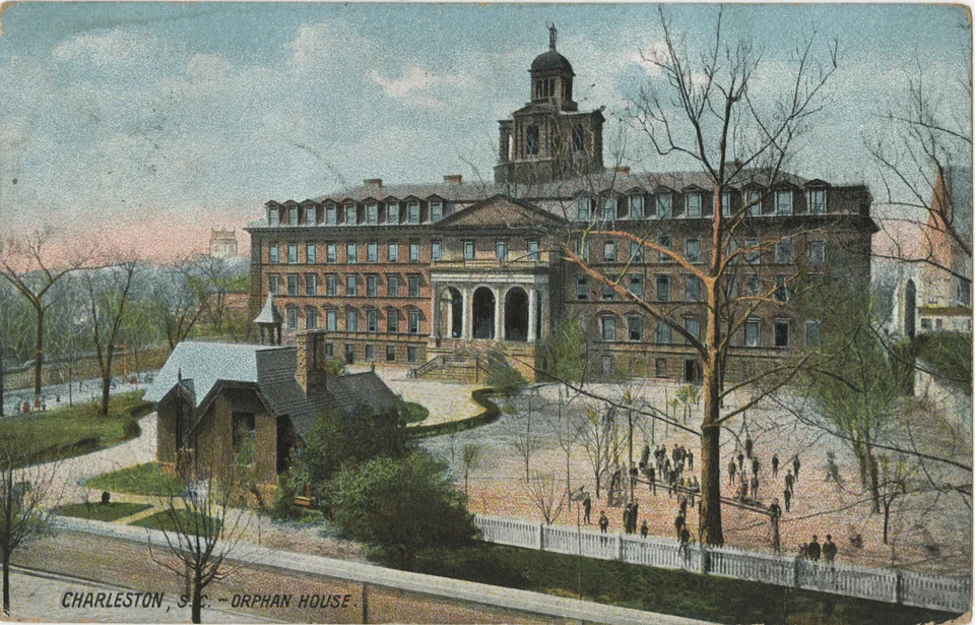
RW: How did you land on reddit as a possible outreach and engagement tool?

CS: I decided to propose a Special Collections reddit account (CofCSpecColl) when brainstorming additional ways to engage with our community following the onset of social distancing back in March. Personally, I use reddit as a way of keeping track of what’s going on where I live, from restaurant recommendations to traffic warnings. Unlike most other social media platforms, reddit is broken down into subcategories, or subreddits, which can be based around common interests or geographic locations. I already knew from experience that the local Charleston board includes both an invested group of locals and a rotating array of tourists who would be interested in Charleston history.

From r/archivists to r/askhistorians (which has over a million members), it’s clear that history is being discussed on reddit from both experts and amateurs. R/askhistorians in particular has built a reputation of reliability. They held a virtual conference this year and produce a podcast. While r/askhistorians appeals to those who already consider themselves history enthusiasts, I wanted to reach people who may not be likely to visit subreddits specifically for historical or archival research, but would still be interested in the content.

When I come across a visually engaging item that I think will catch the attention of people scrolling through their feeds, I post it, along with a paragraph or two of background information.

RW: How do you use reddit as an outreach mechanism?

CS: When I come across a visually engaging item that I think will catch the attention of people scrolling through their feeds, I post it, along with a paragraph or two of background information. I tend to stay away from heavily text-based materials because they don’t draw the eye as much as a colorful image does. A postcard of the old Charleston Orphan House and a before-and-after picture of a well-known downtown street have performed the best so far.

Language in the post should include links to other institutional websites or open-access resources for readers to explore if they’re interested in learning more. I also try to tie in information about the College of Charleston Special Collections sources and encourage Redditors to reach out to us for their other local research needs.

A picture of the Charleston, South Carolina Orphan House.Charleston, SC Orphan House,” from the Leah Greenberg Postcard Collection, College of Charleston Libraries

Screenshot from r/Charleston subreddit

Screenshot from r/Charleston subreddit

Although Reddit is not one of our primary outreach tools, I’ve found the level of engagement to be much, much higher than either Twitter or Instagram.

RW: What results have you achieved by using reddit?

CS: Although Reddit is not one of our primary outreach tools, I’ve found the level of engagement to be much, much higher than either Twitter or Instagram. I’m continually surprised by how willing people are to share stories they otherwise wouldn’t have a chance to.

I think the most successful result we can hope for is spreading the word that Special Collections exists and that we are here for people’s research needs.

One example of a successful post was this postcard of the Charleston Orphan House, which doesn’t exist anymore. It was established in 1790 as the first public orphanage in the United States and operated until the 1950s. The building was demolished and one of the College of Charleston’s dormitories stands there now. Longtime residents have strong memories associated with the building and commenters wrote about their relatives’ experiences living there. Commenters were open and willing to share their private family stories without being prompted. That’s part of what makes reddit a useful outreach tool- commenters aren’t restricted by a limited number of characters. I think the most successful result we can hope for is spreading the word that Special Collections exists and that we are here for people’s research needs.

RW: What are some of the challenges present in using reddit and have you been able to mitigate or circumvent them?

CS: Like on all social media platforms, copyright and permissions are a challenge. Although I always include a disclaimer, it wouldn’t be difficult for someone to take the image and use it without properly citing Special Collections as its repository of origin. Additionally, other Reddit users often feel the need to jump in and add their own information, which may or may not be accurate. It’s encouraging to see commenters get involved in the dialog, but it can be difficult to fact-check everything and correct mistakes. Readers also sometimes treat posts like an AMA (ask me anything) event and will ask questions that are really best suited for a research consultation or in person visit. It can be time-consuming to answer their obscure questions or redirect them to the proper place.

A historical postcard depicts a beach scene on Sullivan's Island, South Carolina.

“On the Beach, Sullivan’s Island, SC,” from the Leah Greenberg Postcard Collection, College of Charleston Libraries.

RW: Do you have any lessons learned you can share with us?

CS: You have to have somewhat of a thick skin! Reddit has a reputation for being harsh, and sometimes it’s true. The first time I posted, a user latched onto my request that anyone wanting to use the image had to DM me first to fill out a publication request form. They questioned how I had the authority to ask for something like that, but were understanding once I explained the situation.

RW: What advice would you give organizations who are interested in trying reddit?

CS: Choose your subreddits carefully. If you are part of a university library and want to reach more students, the university’s subreddit might be a good place to post. Unfortunately for us, r/CofC is inactive. If you want to reach an even broader audience, a state subreddit like r/SouthCarolina is what you’re looking for. It’s best to familiarize yourself with how Reddit works before diving in.

Be sure to stick around and answer questions after submitting your post. Some of the best interactions we’ve had have resulted from follow-up questions and direct messages. Unlike Twitter and Instagram, you have to closely monitor Reddit posts to get the most out of them.

RW: Is there anything else you’d like to share with us?

CS: You can follow the College of Charleston Special Collections on Twitter @CofCSpec_Col and on Instagram at cofcspeccoll!

Archival Innovators: Bridgett Kathryn Pride, the Reference Librarian of the Schomburg Center for Research in Black Culture, Manuscripts, Archives, and Rare Books Division and Art and Artifacts Division within the New York Public Library.

This is the latest post in our new series Archival Innovators, which aims to raise awareness of the individuals, institutions, and collaborations that are helping to boldly chart the future of the the archives profession and set new precedents for the role of the archivist in society.

Bridgett Kathryn Pride, the Reference Librarian of the Schomburg Center for Research in Black Culture, Manuscripts, Archives, and Rare Books Division and Art and Artifacts Division within the New York Public Library.

In this installation of Archival Innovators, SAA Committee on Public Awareness (COPA) member Rachael Woody interviews Bridgett Kathryn Pride, Reference Librarian of the Manuscripts, Archives, and Rare Books Division and the Art and Artifacts Division of the Schomburg Center for Research inBlack Culture, one of four research libraries within the New York Public Library system.

Bridgett is a part of the inaugural class of fellows Rare Book School for Cultural Heritage, focusing on Black collections and zine making. Bridgett received her MLIS, and a MA in History from Simmons University in 2018. She was a part of the Diversity, Equity, Race, Accessibility, and Identity in LIS (DERAIL) forum, and served as the 2018 project manager. Bridgett was awarded the 2018 Kenneth Shaffer Outstanding Student Award for student leadership. She studies American women and their intersectional identities with gender, race, and class in the 19th and 20th centuries.

RW: How did you get into archives, or why archives?

BKP: Actually Rachael, you inspired me quite a bit. I am not sure that I would have taken the path into library science, and then archives without your suggestion when I was in undergrad. Once you recommend I look into the field, everything just sort of fell into place. While I was earning my BA in Literature I was working in the university library and bookstore and loved it. I remember being really interested in learning about book preservation, especially from an “arts and crafts” perspective. I was romanced by the idea that rare books, and historical documents needed specific kinds of care to last in perpetuity, and had to know more.

After finishing my Literature degree I took some time off, then went back to school to earn a BA in History, my other love. Once I finished there, I went straight into library school for a double masters in LIS/Archives, and History. I was thankful to find a program at Simmons University that provided a pathway to complete both degrees together. It was in studying history that I realized people sharing my identity were hard to come by. I had to work extra hard to learn about queer Black women, and decided that the only way to make sure this problem is addressed is by doing the work myself. I began focusing my historical study in grad school on Black women artists and activists.

RW: How did you get your gig at the Schomburg Center for Research in Black Culture?

BKP: The same way as anyone else! I applied when I found the job posting. I knew that this was my dream job! I get to help researchers navigate collections created by Black folks, and I get to work with art and other historical artifacts. I remember being brought to tears during the end of my interview when Tammi Lawson, the curator of the Art and Artifacts Division said her favorite part of working at the Schomburg was that you get to celebrate being Black every day. In our field, that is dominated by white supremacy, hearing that was like being given breath after being on the brink of drowning. 

RW: Please describe the work you do there.

BKP: As the reference librarian, I meet with researchers to discuss their projects, teach instruction sessions for visiting groups and classes, build research guides on specific topics, and manage the public services workflow for my divisions; including scheduling research appointments and monitoring the reading room.

RW: Please describe the collections or one of your favorite collections.

BKP: Our collections are created by and about people of African descent. The collection was first imagined by Arturo Alfonso Schomburg, a Puerto Rican born Black man who was told by one of his teachers that Black people did not have their own history, and did not create anything worthy of study. He then spent his life collecting “Vindicating Evidences” of the intelligence, creativity, and genius of Black people around the globe. 

I have SO MANY favorite collections, from the Black Panther Party Harlem Branch Files, to the Storme Delarverie Papers, to two short letters written by Nella Larsen discussing the “small get together”  she would throw before the Cullen-DuBois wedding (that ultimately none of her guests would attend). One thing that I love about our collections is how much they feed into one another. For example, we have both Lorraine Hansberry and Langston Hughes’ papers. Each collection includes a folder of correspondence that was written to the other. You can almost read them side-by-side to see their beautiful friendship. One of my favorite items is a play bill that Langston sent Lorraine from when he went to see A Raisin in the Sun, the title of which is from Langston’s poem “Harlem”. On the cover, he wrote that he saw the play and watched the entire audience “cry all around” him because it was so beautiful.

RW: You were selected as a Rare Books School Mellon Cultural Heritage Fellow. Can you tell us more about that, the process you went through to become a fellow, and the work you’ll be doing as a fellow?

BKP: I am a part of the inaugural class of 15 fellows who work in multicultural collections in the US. I found out about the fellowship because the curator of the Manuscripts, Archives, and Rare Books Division Is a Rare Book School instructor. She had sent out the announcement that this fellowship had just been funded and if we were interested, we should apply. Because of my interest in Black zines, and how they have been used by the community to spread information, I was eager to apply. There was an application with several essays about why I was applying and how I intend to share what I learn in our field, then a few interviews. The object of the fellowship is for us to develop skills for documenting and interpreting visual and textural materials in special collections and archives, to raise awareness within professional communities about the significance of inclusive, multicultural collections, build connection with diverse communities and public through strategic programing, outreach and advocacy, and advance our careers by establishing new pathways and skills for personal growth. Since the Corona Virus hit, all of our in person classes, conferences, and meetings have been postponed, however we have been meeting monthly for guest speakers, and to discuss articles. Rare Book School has also been hosting other open events that many of the fellows have attended. 

Bridget Kathryn Pride pictured holding a pamphlet she created, entitled Reading & Creating Zines.

RW: You recently created Exploring Black LGBTQ Studies in the Schomburg Center’s Archive, a libguide. Can you please describe your work on this project? Where did the idea to create the libguide come from? What inspired it?

BKP: One of my main jobs as a reference librarian is to teach people how to navigate the collections at the Schomburg. One popular theme I address in both instruction sessions and research consultations is how to identify collections created by queer Black folks. Because I am a part of this community, I was more than thrilled to build a guide to help researchers access these collections. The year I started at the Schomburg Center, NYPL was celebrating Stone Wall 50, the 50th anniversary of the StoneWall Riots. They had received some grant money to process collections by and about queer folks, and made a big push to provide access to LGBT+ collection materials. However, I found that it was hard to locate Black people in these collections. Furthermore, it was really hard to locate Black women. My goal then became to highlight the collections at the Schomburg Center to address the violence done by excluding Black voices.

RW: What barriers or challenges did/do you face?

BKP: At first I thought I was wrong! I kept thinking that there was no way that they would have forgotten to include Black people. I kept thinking, maybe I just am bad at searching. But then realized that I was not the problem, the folks making the decisions on what archival materials to collect didn’t think outside of their own identities. Then, I also discovered that while there were collections that specifically discussed LGBT+ or queer studies, there were lots of collections at the Schomburg Center that were created by queer folks that could not be located using search terms dealing with queerness. For example, you will not find James Baldwin’s papers when searching “Black Gay Authors”, only “Black Authors.” I discovered that even at the Schomburg, parts of people’s identities had been erased.

I was also disappointed to learn about the general lack of collecting that focused on all members of the LGBTQ+ community. Specifically, trans folks are not represented, asexual folks, are missing, and so many others are not represented. Over all, while previous work to document LGBTQ+ stories were focused largely on cis gay White men, the Schomburg also appears to have a bias for cis gay Black men.

RW: What worked? What didn’t work? Were there any surprises in the process of developing your work, or lessons learned that you can share with us?

BKP: I struggled with how to explain the issue that some well known queer folks would not be findable using the guide. (See James Bladwin example). After many revisions, I settled on just being explicit about what the “Queer Studies” subject heading meant, rather than explaining what it excluded. The other part I was surprised by was that non-Schomburg NYPL folks had lots of thoughts and feeling about using the word “queer”, which I heavily identify with. At the end of the day, I ended up changing the guide title, removing the word “queer” in most instances, and focusing on the fact that no mater if the word is queer, or LGBT+, this guide focusing on Black queer folks was now Out in the world.

RW: Where would you like to see the work continue?

BKP: I would like to see a review of our subject headings used on collections that have not been identified as “Queer studies”. Labeling someone as a “Gay Black Author” is important and valuable for a lot of our researchers.

RW: What tips do you have for budding innovators?

BKP: Find what you are passionate about and go from there! Our field is in a transition period. We need to be thinking outside of the box to share our collections in creative ways so that people can continue to see their value. Right now I am doing that with research guides and zines. I am sure there are many other ways to engage with users based on other interests.

A group of children from Beginning with Children Charter School in New York City pose at the Schomburg Center. These children worked with Bridgett to create a zine discussing the book One Crazy Summer and what they learned about the Black Panther Party during Bridgett’s class.

These are sample zine pages from a two volume series created by the students from Beginning with Children Charter School. You can view, download, and print zine volumes 1 & 2 here and here. These are designed to be printed double-sided, flip along the short edge.

RW: In your own words, how would you describe the importance of archival records?

BKP: Archives show us the important journeys of people living their lives. Through archives we see a snapshot of time and place in the materials that were kept. It is a unique experience for every person based upon what they valued. Archival records are as diverse as the people in the world. It is our job to make sure that we are allowing these stories to be available for future generations, and that this diversity is captured.

RW: What is your favorite part of the job?

BKP: I love teaching! I recently started leading zine workshops at the Schomburg to connect young users with the concept of the archive. It brings my heart so much joy to see the faces of Black and Brown learners see themselves reflected in history, not as enslaved people, but as innovators, creators, and activists. That is priceless!

RW: What’s next for you?

BKP: Lots of things! I am about to publish a new research guide on the history of Black protest as it is documented at the Schomburg. [The guide was published on September 21, 2020–after this interview–and is linked here.] I am working with my team on reopening plans, and learning the best ways to teach instruction sessions online. I am working on a few blog posts for NYPL, so I can start completing my own research again, and I am hoping to collaborate with my colleagues on a few other new projects. The wish list of projects and programs is never ending. I need more hours in the week to do everything I am interested in.

RW: How can people connect with you to learn more about your work?

BKP: Folks can find me on Linkedin, Instagram, and Twitter!


Do you know an Archival Innovator who should be featured on ArchivesAWARE?  Send us your suggestions at archivesaware@archivists.org!

Responses & Retrospectives: Cecelia “Cece” Otto on Reimagining Living History Performances in the COVID-era

CeceOttoSuffrageChair01_hr-819x1024This is the latest post in our series Responses and Retrospectives, which features archivists’ personal responses and perspectives concerning current or historical events/subjects with significant implications for the archives profession. Interested in contributing to Responses and Retrospectives?  Please email the editor at archivesaware@archivists.org with your ideas!

In this installation of Responses & Retrospectives (COPA) member Rachael Woody of Rachael Cristine Consulting LLC interviews Cecelia “Cece” Otto, a classically trained singer, composer, international best-selling author and historian who has performed in venues all over the world both as a soloist and in ensemble. In 2013, she completed her cross-country musical journey An American Songline, performing 30 concerts of historic vintage music on venues along the Lincoln Highway. Cece then went on to create other historical programs such as The Songs of World War I, and is currently performing a program about the women’s suffrage movement and developing a concert program about Prohibition. She lives in Portland, Oregon, and has written books and recorded albums based on her research.

When we last heard from Cece Otto she was about to embark on a year-long tour of her women’s suffrage movement program and provided an interview for our Archives + Audiences series. Then COVID-19 hit, cancelling many of her performances that had been months–if not years–in the making. Over the last six months, Cece has reimagined her living history program and agreed to share with us her ideas, tips, and lessons-learned so that all archives, museums, and cultural heritage organizations can find the inspiration and know-how to pivot their own programming.

RW: How has your work shifted with the COVID-19 cancellation of events?

CO: It has shifted in a dramatic way. Prior to COVID-19, all of my appearances and concerts were in-person and 95% of my merchandise was bought at these events. When everything shifted in mid-March and events nationwide started to be cancelled or postponed, I had to hit pause and really think about how I could and should connect with audiences and venues. I wanted to continue to provide something of quality, but I had to think if my type of historic performing would translate well virtually. I pride myself on giving everyone an authentic experience, and performing virtually felt inauthentic in those early stages of quarantine. 

My calendar was booked solid and I had dates and speaking engagements all over the US. Everyone wanted to hear the Women’s Suffrage program, and I was on track to have my most profitable year in seven years. (I know things were similar financially for many sites and institutions too.) Each organization responded differently — some cancelled my shows right away, some waited until the last minute. Each state had their own COVID policies and I was trying to stay on top of it all. Some concerts in the last half of March were rescheduled to August to commemorate the ratification of the 19th amendment, but even then most of those events were postponed yet again because of various factors.  

That being said, there were some bright moments in all of this. I did my very first livestream performance with an organization that had booked me in 2018 because they had the funds and flexibility to make it happen. They were willing to pivot to keep their patrons engaged. When some venues mentioned above rebooked me, they told me I was the first person they thought of. Some places even noted that people had contacted them asking when I was going to be rescheduled. Because it’s an election year, people so badly want hear the songs and stories of the women who fought for the right to vote for over 70 years. 

RW: [Oh yes!] You recently performed live via YouTube premiere. What was that like?

CO: I have to admit, I was nervous about performing via a YouTube livestream. I didn’t know what to expect. Would people turn up? Would people comment on the songs and/or watch the whole concert? There were so many unknowns. But that being said, it was a fun experience. People did turn up! I had people from 15 states in all US time zones as well as people in Canada and Australia tune in to watch, which to this day still blows me away. All in all, I was able to reach regular fans and new fans who had never heard me before.

It was a little weird to not see people. I had to imagine applause at the end of each song, and I ended up saying “thank you” after every song, just like it was in a real show. The chat on YouTube was pretty active, but I couldn’t see it because I was on camera the entire time. Luckily, I had two people moderating comments, so when we did the Q&A at the end of the program the questions were all ready to go. 

That being said, it is a much more intense experience to perform for a camera and no physical audience. People are communal by nature, and we communicate verbally and non-verbally with each other even in a concert setting. The energy in the room that performers and audience members create is unique every time, and while the songs can remain the same each show is different because of people’s reactions. When you have no one there to perform to, that energy is gone and it can be hard to figure out how to introduce songs and talk about the topic at hand. Some songs I think played better in virtual setting because I could emote more and be more passionate on stage, others felt the same virtually as they did in-person, others may be better as live songs only. Because of these shifts, I was exhausted the next day after the show. But overall I was extremely pleased with how it all turned out.

RW: What were the technical, logistical, and theatrical considerations for delivering a virtual performance?

CO: Anyone can go live and be virtual these days, and I didn’t want this to be every single thing that’s appeared since we all went into lockdown in March. I had pressure from fans and organizations to “just get something up there”; many famous musicians were giving free concerts in their living rooms and they felt I can and should just do it like these top musicians did. While I appreciate that they put me in the same category, I financially am not in the same place as an independent musician and historian. The piano player has to get paid too, right? And taking virtual tip jar donations wasn’t going to cut it. This is music from a century ago, and I wanted to give it the proper treatment it deserves. 

My first obstacle was location, and it’s a big one. Theatrically, I had to think about what suited the music best. I live in a home that’s not a vintage home, and my pianist here in the Pacific Northwest has a period home, but a bad wifi connection for streaming a concert. The summer had vintage locations still very much in lockdown here in Oregon, and knowing I had to find a venue for the YouTube concert mentioned above, I put out a call to several places. One venue that I’d performed at a few times before immediately said “yes”, knowing that there would be less than five people in the building when the concert was happening so they would stay within COVID guidelines. They had a lovely parlor in the building that dated to the 1920s, the piano was in decent shape, and the wifi was excellent, so I knew that this space would be perfect. I will say that when thinking about filming, take into consideration the weather, lighting, and if the building has air-conditioning. When I did the test run it was earlier in the day and it was nice and cool outside. The day of the concert, it was 87 degrees outside, the parlor faced west and had no air-conditioning, so by the time the evening concert happened, it was warm and we had no fans to cool things down. It all turned out fine, but you want to be as comfortable as possible when you film.  

Next up was the additional equipment and software I needed to be able to stream properly. I had decided to use YouTube because its sound was better than most platforms, and all people needed was a link — no one had to download anything or needed a password to get in. I purchased one of those ring lights you’re seeing everywhere these days that had the capability to attach a webcam, and I used a USB microphone sat on the floor in front of me off camera. Everything hooked into my laptop and was streamed through YouTube and OBS, which is a free software that people can use for video broadcasting and live-streaming. Last but not least, we brought cleaning products so we could clean all of the surfaces before we left for the night. All in all, we found quality equipment that was less than $150, so any person or organization can and should invest a little if you’re thinking of doing more online content. It will make all the difference in the long run. 

RW: What challenges and opportunities do you see for performing virtually?

CO: The biggest challenge as a performer is that people will forgive bad video, but they NEVER forgive bad audio. If you have distorted audio or silence they will stop listening and watching almost immediately. My mouth didn’t match what I was singing sometimes and it’s a known YouTube issue, but people forgave it because the audio was crystal clear during the entire livestream. As a performer there were three things I had to keep in mind: 1) I had to find a platform that is inexpensive and easy for me to use 2) People know how to find and easily use the platform and last but not least, 3) It again has excellent audio quality. As much as Zoom and Facebook Live have their perks, the audio quality is inconsistent and the sound for music is terrible (talking is fine, music not so much). Many of these platforms are working on rolling out better audio for events in the future, but in the interim I chose YouTube because of its track record. 

Another challenge I again see is people arguing that my fees for my programs and services should be lower because I’m not traveling anywhere and not standing in front of them, which is extremely frustrating. Years of research and rehearsal need to be taken into it all, and I again think wearing period clothing is essential to the art and message of the music, which means I’m taking close to an hour to be camera-ready for a virtual performance. Add in the time and production costs for the filming and editing to create some virtual, and you can understand why rates need to stay where they are.  

But on the flip side, the opportunities to reach new audiences are and have been amazing. It would have taken months of touring to reach fifteen states and two countries, and I’m grateful that organization honored their 2-year commitment to me to make the livestream happen. I also have seen a hunger for people to learn more about me and how I do what I do, and that goes beyond just the professionals and academics in the field. While we’ve all been at home these past several months, we’ve been more curious and thinking about all the things we normally don’t think about. As a performer for many years, I didn’t think people wanted to see “what’s behind the curtain”, but what I’ve found out is that they do. Our world and society is looking back at historic events in ways they never have been before, and the public at large wants to know more. They frankly are yearning to know more. 

RW: What other opportunities do you see for innovating upon your work during this COVID-19 era?

CO: There’s more than I originally imagined! I’m so glad I hit pause and took the time to really think through what I could do and what would serve audiences and historical sites the best. I am grateful I took this time, I truly feel I’m able to provide something virtual that is a good substitute for an in-person show. There are real-time concerts and events of course, but there’s so much that can be done with repurposing what content I do have so more people have access to it. I’ve already taken the first livestream concert and given it to my Patrons on Patreon as a “thank you” for their support, and I was even able to use it to get more members (more on that later). 

I know budgets will be tight for many organizations in the next few years, so until live performances come back fully, I’ve set up three different virtual options that can give something new to members and patrons.

1) Concert only: This is an unlisted online link to one of my concerts that you could use and share with your patrons. They would have access to it for 30 days to view as many times as they like. I would absorb all production costs for this license; all you have to do is give them the link and you’re set!

2) Concert link with live Q&A at the end of the concert: You’d get the link as noted above, and then I would come on at a specific date and time of your choosing to talk with people and answer questions about the songs and my research. Q&A sessions can last anywhere from 15-45 minutes depending on how we get going!

3) Full exclusive livestream concert with Q&A: This option would be me in full costume performing the full program, with the Q&A session at the end of the program. The link would also be made available after the livestream for a set amount of time so if anyone misses it they can see it. Given people’s bandwidth these days, the concert would be 45-50 minutes long with 10-15 minutes of Q&A to keep screen fatigue to a minimum. 

RW: How can people support you and your work during this time?

CO: Until live events return, there are several ways that people can help. Booking virtual events, talks, and purchasing licenses to previous concerts are one way to support my work of course. My Patreon page is a great place for individuals and institutions to continually support what I’m doing as well, and there are various tiers. I’m building an online community there that’s not dependent on algorithms, and I talk behind the scenes about what I’m finding in my research. Patrons will get first access to music, videos, livestreams, and more. I’m even doing AMA (Ask Me Anything) chats. As more members join, I’ll be able to financially do more livestreams concerts that only they will have access to. 

I’ve also got books, concert program booklets, CDs and flash drives of music that people can buy from me directly. If people want to buy items in bulk, I offer discounts as well. Here’s a link to my Amazon Author page, and you can also find my songs distributed on iTunes, CD Baby and more. If finances are tight, something as simple as subscribing to my YouTube channel or leaving a review on Amazon or Facebook make a huge difference in my overall visibility. 

RW. When things are safe to return to in-person performance, how can people contact you about booking a show and is there anything they need to know?

CO: While the centennial of the 19th amendment occurred this year, many people have asked for this concert to be performed in 2021 and potentially beyond 2021 depending on when things get back to “normal”. And rightfully so! These songs and stories need to be heard, and as long as voting rights continue to be challenged, I welcome the opportunity to continue performing this program. 

I’m excited to report that I’ve also been researching and putting together a new program of Prohibition songs that will be ready next year! Not just the good time “fun” songs of the 1920s, but there are songs from the Temperance movement too and earlier. I’ve done programs of several important moments in American history, and I have been thinking about doing “artist in residence”-style performing where I could be in one location for a week performing a different concert every day. I love the idea of also doing talks and workshops with people in the community as well. This music is such a powerful learning tool, and I believe it’s a great way for us to open up and discuss sensitive topics. I feel the need to share that I’m very aware that venues and audiences will be different when we all come back together again, and I’m taking that into account. We’ve collectively been going through so much, and while we’ll all appreciate live entertainment more after this, I also know that we’ll all be processing this time in the months and years to come so the songs need to reflect that as well.  

I heartily recommend that if anyone is interested in working with me, they contact me sooner rather than later so they can ensure they have the date(s) they want. Once things get moving again, I have the feeling my calendar will fill up quickly! They can contact me personally at: cece@americansongline.com, via the American Songline website, or through any of the social media platforms below. 

RW: Where can people find you?

CO: There are many places they can find me online! My website is a great place to go first to learn more, and that link is www.americansongline.com. My YouTube channel is the next best stop—you’ll get to see excerpts of performances and hear testimonials from people who have attended the show. That link is: https://www.youtube.com/user/AmericanSongline. Of course, I’m on all of the major social media platforms like Facebook and Instagram, and I often post fun vintage, retro photos as well as concert and travel updates. Thanks again for the opportunity to share my experiences six months on, I really appreciate it!


This post was written by Rachael Woody based on an interview conducted with Cece Otto. The opinions and assertions stated within this piece are the interviewee’s alone, and do not represent the official stance of the Society of American Archivists. COPA publishes response posts with the sole aim of providing additional perspectives, context, and information on current events and subjects that directly impact archives and archivists.