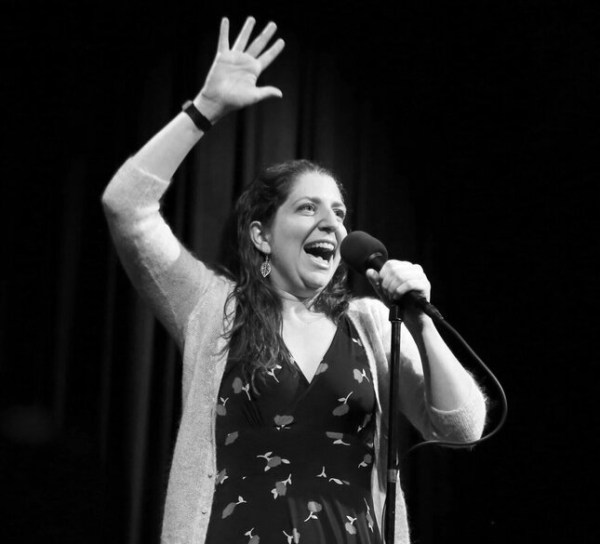
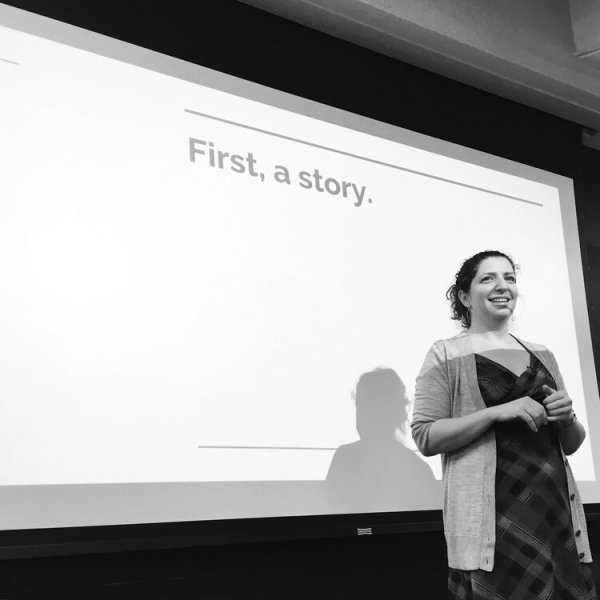
American Archives Month 2024: Storytelling Workshop Master Class with Micaela Blei!


The Committee on Public Awareness (COPA) is thrilled to sponsor this incredible event again! The virtual workshop is led by Micaela Blei, a two-time Moth GrandSLAM winner with a PhD in narrative education. You’ll learn:

● What makes a story work;

● The connections among narrative performance, research, and teaching;

● How to brainstorm and craft stories of your own.

After completing this workshop, budding storytellers and bards will have the opportunity to submit their story for possible performance in a special Valentine’s Day virtual storytelling event —“A Finding Aid to My Soul”—on February 14, 2025! If selected, you’ll receive additional guidance from Dr. Blei to help fine-tune your story. Stay tuned for more details.

This virtual workshop is on Wednesday, October 30, 12p-3p (CT). Registration is $49. Register here.

From the Vaults — Catching Pokémon: A Historically Themed Pokémon Scavenger Hunt Outreach Activity

This series celebrates all the great information that exists in ArchivesAWARE!

This post originally published on December 12, 2016, was authored by guest contributor Meredith E. Torre, Archivist at the Atlanta Housing Authority. It describes using a Pokémon scavenger hunt to celebrate American Archives month.


torre_headshot
Photo provided by Rachel Thomas.

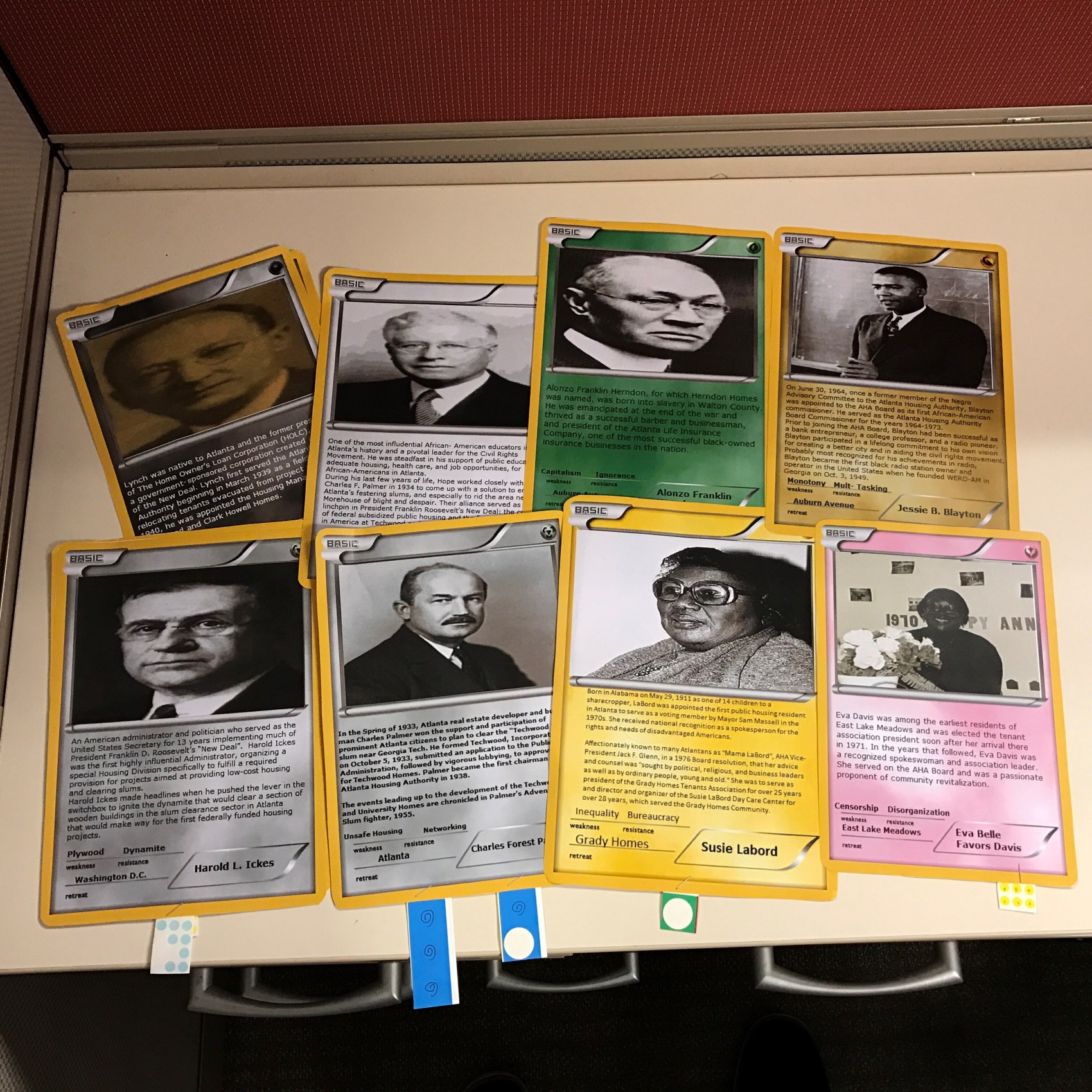
To celebrate October’s Archives month, the Atlanta Housing Authority (AHA) Archives recently launched a historically themed Pokémon scavenger hunt. The game was designed to celebrate some of the important people who have contributed to AHA’s history.

This outreach activity was great at eliciting responsive participation, generating conversation, and demonstrating some of the papers and records the AHA Archives holds for people valuable to our history.

assortment-of-pokemon
An assortment of Pokémon cards featuring notable individuals.

The fabrication of the game was fairly simple. The game was created entirely out of paper “Pokémon” cards, with corresponding stickers (to show how rare or common that particular Pokémon was) attached to the Pokémon, and a Pokéball or scorecard. Because the game was setup like a scavenger hunt and the score card resembled a bingo card, no knowledge of the actual Pokémon game was necessary to play the game.

The Pokémon cards consisted of biographical information for persons who are a significant part of AHA’s history—Charles F. Palmer, Dr. John Hope, Harold L. Ickes, Jesse Blayton, Clark Howell, and President Roosevelt, just to name a few—and corresponding stickers. These Pokémon were posted throughout AHA’s building. The object of the game was to locate the Pokémon (the person of historical significance) and to “catch” the Pokémon by placing the corresponding sticker onto a scorecard or your Pokéball. In the actual game of Pokémon, some Pokémon are common and some are rarer than others. We printed out less Pokémon cards for those person in our history we identified as already familiar and made them “rare”. On the contrary, we printed out more Pokémon cards for those persons perhaps less familiar and placed them in more prominent places to make them “common” and to give them more exposure.


pokemon-scorecard
Pokéball Scorecard

In creating the game, there are lots of Pokémon templates online to choose from. We selected a blank card template created by artist Christian England (LevelInfinitum) on Deviant Art to create our Pokémon cards and edited the images using Pixlr. We created our scorecards as a Word document and printed an image of a Pokéball on the opposite side.

We announced the Pokémon activity and posted the rules with scorecards in centralized locations. We held the game for a period of one week. There was a lot of enthusiasm for the activity and people said in hunting for the Pokémon that they really enjoyed discovering the people who make up a part of AHA’s history and learning things about them they may have not known!

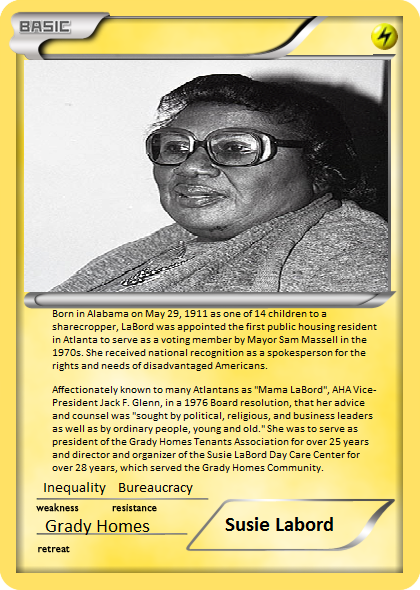
susie-labord
Completed Pokémon card created for Susie Labord, AHA’s first resident commissioner.

Pokémon themed prizes were awarded in a drawing for the hunters who collected the most Pokémon and to the hunter who collected the Legendary Pokémon, AHA’s first resident commissioner, Susie LaBord.

This outreach activity was easy to coordinate, super fun, and is also easily customizable for your institution!

RESOURCES:

Pokémon templates used in this project: http://levelinfinitum.deviantart.com/art/Pokemon-Blank-Card-Templates-Basic-474601445

Artist’s profile page: http://levelinfinitum.deviantart.com/

Pixlr Editor: https://pixlr.com/


Have you developed an innovative outreach program at your repository? If so, please share in the comments below or contact archivesaware@archivists.org to be a guest contributor to ArchivesAWARE!

“Making History: Kansas City and the Rise of Gay Rights:” How Progress Seen in Local Activism Impacts the National Narrative

This is the latest post in our series Archival Innovators, which aims to raise awareness of individuals, institutions, and collaborations that are helping to boldly chart the future of the archives profession and set new precedents for the role of archivists in society.

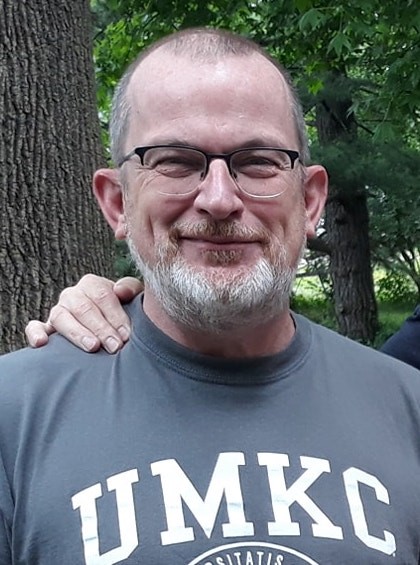
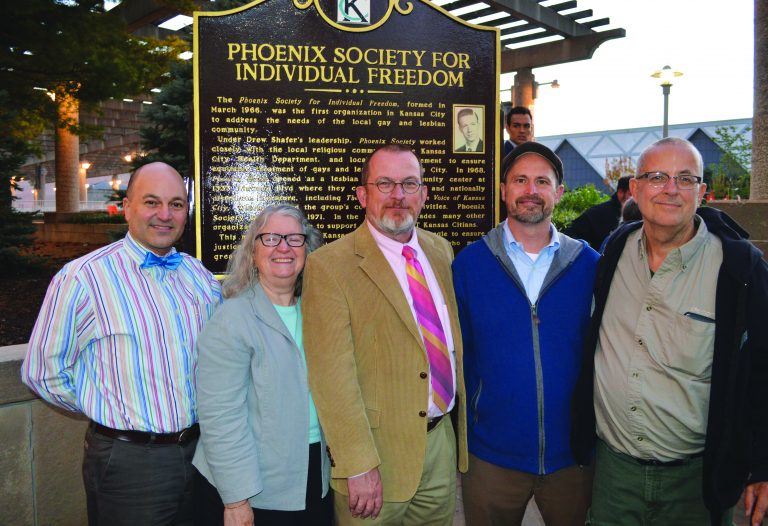
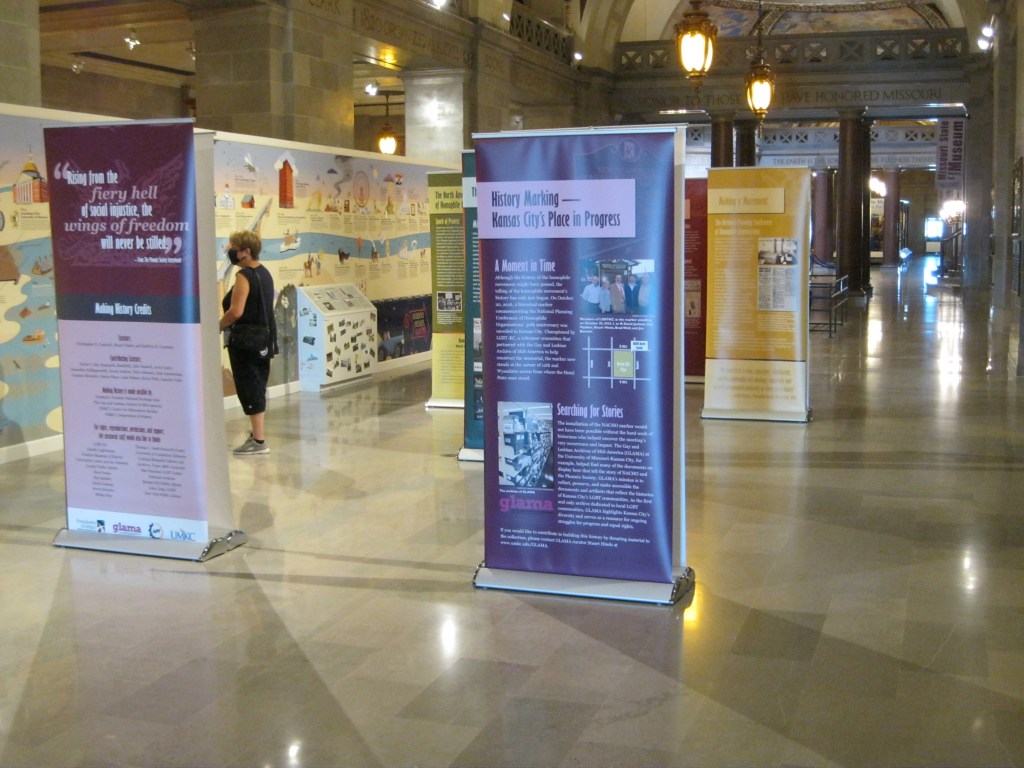
In this installment, Archivist and COPA Early Career Member, Kristi Chanda, interviews Stuart Hinds. Stuart Hinds is a Curator of Special Collections & Archives at University of Missouri-Kansas City.  Hinds discusses the exhibit “Making History: Kansas City and the Rise of Gay Rights” that was built by students at the University of Missouri-Kansas City’s public history program. It documents the rise of gay and lesbian activist community groups before the Stonewall riots. 

KC: What are the main aspects to your exhibit “Making History: Kansas City and the Rise of Gay Rights?” What was the process like creating it and who are the main figures involved?

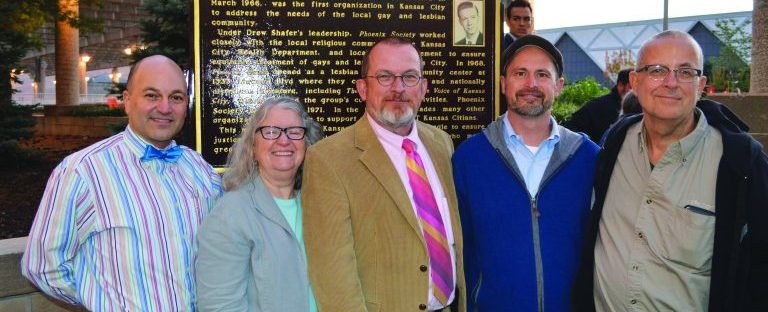
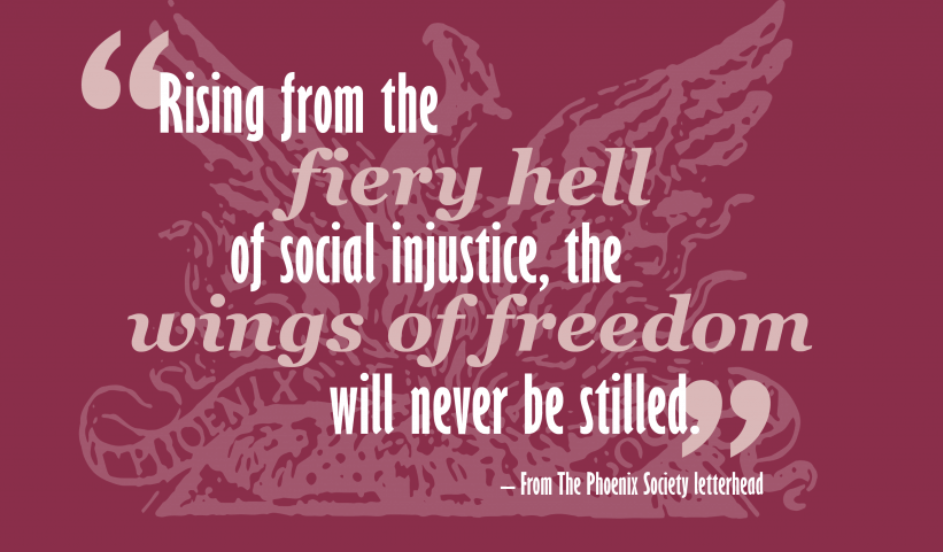
SH: The exhibit tells the story of gay and lesbian activism, both in Kansas City and in the US, in the 1960s before Stonewall, during the Homophile Movement, as it was called. The main thrust of the exhibit is to uncover Kansas City’s surprisingly pivotal role in that movement. The first gathering of gay and lesbian civil rights leaders from across the country, took place in Kansas City in February of ‘66. Out of that meeting comes the formation of umbrella groups for all these different, discrete advocacy and activist organizations across the country. As a part of that umbrella group there is the formation of an information clearinghouse. It was based in Kansas City because the folks here had access to a printing press. So, they would print and distribute the newsletters, the promotional material from a lot of different groups across the country. The exhibit focuses on those efforts, and the formation and activities of Kansas City’s first advocacy group which happened a month after that national meeting. In March of ‘66 the Phoenix Society for Individual Freedom was founded, and they were really active locally. What kicked off the exhibit was the fact that I worked with a committee made up of community members to install a historic marker in downtown Kansas City commemorating the 50th anniversary of that civil rights meeting, and it was put in place across the street from where the hotel used to be. At the same time I worked with a public history faculty member here on campus and his Intro to Public History class developed the exhibit in conjunction with the installation of the marker to sort of flesh out the story that the exhibit tells or that the marker commemorates. It was a class-based exhibit that was a semester-long project, and then I worked with the faculty member and a graduate student who designed the final product. We sort of tightened up the writing and did transitions between panels and all that kind of stuff, and then we got some grant money to fabricate a local version of the exhibit and then a touring version. It went on display locally, in the spring of 2017. The touring version has gone across the Kansas City region and several places in Kansas since then. The process was interesting because it was a class exhibit and I know most of the students weren’t from the LGBTQ community, so they wanted to make sure that they got the story right from the perspective of that community. They interviewed a couple of different folks who were on the committee that worked on the marker. We had a panel discussion with the class, and then reviewed the drafts of their panels.  The main figures that are involved in the narrative of the exhibit include prominent national activists, like Frank Kameny, Barbara Gittings, Del Martin and Phyllis Lyon from The Daughters of Bilitis in San Francisco. The primary activist who started the Phoenix Society, who was really a driving force behind it, was Drew Shafer. He was president of the Phoenix for the first two or three years and, you know how some of these organizations work, there’s only one person who makes everything happen, and in this case that was true.

KC: How does the exhibit positively reflect the past and present of the LGBTQ+ community? In what ways can it help empower future LGBTQ+ activism?

SH: The exhibit contextualizes the situation both nationally and locally. The 60s were a particularly oppressive time for the gay and lesbian community. There were lots of efforts to really keep queer people at bay. The exhibit talks about the scene here in Kansas City and how it was surprisingly active. There was a very active social scene. Unlike in a lot of other cities, places where people congregated, essentially gay bars, weren’t typically raided by the police, which they were in lots of other cities in big cities like New York and Chicago and Los Angeles, San Francisco. You saw a lot of raids and a lot of harassment by law enforcement and that wasn’t the case here in Kansas City. The exhibit talks about that. It goes into detail about the activities of the Phoenix Society, which was responsible for that clearinghouse for the national group. They also had their own agenda and set of activities going on locally. They opened a community center in 1968, two years after they founded the group. There was just a lot going on. By the end of the decade they had really overstretched themselves, they were really burnt out, they had really taken on too much.  I hope that’s a lesson that local activists take from the experience of members of the Phoenix, that as enthusiastic as you are, and as much as you want to achieve it, you must do it in a balanced way or otherwise you are going to burn yourself out very quickly. Everything’s going to come crashing down, which is exactly what happened with the Phoenix.

KC: What obstacles have you and your colleagues faced with creating this exhibit? What issues are you currently encountering?

SH: When the exhibit was first introduced and initiated, there really weren’t many obstacles. It was just a matter of the students doing the research and connecting with the resources that we have here, just doing the work of the class in conjunction with connecting with local community members. I will say we did get a little bit of pushback when we applied for grant funding. We received funding from the Freedom’s Frontier National Heritage Area, which straddles the border between Missouri and Kansas, which was a real hotbed during the Civil War;  that was the emphasis of the Heritage Area when it got started, but they’ve since broadened the scope to really focus on different interpretations of freedom. So, we thought this would be a good group to apply to for some of this grant money.

 There was some hesitation on the part of the institution’s leadership to take this to the review board because the concern was that they would just immediately push back on it because of the content.

We were able to convince them to be strident and move forward and they agreed, and we got the funding to do it.. The touring version of the exhibit has traveled across Missouri and across Kansas to several different places: to a small-town public library in southeast Kansas where there is a very active queer community, to public libraries here in the metropolitan area,  and to museums and historical societies. There was never an issue in the eight or nine places it’s been. Then I was working with folks who are affiliated with the Missouri State Museum,  which is in the state capitol in Jefferson City. We were having conversations about queer Missourians in advance of the state’s Bicentennial which is this year, as they were trying to do an exhibit on important Missourians in the history of the state, and they reached out and we talked about some of the the activists here in Kansas City. As part of that conversation, I mentioned this touring exhibit. They were excited about that, and reached out earlier this spring when we made the final arrangements to get the exhibit to them. It went up in what they call the History Hall, which is the hallway outside of the museum, inside the Missouri State Capitol. Some legislative aides, and a legislator reached out to the Museum and asked why this exhibit was on display. They got a very appropriate response from the Director of the Museum, and then they took it further. They took it to the leadership of the department that oversees the museum, which is the Department of Natural Resources.. The leadership of the Department of Natural Resources, four days after the exhibit went on display, decided to remove it from the state capitol. There was a big hue and cry that got a lot of media attention, locally, regionally, nationally, and internationally. It was in the New York Times, it was in the Washington Post, it was in The Advocate, it was an all sorts of queer blogs. You really couldn’t escape it. As a result of the outcry, the Department of Natural Resources relocated the exhibit in one of their buildings, also located there in Jefferson City, a historic building about four blocks away from the state capitol, far less visible and far less accessible. That’s where the exhibit remains to this day, even though most of the national, regional, and local professional history organizations issued public letters to the governor demanding that the exhibit be relocated back to the state capitol, which didn’t happen and won’t happen at this point. So that’s been challenging on many different levels.It’s just interesting that we encountered this pushback in a building that is supposed to be for all Missouri citizens. First, that they would censor student work and second, that they would censor a specific community of Missourians is really disheartening and frustrating.

KC: Has there been any discussion about future organized plans to take this a step further?

SH: Well, the flip side of the coin is that now we have about seven institutions in line that want the exhibit. I was just talking with the folks at the Missouri State Museum today and it looks like it will come back to us after the holidays, and then we’ll get it first in line for the next showing. Along the way we received generous support from a radio personality in St. Louis who has funded fabrication of another edition of the touring exhibit, and it will go to St. Louis probably within the next few weeks and tour. He’s coordinating several different sites throughout St. Louis to have short term displays of the exhibit through the first six months of 2022. So, it will get out there. It’s just unfortunate it took this ugliness to make that happen.

KC: What do you hope the public would gain when visiting your exhibit? 

SH: You talked about an awareness of stories that reflect the histories of the American LGBTQ communities that aren’t about big cities–that aren’t about New York, that aren’t about San Francisco, that aren’t about Los Angeles. That’s why we started this archive, because the stories that emanate from here help complete the picture. There are lots of Kansas City ties directly to the national narrative. That meeting is just one of those ways and we really hope to expand people’s understanding of the fact that there was activity going on here and similar sized cities and even smaller places while the more well-known stories we’re going on.

KC: Any plans in the making for future displays/events?

SH: We have a local undergraduate college of art and design here in Kansas City, the Kansas City Art Institute. I’m working with one of the faculty members there, and he has taught a class on queer archives the last couple of years. This year, he’s teaching it again in the spring, and he really wants to focus the students’ efforts  on this topic and the controversy around the exhibit, and then make work in reaction to the controversy. One of the venues that expressed interest was the Kansas City Public Library, so I’m hoping we can finagle having the Making History exhibit and the students’ exhibit on display at the Public Library simultaneously because I think that would really be an interesting opportunity for some conversations and just more awareness. I’m excited about that opportunity. We’ll see what happens.

PITCH YOUR STORY! Call for Stories for “A Finding Aid to My Soul” Virtual Event on October 6

“Storytelling provides safe conditions for daring decisions.”

—Micaela Blei
Graphic with pink angles and yellow circles on purple background. Text in yellow and pink. See caption for text.
Pitch Your Story! Call for your unique, moving, or humorous archival stories for “A Finding Aid to My Soul” Deadline: August 31, HTTPS://SMR.TO/P67427

When did you decide that you wanted to be an archivist? What was your first encounter with an archives? How did you handle a challenge in your work? What is a unique, serendipitous, moving, mysterious, special, or humorous experience you’ve had as an archivist?

If you would like the chance to share your story, then pitch it to us! In 100 to 200 words, tell us about your archives story. (Please don’t give us a cliff-hanger; you should summarize the whole story.) Great pitches will let us know what happened, what changed for you (or the world!), and what was at stake.

During “A Finding Aid to My Soul,” archivists from a variety of institutions and experience levels will share 5-minute true, personal stories of their connections to archives they have encountered. The virtual event—on Wednesday, October 6, from 12:00 pm to 1:00 pm CT—will be hosted by award-winning storyteller and educator Micaela Blei (The Moth, Risk). Sponsored by SAA’s Committee on Public Awareness, it is part of American Archives Month and will be recorded.

We’re looking for a wide range of voices to share their experiences. Absolutely no storytelling or performance experience necessary. Bonus: Micaela will be available to support you as you practice your story. 

You may think that your story is not “dramatic” enough. We beg to differ! We want to hear stories with high stakes as well as small, intimate stories of the work you do and the personal ways it connects to your life. If it mattered to you, it will matter to us, too. (If you need some inspiration, listen to selections from past “Finding Aid to My Soul” events on the Archives in Context podcast.)

Pitches are due August 31. Selected storytellers to be notified by Sept. 5. 
Pitch it here! 

Want to listen to more? Selections from past Finding Aid to My Soul events can be found on the Archives in Context (season 3) podcast.

Advocacy and Outreach Opportunities at the Archives*Records 2021 Annual Meeting

The SAA Annual meeting begins next week, though on-demand sessions were available starting Monday, July 26, and SAA section meetings have already started earlier in the month. Below is a list of sessions about awareness, advocacy, and outreach.

Please note, there is a mix of live, recorded, and on-demand opportunities. Make sure to visit the schedule for specific times for live sessions and to view session descriptions to see which category a session or meeting falls and whether you need to register for a session. Unless noted, all events are included with your annual meeting registration.

On-demand sessions available now!

S12 – Outreach and Fundraising in the Time of COVID: How to Engage Your Donors and Keep Events Going When You Can’t Meet in Person

Four panelists demonstrate how they managed to reimagine their outreach and programming to keep their donors and funders engaged during the pandemic.

Live Q&A for this session on Thursday August 5th!

S13 – Outreach and Online Access Innovations from Smaller Institutions

Lightning talk speakers discuss innovative project and outreach ideas—from exhibit formats to walking tours—and online access initiatives—from developing important content partnerships to unusual funding opportunities.

Live Q&A for this session on Friday August 6th!

Monday, Aug. 2

Storytelling Workshop Master Class

This is the 3rd year we have had two-time Moth GrandSLAM winner (and former Moth director of education) Micaela Blei facilitate a storytelling workshop for archivists. Separate registration and fee ($49) for this workshop where you will learn:

  • What makes a story work,
  • The connections among narrative performance, research, and teaching, and
  • How to brainstorm and craft stories of your own.

The workshop is aimed at budding storytellers as well as seasoned bards looking to refresh their skills. It is structured to make the online experience as welcoming and engaging as possible, using a webinar format followed by an optional small-group discussion structure so that you can take part in the workshop at the level that will best serve you.

Stories from the 2019 event, including one from Micaela herself can be found on Season 3 of the Archives in Context podcast. To learn more about Micaela, check out this ArchivesAware! interview from 2019.

Like last year, we will hold our related storytelling event, Finding Aid To My Soul, in October and it will be online. So stay tuned for more information this fall!

Tuesday, Aug. 3

Elevating the Value of Your Archive in an Ever Changing Digital World

This is a meeting for the digital preservation community, hosted by Preservica, and open to all.

Build a Bridge to Stand: Making the Ask Even in Uncertain Times

This 120-minute workshop, led by members of SAA’s committees on Public Awareness (COPA) and Public Policy (COPP) and featuring members of the Issues and Advocacy Section and the Regional Archival Associations Consortium (RAAC), explores a process-focused approach to advocacy. Attendees will participate in round-robin-style breakout sessions and walk away with personalized strategies.

Thursday, Aug. 5

Live Q&A: S12 – Outreach and Fundraising in the Time of COVID: How to Engage Your Donors and Keep Events Going When You Can’t Meet in Person

Join presenters from this on-demand session for a 20-minute live chat/Q&A. We recommend that you view the session before joining the live chat.

Friday, Aug. 6

Live Q&A: S13 Outreach and Online Access Innovations from Smaller Institutions

Join presenters from this on-demand session for a 20-minute live chat/Q&A. We recommend that you view the session before joining the live chat.

Conversation Lounge: Archival Advocacy in Challenging Times: What’s an Archivist to Do?

Laura Millar, author of A Matter of Facts: The Value of Evidence in the Age of Information, along with Chris Burns, past chair and current member of the Committee on Public Awareness, and Bryan Whitledge, co-chair of the Committee on Public Policy, will explore the topic of archival advocacy amidst a global pandemic, the equity movement, political and social unrest, and climate change.

Join the conversation to learn what you can do to make the public understand why archives matter and how you can advocate and become an influencer with decision-makers.

Know of other outreach- and advocacy-related sessions, events, and general happenings taking place over the course of ARCHIVES*RECORDS 2021 that didn’t make our schedule? Tell us in the comments below, or let us know which of these and other annual meeting events you are most looking forward to!

Catherine Stiers on Using Reddit as an Archival Outreach Tool

The College of Charleston Special Collections in Charleston, South Carolina has found a new way to connect its archival collections with their audience through a popular internet forum: reddit. Reddit is a forum where communities can form to discuss a person, topic, or event; share cute animal photos, and ask or answer question from the communities that gather there. Committee of Public Awareness member Rachael Woody sits down with Charelston’s research and outreach specialist Catherine Stiers, to learn more about Stier’s outreach work within reddit.

StiersCatherine Stiers is a Research and Outreach Specialist at the College of Charleston Special Collections in Charleston, South Carolina.

RW: How did you land on reddit as a possible outreach and engagement tool?

CS: I decided to propose a Special Collections reddit account (CofCSpecColl) when brainstorming additional ways to engage with our community following the onset of social distancing back in March. Personally, I use reddit as a way of keeping track of what’s going on where I live, from restaurant recommendations to traffic warnings. Unlike most other social media platforms, reddit is broken down into subcategories, or subreddits, which can be based around common interests or geographic locations. I already knew from experience that the local Charleston board includes both an invested group of locals and a rotating array of tourists who would be interested in Charleston history.

From r/archivists to r/askhistorians (which has over a million members), it’s clear that history is being discussed on reddit from both experts and amateurs. R/askhistorians in particular has built a reputation of reliability. They held a virtual conference this year and produce a podcast. While r/askhistorians appeals to those who already consider themselves history enthusiasts, I wanted to reach people who may not be likely to visit subreddits specifically for historical or archival research, but would still be interested in the content.

When I come across a visually engaging item that I think will catch the attention of people scrolling through their feeds, I post it, along with a paragraph or two of background information.

RW: How do you use reddit as an outreach mechanism?

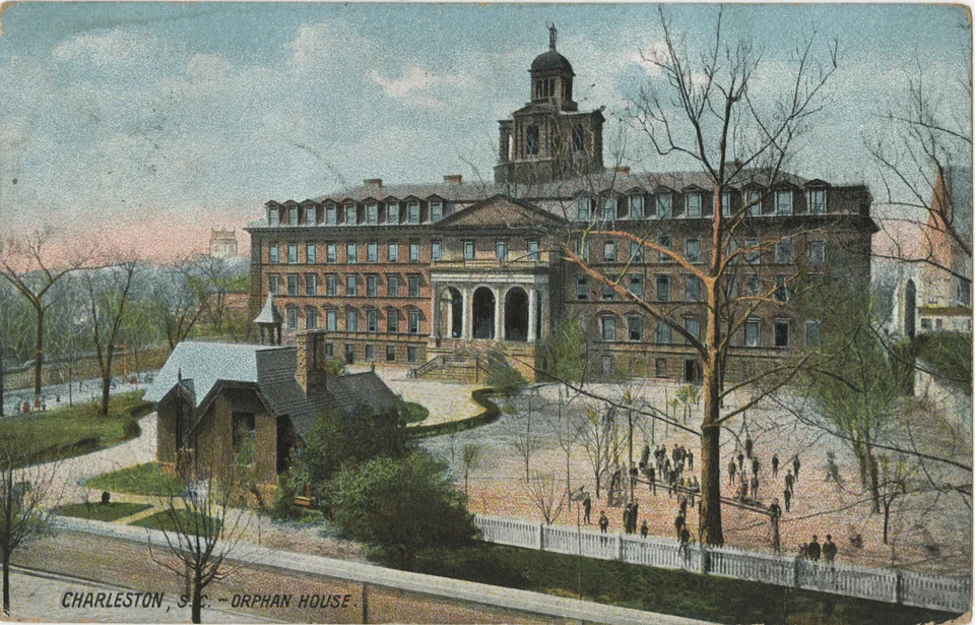
CS: When I come across a visually engaging item that I think will catch the attention of people scrolling through their feeds, I post it, along with a paragraph or two of background information. I tend to stay away from heavily text-based materials because they don’t draw the eye as much as a colorful image does. A postcard of the old Charleston Orphan House and a before-and-after picture of a well-known downtown street have performed the best so far.

Language in the post should include links to other institutional websites or open-access resources for readers to explore if they’re interested in learning more. I also try to tie in information about the College of Charleston Special Collections sources and encourage Redditors to reach out to us for their other local research needs.

A picture of the Charleston, South Carolina Orphan House.Charleston, SC Orphan House,” from the Leah Greenberg Postcard Collection, College of Charleston Libraries

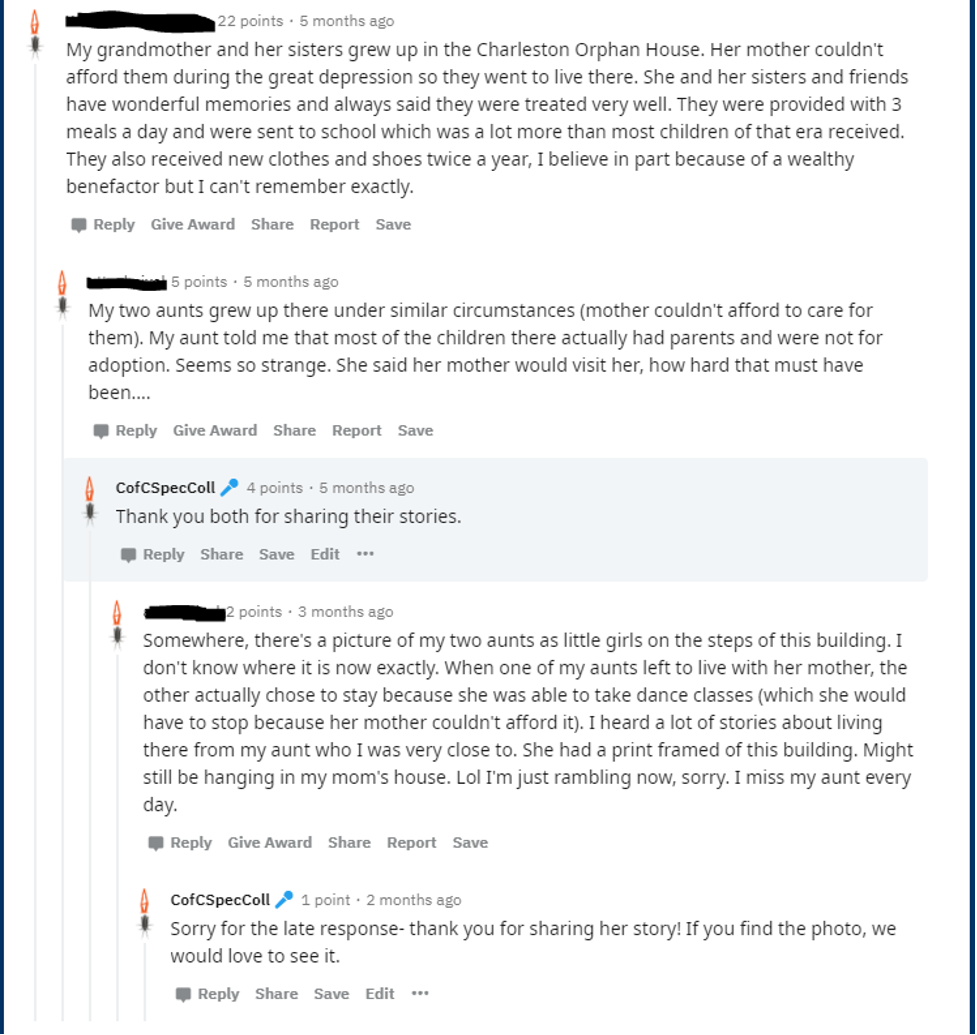
Screenshot from r/Charleston subreddit

Screenshot from r/Charleston subreddit

Although Reddit is not one of our primary outreach tools, I’ve found the level of engagement to be much, much higher than either Twitter or Instagram.

RW: What results have you achieved by using reddit?

CS: Although Reddit is not one of our primary outreach tools, I’ve found the level of engagement to be much, much higher than either Twitter or Instagram. I’m continually surprised by how willing people are to share stories they otherwise wouldn’t have a chance to.

I think the most successful result we can hope for is spreading the word that Special Collections exists and that we are here for people’s research needs.

One example of a successful post was this postcard of the Charleston Orphan House, which doesn’t exist anymore. It was established in 1790 as the first public orphanage in the United States and operated until the 1950s. The building was demolished and one of the College of Charleston’s dormitories stands there now. Longtime residents have strong memories associated with the building and commenters wrote about their relatives’ experiences living there. Commenters were open and willing to share their private family stories without being prompted. That’s part of what makes reddit a useful outreach tool- commenters aren’t restricted by a limited number of characters. I think the most successful result we can hope for is spreading the word that Special Collections exists and that we are here for people’s research needs.

RW: What are some of the challenges present in using reddit and have you been able to mitigate or circumvent them?

CS: Like on all social media platforms, copyright and permissions are a challenge. Although I always include a disclaimer, it wouldn’t be difficult for someone to take the image and use it without properly citing Special Collections as its repository of origin. Additionally, other Reddit users often feel the need to jump in and add their own information, which may or may not be accurate. It’s encouraging to see commenters get involved in the dialog, but it can be difficult to fact-check everything and correct mistakes. Readers also sometimes treat posts like an AMA (ask me anything) event and will ask questions that are really best suited for a research consultation or in person visit. It can be time-consuming to answer their obscure questions or redirect them to the proper place.

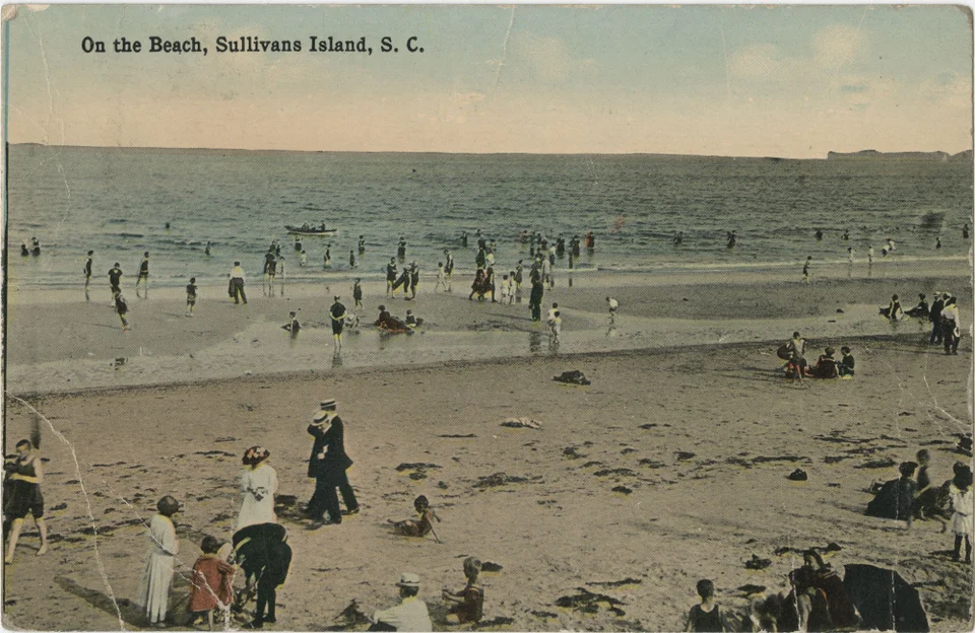
A historical postcard depicts a beach scene on Sullivan's Island, South Carolina.

“On the Beach, Sullivan’s Island, SC,” from the Leah Greenberg Postcard Collection, College of Charleston Libraries.

RW: Do you have any lessons learned you can share with us?

CS: You have to have somewhat of a thick skin! Reddit has a reputation for being harsh, and sometimes it’s true. The first time I posted, a user latched onto my request that anyone wanting to use the image had to DM me first to fill out a publication request form. They questioned how I had the authority to ask for something like that, but were understanding once I explained the situation.

RW: What advice would you give organizations who are interested in trying reddit?

CS: Choose your subreddits carefully. If you are part of a university library and want to reach more students, the university’s subreddit might be a good place to post. Unfortunately for us, r/CofC is inactive. If you want to reach an even broader audience, a state subreddit like r/SouthCarolina is what you’re looking for. It’s best to familiarize yourself with how Reddit works before diving in.

Be sure to stick around and answer questions after submitting your post. Some of the best interactions we’ve had have resulted from follow-up questions and direct messages. Unlike Twitter and Instagram, you have to closely monitor Reddit posts to get the most out of them.

RW: Is there anything else you’d like to share with us?

CS: You can follow the College of Charleston Special Collections on Twitter @CofCSpec_Col and on Instagram at cofcspeccoll!

“A Finding Aid to My Soul” A Storytelling Event Celebrating Archivists on October 1.

Pitch Your Story - COPA (1)

Archives Month Kickoff

Join SAA in celebrating the diversity and commonality of the archivist experience! Five storytellers—Kathy Marquis, Jessica Newell, Micaela Terronez, Melissa Barker, and Ethel Hazard—will share true stories about their unique, moving, serendipitous, mysterious, and often humorous encounters in the archives. This free event, sponsored by the Committee on Public Awareness, will be hosted by two-time Moth GrandSLAM winner (and former Moth director of education) Micaela Blei.

Time: Oct 1, 2020 07:00 PM CT

Register at https://zoom.us/meeting/register/tJMqcO2qqTgsE9OW0hRGHT34jFa-iXcEIEFW

If you were at either the 2018 or 2019 editions of A Finding Aid to My Soul, you know what incredible storytellers your archivist colleagues can be. If you weren’t able to attend either of those events and want a preview of what to expect, here’s a story by Joyce Lee Ann Joseph from the 2019 edition of A Finding Aid to My Soul.


Want to hear more archivist stories? Selections from past Finding Aid to My Soul events can be found on the Archives in Context podcast.

PITCH YOUR STORY! Call for Stories for “A Finding Aid to My Soul” Virtual Event on October 1.

1a

Arielle Petrovich at 2019 Storytelling Event.

Submission deadline extended to August 31!

When did you decide that you wanted to be an archivist? What was your first encounter with a particular archives? How did you handle a challenge in your work? What is a unique, serendipitous, moving, mysterious, special, or humorous experience you’ve had as an archivist?

If you would like the chance to share your story, then pitch it to us! In 100 to 200 words, tell us about your archives story. (Please don’t give us a cliff-hanger; you should summarize the whole story.) Great pitches will let us know what happened, what changed for you (or the world!), and what was at stake.

If your story is selected, you will have an opportunity to share your 5-minute, true personal story at the 2020 A Finding Aid to My Soul. This annual storytelling event brings together archivists for an evening of stories that energize and inspire, and celebrate the diversity of the archivist experience. This year’s virtual event—on October 1, from 7:00 pm to 9:00 pm ET—will be hosted by award-winning storyteller and educator Micaela Blei (The Moth, Risk). It is sponsored by SAA’s Committee on Public Awareness and will kick-off American Archives Month. If you’re unable to join us, the program will be recorded.

We’re looking for a wide range of voices to share their experiences. Absolutely no prior storytelling or performance experience is necessary—Micaela will support and guide you as you practice your story.

You may think that your story is not “dramatic” enough. We beg to differ! We want to hear stories with high stakes as well as small, and intimate stories of the work you do and the personal ways it connects to your life. If it mattered to you, it will matter to us, too.

If you need some inspiration, here’s a story from Travis Williams that closed out the 2019 event.


Want to listen to more? Selections from past Finding Aid to My Soul events can be found on the Archives in Context podcast.

Pitches are due August 31. Selected storytellers will be notified by September 4.

Pitch it here! 

Advocacy and Outreach Opportunities at the Archives*Records 2020 Annual Meeting

Last week was the start of the SAA Annual Meeting with the Teaching Primary Sources Unconference kicking off the Pre-Conference activities. Here is a list of some recommendations for awareness and advocacy sessions and creative outreach.

Please note, there is a mix of live, recorded, and on-demand sessions. Make sure to visit the schedule and view session descriptions to see which category a session or meeting falls and whether you need to register for a session.

Wednesday, July 29

College & University Archives Section

Join the Section to continue discussion on the various topics we’ve had at our weekly “coffee chats”, including collecting COVID stories, working and managing remotely, combating systemic racism at our institutions, and our plans for returning to campus. We’ll split into breakout sessions to explore these topics further. But first (after our business meeting), we’ll hear from Katie Howell, who developed a rapid response collecting initiative to document COVID-19 on the campus of UNC Charlotte.

Students & New Archives Professionals Section

Join SNAP for a brief business meeting as we present updates on section projects and advocacy work from the past year and introduce new steering committee members. 

Friday, July 31

Archives Management Section

Look, I Made a Hat: Agility in the Archives
Archives managers are required to don many hats (as it were) in addressing a range of challenges and moving quickly to implement solutions. After conducting some section business, we will transition to presentations on incredibly timely topics: Budgeting, Personnel, and Advocacy.

Monday, August 3

Storytelling Workshop with Micaela Blei

A powerful story has the potential to connect us to our own experiences, pull a community together, and engage new audiences with our work. In this master class storytelling workshop led by two-time Moth GrandSLAM winner (and former Moth director of education) Micaela Blei, you’ll learn “what makes a story work” and the connections among narrative performance, research, and teaching, as well as brainstorm and craft stories of your own.

The workshop is structured to make the online experience as engaging and welcoming as possible—using a webinar format and then an optional small-group discussion structure to allow you to take part in the workshop at the level that will best serve you. 

Registration is required and there is an additional fee of $49.00 to attend.

Wednesday, August 5

Keeping Archives Relevant in a Dizzying Digital World

Join Preservica customers and staff as they explore together the evolving impact of digital archives, celebrate user projects and stories, and discuss innovations in archival practice.

Thursday, August 6

Plenary 1

In addition to hearing our current president, Dr. Meredith Evans speak, this session includes Jodie Foley and Tempestt Hazel. Jodie Foley is the Montana State Archivist at the Montana State Historical Society.

Tempestt Hazel was the 2019 recipient of the J. Franklin Jameson Archival Advocacy Award from the Society of American Archivists. She is a curator, writer, and founder of Sixty Inches From Center, a Chicago-based arts publication and archiving initiative that has promoted and preserved the practices of BIPOC and LGBTQIA+ artists, and artists with disabilities across the Midwest since 2010. Focusing primarily on reframing cultural archives and institutional collections, her exhibitions and projects have been produced with the University of North Texas, South Side Community Art Center, Terrain Exhibitions, the Black Metropolis Research Consortium, the Smart Museum of Art, and the University of Chicago, among others.

2B – Archival Outreach in the New Normal: Using Digital Platforms to Teach Primary Sources

Learn about the National Archives and Records Administration’s (NARA) longstanding partnership with Internet2 and the Presidential Primary Source Project and the teaching series they have done, completely online. They will share tips for presenting in this medium and discuss methods for regaining audience attention and making the session more interactive.

In addition, learn more how NARA has moved its adult programming to online platforms. They will discuss how to host these kinds of sessions with members of the general public and how to manage registrations, digital platforms, and advertising.

3A – From the Margins to the Center: Foregrounding Underrepresented Communities and Revitalizing Mainstream Collections

This session examines how different approaches to foregrounding marginalized groups and individuals have revitalized established collections at three archival repositories.

3B – Showing Up: Community Engagement Events Toward a Better Cultural Record

This panel will explore the centrality of community partnerships in the diversification of the archival record, featuring programs that have hosted grant-funded community engagement activities to create and collect documentation of historically underrepresented groups.

Friday, August 7

4B – Reframing History: Opening Up Archives to Artists

This panel will highlight the Chicago Archives + Artists Project organized by Sixty Inches From Center and feature visual artists, curators, and writers who have collaborated with archivists, librarians, and other collection caretakers for their research-based creative practices to commission new artworks and curate exhibitions.

Hop into History: Archives and Alcohol in America

Grab a drink, and pull up a stool at the virtual hotel bar for a storytelling session featuring archivists who are working to document various aspects of alcohol history in the United States. Whether your drink of choice is beer, wine, bourbon, or cocktails, we’ll share some stories from our collections that might make you think a little differently the next time you take a sip!

Saturday, August 8

S04 – Ambition, Advocacy, and the Future of Storytelling

Orchestra and radio archivists describe how they pitched forward-thinking projects that break storytelling out of its traditional mold. Participants then break into groups to imagine, share, and learn what the future role of archives will and can be. Practical tips and challenges related to technology, project implementation, and advocacy will be shared.

S11 – Community Collections as Digital Collections

L.A. as Subject (LAAS), Chicago Collections Consortium (CCC), and the Recollect community in Australia and New Zealand will address the lessons learned and future visions in achieving a truly collaborative and reciprocal network. Although they are separate and independent entities, LAAS, CCC, and Recollect developed coinciding missions to collaborate with a diverse set of community archives in order to openly share collections and strengthen the profession through more comprehensive knowledge sharing.

S12 – Connecting to Communities: Outreach at the Missouri State Archives

 In this session archivists from the Missouri State Archives will share their experiences with tours, special events, speaker series, and grant programs. The focus is on creating sustainable, diverse programs to reach a broad range of patrons.

S29 – Love Can’t Turn Around™: Evidences of the Belief in the Power of Our Collective Social Experiences as Sites of Pleasure, Purpose and Politics

The Blackivists™ are a collective of trained and credentialed African-American archivists based in the Chicagoland area who address the needs of people interested in creating and preserving personal, community and “non-traditional” archives. The Blackivists™ collaborated with Honey Pot Performance on a series of programs for the Chicago Black Social Culture Mapping Project, which exists to preserve Chicago’s black social cultural lineage through fun and informative experiences focused on a Chicago based cultural art form: House music.

S35 – Project STAND: Highlights and Hurdles of a National Project on Social Justice and Archives

Project STAND, is a consortium of 70 colleges and universities that has created an online resource centralizing primary sources relating to student activism in historically under-documented and minoritized communities. This session will focus on its creation, highlights, and hurdles, and the role of the archivists to build relationships with marginalized communities, provide tools for documenting activism, and advance archival collections. Speakers will discuss the website and collection highlights, the Archiving Activism toolkit, and the symposia conducted in 2019/2020.

S36 – Protocols 101: How to Start the Conversation at Your Institution

This session explores the future of Indigenous collections stewardship for the 21st century archivist. Following the conference theme, it asks participants to consider how archivists can leverage creativity to make positive changes to collections care and access amidst institutional constraints.

S39 – Remaining Relevant: Changing the aesthetic of archives through collaboration and creativity

This interactive session is opportunity to not only hear what this institution is doing to change the profession, but engage in constructive and collaborative brainstorming with a variety of professionals to incorporate new strategies to better provide access and awareness to collections.

S42 – Setting a New Standard: Practical Applications and Uses of Standardized Measures and Metrics

Presenters will discuss implementation of the  SAA/RBMS Standardized Statistical Measures and Metrics, approved by SAA in 2018, and suggest ways to use statistical data to impact internal operations and advocate for your institution. General recommendations for data collection and application will also be provided. 

Tuesday, August 11

Reference, Access, and Outreach Section

As a part of the 2020 Annual Meeting of the Society of American Archivists, the Reference, Access, & Outreach (RAO) section will host its 8th annual Marketplace of Ideas. The Marketplace of Ideas takes place in conjunction with the annual RAO business meeting, and offers participants a chance to learn more about creative instruction, outreach, and reference programs piloted by colleagues. 

Thursday, August 13

Committee on Public Awareness

Come meet the members of the Committee on Public Awareness, hear about our activities over the past year, and learn about our plans for next year!

Know of other outreach- and advocacy-related sessions, events, and general happenings taking place over the course of ARCHIVES*RECORDS 2020 that didn’t make our schedule? Tell us in the comments below, or let us know which of these and other annual meeting events you are most looking forward to!
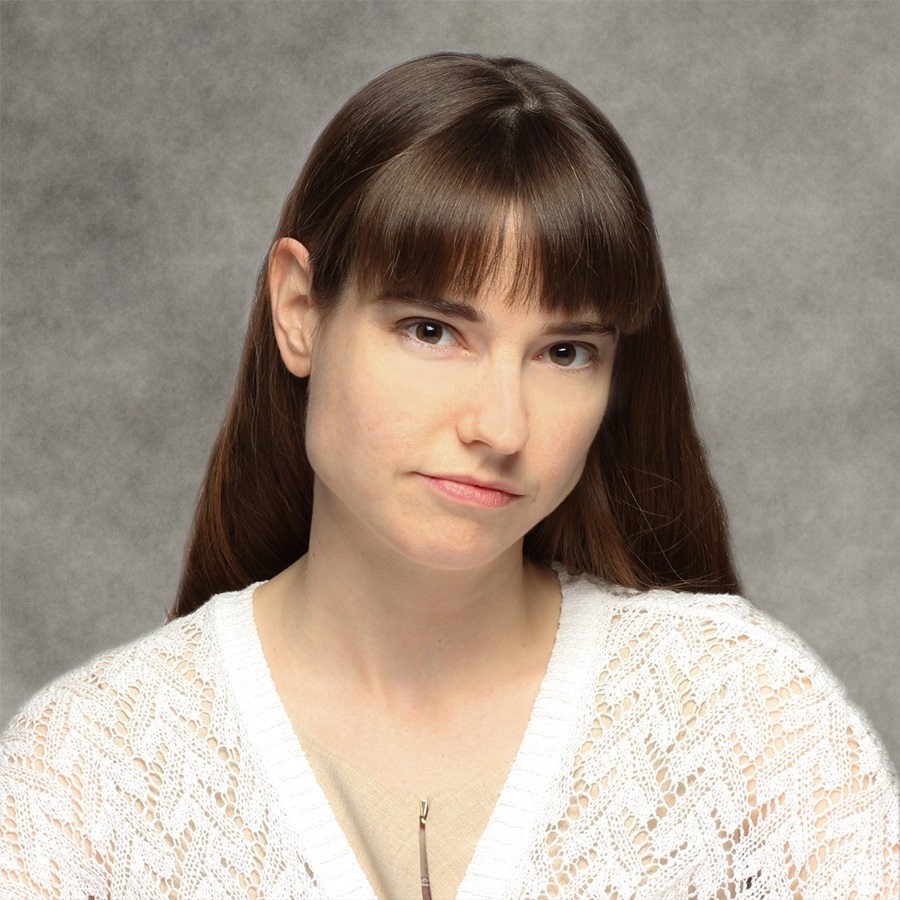
Announcing a Storytelling Workshop with Micaela Blei – August 3, 2020.

MicaelaBleicopy

Micaela Blei, PhD, has years of experience working with individuals, organizations, and communities to shape and share the important stories of their lives. Last year at the SAA Annual Meeting in Austin she hosted the storytelling-show-about-archives, “A Finding Aid to My Soul,” to great acclaim! Her popular workshops are invitations to reflection, spaces for discovery, and—most of all—a lot of fun. Her own stories have been called “heartbreaking and hilarious.” She’s appeared on The Moth Radio Hour and live on sold-out storytelling stages nationwide. In 2016, Micaela wrote The Moth’s storytelling curriculum, now used by more than 1,500 educators around the world. Learn more at micaelablei.com.

A powerful story has the potential to connect us to our own experiences, pull a community together, and engage new audiences with our work. In this master class storytelling workshop sponsored by the Committee on Public Awareness (COPA) and led by two-time Moth GrandSLAM winner (and former Moth director of education) Micaela Blei, you’ll learn “what makes a story work” and the connections among narrative performance, research, and teaching, as well as brainstorm and craft stories of your own. The workshop is structured to make the online experience as engaging and welcoming as possible—using a webinar format and then an optional small-group discussion structure to allow you to take part in the workshop at the level that will best serve you.

micaela+blei_01After this workshop, you’ll have the chance to submit your story for possible performance in a special online storytelling event—“A Finding Aid to My Soul” on October 1, 2020! If selected, you’ll receive additional guidance from Blei to help fine tune your story.

Register for the workshop here ($49 fee), and stay tuned for more details about the third annual “A Finding Aid to My Soul” storytelling event.

Stories from the 2019 event, including one from Micaela herself can be found on Season 3 of the Archives in Context podcast and stories from the 2018 event can be found here and here. To learn more about Micaela, check out this ArchivesAware! interview from 2019.