Finding Aid to My Soul: Becky Tinker

On February 14th, 2025, the Committee on Public Awareness (COPA) offered a storytelling event called “Finding Aid to My Soul: For the Love of Archives.”
This is one of the stories shared during that event.

Lipstick Links Us

If you were to read in a diary entry of mine from the winter of 2021 it would read like an angsty, Emo teenager’s, even though I was 32 at the time. I had spent eight incredible, but very tumultuous years working in animation and children’s television, which were definitely the epitome of the best of times and the worst of times. I burned out of that career hard and experienced what the kids today would call a quarter life crisis. I didn’t know what to do next, professionally speaking, and I guess you could say that I had some serious commitment issues. I felt really let down by the last career that I built for myself, and was worried about getting too attached to another one. So eventually, I moved 3,000 miles across the country to Boston to pursue a new career and enrolled in graduate program for library science at the height of the pandemic, as one does, because I felt like I just needed to commit to something. My family would probably be really horrified to hear me say this, because A, I told them otherwise, and B, I was putting all of my savings and then some into the endeavor. Given the timing, everyone was still caught in this weird haze coming out of isolation. We were all really skeptical of outings. It was made worse by the grayest, darkest winter I’d known in ages, and I was just really prone to second guessing all of the decisions that I’d made up to that point, including my new foray into the library and special collections worlds. I eventually got my first job at a library, though it was Schlesinger Library for the History of Women in America, at Harvard. I was a reading room assistant. I was helping researchers, paging materials from vaults and as part of the initial training exercise, my boss had me search for an item in the collection that was of interest to me.  

I chose the diaries of a woman named Catherine Keane, who was described as a covert operative in Washington, DC and then London during World War Two. I think I was naively hoping for first hand accounts of spies sliding codes hidden in newspapers across London park benches, because there’s was, and definitely still is a part of me that absolutely loved the idea of that life and had such a curiosity about the people who lived it. 

But before I got the chance to find out, I got sick. I got very, very sick. My sinuses felt like they were going to implode, and it was just the kind of sickness that made the loneliness even lonelier. I really want to reach out to my friends across the country, but thought I would just be a burden, so I didn’t. Of course, I was constantly checking for messages from them, even though I wasn’t reaching out to them at all. Everything was making me irritable. It was just one thing building up. My roommate was using all of my makeup without asking, and I was just so embarrassed about this giant pity party that I was throwing for myself. So of course, I did what I always do, I vented about everything in my diary. I was just pouring my thoughts onto pages to get them out of my head, and some are tangible. And eventually I got back to work and opened the reading room, and then I opened Catherine’s diary. I’ll never forget the first line of the first entry that I read. It was “I’m an utterly inert mass of protoplasm.” Catherine had been sick for two weeks. She was finally finding time to write after being released from the military infirmary, she returned to her quarters to discover that the lipstick that the military required women to wear, red shade number 23, was gone having been stolen by somebody. She felt sad that she wasn’t visited by any of her friends. She was worried they didn’t like her, even though she found out later that they were just part of a military training exercise that day, and she signed off the entry saying that she was sick of being sick, exactly word for word like I had in mine the night before. Reading it was somewhat unnerving. I was seeing myself reflected back at me through the words of a woman whose job it was to note down models and descriptions of planes that were flying overhead in this tiny, palm sized notebook that she covered in wool so that it camouflage perfectly into her clothing while she was walking around the city. When I had time throughout the work days, I kept reading and the similarities just kept seeping through. When an electrician came to my apartment, they accidentally broke something so meaningful to me, but I clamped down my emotions, because I could tell how badly he felt about it. I knew it was just an accident. So of course, then that night, I wrote again my diary about it. In one of her next centuries, Catherine complained that during a nighttime raid in London, she wanted to “positively strangle another woman in the bunker who couldn’t stop screaming,” and then she felt so guilty for saying that, because she knew it was a pretty proportional response to bombs raining down from the sky. 

And it was around this time that I began to wonder if the diaries were shaping themselves to my experience like this Narnia gateway, except instead of a winter wonderland, I was reading really uncannily similar thoughts from a woman calculating places likely to be targeted for missiles, but I realized that these similarities were indicative of a very different and equally wonderful truth, which is that we’re so messy, we’re beautifully messy. We can be embarrassed that we’re concerned with our makeup looks while a world war rages outside, or were lonely and sick and don’t want to vent about it out loud. And I really expected to find this story of covert adventure that I could live through vicariously. But instead, I found something that I really needed. These thoughts that she was pouring on pages in wartime, while she put on such a different face for this world that she was trying so hard to save, and she accomplished astounding, courageous things during and after the war. But in writing these diary entries, she made me feel so much less alone, no matter how different our lives were. Sometimes while I was reading Catherine’s diary, I find myself tracing the words. It’s a terrible preservation practice, especially in the winter when you have lotion and oil on your hands. But I didn’t even realize I was doing it. I just felt so emotionally connected to them. And weeks later, I helped a patron page the letters belonging to Julia Child, famous chef working in France. And at one point, I looked up and saw that they were tracing the words of the letters exactly like I had with Catherine’s diaries. And it made me so happy to see them connected to them in that way. And I watched them, and couldn’t help but hope that maybe they were reading a bit of unexpected messiness, instead of very perfectly planned, almost ready to be published French recipes. That maybe they were finding not what they expected, but what they needed, which in my case, was a new passion and profession, and I think that’s something that really can only be found in archives.
Finding Aid to My Soul: Alan McCafferty

On February 14th, 2025, the Committee on Public Awareness (COPA) offered a storytelling event called “Finding Aid to My Soul: For the Love of Archives.”
This is one of the stories shared during that event.

Daydream of an Undergraduate Hustle Monster

So picture this. It’s 2008, I’m a freshman undergrad taking classes full time and juggling five part time jobs to stay afloat. Computer lab assistant, Jimmy John’s sandwich technician, television studio lab instructor, monster makeup artist for Reaper’s Realm Haunted Attractions and my favorite job of them all, a student worker in the university library. I’m shelving books, helping patrons doing reference things, the usual stuff. But twice a day during head counts and book pickups, I would walk past this door with a tiny window in the southwest corner of the library. Peering through the window was this serene looking room full of natural light, peaceful, magical even, I peek through the glass and think, “Wow. Imagine working there,” one job full time, in that beautiful, mysterious space.

Fast forward to my junior year, a new archivist shows up, and he seemed to enjoy the days I came to campus dressed as a zombie. One day, he pulled me aside to give me a gift from his wife’s biology lab, a replica human skull. In hindsight, I realized this may have been a bribe of sorts, because shortly thereafter, he asked me for assistance in the room with sunny serenity. The sunny serenity room was the archives. They have me sorting through old collections, cutting out newspaper clippings, things like that. I’m hooked. I never really thought about archives before, what they were, what they do, what they are, what they do. But suddenly I can’t stop thinking about how and why they preserve history and keep stories alive in such a great way. And after I graduated, I was hired back in the library part time as a clerk, not in the archives, just general stuff. But then out of nowhere, the archivist and their assistant left, like poof gone, and suddenly I’m in the archives alone. Temporarily, of course. I remember thinking, “what am I doing here?” And more importantly, “what can I do to remain here?”

So, I got to work. I read everything I could about archives and special collections, taught myself the basics and tried to figure it out as I went. There was definitely a learning curve, and there were definitely moments where I thought, “This isn’t going to work. I can’t memorize all of this stuff.” But then the director always had my back. She saw what I was doing, and she believed in me, and eventually I even learned what a finding aid was. The director hired a new archivist in 2013. A few months later, I became the archive’s clerk. Around that time, the two of them were asked by another department that anyone in the library had a background in art. I painted in my free time. So they dropped my name and told me I’d be assisting with unloading a truck containing a photography exhibit worth more than my life. Little did we know that they actually signed me up to curate the exhibit, curate as a clerk with less than a year of experience. Almost a decade later, in 2022 I was promoted to assistant archivist, a job I used to think was way out of my league.

Here’s the thing, when I was a student worker, staring into the archives room, I thought it was just a pretty place to be. A quiet, sunny room, but now it’s not just a lovely space. It’s where I found my career. It’s where I found my passion, and every time I step into it, I still feel that same wonder I did as a student. Only now it’s not the daydream of an undergraduate hustle monster. It’s my life, and I’m advocating for UV window film.

Finding Aid to My Soul: Jefferson Navicky

On February 14th, 2025, the Committee on Public Awareness (COPA) offered a storytelling event called “Finding Aid to My Soul: For the Love of Archives.”
This is one of the stories shared during that event.

Watching her Die in a Finding Aid: An Archivist’s Duty

In the fall of 2013, I was a poet in Portland, Maine struggling to find a community of poets. Being a poet is lonely enough as it is, but a poet without a community is loneliness squared. Then I saw a notice for memorial of Maine’s first poet laureate, Kate Barnes. I was still pretty new to the state, and I had never heard of her, but my girlfriend was a big fan of the folk singer Gordon Bach, and he was on the program. So even though it was an hour up the coast, we decided we’d go. The event was in the Lincoln Theater in Damariscotta. An 1875 grand hall, it still has the plaster rosettes on the vaulted ceiling where the kerosene chandeliers used to hang. From the moment we walked in, it was like the psychic universe had opened and all the weirdos and lovers of language poured out. And I began to listen to them one by one, poems and stories. I particularly remember poet Steven Petroff. Disheveled, shuffling up to the stage, casually sipping a Diet Coke as he delivered the most tender rendition of Kate Barnes’s poem, “Inside the Stone”. The whole event was warm and welcoming, and it was hosted by booksellers Beth Leonard and Gary Lawless. Gary is also a poet, and he looked like a cross between Allen Ginsberg and Gandalf. I thought to myself, “these are my people.” And before long, I began to see them around, and would go to their readings, and they came to mine. And the Diet Coke guy. He became a friend, and amazingly, now I live down the road from Gary and Beth. But back then, three years after the memorial service, my now wife saw a job posting archivist for the Maine Women Writers Collection. She said to me, “can you do that job?” Despite not having a library degree, I had enough experience in literary archives to get the job. And one of my first projects was to process the papers of, you guessed it, Maine’s first poet laureate, Kate Barnes. Here was her literary life spread out in form in front of me in plastic bins, letters nibbled on by mice and poems scrawled on the back of shopping lists. It was now my job to care take the legacy of the woman who introduced me to the community that I was so looking for and helped me feel at home in Maine. I may not have met her in-person, but I would ensure that others got the chance to meet her in the archives.

And since I’m a poet, I want to continue the story with a poem I wrote. It’s called “Archivist Job Description”. [You can listen to Jefferson Navicky’s poem on the Finding Aid to My Soul event recording.]

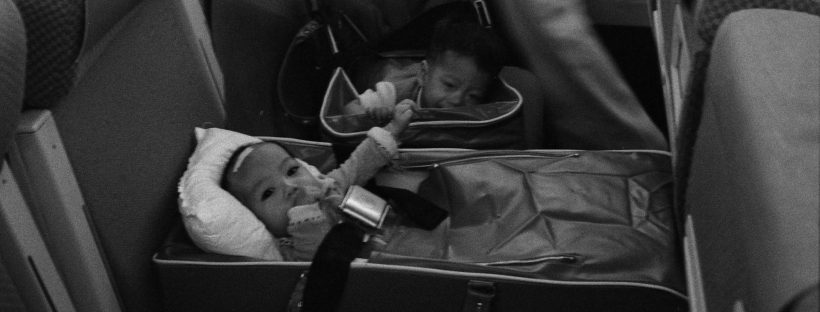
Interior of a plane with babies strapped in carriers and crew in the aisles

Finding Aid to My Soul: Devaki Merch

On February 14th, 2025, the Committee on Public Awareness (COPA) offered a storytelling event called “Finding Aid to My Soul: For the Love of Archives.”
This is one of the stories shared during that event.

Before I was Me

I was born in Vinh Long, a rural port [province] in the Mekong Delta in South Vietnam. As an infant, I was brought to Saigon to an orphanage operated by Friends For All Children, an organization based in Boulder, Colorado. On April 3, 1975 after Ed Daly, who was the president of World Airways, chartered an unauthorized flight evacuating orphans from Vietnam. President Ford initiated Operation Babylift to evacuate over 3,000 children, A C-5, a cargo plane was loaded with children, the infants in the troop compartment and the older children military crew, press and volunteers were on the floor in the cargo department.12 minutes after takeoff, the rear cargo door hydraulics failed. Bud Trainor, the pilot, maneuvered the plane to head back towards Saigon. The plane crashed into the rice paddy, bounced over the Saigon River, crash landed on the other side, breaking into pieces. Survivors, including me, I was nine months old at the time, were rescued, stabilized and flown to the US. We arrived in the Presidio in San Francisco, and I grew up on a beautiful farm in Kauai in Hawaii. The Presidio arrival was the first video capture of Operation Babylift, as President Ford greeted the children and 2020 aired the segment. I have no parental birth records. I have no hospital bracelet. I just have a front-page newspaper article and these news clips that we recorded. Over the years, I used Operation Babylift for school reports. I collected books, VHS, tapes of anything we’ve got on TV. There were documentaries, there were magazines, anything I could find. Little did I know that these were going to become the archives of my life. Books were published, published memoirs by adoptees, families of adoptees. There was a Nat Geo documentary, independent films, different websites would pop up, and personal blogs. This was a start that made the story a little more personal. But I felt like the story was always something that was told by others. It was never truly mine.

I have no parental birth records. I have no hospital bracelet.
I just have a front-page newspaper article and these news clips that we recorded.

 In the early 2000s, social media started to connect the adoptees, adding a whole other dimension to the story. But Trainor, who was the pilot of the C-5, a plane that crashed, he told me, “I don’t want this history to disappear when I do.” That was last year. He had started [a] Facebook page in 2010 and it was called the C-5 a galaxy, but Babylift. And on that, people started to share stories. They started to share histories. They identified the place the faces in the different photos, the pilot and others that were in service actually commented on all of the crash photos adding a narrative of their own to these images that we had seen publicly for years. 

There was a passenger manifest of civilians that was released by the Air Force, and it was a list that I had for years since, like high school reports. It was a publicly released list, but all of a sudden that list was no longer just names. It was real. For example, on one of the manifest lists that was the volunteers, it says line 34 and 35 “mom and dad both died in the crash,” and all of a sudden, the death of that loss became real. They became real people, and not just names. 

They became real people, and not just names.

As the 50th anniversary of Operation Babylift approaches–that will be this April 4 this year, ‘25–I wanted to help preserve history. I was talking to Mary Nell Gage, who was a part of a part of Friends For All Children on-site in Vietnam when I was an infant, and she helped facilitate many of the adoptions, including mine, and continues to support us through her work. She lives in Denver, Colorado. The records that we had when she was in Vietnam and others, the records were actually destroyed when all the on-site adoption records were destroyed, when the Operation shut down at the end of the war. The records that were personally held by the director of friends for all children, Rosemary Taylor, were recycled upon her passing. In December, I moved about 33 boxes up three flights of stairs from Mary Nell. And I joked with her, as after we moved all the boxes up, and I said, “Do you think my file’s in there?” And she said, “Somewhere.” I mean, there’s 33 boxes full of files. 

Later, at dinner, she went up and grabbed a stack of files, plopped them on the table, and I reached for the first one, and I opened it up. “Mommy!” Holy shit. It was mine. It was my mother’s handwriting. It was her application to adopt a child. It had home studies. It had the process and checklists. It had a receipt for me. It had letters, all of the pieces of my story before I was me. And then I was given a list of the plane crash survivors by a woman who wrote a book about Operation Babylift and that I had found on Facebook. She emailed me the PDF, and we looked at it together. I went down the list with her, and there it was, Mimosa. That was me. I was on the list. I was there. This was in the basement in Colorado for decades. And finally, this was my story. Those boxes weren’t just records, they’re proof that we existed and that we mattered. Preserving these stories ensures adoptees like me can finally find their truth. That is my love story of my life and archives. 

Finding Aid to My Soul: Courtney Berge

On February 14th, 2025, the Committee on Public Awareness (COPA) offered a storytelling event called “Finding Aid to My Soul: For the Love of Archives.”
This is one of the stories shared during that event.

The Last of the Thursday Morning Crew

Between the ages of about 11 to 15, I spent every Thursday morning having coffee with my grandpa and his friends. I would wake up early, he’d pick me up, and we’d drive downtown to the local bakery. He’d buy me a giant cinnamon roll, he’d get his coffee, and we’d sit around a table with his friends, where they would spend the next few hours solving the world’s problems or just talking about their week before or the week coming up. 

None of these men understood why this young girl enjoyed spending her Thursday mornings with them. And to be honest, I never really thought much about it. I enjoyed hearing their stories. I enjoyed feeling like a part of the group. It made me feel special. But really, I just liked spending time with my grandpa. Over the years, I heard 1000s of stories, and to be honest, I can’t tell you a single one today, but I did learn about these four old men. 

I enjoyed hearing their stories.

There was Ted, who was a pilot, a telegrapher, a photographer, and he learned how to cut cakes in the Navy, which he brought up every birthday as he passed out these beautifully cut pieces around the table.

There was Tom, who was a less frequent attendee of these meetings, but he was calm and always listening. I know a little less about him. I know he worked for the University, and for some reason, my young mind always equated him to a turtle. Don’t ask me why, but I still think of him as a turtle today.

There was Dick, who was a postman who loved discussing the rural routes on the edge of town and the best way to get from point A to point B. And well into his 70s, was prided himself on the fact that he still had brown hair while everyone else on the table, par me, was gray or going bald. 

And then there was Louis. He was my favorite. He was my grandpa’s best friend. He had served in the army, he had driven [a] truck, and he spent the latter years of his life helping others, most notably the widow of his former employer. 

Eventually, I started public high school and Thursday mornings were no longer my own, but every school break, you would find me at that table with those men, discussing the world and the town and everything in between. And eventually I started college, and a couple years in, I lost the first, Louis. Broke my heart. By the time I had finished grad school, I was the last of the Thursday morning crew left, which is a side-effect of being 60 years junior of your friends, but I think of them often to this day and drink coffee on all of their birthdays. 

I think of them often to this day and drink coffee on all of their birthdays. 

I eventually got a job at my local university archive, and in the following years, I was able to have coffee with each of these men again, at least once, if not a few times. 

The most frequent was Ted, who I initially found in a college yearbook. A photograph with him having a camera around his neck, he had served on the yearbook staff. This was before World War Two, when he left to serve, and he never returned to the university to get his degree. But he did return to town and became the photographer, and I often found [him] developing envelopes and local collections I was processing. 

And then there was Tom, who I had found in some staff and faculty photographs from the 60s, as I rehoused them. Turns out he had been a counselor at the university, which contradicted my memory of him being an AG professor, which goes to show that I might not have always been paying the closest attention on Thursday mornings.

There was Dick, who I didn’t necessarily find in the archive, though I’m sure he’s there somewhere. But every time I needed to move exhibit cases from one part of campus to another, we used his son’s moving company, and every time I saw the truck, I smiled. 

And then there was Louis. Again I didn’t find him exactly, but I did find his parents, who had participated in an oral history project in the 70s, discussing their migration from Italy to the rural area and their experiences there raising their family. I had no idea he was the son of Italian immigrants, but it made sense. 

Through my time in the archives. Over those years, I got to have coffee at least once with each of these men which bring brought joy to my heart and to this day, every time, every morning, I drive to work, and I see in a restaurant window backlit a group of old men sitting around a table drinking coffee, and it’s all my heart’s desire to pull over and see if I can join and maybe help them solve some of the world’s problems.

Call for Submissions: “A Finding Aid to My Soul: For the Love of Archives.”

SAA’s Committee on Public Awareness (COPA) is pleased to announce the return of its storytelling event with a special 2025 Valentine’s Day edition, “A Finding Aid to My Soul: For the Love of Archives.”

When did you decide that you wanted to be an archivist? What was your first encounter with an archives? How did you handle a challenge in your work? What is a unique, serendipitous, moving, mysterious, special, or humorous experience you’ve had as an archivist? We want to help you share your story!

The Event

During “A Finding Aid to My Soul: For the Love of Archives,” archivists from a variety of institutions and experience levels will share 5-minute true, personal stories of their connections to archives they have encountered. The virtual event—on Friday, February 14, from 12:00 to 1:00 p.m. CT—will be hosted by award-winning storyteller and educator Micaela Blei (The Moth, Risk).

Who Should Submit

We’re looking for a wide range of voices to share their experiences. Absolutely no storytelling or performance experience necessary. Bonus: Micaela will be available to support you as you practice your story. 

You may think that your story is not “dramatic” enough. We beg to differ! We want to hear stories with high stakes as well as small, intimate stories of the work you do and the personal ways it connects to your life. If it matters to you, it will matter to us, too. (If you need some inspiration, listen to selections from past “Finding Aid to My Soul” events on the Archives in Context podcast.)

Please note: If you participated in the Master Storytelling Workshop in October, we especially invite you to submit!

How to Submit

Submit your story for consideration. In 100 to 200 words, tell us about your archives story. (No cliff-hangers, please! Summarize the whole story.) Great pitches will include what happened, what changed for you (or the world!), and what was at stake.

Story submissions are due by December 18.

Selected storytellers will be notified in January.

Listen To Stories From The 2020 “Finding Aid to My Soul” Storytelling Event.

To help you get excited about this week’s A Finding Aid to My Soul Storytelling Event, take a listen to these great stories from the 2020 virtual event, also hosted by the one and only Micaela Blei.

Jessica Newell: Gladys Redux

Micaela Terronez: This Time It’s Personal

Melissa Barker: Murder Saves the Day

Kathy Marquis: An Unlikely Match Made In The Archives

Ethel Hazard: The Search History Of My History Search


And join us for the this year’s A Finding Aid to My Soul, Storytelling Event Celebrating Archivists, Oct. 6 2021, 12:00 pm CT.

Join SAA in celebrating the diversity and commonality of the archivist experience! Five storytellers—Sasha Griffin, Tricia Campbell Bailey, Hannah Palin, kYmberly Keeton, and April Anderson-Zorn—will share true stories about their funny, heartfelt, and surprising encounters in the archives. This free event, sponsored by the Committee on Public Awareness, will be hosted by two-time Moth GrandSLAM winner (and former Moth director of education) Micaela Blei.

Time: Oct 6, 2021 12:00

Register at this link https://us06web.zoom.us/meeting/register/tZ0pd–oqDMrE9w5WjAOQ2PXfY05MkAVrs1G

Sponsored by the Society of American Archivists Committee on Public Awareness.

“A Finding Aid to My Soul” A Storytelling Event Celebrating Archivists on October 6!

A Finding Aid to My Soul, Storytelling Event Celebrating Archivists, Oct. 6 2021, 12:00 pm CT, Sponsored by the Society of American Archivists Committee on Public Awareness.

Archives Month Kickoff

Join SAA in celebrating the diversity and commonality of the archivist experience! Five storytellers—Sasha Griffin, Tricia Campbell Bailey, Hannah Palin, kYmberly Keeton, and April Anderson-Zorn—will share true stories about their funny, heartfelt, and surprising encounters in the archives. This free event, sponsored by the Committee on Public Awareness, will be hosted by two-time Moth GrandSLAM winner (and former Moth director of education) Micaela Blei.

Time: Oct 6, 2021 12:00 PM CT

Register at this link https://us06web.zoom.us/meeting/register/tZ0pd–oqDMrE9w5WjAOQ2PXfY05MkAVrs1G


Want to hear more archivist stories? Selections from past Finding Aid to My Soul events can be found on the Archives in Context (season 3) podcast.

An Interview with Micaela Blei, Award-Winning Storyteller, Educator, and A Finding Aid to My Soul Host!

The Committee on Public Awareness (COPA) is collaborating again with our favorite professional storyteller, Micaela Blei, for our archivist and archives-centric storytelling event, A Finding Aid to My Soul, on October 6, 12:00 pm — 1:00 PM CT.

Micaela Blei, PhD, is a storyteller, educator and editor based in Brooklyn, NY. She’s a two-time Moth GrandSLAM winner, former Director of Education for The Moth and former third grade teacher who has told stories, taught storytelling workshops and hosted shows around the world. She gives keynotes and research talks on storytelling and empathy at conferences and universities nationwide. Micaela’s stories can be heard on The Moth Radio Hour and podcast, the acclaimed podcast Family Ghosts, and many others. You can find out more about her upcoming online courses and hear more stories at micaelablei.com

Check out our first interview with her in 2019.

This is your third time hosting COPA’s A Finding Aid to My Soul. Last year we took this event online for the first time. What surprised you about last year’s event? What do you think the benefits are of an online event? 

It was a surprise how well it worked! I was nervous at first: it was our first time working together for a show that was fully online. But I was thrilled when people shared their reactions— that they found it meaningful, connecting and most of all fun. I think the benefit of an online event— and this isn’t news to us, now that we’ve been doing things online for over a year— is accessibility. It was amazing to see people logging in from all over, who might otherwise not have made it to a live event.

You offer coaching and storytelling workshops to all kinds of groups. What is it like working with archivists? 

I find archivists to be really fun to work with, partly because of my own personal fascination with libraries and archives! I worked in an archive as an undergrad (at Beinecke, for the amazing Pat Willis) and it has always felt like the career I never had. Also, archivists understand stories! You all are immersed in stories all the time, and you’re communicators in so many modes— to the public, to stakeholders, to the people whose archives you are stewarding. In short— you’re my favorites.

Is there anything else you’d like to share regarding your work as a storyteller and educator? 

Just that I’m thrilled to be back working with SAA and I truly can’t wait to work with some new archivist tellers this year!


Listen to a story by Micaela Blei, Arielle Petrovich, instruction and outreach archivist at the University of Notre Dame; and Kira Lyle, grad student at the University of South Carolina on Archives in Context podcast, Season 3, Episode 2: Finding Aid to My Soul, Part 1.


Don’t forget to pitch your story! Last week our call for stories for “A Finding Aid to My Soul” Virtual Event went out.

Pitches are due August 31. Selected storytellers to be notified by Sept. 5. 
Pitch it here!