Federal Funding Impact Story #4

Project: Detroit Institute of Arts Archives Assessment

Capture

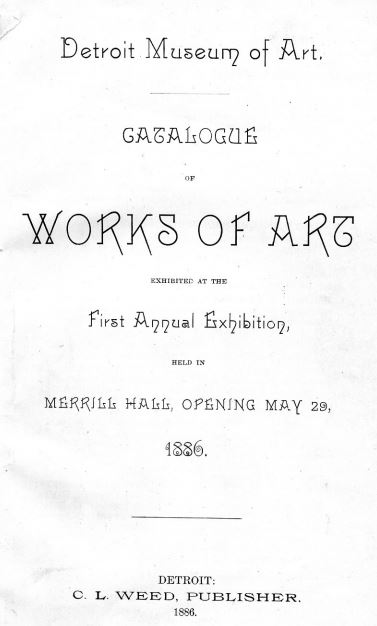
Detroit Museum of Art exhibition catalog, 1886.


Granting Agency: National Endowment for the Humanities (NEH)
Grant Program: Humanities Collections and Reference Resources
Institution: Detroit Institute of Arts
State: Michigan
Congressional District: 13th Michigan Congressional District
Grant Period: June 20, 2016-July 31, 2017
Award Amount: $40,000
Institutional Match Amount: $40,000

Jobs Created:
– 1 PTE 28 hr/wk position for 12 months
– 3 graduate students earning 3 credits each for 5 months of experience

Project Description
Assess and establish intellectual control over a collection of 11,000 linear feet of the museum’s administrative records, dating back to its founding, including 30 years of unprocessed artists’ correspondence, acquisition records, director’s files and curators’ exhibition papers.

What was the need for the grant?
Documents within the DIA’s Research Library and Archives detail pivotal moments in the City of Detroit’s history. Most recently, they described the DIA’s role in the resolution of the City of Detroit’s 2013 bankruptcy. It was the largest municipal bankruptcy filing in U.S. history both by debt, estimated at $18 billion, and by population, over 700,000 residents. At the time, the DIA was owned by the City of Detroit. It was also the city’s most valuable asset. Following the bankruptcy filing, creditors asked for the sale of DIA art. News agencies predicted the museum would close.

During bankruptcy proceedings, the DIA’s archival records helped save the museum. During the trial, over 180,000 DIA records were digitized for court proceedings. The documents showed that most of the museum’s most important works came from non-City of Detroit support. They were used extensively during the approval of a financial agreement that would come to be known as the “Grand Bargain.”

Unfortunately, like most of the DIA’s archival records, very few of the bankruptcy documents had previously been appraised, accessioned or processed. All such activities stopped thirty years ago, following severe museum-wide budget cuts and the dissolution of the DIA’s archival team. Therefore thirty years of records, including artist correspondence, directors and curators’ papers, and acquisition documents, have not received archival treatment. Many of the museum’s earlier documents, dating back to the late 19th century, have not been processed either.

Following Detroit’s bankruptcy and its resolution, the museum has better financial stability than at any other time in its modern history. With financial stability and a bankruptcy behind it, the DIA has resumed its commitment to its archival activities.

What has been the primary impact of this project?
The holdings survey was the key to understanding the unknowns of the materials currently held in RL&A. The museum is fully committed to making its archives more available and better organized for researchers. The Project Director and DIA Archivist are now able to better strategize future use of the DIA archives upon discovering its full contents. An immediate outcome of the holdings survey is improved access to collection, in particular, those that have been “hidden.” The collections-based reports can subsequently be translated into finding aids and catalog records for better access to the local, national, and international community.

The Project Team synthesized the results of the holdings survey with the input of the Advisory Team. The combined intelligence has been used to strengthen physical and intellectual control over the collection. The holdings survey provided the evidence needed to move forward with making sound decisions for improvements in description and access, prioritizing preservation needs, informing workflows, identifying issues we were not aware of, and plan for future projects (such as a future digitizing project).
Impact 3: To date, 164 collections (approximately 8,000 cases and 4,700 cubic feet) have been identified within the Library Stacks (the library’s book storage area) Archives Stacks, the DIA’s offsite Warehouse, and various other departments within the museum including AV offices and the Photography Department. Materials in each of these locations were inventoried and compiled into a single database for ready reference with rankings to reflect housing quality, physical quality, physical access, intellectual access, and intellectual value. These rankings are to inform and prioritize for future digitization efforts.

Submission by: Danae Dracht, Project Archivist, Detroit Institute of Arts
Image Source

Federal Funding Impact Story #3

Project: Documenting Modern Living

Splash Page 3

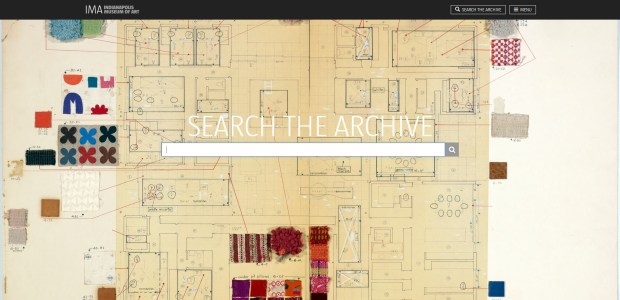
Alexander Girard textile design floor plan, ca. 1956, on the IMA Archives Digital Archives Portal landing page (archive.imamuseum.org)

Granting Agency: National Endowment for the Humanities
Grant Program: Preservation and Access: Humanities Collections and Reference Resources
Institution: Indianapolis Museum of Art
State: Indiana
Congressional District: Indiana US District 7
Grant Period: April 2012 – May 2015
Award Amount: $190,000
Institutional Match Amount: $221,000

Jobs Created:
The largest portion of the award received from NEH went to the hiring of two full time employees–one for 18 months, and the other for 24 months.

Project Description
Digitization of the Miller House and Garden Collection, and creation of a Digital Archives Portal for delivery of content.

What was the need for the grant?
The Miller House and Garden Collection documents the design, construction, decoration, and maintenance of the iconic mid-century modern property for over 50 years. When the house and garden were gifted to the Indianapolis Museum of Art, this important archival collection also came to the museum. To assist the IMA in successfully stewarding the home and the many collections materials that came along with it, increased access and better preservation of the archival collection were key. Digitization would solve both needs, and a grant would allow for the purchase of digitization equipment and the hiring of staff to undertake the years-long process.

What has been the primary impact of this project?
This project has allowed for unprecedented access to an important mid-century design collection that documents the legacies of Daniel Urban Kiley, Eero Saarinen, and Alexander Girard. The easy availability of this material has made it possible for the Indianapolis Museum of Art to present the story of the home to the Columbus and broader Indiana  and national communities at a level of detail and accuracy that would not have been possible without the grant award. Perhaps the greatest impact that this project has had is on the country’s future architects, as architecture students from around the country have requested the high-resolution images of the home and landscape architectural drawings to further their studies. Students of interior design have similarly benefited, and will continue to do so for many decades to come.

This grant from the National Endowment for the Humanities has also had a direct impact on the lives of the two full time, temporary employees hired with the grant funds. One has gone on to further the Columbus Indiana Architectural Archives as their archivist, and the other was offered a job at a high-profile design company immediately following the grant period as a result of their work on the Documenting Modern Living project.

Submission by: Samantha Norling, Archivist, Indianapolis Museum of Art
Image

Federal Funding Impact Story #2

Project: Preservation at the Charleston County Records Center

charleston-county

Granting Agency: National Endowment for the Humanities (NEH)
Grant Program: Preservation Assistance Grants for Smaller Institutions
Institution: Charleston County Government
State: South Carolina
Congressional District: SC 1st Congressional District
Grant Period: January 2016 – June 2017
Award Amount: $6,000

Jobs Created:
1 contract consultant job created

Project Description
Preservation needs assessment conducted by a Lyrasis consultant, along with the purchase of preservation materials to rehouse archival collections.

What was the need for the grant?
Many of the oldest, most valuable records held at the Charleston County Records Center (CCRC) were in need of preservation. Federal grant funds from the NEH aided in beginning the process of developing a preservation program through the preservation needs assessment and provided funds for rehousing materials needed to adequately preserve archival records.

What has been the primary impact of this project?
The project impacted the local citizens of Charleston County by developing a plan to ensure their records and their ancestor’s records are in good condition and accessible in the future. At the national level, this project looked at how to ensure that historical records of research interest will be preserved for future research purposes. The grant also made it possible for CCRC to purchase 150 archival boxes to rehouse historic Clerk of Court records that date pre-1950.

Submission by: Haley Doty Vaden, Records Manager, Charleston County Government

Share Your Federal Funding Impact Story!

CapitolImage_620

On Thursday, March 16, 2017, President Trump sent an outline of his proposed FY 2018 budget to Congress, to be followed by a more detailed proposal in the spring. The budget, known as “America First: A Budget Blueprint to Make America Great Again,” proposes a $54 billion increase in defense and public safety spending that is offset by equivalent cuts in discretionary non-defense programs. Included in those cuts are reductions in, or the total elimination of, funding for federal agencies with a history of supporting cultural heritage organizations and projects.

Share Your Story!

The proposed budget eliminates funding for the following agencies with a history of supporting archival and other cultural heritage projects:

  • Institute of Museum and Library Services (IMLS)
  • National Endowment for the Humanities (NEH)
  • National Endowment for the Arts (NEA)

The proposed budgets for other agencies with archives-related programs have not yet been released. These include:

  • National Archives and Records Administration (NARA)
  • National Historical Publications and Records Commission (NHPRC)
  • Library of Congress
  • Smithsonian Institution

Although this budget originating from the Oval Office is only a proposal, with Congress ultimately controlling appropriations, this proposal serves as a reminder to cultural heritage professionals in archives, libraries, and museums that it is always important to advocate for our institutions and those sources of funding that are so crucial to the work that we do.

During the lengthy appropriations process to come in the House and Senate, we should focus our advocacy efforts on the appropriations subcommittees with jurisdiction over the programs that affect SAA members and the institutions that employ them. By sharing examples of the positive impact of federal funding for the arts and humanities with representatives in both the House and Senate, we as a profession can hope to affect the decisions made regarding these federal funding agencies.

As archivists, librarians, and museum professionals, we know how our collections, institutions, and local communities have benefited from grant funding from these federal agencies. We collect statistics about the work we accomplish under these grants, but we also know that the impact goes far beyond numbers alone.

Consider: Did your federal grant-funded project empower K–12 educators to teach with primary sources, connect family members through genealogical records, or inspire a community art project?  Did a federal grant enable your institution to create jobs, contract with an external vendor, or carry out a project that had a fiscal impact on your institution? It is these stories of direct impact, whether personal or fiscal, and at all levels–within your institution, your local community, or even on a national scale–that speak to the true value of federal grant funding for the arts and humanities.

Personal impact is powerful. Please share the details of your federally funded project and the story of its impact. Access the online submission form at the following link:

Share Your Story!

Submitted stories will be published online by the SAA Committee on Public Awareness, and promoted by the Society of American Archivists through their website and social media channels. We hope to gather stories representing all types of archival repositories, and in all 50 states and the District of Columbia, so please consider sharing your story–no impact is too small when it comes to advocating for federal support for the arts and humanities! Please check back regularly to ArchivesAWARE and the main landing page for the Federal Funding Impact Story initiative on the SAA website to read and share stories of impact.

NEH        NHPRC

IMLS

NEA

Header image courtesy of the Library of Congress.

Live Blogging from RAO Marketplace of Ideas, Group 3

The SAA Committee on Public Awareness (COPA) is excited to be joining this year’s purveyors of hot topics and cool demonstrations at the Reference, Access, and Outreach (RAO) Section Marketplace of Ideas at the 2016 Annual Meeting. In the spirit of trying new avenues for outreach, we are not only encouraging attendees to live tweet with #ArchivesAWARE, but are also experimenting in LIVE BLOGGING–RIGHT NOW.

Group 3

Group 3

We are asking groups of Marketplace shoppers some outreach-related questions to get discussions going, and below are some of the responses we are getting LIVE:

1. What was the best new outreach initiative you’ve tried? If not new, what is your go-to for archival outreach?

    • Chemical Heritage Foundation in Philadelphia. Outreach resides with the Museum. Tumblr blog for Library. Has 13,000 followers to date. Have a big following among tattoo artists, who like illustrations. Interact with them through Tumblr. Also have a First Friday program with pop-up exhibits.

      Othermalia

      Othermalia

    • Temple University. Cookbooks, do a potluck with older recipes. People come in and find recipes from a selection of cookbooks.
    • Stanford. History of Information class. Students had to make recipes.
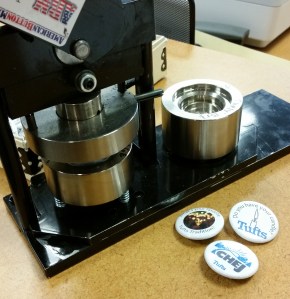
    • Go to. Tufts – Alumni events around commencement..Bring a button maker featuring Jumbo the elephant. Flooded with activity. New series of Tufts traditions.
Tufts button maker and buttons.

Tufts button maker and buttons.

2. How do you measure success for outreach activities? What are your benchmarks?

3. That being said, what have been some of your outreach fails?

4. Who do you consider an outreach superstar (not just archives!)

Live Blogging from RAO Marketplace of Ideas, Group 2

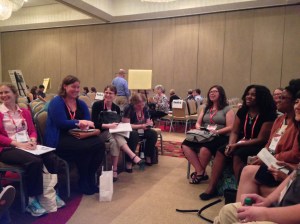
The SAA Committee on Public Awareness (COPA) is excited to be joining this year’s purveyors of hot topics and cool demonstrations at the Reference, Access, and Outreach (RAO) Section Marketplace of Ideas at the 2016 Annual Meeting. In the spirit of trying new avenues for outreach, we are not only encouraging attendees to live tweet with #ArchivesAWARE, but are also experimenting in LIVE BLOGGING–RIGHT NOW.

Group2

We are asking groups of Marketplace shoppers some outreach-related questions to get discussions going, and below are some of the responses we are getting LIVE:

1. What was the best new outreach initiative you’ve tried? If not new, what is your go-to for archival outreach?

  • Chicago. Open Archives Day. Did a tour on a day when enrollment management was doing tours. Got middle school children in to see archives.
  • MIT. Centennial of move from Boston to Cambridge. Made a coloring book and had crayon packets. Hands out at cookouts on campus with children, hands them out at commencement.
  • Arlington, Virginia. Lobby displays in the public library. Took a colorful business postcard and turned it into a puzzle. Have now made five of them. 48-piece puzzle. Adults and children both like it, serves as a conversation starter. About $60 to make one.
  • Library of Virginia. 2 year anniversary of transcribe program. Have programs once a month to have people come in to transcribe. Get a diverse audience of transcribers. Just did a Facebook post on two-year anniversary.
  • Go-to and a fail – inexpensive banners. Picture and a paragraph. Can bring them to different events. Have brought them to County Fairs with someone there to talk about posters, but people didn’t really engage. Over-reliance on go-to activity.
  • Go-to. Behind the scenes tour at the Corning Glass Library. Can be a lot of traffic. Looking at a virtual tour option.
  • Library of Congress. Have users tweet. Give them hashtags.
  • Social Media is a go to.
  • Exhibits and public programs are go tos.
  • Meet-ups at the Library of Congress have been successful, in-person and online.
  • Flicker feed has gotten a lot of people talking about collections and providing information

2. How do you measure success for outreach activities? What are your benchmarks?

  • Statistics. Best performing posts, traffic and interactions.
  • In the case of the puzzle, people continue to use it.
  • Very little setting of benchmarks before events.
  • Measuring the impact by gathering feedback through conversations.

3. That being said, what have been some of your outreach fails?

4. Who do you consider an outreach superstar (not just archives!)

  • Corning Glass Museum.
  • University of Iowa Special Collections social media, especially Tumblr and YouTube.
  • Austin Archives Bazaar.

Live Blogging from RAO Marketplace of Ideas, Group 1

The SAA Committee on Public Awareness (COPA) is excited to be joining this year’s purveyors of hot topics and cool demonstrations at the Reference, Access, and Outreach (RAO) Section Marketplace of Ideas at the 2016 Annual Meeting. In the spirit of trying new avenues for outreach, we are not only encouraging attendees to live tweet with #ArchivesAWARE, but are also experimenting in LIVE BLOGGING–RIGHT NOW.

Almost time to get started. Jill is ready!

Jill is ready to get started!

We are asking groups of Marketplace shoppers some outreach-related questions to get discussions going, and below are some of the responses we are getting LIVE:

1. What was the best new outreach initiative you’ve tried? If not new, what is your go-to for archival outreach?

  • Campus-wide open house at MIT. Cartoon of a character crossing the bridge from Boston to Cambridge, blew it up for people to take pictures with. Used a fake plastic torch for people to hold. Inexpensive, fun thing to do. Photos were tweeted out. Big success with families.
  • Book talk at University of Hawaii. Air conditioner went down. Made fans out of reproductions of pictures of an individual in the archives.
  • University of Wyoming. Faculty members – matched research interests with collections. Invited them to a limited open house. Had materials. Great way to connect materials and faculty members. Had event in the early evening. Did research on faculty beforehand.
  • Southern Illinois University. Working with incoming graduate students. Break up into groups and tell them about sources before they decide on theses and dissertation. Offer pizza and beer.
  • University of Alaska, Anchorage. Go to new faculty orientation. Anthropology faculty are frequently interested. Basic presence where they are has been really helpful.
  • Idea for a bring a friend to work day for student assistants who work in the archives.
  • Center for Jewish History. In-reach. Exhibit about historical cookbooks currently. To augment it they are having a historical bake-off, things like a jello mold with horse radish in it.

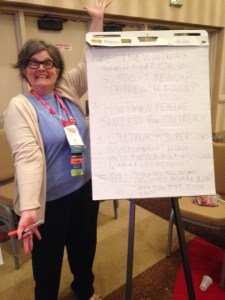
Go To’s for Outreach

  • Exhibits
  • Social Media – Twitter, Facebook, blogging, Vine, Instagram
  • Tours
  • Movie Night
  • Teach with primary sources
  • Workshops – Like personal digital archiving. Sexier the better!

2. How do you measure success for outreach activities? What are your benchmarks?

3. That being said, what have been some of your outreach fails?

  • Tours and talks to prospective students, was an uninterested audience.
  • Library audio tour that said front doors of archives were kept closed to keep room cool.
  • University of South Carolina – Twice they reached to every Chair in History and Political Science across South Carolina to generate research use. Reached out to 50 people, zero response. Hard to get faculty to break their patterns.

4. Who do you consider an outreach superstar (not just archives!)

  • David Carmichael was on public radio talking about archives, was very impressive.
  • Art Museum on Southern Illinois campus has a very vibrant community.

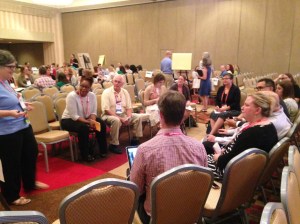
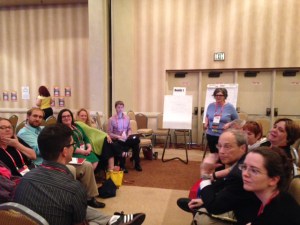
Group 1

 Group 1

We’re Live Blogging from the RAO Marketplace TODAY at #saa16!

The SAA Committee on Public Awareness (COPA) is excited to be joining this year’s purveyors of hot topics and cool demonstrations at the Reference, Access, and Outreach (RAO) Section Marketplace of Ideas at the 2016 Annual Meeting. In the spirit of trying new avenues for outreach, we will not only encourage attendees to live tweet with #ArchivesAWARE, but will also experiment in LIVE BLOGGING. 

We have prepared a number of outreach-related questions to start discussions with groups of Marketplace shoppers, and plan to share responses throughout the event, which takes place Friday, August 5, from 1:00 pm – 2:30 pm. Below are some of the questions we’ll be discussing:

1. What was the best new outreach initiative you’ve tried? If not new, what is your go-to for archival outreach?

2. How do you measure success for outreach activities? What are your benchmarks?

3. That being said, what have been some outreach fails?

4. Who is an outreach superstar (not just archives!)

If you are attending ARCHIVES*RECORDS 2016, please consider joining us for lively outreach discussion and the live blogging experiment. And if you can’t attend, simple follow #ArchivesAWARE and this blog feed to follow and join in the conversation!

Archives Awareness on the Redesigned SAA Website

SAA_homepage

After many months of planning and development, the Society of American Archivists launched a redesigned website last week. Coordinated by SAA staff members, the new website reflects the work of many SAA constituent groups, including the Committee on Public Awareness (COPA) and the Committee on Advocacy and Public Policy (CAPP).

saa-strategic-plan-goals

The four main goals of SAA’s 2014-2018 Strategic Plan.

As a reflection of SAA’s current Strategic Plan, which prioritizes Advocating for Archivists and Archives as Goal #1, “Advocacy” is now prominently featured on the website’s main navigation bar. In this context, SAA defines “Advocacy” as not only the shaping of public policy that impacts archives and archivists, but also includes the act of raising public awareness of archives collections, institutions, and professionals.

Advocacy Banner

Advocacy links available directly from the main SAA page navigation bar.

Over the past year, COPA has worked to compile the many resources that lived throughout the former SAA website–on various sub-pages, constituent groups’ micro-sites, and external pages like this WordPress blog–and make them available in one centralized place on the redesigned website. These can now be found under “Resources & Toolkits” under Public Awareness.

The current list is just a starting point, with new additions to be added as they are identified. We welcome suggestions for additional Public Awareness resources and tools. They can be shared in the comments below, or e-mailed to archivesAWARE@archivists.org. As the ArchivesAWARE! blog was developed as a forum for sharing and discussing awareness-raising tools, tips, and experiences, we also welcome guest authors who want to highlight their resources on this blog, as a more dynamic compliment to the static Resources & Toolkits list!

Feedback

Just as the Advocacy and Awareness pages will continue to evolve, so will the entire website continue to expand–and the SAA office is eager for feedback. Take the survey and share your thoughts over the next few weeks!

Welcome to ArchivesAWARE!

DWC_sm
This post was authored by guest contributor David Carmicheal, State Archivist, Commonwealth of Pennsylvania and Chair, SAA Committee on Public Awareness (COPA)

Yet another archival blog? Really?! Who has time for one more? We hope you have time because this might just be the most important archival blog you ever read. Really.

If you’ve hung around archival conferences and listservs for the last few years, or even had drinks with a few archival colleagues in the past month, you’ve probably heard the familiar lament: ‘My archives is misunderstood. No one knows what I do. My work is important but my institution keeps cutting my budget.’ But over the past couple of years the groans have been joined by a more exciting sound: the voices of archivists who are determined to do something about public perceptions of archives.

There have always been archivists who have a passion for archival outreach, and we all know individuals who are great at spreading the message that archives change lives, but lately those lone voices seem to be growing into a groundswell, an entire chorus of archivists working together to harmonize their message and express the value of our work in ways that a lone individual cannot. This blog intends to be an outlet for those who want to join that chorus. People like you. So, you should

Read this blog. Want to learn how to better express the importance of archives to colleagues, friends, or even strangers? Want to learn tips and techniques to help you make the case for archives to your boss or your board? Can’t quite get the hang of that elevator speech? Keep your eye on this site. You should find plenty of good advice here.

Write for this blog. Had a great outreach success or an advocacy disaster? Share it here. We’ll all learn from each others’ triumphs and failures. Care to talk about upcoming events related to outreach, advocacy, or awareness? This is your place.

Share this blog. Do you have friends or colleagues who might like to read  this blog or write for it? Maybe even some non-archivists who have experience or expertise in public relations or outreach? Share the link!

If you join us in this venture—if we work together to share our experiences and build new skills in advocacy and awareness building—this could easily become the most important archival blog we’ll ever read. Are you ready to join the chorus?

Want to join the conversation on ArchivesAWARE? The editors are always looking for additional content! Read more about the submission process on the About page, and contact the editors at archivesaware@archivists.org.