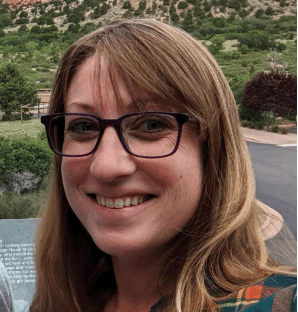
So You Wanna Be An Archivist: Kathryn Hoogendoorn

This is the newest post in our “So You Wanna Be An Archivist,” series, where archivists and other information professionals describe their path to the profession. In this article, COPA member Angie Piccolo interviews Kathryn Hoogendoorn about their path to becoming the Digitization Specialist for the United States Holocaust Memorial Museum in Washington D.C. 

Q: Please describe your current position.

Kathryn: I am the Digitization Specialist for the United States Holocaust Memorial Museum in Washington D.C. Basically, I am a program manager for digitization of paper and object digitization. It is a large cross-office effort that requires extensive communication and logistics with all of our divisions.

Q: What drew you to the profession?

Kathryn: I think aspirations toward access and education of the general public were my biggest draws to the profession, as well as the cool stuff you get to see! I have always had a special place in my heart for historical documents and books. 

Q: Can you describe your education background and work experience?

Kathryn: My route into archives is circuitous at best. In the beginning, I had wide-eyed dreams of being a chemist and I hold a BS in Chemistry. I have always been an avid collector of antique books but I never thought I could combine my hobby and degree. One day, I happened upon a historical library where I struck up a conversation with a conservator and realized I could! As I pursued conservation, my mentor suggested a Masters in Library and Information Science (MLIS). to start as an archivist and obtain certification in conservation. That sounded like a great plan, so I obtained my MLIS. I loved being an archivist so much, I never went back for my certifications. 

Through the years, my career has taken me from working with the archival collection for long term preservation to focusing on digitization and digital access. I have worked as an archival assistant, a lone arranger for a corporation, a paper digitizer and now I am the lead for a digitization program focused on digital access. Digitization provides a rewarding, hands-on approach to the collection and how it is used in real time. 

Photo Description and Credit: ‘One of the Museum’s digitization stations. US Holocaust Memorial Museum’

Q: What skill has been the most valuable in your career?

Kathryn: Picking just one skill is difficult, but flexibility and the ability to turn an idea into real work have been very valuable. 

Archives are at the whim of many outside forces including budgets, Federal direction and donors. It’s important to be able to change priorities or workflows without letting it disrupt your sense of passion for the work. 

Taking an idea like “these departments should work together to achieve a goal” may be easy to say, but difficult to articulate on paper and to implement. This is a project management skill that has been highly valuable in my career. 

Q: What advice would you give to someone trying to enter into this field?

Kathryn: A passion for access, history, preservation and curiosity are key to being in this field. You won’t make millions, but you will have a very rewarding career. 

I always advise students going into archival studies to look at their bachelor’s degree and go for a secondary interest like education, science or public administration. These degrees do not prevent you from obtaining your archives related Master’s degree, but they do provide a foundation of skills and knowledge that will be invaluable. 

Ask around. Archivists love to share! 

Consider the digital side of archives. It may not sound as glamorous, but we have a really great time and there are constantly new developments making the work more and more interesting every day.
Recent Society of American Archivists Statements

The Society of American Archivists (SAA) has made a concerted effort to respond to each new affront to archivists and cultural heritage workers as well as to share resources to support impacted archivists. To amplify and encourage wider distribution of this information and to raise awareness of the organization’s stance on current events, this post will collate recent updates from SAA leadership (as of March 19, 2025).


SAA Response to AOTUS Removal Urges Advocacy

The leadership of the Society of American Archivists (SAA) is alarmed by the dismissal of the Archivist of the United States on February 7, 2025. We believe the removal of AOTUS with no stated cause does harm to our nation and its people. The Society wants to reassure our colleagues across the profession that we continue to support the mission of the National Archives and Records Administration (NARA) to preserve and provide access to the essential records of the federal government.


As archivists, we adhere to a set of core values that champion accountability and social responsibility and promote preservation, access, and use. Protecting the integrity of the federal record and affirming the work of those who care for it aligns with our professional codes and responsibilities.


SAA will continue to monitor the situation at NARA and will actively work to support NARA workers and archivists across the United States. In the meantime, we want to remind you that your voice matters; please take a few minutes to contact your legislators today.


It’s all in the details. When advocating, use statistics and facts to help support your claims. Tell your representatives and senators why the safekeeping of government archives is essential to a free and healthy democracy. Call or write to them to share how national archives change lives.

Some examples include:

  • preserving and promoting our nation’s foundational documents, 
  • giving veterans access to their personnel records to secure benefits, 
  • connecting with your family’s history, 
  • teaching students about the history of the United States, and 
  • studying and understanding the human experience. 

SAA will continue to support our NARA colleagues by contacting policymakers directly about the importance of government archives and records management. We appreciate the voices of the many SAA members who have reached out to us over the past few days and stand with you as partners in advocacy.


SAA Condemns Widespread Firing of Archivists and Cultural Heritage Workers

The Society of American Archivists condemns the decision of the White House to terminate substantial numbers of archivists and cultural heritage workers at the National Archives and Records Administration (NARA), the National Park Service, and other government agencies.


All federal employees who work with archives serve a vital function for the United States. The White House’s staffing decisions, which compromise the livelihoods of thousands of individuals, jeopardize the preservation and access to the evidence that safeguards individuals’ rights, documents government actions, and ensures transparency. The actions can be seen as threatening the independence of NARA, thereby creating a risk that public servants can evade accountability. Federal archives are foundational infrastructure for a democratic society and should serve their non-partisan function without political interference.


SAA strongly urges Congress to assert their prerogatives, retain Congressionally authorized staffing levels, and preserve Congressionally legislated agency independence.


SAA Council extends our support and solidarity to impacted workers. The Council is actively working to determine how best to support federal archival workers during this time. We welcome impacted workers to contact SAA regarding how we can best provide support: president@archivists.org.


SAA Statement on Media Reports Concerning Records Destruction

According to multiple news reports, USAID workers have been ordered to destroy or burn records, including classified records. Current reporting indicates conflicting information on whether the agency is in compliance with the Federal Records Act, which governs records from executive branch agencies.

With the many current federal actions targeting the reduction and elimination of federal agencies, the Society of American Archivists notes that such actions increase the risk of non-compliance with the Federal Records Act across federal agencies. Federal statute (44 U.S. Code § 3105) and regulations require agency heads to prevent the unlawful or accidental removal, defacing, alteration, or destruction of records. The swift shuttering of USAID raises questions as to the proper disposition of that agency’s records, including ensuring permanent records are transferred to the National Archives and Records Administration (NARA). Furthermore, SAA supports all federal staff in their effort to uphold the rules and statutes governing the management of records and archives.

Federal courts have been asked to intervene on this and other White House efforts to undermine records management and archives activities. SAA will continue to monitor these developments.

We encourage SAA members and all who care about the importance of government archives to contact their elected members of Congress with the following key messages:

SAA has created a list of resources for federal workers available on the SAA website Resources for Federal Workers.

Get your photos ready!

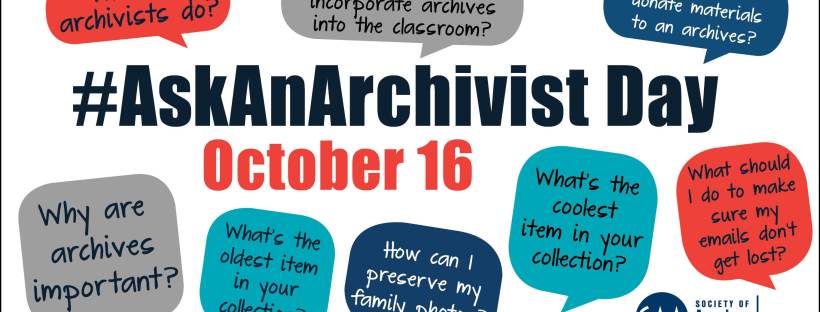
SAA Marketing and Communications Specialist, Julia Pillard, shares how we can all celebrate #AskAnArchivistDay on October 16th.


Coming as I do from an academic background, I have long appreciated the value of archives. I can recall touring the archives at Norlin Library at the University of Colorado in Boulder during my graduate degree and being so impressed by the extensive knowledge of the archivists giving us the tour. From my experience, I know exactly how amazing archives can be and what treasures they have to offer.

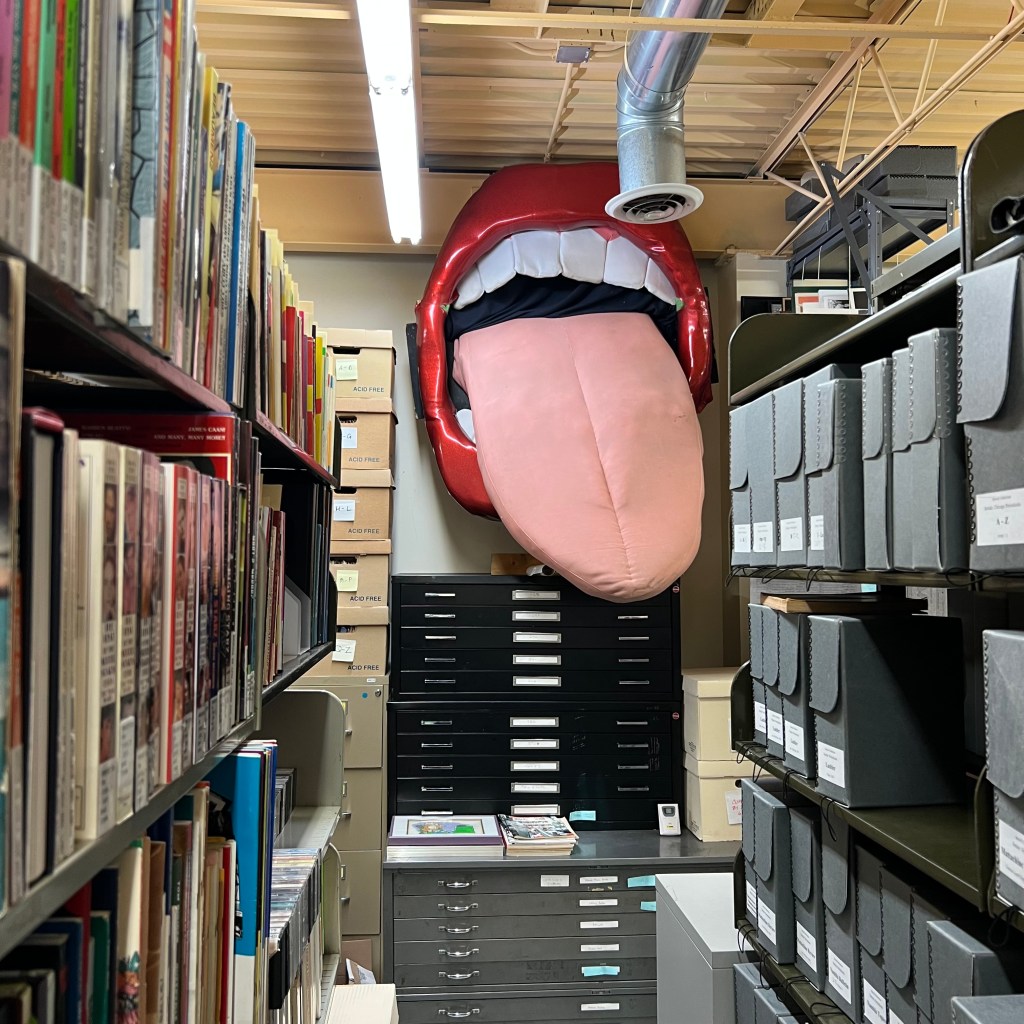
Last year, for the first time, SAA embarked upon a new endeavor to celebrate #AskAnArchivist Day. We put out a call for submissions from archives and repositories around the country, asking for them to share “a picture of the most interesting thing in your archives” to then be features on SAA’s Instagram page. We received dozens of responses and featured twenty-six pieces on our Instagram that day. Our most liked post was from the Gerber/Hart Library & Archives, who shared a massive tongue sculpture that hangs in their archives.

Gerber/Hart is one of the largest LGBTQ+ repositories in the world! There are a lot of interesting items in the collection, but this massive tongue often draws the most attention! Perched atop the poster collections is the enormous mouth that once hung in Carol’s Speakeasy, a Chicago disco and club institution from 1978-1992. Named for Mother Carol (Richard Carroll Farnham), the tongue symbolized ‘loud-mouth’ Mother Carol herself. The tongue has been featured in a few exhibits at Gerber/Hart and takes around four people to move. When the tongue was donated to Gerber/Hart, it was black from years of cigarette smoke and had to be cleaned before being transferred to the archive. Courtesy of the Gerber/Hart Library & Archives.

We had such fun with this experience that we’ve decided to do it again this year! If you want to share a high-resolution photo from your institution, archives, or repository, send it to jpillard@archivists.org along with a caption. And get inspired with some of favorite photos from last year:

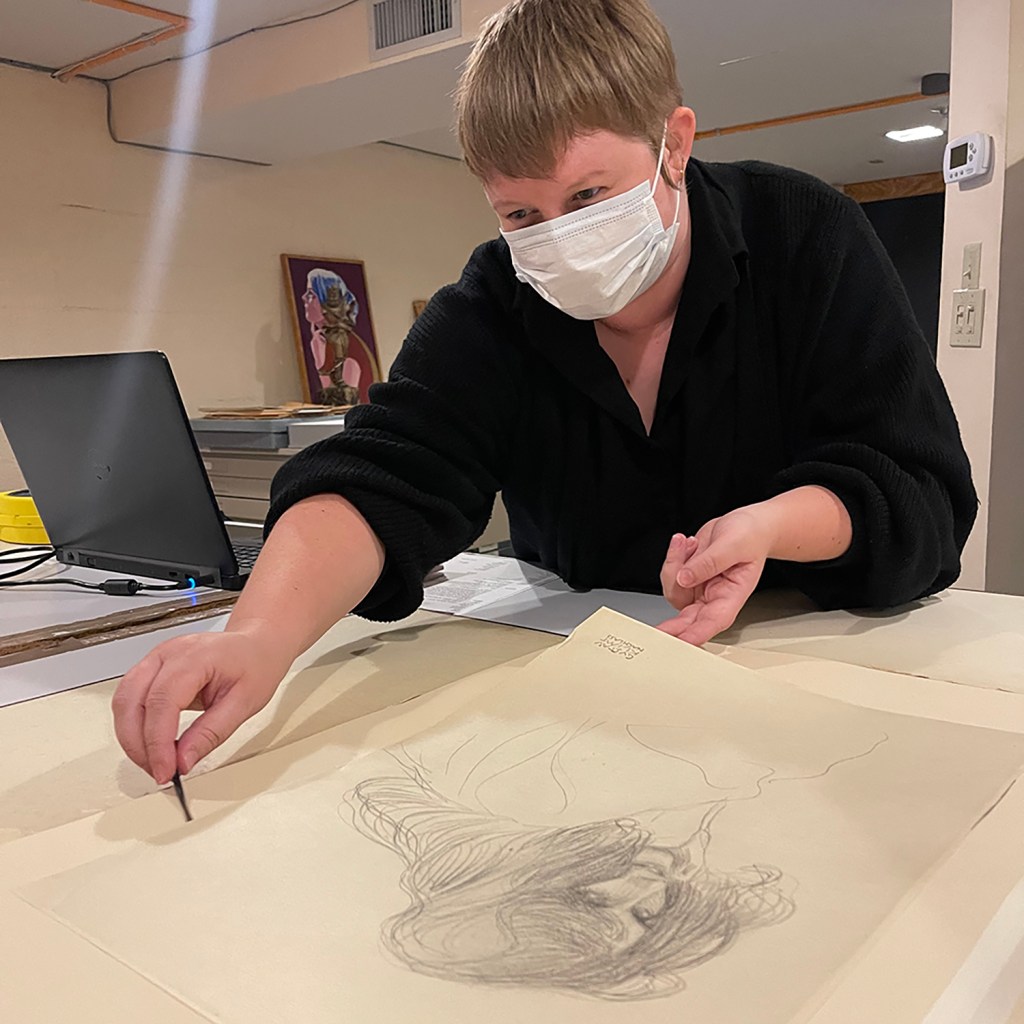
A Frank Lloyd Wright Foundation archivist assesses the Gustav Klimt portfolio owned by Lloyd Wright. Courtesy of the Frank Lloyd Wright Foundation.
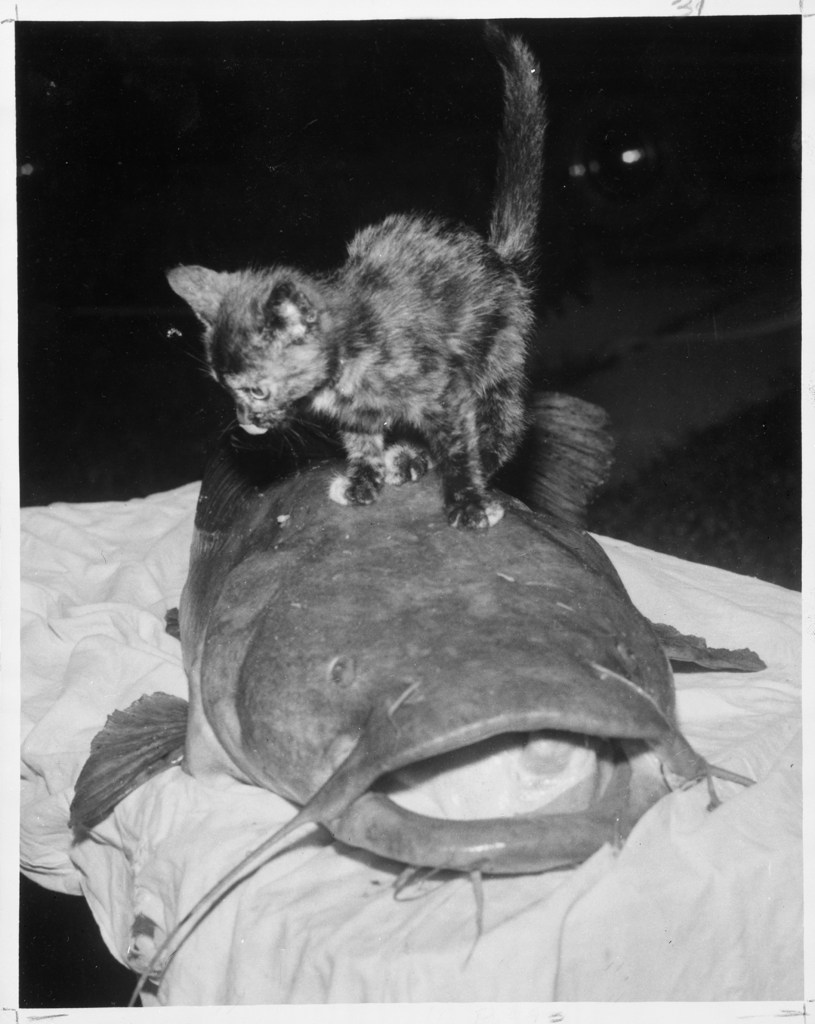
The Indiana Archives shared a photo of a kitten sitting on a catfish from between 1930 and 1969. Courtesy of the Indiana Archives.
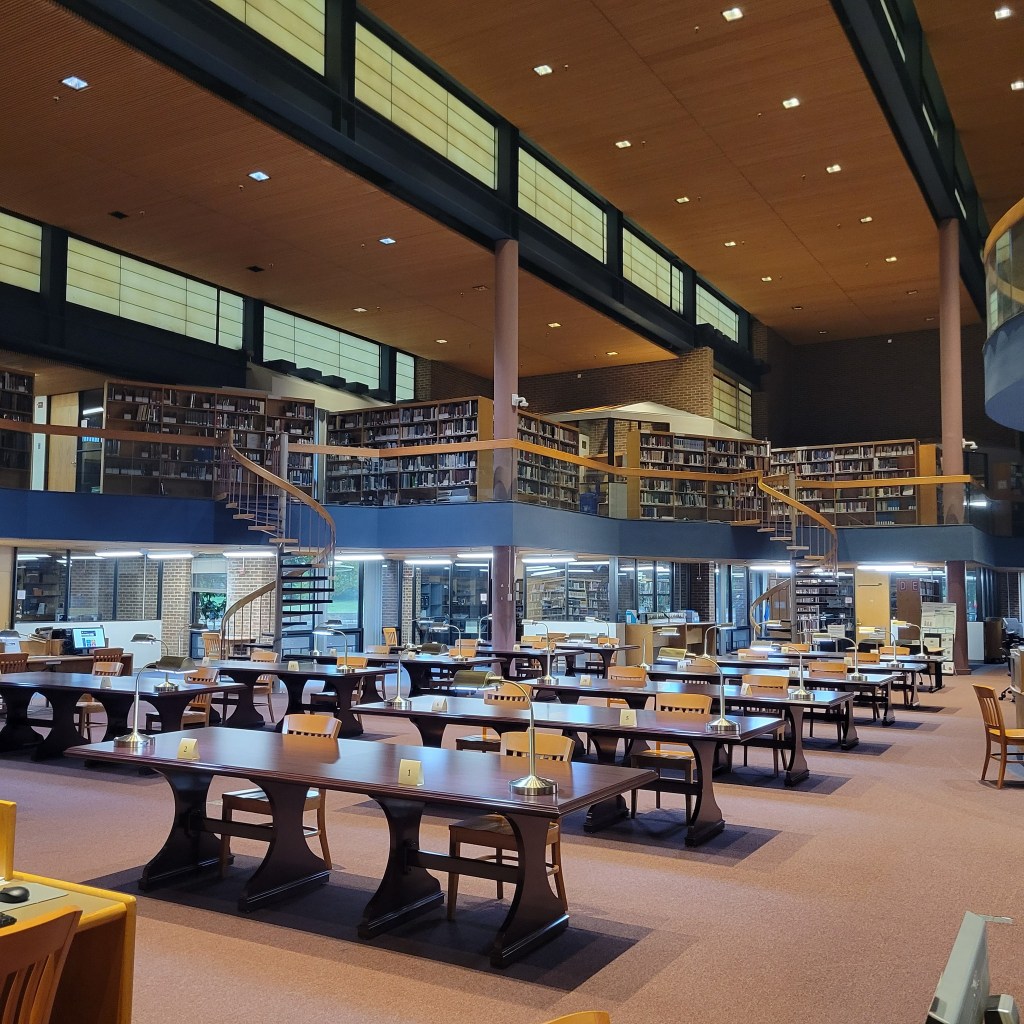
The updated Search Room at Maryland State Archives. The new tables were designed to offer three times as much space for visitors. Courtesy of the Maryland State Archives.

There’s an Archivist for That! An Interview with Donna Wojcik of the New Mexico Farm and Ranch Heritage Museum

This is the newest post in our There’s an Archivist for That! series, which features examples of archivists working in places you might not expect. In this article, Donna Wojcik talks about her job as Research/Archivist/Oral Historian for the New Mexico Farm and Ranch Heritage Museum.

Headshot of Donna Wojcik

1. How did you get your gig?

I started volunteering at the New Mexico Farm and Ranch Heritage Museum when it opened in 1998, serving as a greeter and oral history transcriber. I became a full-time staff member in 2001 as a receptionist/oral history transcriber. In 2012 I assumed the responsibility for the oral history program as the Oral Historian.  In 2018 I was tasked with archiving twenty-five years of photos and paper items, with my title reclassified as Research/Archivist.  In 2023 I became responsible for the library/archive, which is now called the Resource Room, continuing to identify and document photos, slides, and paper items in the archive and oversee our resource library.

2. Tell us about your organization.

We are a 47-acre facility that connects the present generation to the history of farming and ranching in New Mexico with a goal to inspire a deeper appreciation and understanding of the state’s rich heritage.  We create exhibits and programs that enable others to understand and learn from the past to enrich their present lives and help them shape a better future.  Public access to our Resource Room is by appointment and provides access to our oral history collection, Ancestry.com, livestock brand books, rare books, and books on a wide variety of subjects related to New Mexico history, culture, and arts.

Bookshelves of archival material.
Archival shelving with boxes for media.

3. Describe your collections.

My responsibility is rare books, research books, maps, ledgers, and our collection of over 400 oral history interviews each containing a recording, abstract, and literal transcript.  I am also tasked with creating/managing our institutional archive, which documents twenty-five years of events, exhibits, educational activities, outreach, and staff.

4. What are some challenges unique to your collections?

I was given the directive to “create an archive” so I am literally building one from scratch.  I have nine wonderful volunteers who help me to accomplish this goal.  We have sorted and identified over 3,100 photographs from boxes that date back to 1996 and are in the process of scanning these items and entering everything into a database.  I think that the biggest challenge for me is to be comfortable deciding what should be kept and what can be removed.

Examples of journals including El Palacio, The New Mexico Stockman, and The Western Historical Quarterly

5. What is your favorite part of your job?

My favorite part of the job is creating something that will last for years to come and knowing that I have been a part of it from the beginning.  I enjoy teaching the public about oral history and enjoy helping them with livestock brand research. I love working with volunteers and recognize that I could not do my job without their help and dedication.