There’s an Archivist for That! Interview with Samantha Bradbeer, Hallmark Archivist

This is the second post in our new “There’s an Archivist for That!” series, which will feature examples of archivists working in places you might not expect.  To continue this new series, COPA member Rachel Seale, Outreach Archivist at Iowa State University, brings you an interview with Samantha Bradbeer, archivist and historian at Hallmark Cards, Inc.
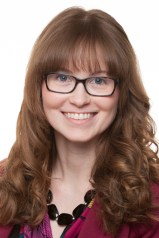
SBradbeer Interview Photo 1

Samantha Bradbeer, Courtesy of Hallmark Cards, Inc.

Samantha Bradbeer has served as the archivist and historian for Hallmark Cards, Inc. since 2011. Prior to Hallmark, she was an assistant librarian at the Ike Skelton Combined Arms Research Library on Ft. Leavenworth, KS and interned at the Smithsonian National Museum of Natural History.

She is a Certified Archivist (CA), and holds a Bachelors of Arts in Anthropology (BA) from the University of Kansas and a Masters in Museum Studies (MA) from Johns Hopkins University.

Samantha is an active member of SAA’s Business Archives Section and ICA’s Section on Business Archives, and serves as the vice-chair of the Kansas City Area Archivists.

RS: How did you get your gig?

SB: I began my career at Hallmark almost seven years ago. At Christmastime 2010, a friend recommended that I apply, as she felt that the job announcement was kismet. We both felt that it was written just for me, as I met all the requirements to a tee and have been a brand supporter for years. Some of my fondest childhood memories are of visiting Hallmark Gold Crown stores for cards and Keepsake Ornaments with my parents, and, as if there was serendipity involved, I even saw some of my first Hallmark purchases stored in the Hallmark Archives during the interview process. As luck would have it, Hallmark hired me on Valentine’s Day 2011.

Since then, I have been responsible for preserving and sharing Hallmark’s corporate and product history with employees, business partners, special guests, media and the greater Kansas City community. I am able to do so by answering research requests, creating exhibitions, providing tours, recording oral history interviews and responding to guest speaker opportunities. I am also responsible for arranging, cataloging and storing the collections.
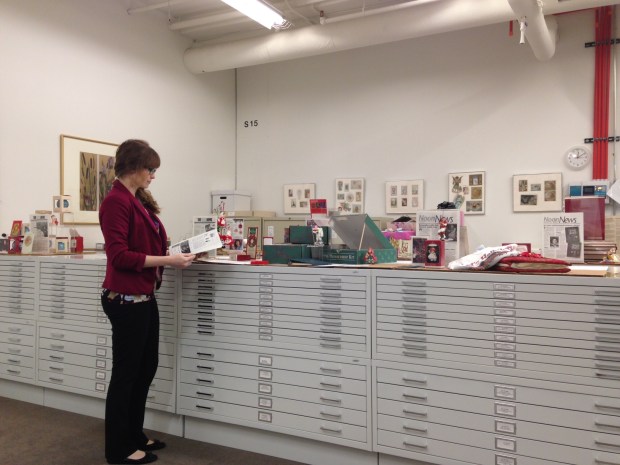
SBradbeer Interview Photo 2

Samantha prepares several displays for the 2017 Keepsake Ornament Club Convention (Courtesy of Hallmark Cards, Inc.).

RS: Tell us about your organization.

SB: The Hallmark Archives is located inside Hallmark’s worldwide headquarters on the southern edge of Kansas City, Missouri.

The significance of our holdings stem from Hallmark founder J.C. Hall’s encouragement for a high level of quality and creativity and a longstanding tradition of support for the arts. Hall began assembling our antique card collection, one of several collections we hold, in the 1950s in the interest of creating an accurate and varied record of the historic development of the greeting card industry, and our company’s major product line.

The Hallmark Archives has since served a dual role in that – in addition to serving the entire corporation and outside organizations as a source for industry history, holiday origins and graphic design trends  – it also serves Hallmark by supporting current product development. Hallmark artists and writers often reimagine past designs based on current marketplace trends or anniversaries. For example, Hallmark is currently celebrating the 100th anniversary of gift wrap, and several vintage gift wrap patterns from the Hallmark Archives are currently in stores to mark the occasion.

RS: Describe your collections.

SB:  The collections housed in the Hallmark Archives provide a visual and historical representation of greeting card history, industry and printing technologies, and serves as the repository for materials documenting Hallmark corporate, family and product history.

  • The design collection includes advertising, chromolithographs, folios, original artwork, prints, progressive proof books and rare books from the 17th to 19th centuries.
  • The historical collection includes Victorian-era greeting cards representing holidays and everyday, as well as advertising and trade cards, handmade or folk art, playing cards, postcards, scrapbooks and salesman’s sample books.
  • The corporate collection includes Hallmark advertising, audio visual materials, correspondence, photographs, publications and oral histories from 1910 through today.
  • The product collection includes greeting cards and other products manufactured and sold by Hallmark from 1910 though today.
  • The masterworks collection includes samples of original Hallmark product art dating from the 1950s through today.

Unique items in the Hallmark Archives include medieval manuscripts, two examples of the world’s first printed Christmas card and Victorian-era Valentine puzzle purses.
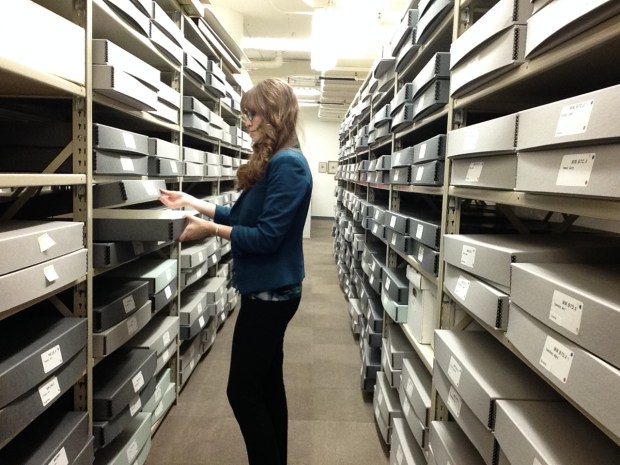
SBradbeer Interview Photo 3

Samantha adds original artwork to the masterworks collection (Courtesy of Hallmark Cards, Inc.).

RS: What are some challenges unique to your collections?

SB: Hallmark has created millions of products since 1910, and the Hallmark Archives has stored and preserved a sampling from every year and holiday or occasion. It can be challenging at times to select which products to keep, but luckily our complete set of employee newsletters and product catalogs provide insight into the full product line, when needed.

Although our retention schedule automatically sets aside most products, many departments keep their records as working files for years, even decades. We recently started relocating some of these records to the Hallmark Archives, as the departments needed additional working space. Retired employees and fans of the company have also donated other products and records, and, like many archives, we have a backlog of materials to still process and properly store.

As technology has improved, we have also been digitizing our collections gradually. Most of our materials are digitized when our employees and business partners request them, but, as time allows, we have also scanned entire collections, including our masterworks collection of over 40,000 samples of original Hallmark product art dating from the 1950s through today. With that being said, an extremely small portion of our corporate records – including audio visual materials stored on now obsolete formats – has been digitized. I hope to start digitizing more of these records, especially as we are sharing more and more of our company history online and in the media.

RS: What is the favorite part of your job?

SB:  Over the past 100 years, Hallmark has partnered with dozens of well-known and influential artists, writers, celebrities and politicians. Many of whom – including Winston Churchill, Walt Disney, Dwight D. Eisenhower, Grandma Moses and Norman Rockwell – built personal relationships based on mutual respect and admiration with our founder. I grew up reading about these icons, and having the opportunity to see their original artwork and read their personal letters still gives me goose bumps.

I love to display these materials and other unique items from the Hallmark Archives as often as I can at the Hallmark Visitors Center, so employees, local residents and visitors to Kansas City can see a glimpse into our collections and company history.
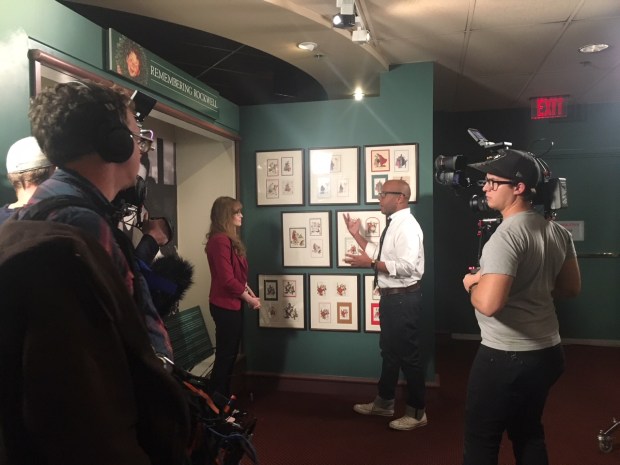
SBradbeer Interview Photo 4

Samantha shares the history behind J.C. Hall and Norman Rockwell’s friendship and business partnership with Hallmark Channel’s Home & Family talk show host Ken Wingard (Courtesy of Hallmark Cards, Inc.).


Stay tuned for future posts in the “There’s an Archivist for That!” series, featuring stories on archivists working in places you might not expect. If you know of an archivist who fits this description or are yourself an archivist who fits this description, the editors would love to hear from you—share in the comments below or contact archivesaware@archivists.org to be interviewed on ArchivesAWARE!

 

A Bazaar by any other name is still…(an event)?

This post was authored by guest contributor Vince Lee, Archivist at the University of Houston, and current member of SAA’s Committee on Public Awareness (COPA).

As we wrapped up our inaugural Houston Archives Bazaar in September of this year, I was curious to see what others were doing all around the country and in their region. What did they call their events? The Houston Archives Bazaar took inspiration, and if we’re honest, help from the Austin Archives Bazaar and the folks who helped create and run it. They were very generous in sharing their time, knowledge, and experience of the planning and logistics that went into hosting the event.

Image Credit: Austin Archives Bazaar Org

The Austin Archives Bazaar was started by Archivists of Central Texas in 2014. “We were initially inspired by the LA Archives Bazaar and the Portland Archives Crawl, but have since learned of other institution-independent collaborative outreach events which also predate the Austin Bazaar,” said Jennifer Hecker, one of the cofounders. Jennifer is joined by Daniel Alonzo, Madeline Moya, Molly Hults, and Kristy Sorenson as the other cofounders of the group. To date the Austin Archives Bazaar has hosted two events in 2014 and 2016 and are currently in the planning for their third in 2018.

Image Credit: Oklahoma Archivists Association

Looking around the Southwest region, another newcomer to the scene is the Oklahoma Archives Bazaar. In partnership with the Oklahoma Historical Society, they just held their inaugural Bazaar back on October 28 during American Archives Month. Not unlike our Houston Bazaar, they also featured door prizes, an oral history booth, self-archiving workshops, and presentations by archivists as well as historians.  The Bazaar was organized by the Oklahoma Archivists Association (OAA), a group of local professional archivists dedicated to providing education and networking for archives professionals, record-keepers, and students in the area.

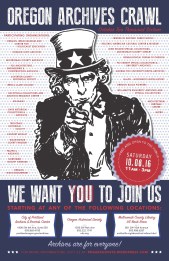
Poster of the 2016 Oregon Archives Crawl (Image Credit: Kylie Thalhofer)

The Oregon Archives Crawl was established in 2008 and has been hosted every other year by a group of volunteers in the month of October. As the name suggests, rather than having all activities and events at one venue or under one roof, attendees are encouraged to visit and “crawl” between the Portland Archives and Records Center, the Multnomah County Central Library, and Oregon Historical Society. Much like a pub crawl, the benefits are that it allows visitors to sample and get a flavor for each of the venues in their natural settings, while at the same time they can pick and choose activities offered at each site, and also they can get a sneak peek or tour behind the scenes at each repository.

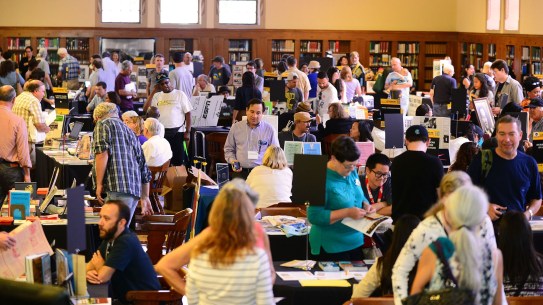
Perhaps the Granddaddy of all Archives Bazaars goes to? Survey says…. Los Angeles (LA) Archives Bazaar! Established in 2006, the LA Archives Bazaar has often been the genesis and inspiration for other Archival Bazaars that have sprung up around the country. Hosted annually by USC Libraries and LA as Subject (an alliance of libraries, museums, and other archival and cultural institutions), the event has been at the Doheny Memorial Library on the campus of the University of Southern California. Their motto to visitors has simply been, “All Day. All in One Place”. The goal is to share the rich and diverse histories that make up Southern California. Participants at the event have included the Academy of Motion Picture Arts & Sciences and the Los Angeles Public Library to private collectors. Visitors will also get to meet with exhibitors, attend programs, and workshops throughout the day.  (Bonus: check out this time-lapse video of the LA Archives Bazaar!)

LA Archives Bazaar at the Doheny Memorial Library (Photo Credit: Rich Schmitt)

2016 Vermont History Expo (Image Credit: Daryl Storrs)

But wait just a minute here. Although not technically a Bazaar and according to their website it is now defunct, the Vermont History Expo was started in 2000 as a result of expanding upon the success of the Vermont Heritage Weekend that was hosted in 1999. Throughout the next 16 years, thirteen expos would be hosted at the Vermont Historical Society until 2016. During that time expos would feature heritage exhibits, children’s activities, historical reenactments, performers, authors, and historical presentations that focused on different themes throughout Vermont’s history. There was literally something for everyone and every interest.

It seems up for debate as to when the concept of the Archives Bazaar, Crawl, or Expo started, and which one is the oldest, depending on the criteria one uses.  What isn’t debatable is that each of these events, regardless of their names, serves to promote the importance of documenting local/state/regional history and raising awareness of the various repositories that exist, whether they be archives, libraries, museums, or cultural institutions, in preserving that history. It also raises awareness of the ongoing and important work that we as archival professionals do within our regions and locales.

We would love to hear from others on the creative lexicon of terms you’ve encountered to title an archival event!

Asserting the Archivist, No. 1

Square HeadshotThis post was authored by guest contributor Samantha Norling, Digital Collections Manager at Newfields and member of SAA’s Committee on Public Awareness (COPA).  This is the first post in our new “Asserting the Archivist” series on the importance of highlighting archivists and archival work in outreach efforts, rather than just focusing on the collections themselves.

In January 2016, I authored a post for ArchivesAWARE titled “Asserting the Archivist in Archival Outreach: A Case Study and Appeal.” In that post, I described the process by which the Indianapolis Museum of Art Archives staff evolved our approach to social media outreach and took purposeful steps to include–and often, feature–archivists and archival work in posts on a regular basis. In doing so, we introduced our audience of primarily design- and architecture-enthusiasts to the work that goes into preserving the collections that intrigued them, and to the trained professionals who carry out that work.

Too often, archivists and archival repositories can get stuck in the loop of sharing only THE STUFF, especially as those posts get a positive response and many interactions. But those collection-centric posts that help to extend our reach to every conceivable interest group on the web provide us with a valuable opportunity to highlight the work, knowledge, and skills of archivists to a nearly unlimited variety of audiences. My post in 2016 was not only a case study, but an appeal to encourage more archivists to “Assert the Archivist” in their outreach efforts, and to share favorite examples of archivists and archival work as a featured component in social media outreach, either directly from the archives or as part of social media presence of the organizations/companies/etc for which archivists work.

To keep this dialogue going, I will be sharing some of my favorite examples of Asserting the Archivist, and encourage you to share yours in the comments to my posts, or on Twitter with the hashtags #ArchivesAWARE and #AssertingtheArchivist.

To kick this new blog series off, I’d like to share an excellent example of how an archivist can contribute significantly to their organization’s social media presence and, conversely, how the institutions at which we work can get the message out about our profession to their established audiences. In this scenario, truly everyone benefits!

Irish Distillers Pernod Ricard – Archivist Carol Quinn

Irish Distillers Pernod Ricard is a business that clearly values their corporate history and the history of their industry, and they regularly convey that through outreach that features their archivist, Carol Quinn. Looking through some of their past posts on Twitter, you will find a number of short videos that show Quinn working in and with their archives, announcements for talks that she has given on various aspects of the corporation and industry history, a blog post Quinn wrote (“Walk a Mile in My Shoes” ) about her role at Irish Distillers, and an article for which she was interviewed about “The Importance of Archiving“–particularly for businesses. The variety in both formats and content of the Irish Distillers’ outreach that features Quinn demonstrates the importance they place on the role that their professional archivist plays within their corporation.

Do you have a favorite example of archival repositories or organizations/businesses that “assert the archivist” in their outreach efforts? Or would you like to share your experience incorporating archival work into your outreach? Please share in the comments below or contact archivesaware@archivists.org to be a guest contributor to ArchivesAWARE!

The National Women’s Conference: Taking 1977 into the 21st Century

This post was authored by guest contributor Vince Lee, Archivist at the University of Houston, and current member of SAA’s Committee on Public Awareness (COPA).


The National Women’s Conference: Taking 1977 into the 21st Century, November 6-7, 2017

Although the  conference marking the 40th Anniversary of the historic 1977 National Women’s Conference has come and gone, many of its memories, the impact of the sessions, and the camaraderie and interactions of the attendees, who for some was a reunion of sorts, are something all will take back with them from their two days at the University of Houston. The event marked a collaborative partnership between UH’s Center for Public History, the Department of Women’s, Gender & Sexuality Studies, UH Libraries and Special Collections, Houston Public Media, and other partners and donors across campus. Many of the volunteers present over the past two days at registration and the information tables were UH students, staff, and faculty who generously volunteered their time to answer questions, provide direction, record oral histories, and troubleshoot problems to ensure a successful conference experience for attendees.

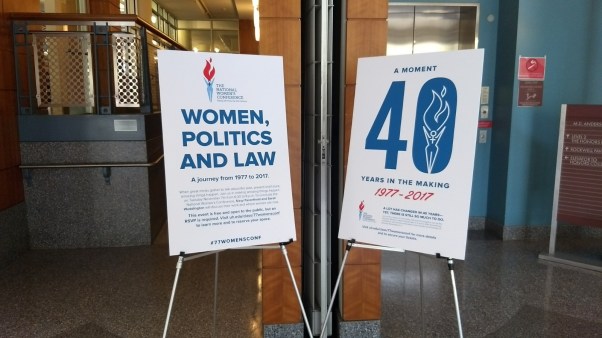
Conference signage. Photo courtesy of Vince Lee.

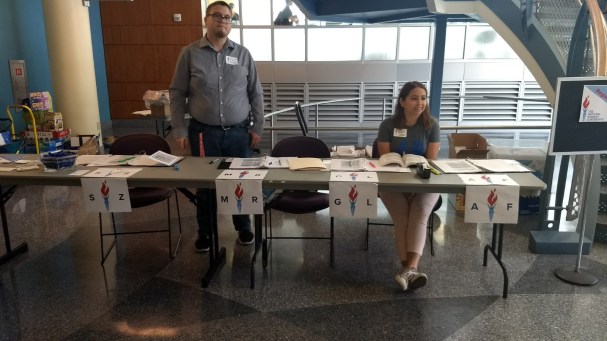
Conference registration table. Photo courtesy of Vince Lee.

Oral History Commons

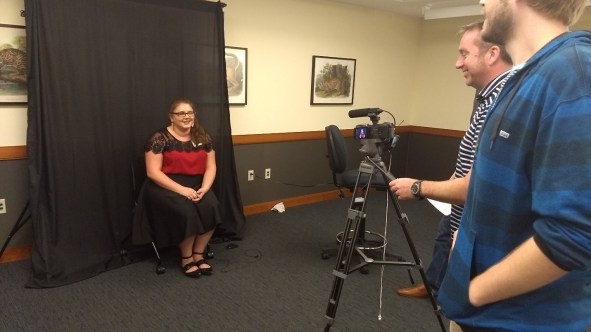
One of the highlights of the two-day conference was the oral history commons that was setup in Special Collections.  Interested participants could drop in or schedule in advance a short ten-minute StoryCorp style interview recorded by a team of graduate students from the Center for Public History. Interviewees were encouraged to talk about their experiences of the 1977 National Women’s Conference. As a result we were able to capture conversations from attendees and original delegates that were there at the 1977 conference.  Once all the footage is compiled we will provide access to the oral histories on the UH Digital Library site.

Oral History Commons at the conference. Photo courtesy of Vince Lee.

Student-Curated Exhibit

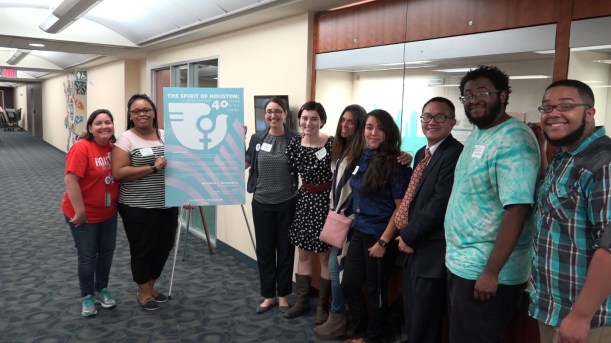
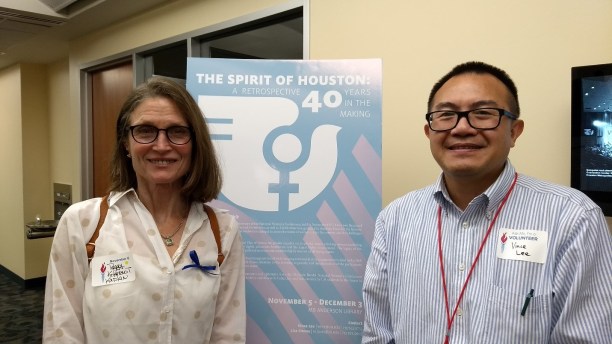
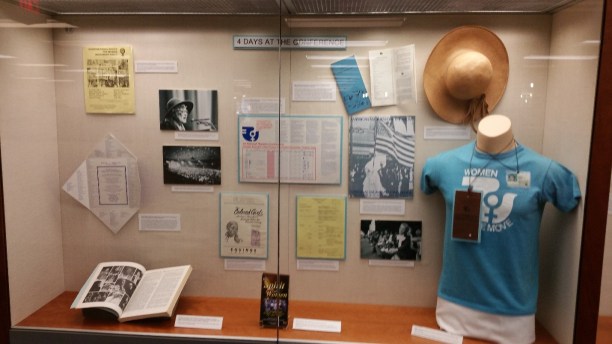
The conference provided a venue and an opportunity to unveil the opening of the student-curated exhibit for the 1977 National Women’s Conference, entitled Spirit of Houston: A Retrospective 40 Years in the Making. As part of a class project this past spring, students from the course, Issues in Feminist Research selected materials from the Marjorie Randal National Women’s Conference Collection. Materials selected would relate to the five themes each student group were working on for each of the five exhibit cases, namely: Origins, Preparing for the Conference, 4 Days at the Conference, Controversies and Challenges, and Impact of the National Women’s Conference. Students were recognized for their contributions to the exhibit at a reception given by the library on the final day of the event. As an added bonus, I was able to have my picture taken in front of the exhibit with Peggy Kokernot Kaplan, one of the original runners and torch bearers to the 1977 National Women’s Conference.

Students with their professor in front of the student-curated exhibit. Photo courtesy of Regina Vitolo.


Peggy Kokernot Kaplan with Vince Lee in front of the exhibit. Photo courtesy of Vince Lee.

Collaboration and Partnership

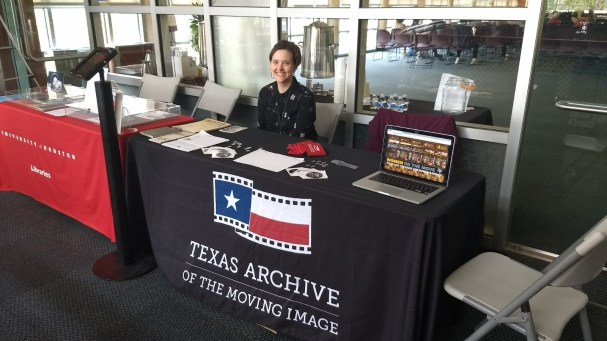
In collaboration and partnership with the Texas Archive of the Moving Image (TAMI), TAMI and UH Special Collections offered a free film and video digitization program to attendees who brought in footage they had on the 1977 National Women’s Conference. Formats that we could accept included VHS, Betamax, Umatics, and mini DV tapes as well as 8 or 16 mm film. Owners of the footage would complete a loan/use agreement form with the deposit of the media.  In exchange TAMI and UH Libraries would inventory the film and videotape, provide minor cleaning and repairs if necessary, and digitize the materials. Originals would then be returned to the owners, along with the digitized files- transferred to an external hard drive provided by the owner or, for smaller collections, onto DVDs or a 2GB thumb drive provided by UH Libraries.

Texas Archive of the Moving Image station at the Conference. Photo courtesy of Vince Lee.

Wikipedia Edit-a-Thon and Tours

A full day (9-5) Wikipedia edit-a-thon was offered where interested participants could drop into one of the computer classrooms, learn how to contribute entries to Wikipedia, and start working on entries to help raise awareness and representation of women and feminist topics through the addition of their articles and entries. Other attendees took advantage of tours offered of the Carey Shuart Women’s Archive and Research Collection to learn more about the collections that are housed there in addition to a tour of the exhibit given by student curators.

Student-curated exhibit.
Photo courtesy of Regina Vitolo.

Sissy and Sarah

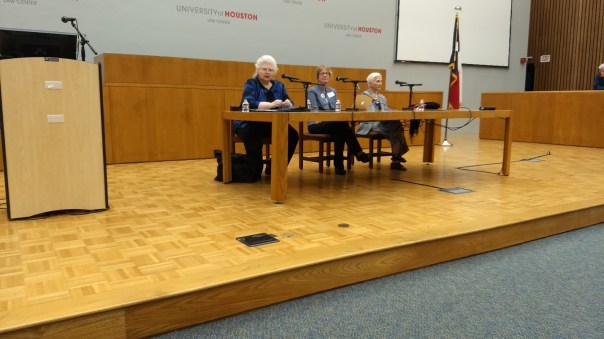
Throughout the two-day conference there were panels and sessions offered on a wide range of topics touching on “Feminism and Conservatism”, Mixed Outcomes of the 77 Conference, to “Art, Activism, and Artists” and “Invisible Minority Women”. The culmination of the conference was a Roundtable Discussion given by Frances “Sissy” Farenthold and Sarah Weddington and moderated by Dr. Nancy Young. Their discussion for the evening would focus on the topic of Women, Politics, and the Law. They provided their recollections of the 1977 conference and what they have learned, the political ramifications both in front of and behind the scenes, and taking stock of the current political climate for women and where we go from here with the next generation of women.

L-R: Sarah Weddington, Dr. Nancy Young (moderator), and Sissy Farenthold at the UH Law Center Roundtable Discussion on Women, Politics, and Law. Photo courtesy of Vince Lee.

The two-day conference was a partnership and demonstration of collaboration among the different departments across the UH Campus in raising awareness of what we each could contribute to an historic and singular event. The conference itself was available and open to the general public. For more information on the conference and the various partners involved please visit: http://www.uh.edu/class/mcgovern/national-women-conference/index

To listen to the exhibit podcast: https://soundcloud.com/user-839796282

Federal Funding Impact Story #7

Project: Finding Common Ground: Cooperative Training for the Cultural and Emergency Response Communities

mblc_logo

Granting Agency: National Endowment for the Humanities (NEH)
Grant Program: Division of Preservation and Access, Education and Training
Institution: Massachusetts Board of Library Commissioners (MBLC)
State: Massachusetts
Congressional District: 8th Massachusetts Congressional District
Grant Period: January 1, 2017 – December 31, 2018
Award Amount: $196,696
Institutional Match Amount: $253,096

Jobs Created:
– Project Coordinator (1 FTE for 24 months)
– Will hire instructors from the Massachusetts Firefighting Academy (number and amount of time  has yet to be determined)

Project Description
Disasters can affect and disrupt people’s lives, severely impact continuity of functions at all levels of government, and jeopardize the very existence of our nation’s humanities collections, cultural institutions, and historic sites and properties. Until recently, there was little communication, cooperation, or collaboration between the cultural heritage community and the emergency responder community in addressing cultural heritage concerns both before and after disasters.

What do we mean by the emergency responder community? They include the fire department; the police/sheriff’s department; local, county, tribal, and state emergency management officials; emergency medical technicians; the local emergency planning committee; the public works department; the mayor or community administrator’s office; and even the National Guard and the Coast Guard. By bringing both communities together to learn from each other at the local level, we can effect the inclusion of cultural heritage in municipal risk assessment, mitigation planning, response to, and recovery from a disaster. It is time that both communities come together to recognize that once life safety has been addressed following a disaster, the health and welfare of a municipality depend on the recovery and vitality of all sectors of a community, including cultural heritage.

To address these issues at the local level and to serve as a pilot at the national level, the Massachusetts Board of Library Commissioners (MBLC), the state library agency – in partnership with COSTEP MA (Coordinated Statewide Emergency Preparedness in Massachusetts), the Massachusetts Archives, the New England Museum Association, the Massachusetts Cultural Council, and the Massachusetts Department of Fire Services (DFS) – proposes a two-year, statewide, preparedness-and-response training project for cultural heritage and emergency responder personnel. The training package developed will be shared nationally with other states’ fire service and cultural heritage institutions. The partners, working closely with the project director and coordinator, will adapt, create, and present a series of five workshops on the following topics: risk assessment and mitigation, disaster planning (in two parts), disaster response, and salvage. Each of the first three workshops will be presented five times at locations across the Commonwealth.  Due to the nature of the live fire demonstration and salvage exercises, the last two sessions will be held at the two Department of Fire Services campuses in eastern and western Massachusetts. A session on the basics of preservation will be offered in an asynchronous format for all participants to complete ahead of the in-person workshops.

NEH funds will be used to hire a project coordinator; adapt and develop course materials for both the face-to-face and online presentations; present the workshops; cover consultant fees, travel, and supplies; and develop and convene train-the-trainer sessions for instructors. These sessions will introduce potential instructors to the purpose – to develop the foundation for consistent message and high-quality training – the content, and the available tools for the full course.

What was the need for the grant?
We wanted to address the problem of cultural institutions being left out of responses following disasters. By obtaining federal funds we are able to work closely with the Massachusetts Firefighting Academy to coordinate training between the cultural heritage organizations and the firefighters in an 18-month training program that will enable people from both communities in the same municipality to train and work together. The eventual impact is better communication and protection for the cultural heritage organizations and the development of the workshops into an online course to be distributed nationally.

What has been the primary impact of this project?
Eventually, we hope that this will bring the cultural heritage community and the firefighting/emergency management communities together to protect our cultural and historic patrimony before, during, and after disasters. The aim is to involve at least 200 members of the two communities to work together throughout the course as trained in the five offerings of the first three workshops (risk assessment, disaster planning I and disaster planning II (tabletop exercises) and at the two final ones (a live burn and salvage).

Submission by: Gregor Trinkaus-Randall, Preservation Specialist, Massachusetts Board of Library Commissioners

The Houston Archives Bazaar: An Interview with Emily Vinson, President of Archivists of the Houston Area

HABlogoIn this post, ArchivesAWARE! chats with Emily Vinson, President of Archivists of the Houston Area (AHA!) and Audiovisual Archivist at the University of Houston Libraries Special Collections, about the recent Houston Archives Bazaar.  Emily shares tips and lessons learned from the experience, stresses the importance of collaboration and communication in mounting outreach events, and shares AHA!’s strategies for attracting media attention to the Bazaar, which, despite the devastation brought by Hurricane Harvey just two weeks before, was still a resounding success.
 

AA: Can you describe the idea behind this archival outreach program?

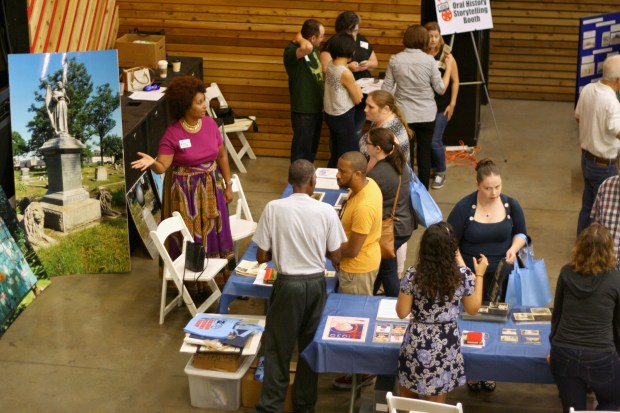
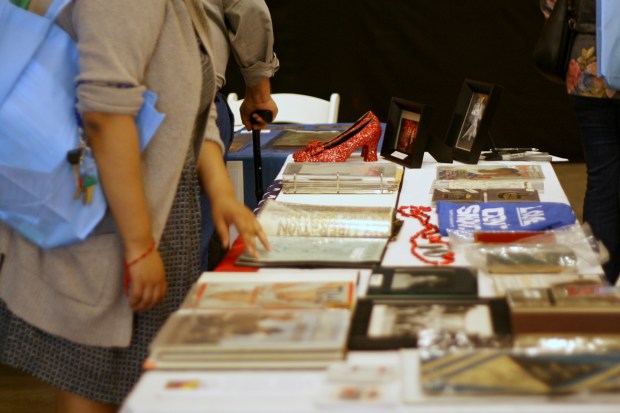
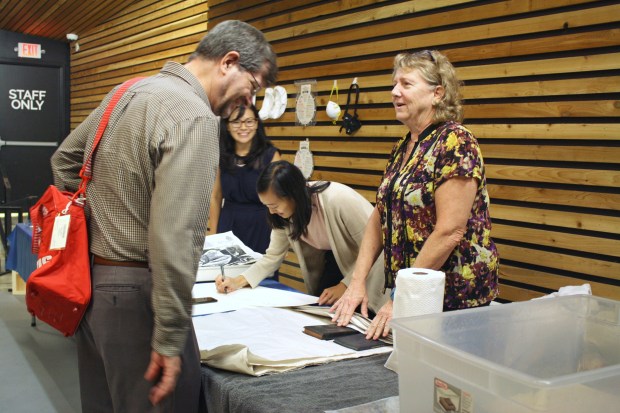
EV: Archivists of the Houston Area (AHA!) is a local archival professionals organization that aims to “promote archival repositories and activities in the greater Houston, Texas area.” In the fall of 2017, we mounted our first Houston Archives Bazaar. The event boasted over 20 local archival organizations. Over 200 members of the public attended. In addition to the organization tables, we also boasted Preservation and Digitization Stations, archival film screenings, speakers, and an Oral History booth. Thanks to generous sponsors and donations we were able to offer attendees tote bags and wonderful door prizes.

IMG_5432

Photo credit: Ai-Ha Do

AA: Where did you get the idea and what inspired you?

EV: We were inspired by the incredible work of the Austin Archives Bazaar. Three members of the AAB planning committee, Jennifer Hecker, Madeline Moya, and Daniel Alonzo came to Houston for the AHA! Winter meeting and shared their experience in planning the 2014 and 2016 Austin Archives Bazaars events. They also shared their extensive documentation with us, which was a huge help.

IMG_5381

Photo credit: Ai-Ha Do

AA: What worked? What didn’t work? Were you surprised by the outcome or any part of your experience?

EV: The biggest surprise was Hurricane Harvey! The storm hit Houston just two weeks before our planned date, and it was completely up in the air if we would be able to move forward with the Bazaar or not. In the days immediately after the storm, we had no way of knowing if our participants would be able, or want to have the event, or if the public would be interested in attending. Ultimately, we decided to proceed as planned. Only three repositories weren’t able to participate. We tried to respond to the disaster by inviting members of the Texas Cultural Emergency Response Alliance (TX-CERA) to come and demonstrate water-salvage methods for individuals who had been affected by flooding.

IMG_5229

Photo credit: Ai-Ha Do

AA: What would you do differently?

EV: As part of our planned events, we had several speakers – which was great. However, because we were in a music venue, the speakers didn’t have a dedicated space but instead had to speak over the crowd, which was a bit of a challenge. I think in the future we will brainstorm alternative set-ups to ensure the speakers can be heard. Also, we had a “digitization station” to encourage preservation scanning – I think there is an opportunity to do a lot more promotion in this area to ensure attendees are aware they can bring in materials to scan.

IMG_5343

Photo credit: Ai-Ha Do

AA: What tips do you have for those interested in putting on a similar event?

EV: Give yourself lots of time! Everything was very time consuming, which at times was challenging to balance on top of work and other responsibilities. Also, it is crucial to keep lines of communication open throughout the process.

HABposter

AA: Did you get media attention? How did that happen?

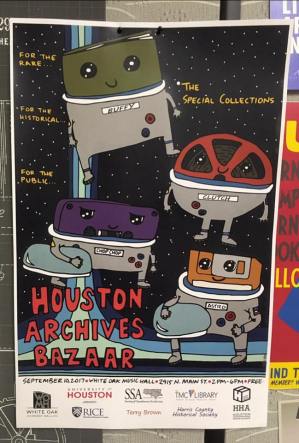
EV: Yes – we developed a multi-pronged media approach. We started with a press release that we had translated into Spanish and Vietnamese (both wide-spread languages spoken in Houston). We sent our press release to all news outlets in the region. We also utilized Facebook and Twitter extensively, including paid promotions on Facebook. To contact people who might not be reached through those two methods, we printed postcards and posters that we posted at local coffee shops and mailed to local churches and community centers.


EmilySquareEmily Vinson is Audiovisual Archivist and curator of the KUHT Collection at the University of Houston Libraries Special Collections. Prior to UH, Emily worked as an archivist at Rice University’s Baker Institute for Public Policy; a project archivist preserving unique audio holdings at New York Public Radio; and a fellow in Preservation Administration at New York Public Library. She holds an MS in Information Studies with a Certificate of Advanced Studies in Preservation Administration from the University of Texas, Austin. Emily currently serves as the President of the Houston Area (AHA!), and is co-chair of the Preservation Committee for the Association of Moving Image Archivists (AMIA).


There’s an Archivist for That! Interview with Anne L. Foster, Yellowstone National Park Archivist

This is the first post in our new “There’s an Archivist for That!” series, which will feature examples of archivists working in places you might not expect.  To launch this new series, COPA member Rachel Seale, Outreach Archivist at Iowa State University, brings you an interview with Anne L. Foster, Archivist at Yellowstone National Park.

Anne Foster.resized

Photograph of Anne L. Foster. (Courtesy of Anne L. Foster).

Anne L. Foster has served as Yellowstone National Park’s Archivist since 2010. Prior to that, she was the University Archivist at the University of Alaska Fairbanks, Traveling Archivist for the Montana Historical Society, NHPRC Fellow in Archival Administration at Fort Lewis College in Colorado, and Assistant Archivist at the Sharlot Hall Museum in Arizona. She is a Certified Archivist (CA), Digital Archives Specialist (DAS), and holds an Masters in Library Science (MLS) from the University of Maryland.

RS: How did you get your gig?

AF: As an undergraduate history student at nearby Montana State University in my hometown of Bozeman, Montana, I used to see flyers advertising an internship in the archives at Yellowstone. While I couldn’t take advantage of the program at the time (I was working three other jobs to pay for school), the fact that archives was a potential career for a history major and that someplace I loved like Yellowstone had one stuck with me. For the next fifteen years, through graduate school and several other archives jobs, I would periodically check and see Yellowstone was hiring. And then, on one random check—they were! I’d just been tenured and promoted at my academic repository, but finally, my dream job was available.  All those other jobs were probably a good thing, though, because they gave the skill set needed to step in as the first professional archivist in Yellowstone and tackle one of the largest backlogs in the National Park Service.

Processing room during our Archives Blitz grant project

Processing room during the Archives Blitz grant project (courtesy of Anne L. Foster).

RS: Tell us about your organization.

AF: The Archives is part of Yellowstone’s Heritage & Research Center (HRC), which also houses the Park’s museum collection, herbarium, and research library.  The HRC is part of the Yellowstone Center for Resources, which is tasked with managing all those things that make Yellowstone so special like the thermal features, wolves and bears, and the scientific research that guides management decisions. While we are part of the National Park Service, we are very fortunate to also have Yellowstone Forever, our philanthropic and educational partner. Yellowstone Forever actually started life in the 1930s as the Yellowstone Museum and Library Association, so our collections have long been a key part of their efforts. Most people think of Yellowstone as the place for geysers and wildlife—and we are–but the Archives is the place where we document those special features and our efforts to preserve them, which to me is something special.

HRC

Entrance to Yellowstone National Park Heritage and Research Center (Courtesy of Anne L. Foster).

RS: Describe your collections.

AF: Like many archives in the U.S., we are both an institutional repository and a collecting institution. Our institutional records are government records and we are subject to federal records laws and guidelines. There are actually two types of records within the government collection: resource management records and administrative/historical records. All national parks keep resource management records. Parks are created to manage a resource or resources and as long as that resource exists, we need to keep records pertaining to those resources to help inform future management decisions (these records are considered “permanently active” as long as the resource is active).  Unlike other national parks, however, we also retain our permanent administrative and historical records like Superintendent’s correspondence, planning documents, partnership agreements and other records that don’t pertain quite so directly to resources. For other parks, those records are sent to the National Archives. Yellowstone is fortunate to be one of the few Affiliated Archives of the National Archives and Records Administration (NARA). This means that the records become part of NARA’s collection, but so long as we meet their standards for preservation, security, and access, we can keep them in our location. This makes it easier for our researchers, both staff and the public, to access our history in one place.

Our third category of collection is our donated or manuscript collections. These materials range from Park visitors’ photo albums, diaries, and scrapbooks through the research of scholars and  scientists who donate their data for future comparative or longevity studies to records of businesses who have operated in the Park over its nearly 150 years. In fact, our Yellowstone Park Company (YPC) records, the main Park concessioner for the first 100 years, is our most accessed collection because it includes payroll records. The YPC hired hundreds of college kids every summer and, apparently, that summer was so memorable that the employees would spend the rest of their lives talking about their summer in Yellowstone. Now, we’re getting those employees’ kids and grandkids coming in to find out what Grandma or Grandpa really did in Yellowstone.

Archives stacks

Yellowstone National Park Heritage and Research Center Archives stacks (courtesy of Anne L. Foster).

RS: What are some challenges unique to your collections?

AF: People love Yellowstone, so much so that there isn’t much about the Park that they aren’t interested in.  This makes archival appraisal a bit challenging—the most routine things truly have the potential for historical value.  Our NARA-approved NPS records schedule, for example, classifies most supply records as temporary. Of course it does—why would one need records for equipment once that item is used up or sold? But, we get queries regularly from people who have purchased former Park vehicles (buses, boats, snowmobiles) and want to know all about their item, down to paint formulas and the names of Rangers who drove them; it’s frustrating not to be able to answer their questions. At the same time, we can’t possibly keep everything.  So, it comes down to a rigorous and often detailed appraisal process.

We can have some unique preservation challenges as well.  Some of our most interesting records are logbooks–bound books used to record eruption data, visitor comments, or deep thoughts about wilderness. But, many of the logbooks are kept in less than optimal locations during creation—backcountry cabins, rock cairns on top of mountains, or next to erupting geysers.  By the time they are filled and transferred to the archives they can be nibbled, rained upon, or even somewhat eaten away by the acidity of geyser spray. During the 1988 fires, the Park’s historian actually flew with a fire crew in a helicopter to several backcountry cabins in order to rescue the logbooks (fortunately, all of the historic cabins were saved). Today, we have a more regular transfer of the logs to help cut down on damage and make use of digital duplication in cases where the damage is significant or potentially harmful to other items.

RS: What is the favorite part of your job?

AF: The location; it is magical to go to work in Wonderland and even more extraordinary to be the keeper of the documentary record for the world’s first national park. That feeling is shared by my coworkers as well as our visitors and researchers—it makes for a lot of enthusiasm and interest in the Park’s history. Every day is different and that makes for interesting and challenging work. There’s a huge amount of variety to my day: the types of records, the archival functions, and the research questions are as varied as Yellowstone’s landscape.

Stay tuned for future posts in the “There’s an Archivist for That!” series, featuring stories on archivists working in places you might not expect. If you know of an archivist who fits this description or are yourself an archivist who fits this description, the editors would love to hear from you—share in the comments below or contact archivesaware@archivists.org to be interviewed on ArchivesAWARE!
 

Giving It a Try: #AskAnArchivist Day


This post was authored by guest contributor Caryn Radick, Digital Archivist, Special Collections and University Archives, Rutgers University Libraries, and current member of SAA’s Committee on Public Awareness (COPA).

In late September, my colleague and I declared this would be the year that Rutgers Special Collections and University Archives would participate in #AskAnArchivist Day! Although most of our social media outreach happens on Facebook and Instagram, taking part in #AskAnArchivist Day would would give us a ready-made opportunity to expand our social media reach further into the Twittersphere.

How we prepared:

Given our late declaration, we had to scramble. We decided to do the following:

  • Reach out to our libraries’ communications office about our participation to see if they could offer suggestions and/or support.
  • Leverage our Instagram presence by preparing posts that could go on Twitter throughout #AskAnArchivist Day using Later.
  • Look for “fun/interesting facts” to post about Rutgers’ collections throughout the day, but to set “office hours” for our participation.

The results of those decisions helped us prepare the day:

  • The communications office offered suggestions (like making videos) and promoted the chat on the Rutgers University Libraries web page and through social media.

  • Using Later let us schedule some posts, in case we got pulled away from our Twitter account during non-office hours.
  • We enjoyed gathering the fun/interesting facts, particularly making a video demonstrating how our dumbwaiter works.

During the office hours (1-2:30) we spent a lot of time interacting on Twitter, but most of our tweeting was with other #AskAnArchivist Day participants. Questions from researchers or people interested in archival life were few. This “are we just talking to each other”? observation came up on Twitter as well. I’d be curious to know which archives have high non-archivist engagement and how they achieve it.

After the session was over, we compiled some quick statistics about the day on Twitter. Our preliminary tally indicated we got about 150 likes and 13 new followers. We later learned that we had made the “What’s Trending” section of the Rutgers Today newsletter (with a tweet about President Obama’s chair from when he attended Rutgers’ commencement).

We also had three of our items posted on that day shared in the Upworthy Story about strange objects found in archives.

Lessons learned from #AskAnArchivist Day:

  • Figure out what you want to achieve and frame your day in a way that supports it.  For example, if our goal was to gain more Twitter followers and share info about our collections, we were successful. If we intended to interact with researchers and people who want to know more about being an archivist, then it was less fruitful.
  • Start planning early! This allows more time to decide upon and gather images, videos, and facts to share.
  • Think about your set-up for monitoring Twitter. We had multiple screens open and were working on two computers. Sometimes we got a little lost in the toggling, but having two people offering different perspectives was useful.
  • Vary the breadth of objects and media you plan to share. It is tough to predict what will generate the most likes and retweets, so mix it up.
  • Get a good sense of your Twitter statistics (number of followers, averages likes and retweets, etc) prior to #AskAnArchivist Day. This provides a good baseline for comparison.
  • Promote the event through other social media channels. We did this for about a week before the event and it seemed to generate interest.

What lessons have you learned from #AskAnArchivist Day? If you’ve participated for multiple years, what changes have you made since you started?

#AskAnArchivist Day 2017 Summary


This post was authored by guest contributor Anna Trammell, Archival Operations and Reference Specialist at the University of Illinois Archives Research Center/Student Life and Culture Archives, and current member of SAA’s Committee on Public Awareness (COPA).


#AskAnArchivist Day was once again a huge success, allowing archivists from across the country to communicate directly with the public about their work. #AskAnArchivist was trending in the United States from 10:00 am to 1:00 pm with 8,927 total tweets on October 4 from 4,077 unique users. An additional 759 tweets appeared on October 3 and 1,595 on October 5 (at last count). While the total number of tweets using #AskAnArchivist on Wednesday was down from last year, the number of unique users and hashtag use before and after #AskAnArchivist Day was up significantly.

The top tweet received over 2,300 retweets and 6,300 likes.

https://twitter.com/KevinIsHistory/status/915605700381958144

Other top tweets highlighted specific items,

https://twitter.com/j_vvsm/status/915627211507482624

provided a behind-the-scenes look,

and answered (almost) every preservation question.

#AskAnArchivist Day not only provided a forum for archivists to interact with the public, but it also encouraged dialogue between archivists. These top tweets are just two examples of these discussions:

https://twitter.com/ireashiamonet/status/915580855631990784

https://twitter.com/frecklewars/status/915594679772745730

Members of SAA’s Committee on Public Awareness used #AskAnArchivist Day to ask members of the profession about their outreach activities,

special visitors,

surprising archives positions,

https://twitter.com/NickPavlik/status/915593645222449153

and how they’d describe an archivist in 5 words.

For more #AskAnArchivist Day tweets, check out SAA’s highlights.

What was your favorite question on #AskAnArchivist Day? How did you promote #AskAnArchivist Day at your institution? Any suggestions for archivists wanting to participate for the first time next year? Let us know in the comments!

Thank you to all who participated in this year’s #AskAnArchivist Day and helped make it a success!

Gearing Up for #AskAnArchivist Day

IMG_2250

The members of SAA’s Committe on Public Awareness (COPA) have gathered in Chicago this week to review and rework our work plan for the next year. With #AskAnArchivist Day fast approaching (it’s this Wednesday, October 4th, in case you missed the announcement), we’re dedicating a chunk of time today to get ready our favorite day of the year.

Last year, the COPA members and SAA staff had fun creating promotional memes for the annual event…

…so we’re creating a few more today for a last promotional push.

Follow the official hashtag, #AskAnArchivist, on Twitter–we’ll keep sharing our memes (the good, the bad, and the ugly) up until the big day. And it looks like University of Chicago Special Collections is getting in on the meme fun this morning as well…

Think you can top these #AskAnArchivist Day promotional memes? Share yours on Twitter today and tomorrow to build up momentum heading into Wednesday!

Don’t worry, we’re not spending our entire in-person meeting creating memes. We’ve also come up with a number of questions that we plan to ask throughout the day on Wednesday so that COPA can join the conversation and hear about your archival outreach successes…and failures.

We’ll be asking/prompting:

“What’s an archivist?” elevator speech in 140 characters or less. Go!

What has been your favorite outreach event that brought people to your archives?

Any collections or repositories you’ve heard of that made you say “There’s an archivist for that?!”

…so get your answers ready, and be prepared for more questions coming from COPA! We’ll be using an added hashtag, #ArchivesAWARE, to make it easy to follow our questions.

See you Wednesday!

#AskAnArchivist Day 2017 participants list