
On February 14th, 2025, the Committee on Public Awareness (COPA) offered a storytelling event called “Finding Aid to My Soul: For the Love of Archives.”
This is one of the stories shared during that event.
Lipstick Links Us
If you were to read in a diary entry of mine from the winter of 2021 it would read like an angsty, Emo teenager’s, even though I was 32 at the time. I had spent eight incredible, but very tumultuous years working in animation and children’s television, which were definitely the epitome of the best of times and the worst of times. I burned out of that career hard and experienced what the kids today would call a quarter life crisis. I didn’t know what to do next, professionally speaking, and I guess you could say that I had some serious commitment issues. I felt really let down by the last career that I built for myself, and was worried about getting too attached to another one. So eventually, I moved 3,000 miles across the country to Boston to pursue a new career and enrolled in graduate program for library science at the height of the pandemic, as one does, because I felt like I just needed to commit to something. My family would probably be really horrified to hear me say this, because A, I told them otherwise, and B, I was putting all of my savings and then some into the endeavor. Given the timing, everyone was still caught in this weird haze coming out of isolation. We were all really skeptical of outings. It was made worse by the grayest, darkest winter I’d known in ages, and I was just really prone to second guessing all of the decisions that I’d made up to that point, including my new foray into the library and special collections worlds. I eventually got my first job at a library, though it was Schlesinger Library for the History of Women in America, at Harvard. I was a reading room assistant. I was helping researchers, paging materials from vaults and as part of the initial training exercise, my boss had me search for an item in the collection that was of interest to me.
I chose the diaries of a woman named Catherine Keane, who was described as a covert operative in Washington, DC and then London during World War Two. I think I was naively hoping for first hand accounts of spies sliding codes hidden in newspapers across London park benches, because there’s was, and definitely still is a part of me that absolutely loved the idea of that life and had such a curiosity about the people who lived it.
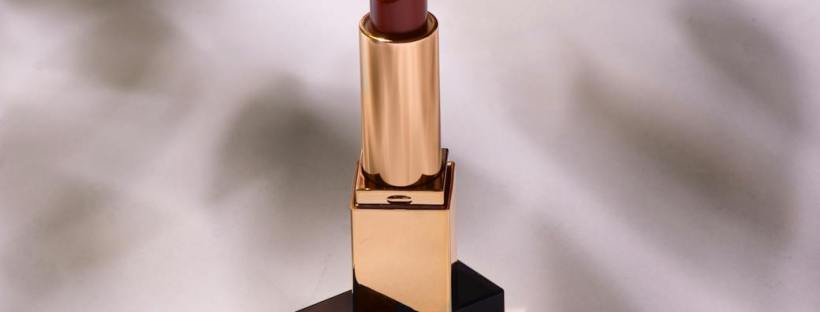
But before I got the chance to find out, I got sick. I got very, very sick. My sinuses felt like they were going to implode, and it was just the kind of sickness that made the loneliness even lonelier. I really want to reach out to my friends across the country, but thought I would just be a burden, so I didn’t. Of course, I was constantly checking for messages from them, even though I wasn’t reaching out to them at all. Everything was making me irritable. It was just one thing building up. My roommate was using all of my makeup without asking, and I was just so embarrassed about this giant pity party that I was throwing for myself. So of course, I did what I always do, I vented about everything in my diary. I was just pouring my thoughts onto pages to get them out of my head, and some are tangible. And eventually I got back to work and opened the reading room, and then I opened Catherine’s diary. I’ll never forget the first line of the first entry that I read. It was “I’m an utterly inert mass of protoplasm.” Catherine had been sick for two weeks. She was finally finding time to write after being released from the military infirmary, she returned to her quarters to discover that the lipstick that the military required women to wear, red shade number 23, was gone having been stolen by somebody. She felt sad that she wasn’t visited by any of her friends. She was worried they didn’t like her, even though she found out later that they were just part of a military training exercise that day, and she signed off the entry saying that she was sick of being sick, exactly word for word like I had in mine the night before. Reading it was somewhat unnerving. I was seeing myself reflected back at me through the words of a woman whose job it was to note down models and descriptions of planes that were flying overhead in this tiny, palm sized notebook that she covered in wool so that it camouflage perfectly into her clothing while she was walking around the city. When I had time throughout the work days, I kept reading and the similarities just kept seeping through. When an electrician came to my apartment, they accidentally broke something so meaningful to me, but I clamped down my emotions, because I could tell how badly he felt about it. I knew it was just an accident. So of course, then that night, I wrote again my diary about it. In one of her next centuries, Catherine complained that during a nighttime raid in London, she wanted to “positively strangle another woman in the bunker who couldn’t stop screaming,” and then she felt so guilty for saying that, because she knew it was a pretty proportional response to bombs raining down from the sky.
And it was around this time that I began to wonder if the diaries were shaping themselves to my experience like this Narnia gateway, except instead of a winter wonderland, I was reading really uncannily similar thoughts from a woman calculating places likely to be targeted for missiles, but I realized that these similarities were indicative of a very different and equally wonderful truth, which is that we’re so messy, we’re beautifully messy. We can be embarrassed that we’re concerned with our makeup looks while a world war rages outside, or were lonely and sick and don’t want to vent about it out loud. And I really expected to find this story of covert adventure that I could live through vicariously. But instead, I found something that I really needed. These thoughts that she was pouring on pages in wartime, while she put on such a different face for this world that she was trying so hard to save, and she accomplished astounding, courageous things during and after the war. But in writing these diary entries, she made me feel so much less alone, no matter how different our lives were. Sometimes while I was reading Catherine’s diary, I find myself tracing the words. It’s a terrible preservation practice, especially in the winter when you have lotion and oil on your hands. But I didn’t even realize I was doing it. I just felt so emotionally connected to them. And weeks later, I helped a patron page the letters belonging to Julia Child, famous chef working in France. And at one point, I looked up and saw that they were tracing the words of the letters exactly like I had with Catherine’s diaries. And it made me so happy to see them connected to them in that way. And I watched them, and couldn’t help but hope that maybe they were reading a bit of unexpected messiness, instead of very perfectly planned, almost ready to be published French recipes. That maybe they were finding not what they expected, but what they needed, which in my case, was a new passion and profession, and I think that’s something that really can only be found in archives.
 ArchivesAware