
On February 14th, 2025, the Committee on Public Awareness (COPA) offered a storytelling event called “Finding Aid to My Soul: For the Love of Archives.”
This is one of the stories shared during that event.
Before I was Me
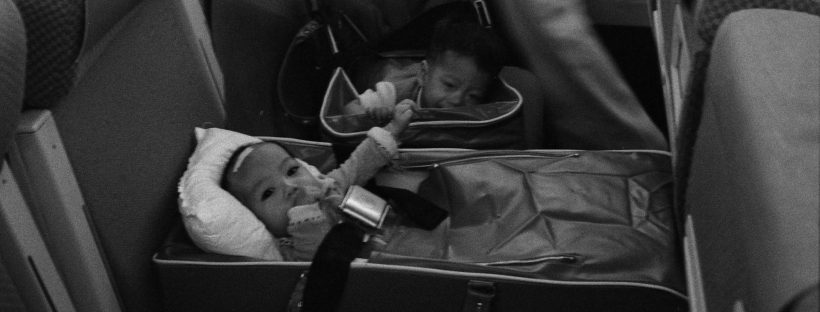
I was born in Vinh Long, a rural port [province] in the Mekong Delta in South Vietnam. As an infant, I was brought to Saigon to an orphanage operated by Friends For All Children, an organization based in Boulder, Colorado. On April 3, 1975 after Ed Daly, who was the president of World Airways, chartered an unauthorized flight evacuating orphans from Vietnam. President Ford initiated Operation Babylift to evacuate over 3,000 children, A C-5, a cargo plane was loaded with children, the infants in the troop compartment and the older children military crew, press and volunteers were on the floor in the cargo department.12 minutes after takeoff, the rear cargo door hydraulics failed. Bud Trainor, the pilot, maneuvered the plane to head back towards Saigon. The plane crashed into the rice paddy, bounced over the Saigon River, crash landed on the other side, breaking into pieces. Survivors, including me, I was nine months old at the time, were rescued, stabilized and flown to the US. We arrived in the Presidio in San Francisco, and I grew up on a beautiful farm in Kauai in Hawaii. The Presidio arrival was the first video capture of Operation Babylift, as President Ford greeted the children and 2020 aired the segment. I have no parental birth records. I have no hospital bracelet. I just have a front-page newspaper article and these news clips that we recorded. Over the years, I used Operation Babylift for school reports. I collected books, VHS, tapes of anything we’ve got on TV. There were documentaries, there were magazines, anything I could find. Little did I know that these were going to become the archives of my life. Books were published, published memoirs by adoptees, families of adoptees. There was a Nat Geo documentary, independent films, different websites would pop up, and personal blogs. This was a start that made the story a little more personal. But I felt like the story was always something that was told by others. It was never truly mine.
I have no parental birth records. I have no hospital bracelet.
I just have a front-page newspaper article and these news clips that we recorded.
In the early 2000s, social media started to connect the adoptees, adding a whole other dimension to the story. But Trainor, who was the pilot of the C-5, a plane that crashed, he told me, “I don’t want this history to disappear when I do.” That was last year. He had started [a] Facebook page in 2010 and it was called the C-5 a galaxy, but Babylift. And on that, people started to share stories. They started to share histories. They identified the place the faces in the different photos, the pilot and others that were in service actually commented on all of the crash photos adding a narrative of their own to these images that we had seen publicly for years.
There was a passenger manifest of civilians that was released by the Air Force, and it was a list that I had for years since, like high school reports. It was a publicly released list, but all of a sudden that list was no longer just names. It was real. For example, on one of the manifest lists that was the volunteers, it says line 34 and 35 “mom and dad both died in the crash,” and all of a sudden, the death of that loss became real. They became real people, and not just names.
They became real people, and not just names.
As the 50th anniversary of Operation Babylift approaches–that will be this April 4 this year, ‘25–I wanted to help preserve history. I was talking to Mary Nell Gage, who was a part of a part of Friends For All Children on-site in Vietnam when I was an infant, and she helped facilitate many of the adoptions, including mine, and continues to support us through her work. She lives in Denver, Colorado. The records that we had when she was in Vietnam and others, the records were actually destroyed when all the on-site adoption records were destroyed, when the Operation shut down at the end of the war. The records that were personally held by the director of friends for all children, Rosemary Taylor, were recycled upon her passing. In December, I moved about 33 boxes up three flights of stairs from Mary Nell. And I joked with her, as after we moved all the boxes up, and I said, “Do you think my file’s in there?” And she said, “Somewhere.” I mean, there’s 33 boxes full of files.
Later, at dinner, she went up and grabbed a stack of files, plopped them on the table, and I reached for the first one, and I opened it up. “Mommy!” Holy shit. It was mine. It was my mother’s handwriting. It was her application to adopt a child. It had home studies. It had the process and checklists. It had a receipt for me. It had letters, all of the pieces of my story before I was me. And then I was given a list of the plane crash survivors by a woman who wrote a book about Operation Babylift and that I had found on Facebook. She emailed me the PDF, and we looked at it together. I went down the list with her, and there it was, Mimosa. That was me. I was on the list. I was there. This was in the basement in Colorado for decades. And finally, this was my story. Those boxes weren’t just records, they’re proof that we existed and that we mattered. Preserving these stories ensures adoptees like me can finally find their truth. That is my love story of my life and archives.
 ArchivesAware