
This is the newest post in our There’s an Archivist for That! series, which features examples of archivists working in places you might not expect. In this article, COPA member Claudia Willett interviews Rebekah Valentine about her job as Lead Archivist for Senator Dianne Feinstein’s papers at Stanford University .
How did you get your gig?
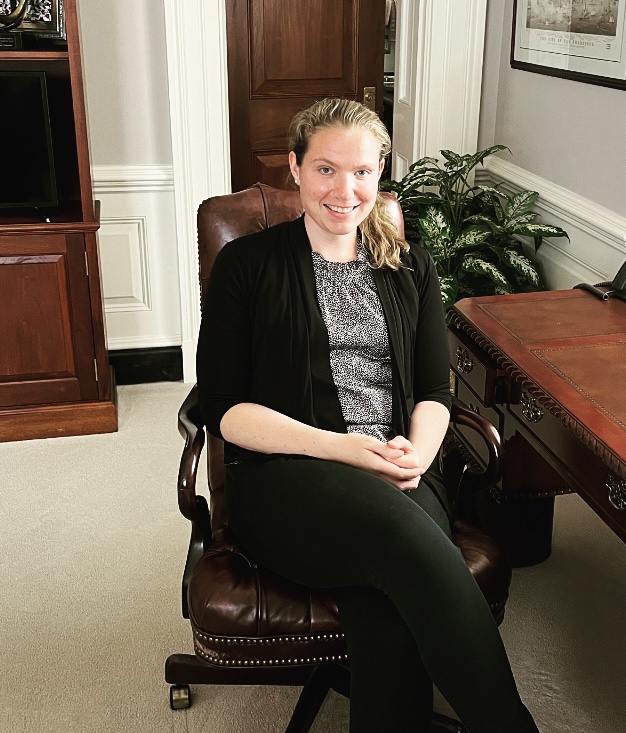
My interest in congressional papers began with my summer internship with Senator Patrick Leahy’s office. After graduating with my MLIS from the University of Maryland, he hired me to be his archivist assistant. This position led to me becoming Senator Feinstein’s archivist. I am now continuing to lead her archiving project at her chosen university.
Tell us about your experience working as an archivist in a Congressional office.
Being a congressional archivist has been one of the most rewarding and also the most challenging experiences in my career thus far. Most members do not have archivists, and those that do tend to hire them near the end of their career. As a congressional archivist, I spent most of my time surveying the collection, creating inventories, and supporting congressional staff with archiving their records. I was also responsible for closing the archival portion of the office and ensuring that the Senator’s records were sent to her chosen repository.
Describe your collection.
The collection consists of about 5,000 linear feet of analog records, 2,000 memorabilia items, and 7 TB of digital files. The records consist of a hodgepodge of legislative, press, constituent relations, administrative, photographs, correspondence, audio visual materials, and the personal/official records of the Senator. Constituent mail was my archiving team’s favorite material to process. We found it interesting to see what issues the people of California cared about most and even found some letters from a couple of well known people.
What are some challenges unique to Congressional collections?
I think the sheer volume of congressional collections and all the different types of records is one of the biggest challenges. There is a lot of personal and sensitive information in many different parts of the collection, and it is challenging to navigate access and use. The digital records bring several challenges with the unique databases and file types the Senate used over time, which causes preservation and access issues. The Internet Quorum, a constituent mail database, has been especially challenging for repositories that have congressional collections.
What is your favorite part of your job?
One of the best parts of my job is finding hidden treasures in collections. These treasures can be fun articles written about the Senator, letters written to the Senator by high level officials, and her artwork sketched out on scraps of paper. It is also great to see other members of the teams’ excitement when they find cool things in the collection as well.
One of the best parts of my job is finding hidden treasures in collections. These treasures can be fun articles written about the Senator, letters written to the Senator by high level officials, and her artwork sketched out on scraps of paper. It is also great to see other members of the teams’ excitement when they find cool things in the collection as well.
 ArchivesAware
One thought on “There’s an Archivist for That! An Interview with Rebekah Valentine, Lead Archivist for the Dianne Feinstein papers”